Keep South Carolina Wild

Legislative Update

by Trip King, SCWF Government Relations Manager

The South Carolina General Assembly is set to adjourn at 5:00 pm on Thursday, May 14th thus ending a two-year Legislative Session. While there are several bills still pending that the South Carolina Wildlife Federation has an interest in, we have nevertheless successfully advocated for significant pieces of legislation that have already made it across the finish line. And, we anticipate, with only a few days left in the session, we’ll be able to help shepherd a few more bills into law.  

SCWF, working closely with our advocacy partner Audubon South Carolina, was able to pass legislation that designated the Prothonotary Warbler as South Carolina’s Official State Migratory Bird. That legislation, Senate Bill S.383 now Act 98 of 2026, passed the both Senate and the House receiving a unanimous roll call vote in each chamber and was signed into law by the Governor on February 27th.  Subsequently, we were honored to participate in a ceremonial bill signing ceremony with Governor McMaster at Audubon’s Francis Beidler Forest on April 20th. It was a very special occasion for a very special bird that calls South Carolina home each year after traveling thousands of miles on its annual migratory journey to and from Colombia, South America.

The “Hunting Heritage Protection Act”, House bill H.3872, is poised to receive final legislative approval this week after a minor amendment in the Senate. This legislation would ensure that there is no net loss in acreage for hunting opportunities on state-owned wildlife management areas managed by South Carolina’s Department of Natural Resources. This initiative was an undertaking by the Sportsman’s Caucus and was supported by and advocated for by SCWF.

Also pending is H.5069, the “South Carolina Protected Lands and Conservation Coordination Act.”  This bill, which we expect will be given final approval by the General Assembly before adjournment, establishes a bold long-range State policy goal of increasing the number of protected lands to 7 million acres by the year 2050.  Currently, approximately 3.5 million acres of South Carolina’s roughly 21 million acres total land mass are protected from development by one means or another. SCWF has been very active in its advocacy of this legislation and has worked behind the scenes with the sponsor, Representative Travis Moore, and other legislative leaders to fast-track this bill through the House and Senate this year.

As with any legislative session, there are good bill that we have supported and lent our voices to that simply don’t make it into law. One of these bills is H.3409. Introduced by Representative Patrick Haddon, this legislation would increase the qualified conservation income tax credit from $250 per acre to $1,000 per acre. The income tax credit rate available to those who are willing to place their property in a qualified conservation easement or make a qualified conservation contribution has stood at $250 per acre for more than 20 years. That rate has not been adjusted for inflation nor exploding property values and should be adjusted as H.3409 would do.  Regrettably, Rep Haddon’s bill has stalled in the House Ways and Means Committee and will not pass this year.

While we enthusiastically supported the SC Conservation Education Act, which was enacted into law in 2025, neither the House Ways and Means Committee nor the Senate Finance Committee committed any money in the respective budgets for FY26-27 to fund this program. The Conservation Education Act, housed in the SC Department of Natural Resources, would fund third-party indoor and outdoor classroom conservation education programs specifically for youth.  We hope that the General Assembly will provide adequate resources to DNR in the future to fund this important program.

While the FY2026-27 state budget has yet to be finalized, there is good news for conservation and land protection in the current spending plan. Both the House and Senate, respectively, included record “new” money for conservation grant programs, such as conservation easement funding through the SC Conservation Bank, and land acquisition funding for state resource agencies. In recent years, the Legislature has really stepped up to the plate to fund land protection efforts in our state and we thank the entire General Assembly for their efforts and Governor McMaster who has prioritized protecting our most precious natural resources, land and water, for generations yet to come.

Legalizing the Right to Grow Native Plants

Article by Brianna Randall, National Wildlife Federation

Published March 26th, 2026

https://www.nwf.org/Home/Magazines/National-Wildlife/2026/Spring/Gardening/Native-Plant-Laws

Homeowners and NWF affiliates are fighting to change restrictive local landscaping laws in favor of native plants

Lou Lesesne stands in his Charlotte, North Carolina, front yard (above), which brims with sundrops, coneflowers and other nectar-rich plants that support pollinators such as sweat bees.

FIVE YEARS AGO, when Lou Lesesne moved to a new house in Charlotte, North Carolina, he decided to “get rid of the grass and bring in the pollinators.” Today, his yard boasts expansive beds of ironweed, purple and cutleaf coneflower and other native plants that support native wildlife. “I like to do my part to help the birds and the insects find habitat,” Lesesne says.
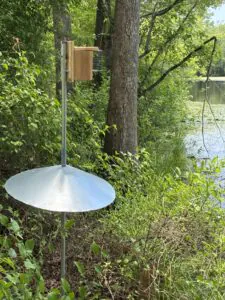
This past June, however, Lesesne received a letter from the city of Charlotte warning him he was in violation of a property-maintenance code requiring homeowners to keep nonwoody plants shorter than 12 inches. The city told him to mow down his natural garden or pay a fine of up to $500.

His experience is hardly unique. Across the country, wildlife-friendly gardeners are running afoul of local laws that prioritize “nice, tidy green lawns that are mowed low to the ground,” says Patrick Fitzgerald, the National Wildlife Federation’s senior director of community habitat.

But thanks to advocacy efforts by homeowners like Lesesne—often in collaboration with NWF affiliates—such rules increasingly are being challenged and subsequently repealed or revised. “We’re seeing a lot of momentum to change local landscaping ordinances, especially as more people bump up against rules that don’t allow them to grow native plants,” Fitzgerald says.

Dating back to the early 1900s, municipal property maintenance ordinances are intended to keep neighborhoods looking cared for and neat. The rules often prohibit homeowners from growing nonwoody plants above a certain height, typically 10 to 12 inches. But that requirement stymies the efforts of gardeners who choose natural landscaping. Native plants can grow several feet high—and need to before they can flower and reseed. When mature, some of the ironweeds adorning Lesesne’s yard, for example, can stretch up to 10 feet tall. Allowing such plants to reach their full height provides the pollen, nectar, seeds and other food wildlife need, as well as vertical structure that creates habitat for a variety of species, from insects and birds to reptiles and amphibians.

When Lesesne received his citation, he contacted the North Carolina Wildlife Federation (NCWF), an NWF affiliate, for advice on how to save his native plants. He wasn’t the only one, and NCWF has been happy to help. Changing municipal ordinances to encourage natural landscaping is “commonsense conservation,” says Alden Picard, NCWF’s conservation coordinator, who has fielded dozens of calls, emails and visits from concerned native gardeners like Lesesne. “This is something everyone can get behind. It’s a gardening for wildlife campaign. It’s a campaign to let our milkweed, ironweed and joe-pye weed grow tall, flower and go to seed,” he says.

In July 2025, NCWF joined forces with six other local and state conservation groups to create the Coalition to Protect Our Urban Nature. The coalition successfully rallied residents of Charlotte to submit several hundred comments as well as attend public forums to lobby for exempting native gardens from the city’s vegetation-height requirement

Ed Murray, a Charlotte homeowner with more than 100 native plants in his yard, testified on behalf of the proposed change at a city council meeting in fall 2025. He framed native landscaping as a family issue that benefits children. “We live in a very urban area, so it’s not like you can drive 10 minutes and get a lot of biodiversity. But you can still have a place where your kids go out into the yard and see interesting things,” he says. Murray believes that interacting with the native plants, insects and birds in their yard gives his 4-year-old daughter “a significant leg up in understanding the way the world works.”

Charlotte Mayor Vi Lyles found such testimonies so convincing that, last October, she pledged to exempt native plant gardens from the vegetation-height requirement. This February, the city council approved the change, paving the way for homeowners in the nation’s 14th largest city to create more wildlife-friendly gardens.

Another North Carolina city, Winston-Salem, passed a similar ordinance in 2025. Next up, Murray hopes the Charlotte coalition sets its sights on requiring native plants—and prohibiting the planting of invasive species—on city-owned properties, a policy adopted by Greensboro, North Carolina, in 2024.

In South Carolina, another NWF affiliate, the South Carolina Wildlife Federation (SCWF), also is helping reshape rules in the state capital, Columbia, to help homeowners grow—not mow—native gardens. After hearing complaints that residents were being penalized for growing native plants, SCWF teamed up with the Gills Creek Watershed Association and the South Carolina Native Plant Society Midlands Chapter to lobby the city to change its property maintenance ordinance. In May 2025, Columbia amended its rules so that homeowners certified through a recognized program, such as NWF’s Certified Wildlife Habitat® program, can register their yard with the city to avoid fines.

“South Carolina is one of the fastest-growing states. It’s more important than ever that we are able to replace some of the habitat that’s removed when new neighborhoods are built,” says Sara Green, SCWF’s executive director. When homeowners re-create lost habitat by planting native gardens, she adds, it benefits at-risk wildlife, including songbirds and native pollinators. Green has received requests from several other NWF affiliates seeking to change their local landscaping rules.

To support such efforts, NWF published the Guide to Passing Wildlife-Friendly Property Maintenance Ordinances in 2021. “The National Wildlife Federation prioritizes landscaping ordinances because they represent a key lever for increasing native plant habitat in communities,” Fitzgerald says, adding that “there’s been a recent groundswell of interest in advancing local policy changes to benefit wildlife.” In the coming year, he says, NWF will survey its affiliates to assess local advocacy efforts underway, including which of them can be replicated elsewhere.

Legalizing protections for wildlife-friendly gardens at the city level “is a much better return on investment than trying to change rules one homeowners association at a time,” Picard says. “It’s time for local government to wake up, to move forward, so that we have monarchs and bumble bees and songbirds in our yards 50 years from now.”

Banner image by Dave Ozric

2025 – 2026 Scholarship Recipients

A committee of the South Carolina Wildlife Federation board is proud to announce the selection of the 2025/2026 scholarship recipients. Congratulations to Ella Michel, Lily Addicot, and Anna Chobot for their selection as SCWF scholarship winners and to Hsuan Hsieh for being selected for the Nicole Chadwick Memorial Scholarship. These impressive young conservationists are all motivated to use science-based solutions to make an impact on the world around them.

Ella Michel is a senior at the South Carolina Honors College studying Environmental Policy and Conservation. Ella is passionate about innovating our energy systems to be more sustainable, with a specific focus on energy efficiency. Increasing energy efficiency has a wide range of benefits, reducing energy bills and emissions simultaneously. She plans to leverage her interdisciplinary degree to approach energy efficiency improvements from a multidimensional perspective, including policy, industry, utility, and community-based solutions. It is through this work that she envisions a future where people can access the energy they need, while our environment is protected.


Lily Addicott is a master’s student in the Environmental Studies and Sustainability program at the College of Charleston, with a bachelor’s degree in microbiology from Clemson University. Since arriving in Charleston, she has shown a particular passion for geospatial science and wildlife conservation. Her thesis project will focus on quantifying the anthropogenic disturbance on local bottlenose dolphin populations. In the future, she hopes to make her impact on the world by working for a non-profit organization focused on ecology and conservation. Lily spends her free time teaching the sport of orienteering and trying to get people outside reading maps and connecting with nature!


Anna Chobot is a senior Wildlife and Fisheries Biology major at Clemson University with an interest in herpetology and contaminant research. She has worked on two Clemson research projects so far: one studying microplastic abundance in the diet of the American alligator (Alligator mississippiensis) across the Southeastern United States, and the other analyzing the genetic demographics of patch-nosed salamanders (Urspelerpes brucei) within the Tugaloo River Basin. Over the summer, she developed and conducted an independent research project studying microplastic abundance and diversity in water, sediment, fish gastrointestinal, and alligator diet samples across four coastal South Carolina sites. She plans to publish these results and continue to pursue a career in research by attending graduate school after graduating from Clemson in the spring.


Hsuan Hsieh is a PhD candidate in Parks, Recreation, and Tourism Management at Clemson University, where her research focuses on forest therapy and nature-based approaches to improving health and well-being. She enjoys guiding forest therapy walks and believes in the idea of “healthy forests, healthy people,” hoping that forest therapy practice can foster greater environmental care and nurture a reciprocal relationship between humans and nature.


SCWF is honored to be able to distribute educational grants to full-time students pursuing a degree in any environmental field at South Carolina schools of higher education. Both undergraduate and graduate students are eligible, based on their performance in academia and in related community activities. These scholarships are funded by contributions from generous individual donors in addition to the ongoing support received from these funds:

  • D. L. Scurry Foundation provides educational scholarship funds for individuals attending colleges, universities and technical schools in South Carolina.
  • The Riverbanks Conservation Support Fund (CSF) provides financial assistance for conservation oriented projects/programs worldwide that promote preservation of the Earth’s biodiversity.
  • The Nicole Chadwick Memorial Fund honors the legacy of an endangered species biologist who made a long-lasting impact on wildlife conservation in South Carolina.

Banner Image Credit: Piedmont Sandwort by Allison Bugarin

Working for Wildlife Day Brings Volunteers Together for Conservation Action

Volunteers, partners, and staff gathered once again for the annual Working for Wildlife Day, a hands-on volunteer event hosted by the South Carolina Wildlife Federation in partnership with the Carolina Sandhills National Wildlife Refuge. The event continues a long-standing tradition of conservation work at the refuge, where volunteers help maintain and protect habitat for native wildlife.
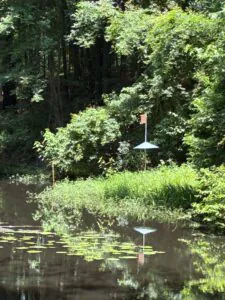
This year’s workday brought together a dedicated group of volunteers ready to roll up their sleeves and make a difference. After gathering at the refuge headquarters in the morning, participants split into teams and headed out to tackle a variety of stewardship projects across the refuge.


Supporting Habitat and Wildlife

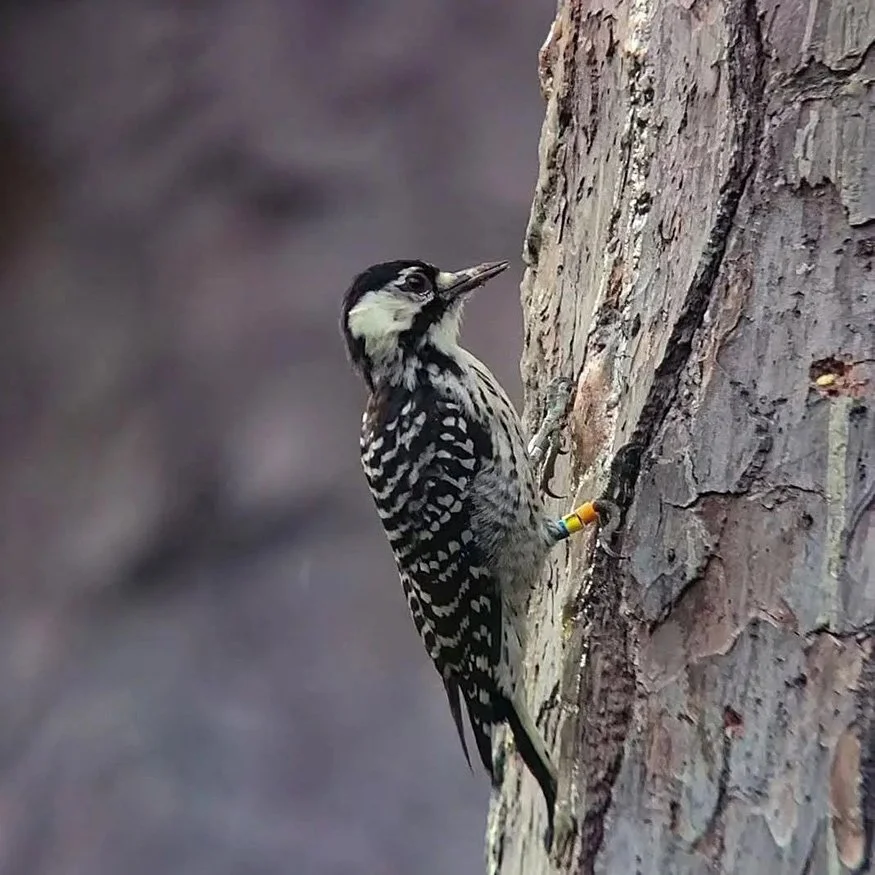
One of the tasks of the day involved raking around Red‑cockaded Woodpecker cavity trees. This endangered species depends on mature longleaf pine forests for nesting, and maintaining the areas around their cavity trees helps protect these sites during prescribed burns and keeps habitat conditions suitable for the birds.

Another group of volunteers helped check and maintain duck nest boxes throughout the refuge. These boxes provide important nesting opportunities for species such as the Wood Duck, which rely on cavities near wetlands to raise their young.

Volunteers also assisted with installing and maintaining signage around the refuge. These signs help guide visitors, protect sensitive areas, and share important information about the wildlife and habitats found within the refuge.


A Landscape Worth Protecting

The Carolina Sandhills National Wildlife Refuge protects a unique sandhills ecosystem dominated by longleaf pine and wiregrass habitat. The refuge supports an incredible diversity of wildlife, including more than 190 species of birds and dozens of mammals, reptiles, and amphibians.

By assisting with habitat maintenance and conservation projects, volunteers play an important role in helping refuge staff protect these species and the landscapes they depend on.

Thank You to Our Volunteers

Events like Working for Wildlife Day would not be possible without the dedication of volunteers who give their time and energy to conservation. Their efforts help ensure that South Carolina’s wildlife and wild places remain healthy for generations to come.

We are grateful to everyone who joined us this year and helped make the day a success. Whether raking around woodpecker trees, checking duck boxes, or installing signage, each project contributed to the continued stewardship of this special place.

We hope to see everyone again next year for another day of working together for wildlife!


Prothonotary Warbler designated State Migratory Bird

SCWF and our partners in the SC Conservation Coalition are celebrating the passage of SC Senate Bill 383—the “Prothonotary Warbler Recognition Act”—which designates the brilliant yellow, swamp-dwelling songbird as South Carolina’s official migratory bird. The legislation passed the South Carolina House and Senate unanimously, and is now headed to Gov. Henry McMaster to be signed into law.

The Prothonotary Warbler, a bright yellow bird with a striking dark eye, is often one of the rock stars of our birding outings.  As part of their natural behavior, they are often seen foraging and nesting right at eye level, and often in close proximity to trails, giving birdwatchers a close view of this beautifully colored bird.  

During the spring and summer months, the Prothonotary Warbler calls South Carolina home to feast upon insects, spiders, and snails located in and around our forested wetlands, before returning to their wintering grounds as far south as Colombia, South America. They depend on healthy swamps and waterways, illustrating the need to protect our state’s wetlands. 

Uncommon among warblers, this bird is a cavity nester, which presents us a great opportunity to help save this bird whose population has declined approximately 42% over the last 50 years. SCWF staff, volunteers, and partners have installed over 600 boxes on state, federal, and private land all throughout South Carolina over the past 4 years for this species.  

As South Carolina’s human population continues to grow, all wildlife face continued threats from habitat destruction due to pollution, deforestation, and invasive species.  This designation will help bring awareness to this amazingly bright and beautiful bird, and how we can all make a difference for wildlife by protecting and enhancing its habitat.

SC third graders studying the SC State Symbols will now get the opportunity to learn more about the iconic prothonotary warbler, its long-distance migration, and its habitat needs.

The song of the Prothonotary warbler is said to sound like: “sweet, sweet, sweet!”  This designation will help us ensure that the “sweet” song of the Prothonotary Warbler is a sound our swamps and forested wetlands will have for generations to come.

Best places to see Prothonotary Warblers:


Banner image by David Ramage.

Forks, Knives, & Spoonbills art contest winner

We are excited to announce that Liz List is the winner of the 2026 Forks, Knives, & Spoonbills art contest for her piece, Gathered Around the Plate! This statewide competition, hosted by the South Carolina Wildlife Federation, invited local artists to design unique artwork featuring the six imperiled wildlife species highlighted in this year’s conservation dinner series. This year’s featured species include the Eastern whip-poor-will, golden-winged warbler, green heron, prairie warbler, yellow-billed cuckoo, and of course, the roseate spoonbill, whose conservation story inspired this dinner series.

Thank you to everyone who submitted their creative work and helped make this contest our largest so far! We sincerely appreciate every artist who participated. The imaginative ways you brought this year’s featured species to life are truly inspiring.

Winning Entry

About the winning image:

Because I work from photos, half the challenge is to be in the right place at the right time to capture an image that I can transform into a painting. The other half of the challenge is also the fun part. Painting often takes me right back to those precious encounters with birds and nature. My love of birds began when I was in the 8th grade and first experienced bird watching with my science teacher. I am especially fond of Canada Geese because they remind me of childhood trips to Horicon Marsh in Wisconsin to view the geese in migration.

When it comes to painting, I am fascinated by reflections and inspired by textures. In my “real life” job, I teach art at our state school for the blind, and much of my work involves using tactile materials that enable my students to experience art through their sense of touch. When I paint, I like to challenge myself to represent textures such as water, feathers, wood, and rocks simply through brushstrokes and layers of color. The common ground between my career as a teacher and my ambitions as an artist is my love of learning. Each new painting offers me another opportunity to grow, and this contest provided a challenge to consider the bird images as part of a design apart from their natural habitat. In this case, I chose to represent them gathered around a plate.

Our top selections are featured below.


Banner image credit: Roseate Spoonbill by Gretchen Locy.

9-year-old tells SC lawmakers that prothonotary warbler should be state’s official migratory bird

Published by the Post and Courier – https://www.postandcourier.com/politics/prothonotary-warbler-sc-migratory-bird/article_6d26f31c-28ad-4724-ae9f-285943d8628f.html 

February 11, 2026

By Anna Wilder awilder@postandcourier.com

COLUMBIA — Jack Ragley has always been interested in birds. The 9-year-old’s favorite is the blue jay.

But on Feb. 10, Jack stood inside the S.C. Statehouse to talk about another bird he cares deeply about and argue that lawmakers should officially recognize it as South Carolina’s migratory bird.

After all, the beautiful, bright yellow prothonotary warbler that lives in swamps and wetlands travels “really far” during its annual migration, he said.

Also, South Carolina is “one of the places it needs the most” to live and thrive, he told the lawmakers.

“This bird chooses South Carolina every year, and I think South Carolina should choose this bird, too,” Jack said.

State lawmakers are considering adding the prothonotary warbler to South Carolina’s list of official symbols, which would make it the state’s first officially designated migratory bird.

The prothonotary warbler is a “strikingly beautiful, golden-yellow” songbird that migrates annually between South Carolina and its wintering grounds in Central and South America, according to the bill’s text.

South Carolina does not currently have an official migratory bird. The Carolina wren (Thryothorus ludovicianus) has been the state bird since 1948, when the designation was signed into law by then-Gov. Strom Thurmond.

Jack, a fourth grader from Columbia, wore his Scout uniform as he testified before the Agriculture, Natural Resources and Environmental Affairs House Subcommittee.

“I like birds because they’re beautiful to the eyes and to the ears,” Jack told the lawmakers. “They make being outside more fun and watching birds makes me feel relaxed.”

He is a Webelos, meaning “we will be loyal scouts,” in Pack 37 and has been an active member for five years. He said studying the local habitat at his school, Heathwood Hall Episcopal, has made him love nature “even more.”

“When you start noticing birds, you start noticing a lot more about what’s outside,” Jack said.

South Carolina provides critical breeding grounds and a stopover habitat during the bird’s annual life cycle, particularly in the state’s hardwood forests, swamps and wetlands.


Jay Keck, a naturalist with South Carolina Wildlife Federation, said the bird is easy to spot if you know where to look.

The bird has short legs and a short tail and is slightly larger than other warblers. Its song sounds like “sweet sweet sweet,” Keck said.

“This will help us ensure the sweet sound of the warbler is a sound our swamps, forests and wetlands will have for generations to come,” Keck said.

The prothonotary warbler has been experiencing a population decline, with numbers dropping by approximately 40 percent since the 1960s.

Sponsor of the bill, Sen. Tom Davis, R-Beaufort, wrote via text that designating it as the official state migratory bird draws attention to the role in conserving “interconnected ecosystems and promotes awareness and responsible land and water management practices.”

It’s also a “really cool-looking golden-yellow songbird,” Davis wrote.

Audubon, a nonprofit conservation organization that manages more than 30,000 acres of critical bird habitat statewide, helps maintain essential habitat for the birds by preserving tree cavities for nesting and ensuring an abundant supply of insects for food. This is all critical as the species travels thousands of miles.

Jack learned about the bill from his parents, Jay and Connelly-Anne Ragley, who both work in government. He also attended an Audubon-hosted event where he spoke with staff and learned more about the bird.

Connelly-Anne Ragley emailed just about everyone — Jack’s teacher, former teacher, head of school, science director and more — so the entire fourth grade knew he was headed to the Statehouse to talk about why the bird was important.

Lawmakers voted to advance the bill out of subcommittee, sending it to a full committee.

“I thought it was kind of heart-touching to me, because I kind of worked hard to do this,” Jack said of lawmakers’ response to his testimony.

He said designating the bird would help kids like him learn more about the state and “feel proud of it.”

“Designating a state migratory bird like the prothonotary warbler allows us to bring more awareness to our feathered friends, including what all South Carolinians can do to help birds,” Jen Tyrrell, community science and research manager at Audubon.

Jack hopes the bill will be signed by Gov. Henry McMaster this year.

After his speech, he celebrated with a lunch outing with his mom before heading back to his fourth-grade classroom for “peak,” an outdoor education program where students paddleboard on a pond and learn about the environment.

Lawmakers on the panel told Jack that Rep. Bill Hixon, R-North Augusta, the full committee’s chair, would write him a school excuse note.

When asked if he would return if the bill reached McMaster for signing, Jack smiled.

“I’ll try.”

Published by the Post and Courier – https://www.postandcourier.com/politics/prothonotary-warbler-sc-migratory-bird/article_6d26f31c-28ad-4724-ae9f-285943d8628f.html 

2025 South Carolina Songbird Art Contest

We are delighted to celebrate the talented students who participated in the 2025 South Carolina Songbird Art Contest, presented in partnership with Wildlife Forever. Congratulations to this year’s winners, and thank you to everyone who participated! This statewide contest invited K–12 students to explore South Carolina’s native songbirds through art, encouraging creativity while deepening students’ understanding of local wildlife and the habitats on which the birds depend.

By blending art with environmental education, the Songbird Art Contest helps students learn about bird identification, migration, and habitat conservation while fostering a sense of stewardship for South Carolina’s natural resources. These early connections to nature play a crucial role in building the next generation of conservationists and informed environmental leaders.

With 163 incredible submissions, selecting the winners was no easy task. Each piece reflected a unique perspective and a shared appreciation for South Carolina’s songbirds. We are grateful to every student, teacher, and family member who helped make this contest possible and  joined us in advancing our mission to conserve and restore South Carolina’s wildlife and their habitats through education and advocacy.

Selected artwork will be featured throughout the year on our website and social media channels. Be sure to follow us on Facebook and Instagram @SCWildlifeFederation to see these incredible works and help us celebrate the next generation of conservation-minded artists. 

Grade Winners: Kindergarten – Third


Grade Winners: Fourth – Sixth

Grade Winners: Seventh – Ninth


Grade Winners: Tenth – Twelfth


We would also like to extend our sincere thanks to Dominion Energy for their generous support of the 2025 South Carolina Songbird Art Contest. Their commitment to education and environmental stewardship made this program possible, and helped connect students across South Carolina with wildlife conservation in a meaningful and creative way.


COPYRIGHT NOTICE:

The photographs contained on this, and any other site under the scwf.org domain, are the property of SCWF and are protected by United States and International copyright laws. All copyright, trademark, and other intellectual property rights in this site, are the property of the South Carolina Wildlife Federation.

All Photographs on scwf.org are copyrighted.
No permission, either express or implied, is granted for the electronic transmission, storage, retrieval, or printing of the photographs contained on scwf.org, other than that which is related to the normal “caching” practices of web browsers and activities such as downloading solely for your personal enjoyment. No parties/individuals visiting or viewing images from scwf.org, may otherwise copy, modify, publish, transmit, or distribute the contents of the photographs found herein. Express written permission must be granted in order to use these photographs for any purpose that is not outlined above.

Your use of scwf.org or viewing of this statement indicates your acceptance of these conditions.

Governor McMaster prioritizes land conservation

Thank you to Governor Henry McMaster for his dedication to preserving land in South Carolina!

Below is section of the transcript of his State of the State Address given January 28, 2026 which relates to land conservation. Read the full transcript here.


“South Carolina’s future prosperity requires us to enhance our efforts to respect and protect our land, our history, our culture and our natural environment.  It is not a coincidence that previous years of economic growth have followed our efforts to conserve, preserve, and display our unique gifts of nature’s abundance.

These are not opposing objectives which must be balanced as in a competition, one against the other. Instead, they are complementary, intertwined, and inseparable, each dependent on the other. Each can be accomplished to the fullest if we plan now and be bold.

In recent years, we have provided funds, time, and attention for identifying significant properties for preservation and conservation and for flood mitigation.

We created the Floodwater Commission. Its purposes included measuring our strengths and weaknesses concerning flooding, erosion and the conditions of our rivers, coast and barrier islands; and to make recommendations for the State to act upon.  From the commission’s recommendations came the creation of a new cabinet agency, the Office of Resilience, and a Chief Resilience Officer for the state.

Their mission: To develop plans and studies to identify and understand flooding issues, to deploy mitigation projects, to provide grants for flood reduction, to conduct the voluntary buyout of homes in flood-prone areas, to protect and preserve endangered lands and wetlands, and to take on special environmental protection projects, as was done with the remarkable cleanup of over a million and a half gallons of hazardous toxins, tainted ballast and old diesel fuel inside the USS Yorktown in Charleston Harbor.

After the state’s official Water Plan languished without update or consensus for over twenty years, we created the WaterSC working group, led by the new cabinet agency, the Department of Environmental Services.  We tasked this cadre of stakeholders to quickly complete the plan and provide an inventory of how much surface and ground water we have, and how much we will need in the future.  Like the old saying goes, “if you can’t measure it, you can’t manage it.”  I am pleased to report that the new State Water Plan was completed and published just last month.

Today we have a veritable army of people, farmers, public and private organizations, as well as local governments, dedicated to these endeavors, including the Conservation Land Bank, the Department of Natural Resources, the Office of Resilience, the Forestry Commission, the Department of Parks, Recreation and Tourism, the Nature Conservancy, the Open Space Institute, the Darla Moore Foundation, the Audubon Society and Francis Marion University.

In less than 10 years, we have preserved almost 400,000 acres of historically or environmentally significant lands, including the State’s largest conservation easement in history, which last year permanently protected 62,000 acres in the Pee Dee.

We have protected our most important historic and cultural sites, including Snow’s Island, where General Francis Marion’s Revolutionary War camp is somewhere located, and the colonial era Blessing Plantation, on the Cooper River. These properties are protected and in the future will become publicly owned, welcoming visitors to enjoy and learn about key aspects of South Carolina’s landscape and history.

Also included in this newly conserved acreage are African American historic sites, working farms and forests, and new areas for outdoor recreation, from the mountains to the sea.

Over the decade we have created new state parks, such as Ramsey Grove on the Black River and expanded existing parks in the midlands and the upstate. Among these is the Glendale Nature Park, in Spartanburg, one of the largest urban parks in the Upstate.

A significant portion of this land was protected with funding from the South Carolina Conservation Land Bank – just over $250 million. The investment from the Bank has brought in other funding from federal, local and private sources, exhibiting an unprecedented level of efficiency and effectiveness that has been the hallmark of South Carolina land conservation for many years.

Importantly, local governments have stepped up on land conservation, collectively investing many millions of dollars to conserve land and create new parks.  But, of the forty-six counties in the state, only a few have conservation funding programs. I urge all of our counties to join this effort.

Protecting our land is a gift for all our people.  With insight and continued hard work, we can achieve the goal helping private and public property owners with preserving half their lands for future generations, and making our South Carolina recognizable as the closest thing we have to heaven on earth.


Banner photo by Melanie Gallant.

SCWF Volunteer Day at Camp Discovery

Last Saturday, 25 dedicated volunteers gathered at Camp Discovery  in Blythewood, South Carolina, to help monitor nest boxes and support local bird conservation efforts. Their hard work allowed us to inspect 37 nest boxes and document 17 nests, resulting in a 43% nesting success rate.

There were nine Eastern bluebird nests observed and seven Carolina chickadee nests, two cavity-nesting species that benefit from well-maintained nest boxes. The nest box checks also helped us assess maintenance needs across the site. We identified boxes that will need to be replaced and also some that require repairs to ensure they remain safe and usable for future nesting seasons. This information allows us to plan improvements that directly benefit wildlife.
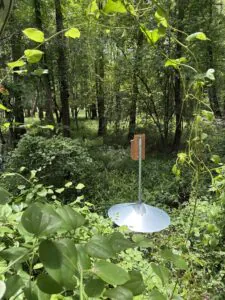
 

In addition to collecting data, volunteers cleaned out old nesting material from boxes that were no longer in use. Regularly cleaning nest boxes is essential for bird health, as it helps reduce parasites and disease, prevents nest material from building up too high, and makes boxes more attractive to birds returning to nest in future seasons.


This important work wouldn’t be possible without our volunteers. Their time, care, and enthusiasm make a real difference for birds at Camp Discovery, and we’re grateful for their commitment to conservation.