Keep South Carolina Wild
July 20, 2026
Lacey McCormick & Erica Claycomb
National Wildlife Federation
https://www.nwf.org/Home/Latest-News/Press-Releases/2026/7-20-2026-Charleston-Drinking-Water
CHARLESTON, S.C. — Researchers at Yale and the University of Massachusetts have found that 50 percent of the water in the Edisto River starts out in streams that may no longer be protected by the Clean Water Act. These types of streams also provide 40 percent of the water in Bushy Park Reservoir.
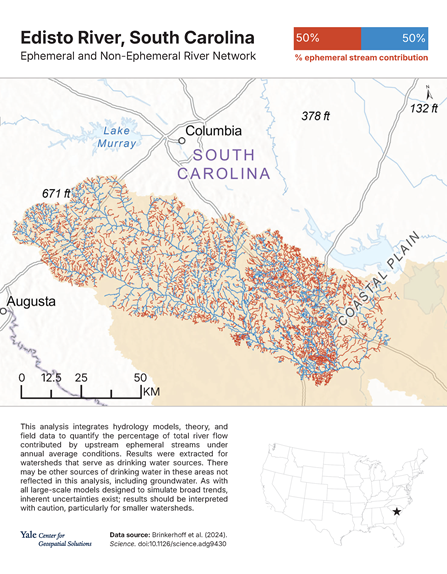
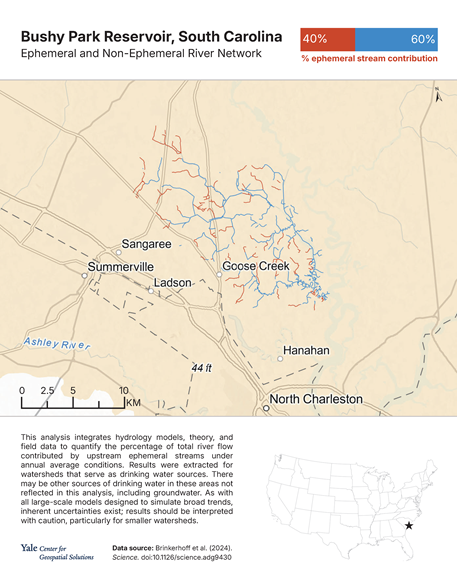
New Research: Maps of streams at risk in the Edisto River and Bushy Park Reservoir watersheds
The Supreme Court ruled in 2023 that streams can only be protected under the federal Clean Water Act if they are “relatively permanent,” effectively excluding ephemeral streams that flow after rainfall or snowmelt.
The decision also greatly restricted which freshwater wetlands can be protected. An Environmental Protection Agency analysis suggests that roughly 74 percent, or 2.3 million acres, of South Carolina’s freshwater wetlands may no longer be protected.
“Clean drinking water starts at the source,” said Sara Green, executive director of the South Carolina Wildlife Federation. “For decades, the Clean Water Act helped protect the streams that provide our drinking water. Now we need to look at what we can do on the state and local level to keep these streams clean and healthy.”
The new maps of Charleston-area streams were built using models originally developed for a nationwide study of ephemeral streams published in the journal Science.
“Our research shows that small streams exert a meaningful influence on downstream, larger rivers, including systems that supply drinking water,” said Craig Brinkerhoff, a river scientist and engineer at Yale. “All of these waters are connected and if enough of these streams were polluted or damaged, it could potentially impact Charleston’s drinking water supplies over the long run.”
EPA is currently working on a formal rule outlining which types of streams and wetlands are protected by the Clean Water Act.
“Healthy streams and wetlands aren’t just pretty, they filter and remediate common pollutants like bacteria and agricultural runoff. Without Clean Water Act protections, a critical piece of our water treatment infrastructure is at risk,” said Green.
South Carolina’s drinking water infrastructure was recently rated a D+ by the American Society of Civil Engineers, which estimates the state already has $6 billion in drinking water infrastructure needs.
EPA documents acknowledge that loss of protections for these streams could increase the cost to treat raw water to drinking water standards.
“It’s a double-whammy that we are losing these longstanding federal protections at the same time the President’s budget proposes deep cuts to water treatment funding,” said Jessie Ritter, associate vice president for water at the National Wildlife Federation. “EPA should be transparent about how leaving these streams unprotected will affect Americans’ drinking water.”
Additional Resources:
2025-06-15 Posted by Post & Courier The Trump administration is seeking to rescind the definition of "harm" as it's currently applied under the Endangered Species Act. Conservation groups worry the...

Thank YOU to every single person who participated in Wild Summer Nights Online auction. You were vital to making this year's auction our best yet! This year’s auction was record-breaking,...
Fall is a great time to slow down, step outside, and take a closer look at the wildlife around us. In September, SCWF hosted two hands-on educational programs that invited...