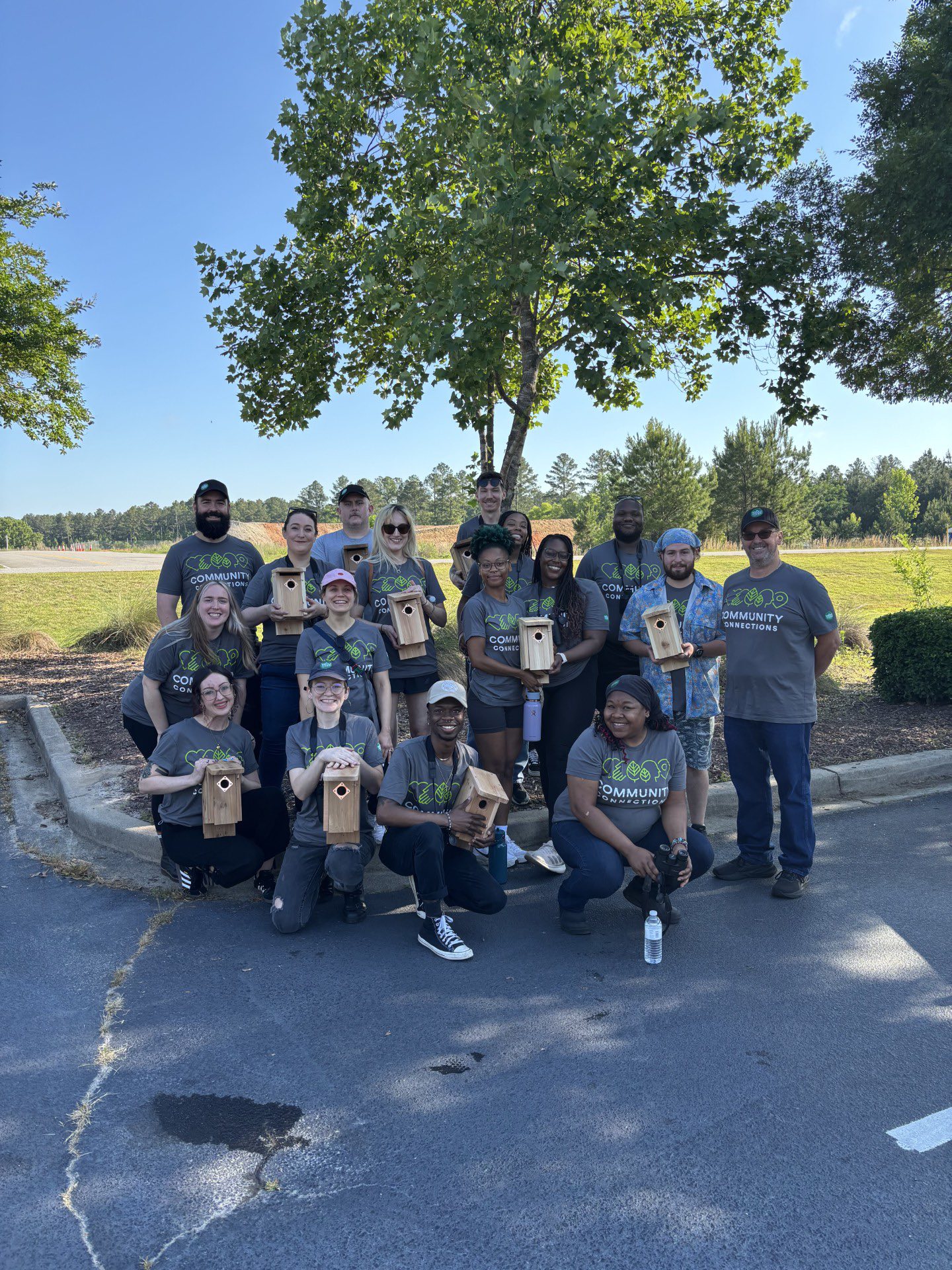
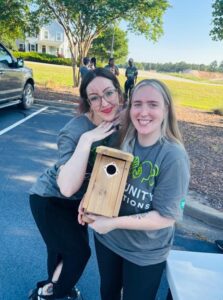
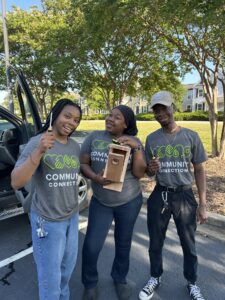
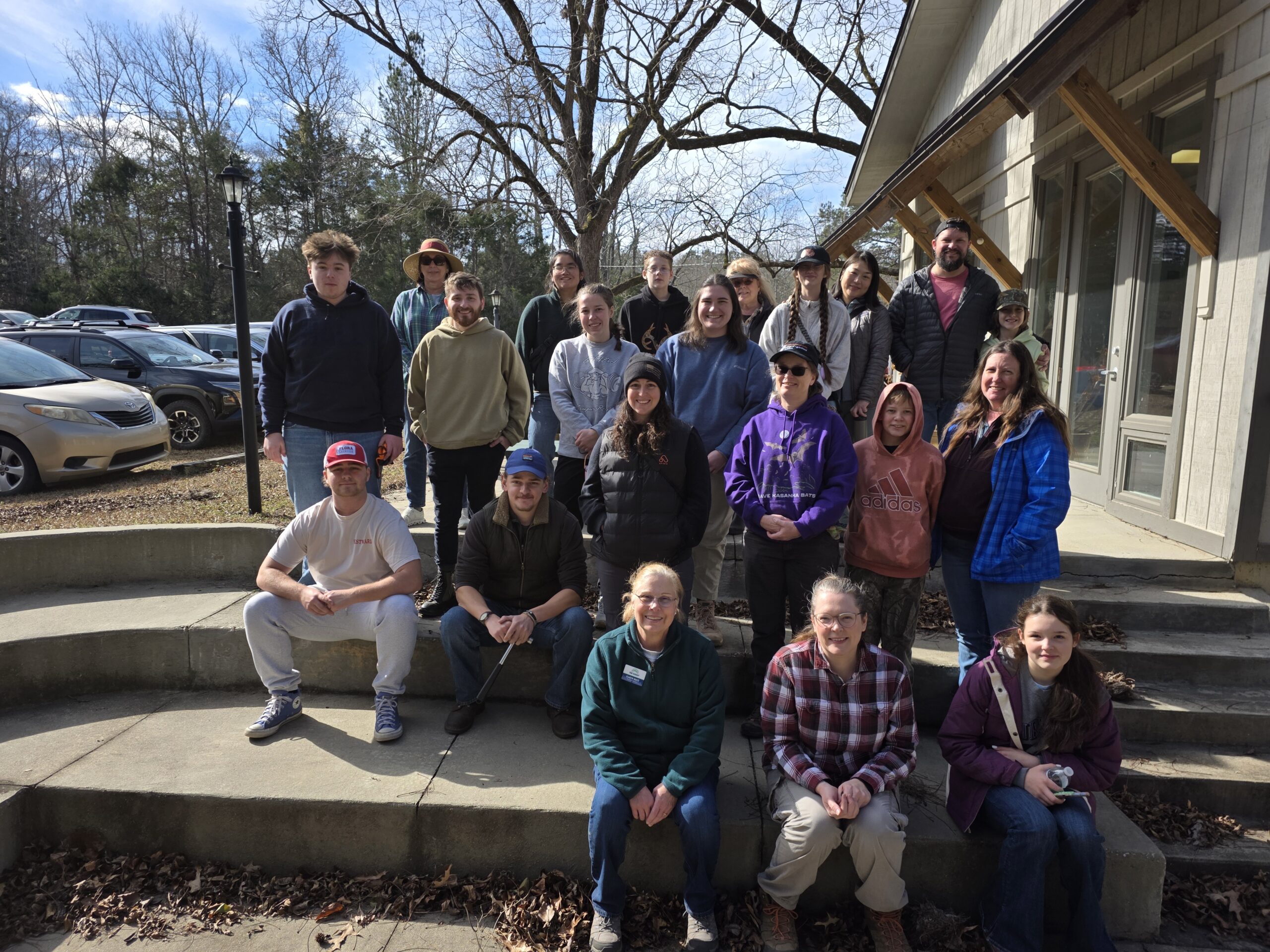
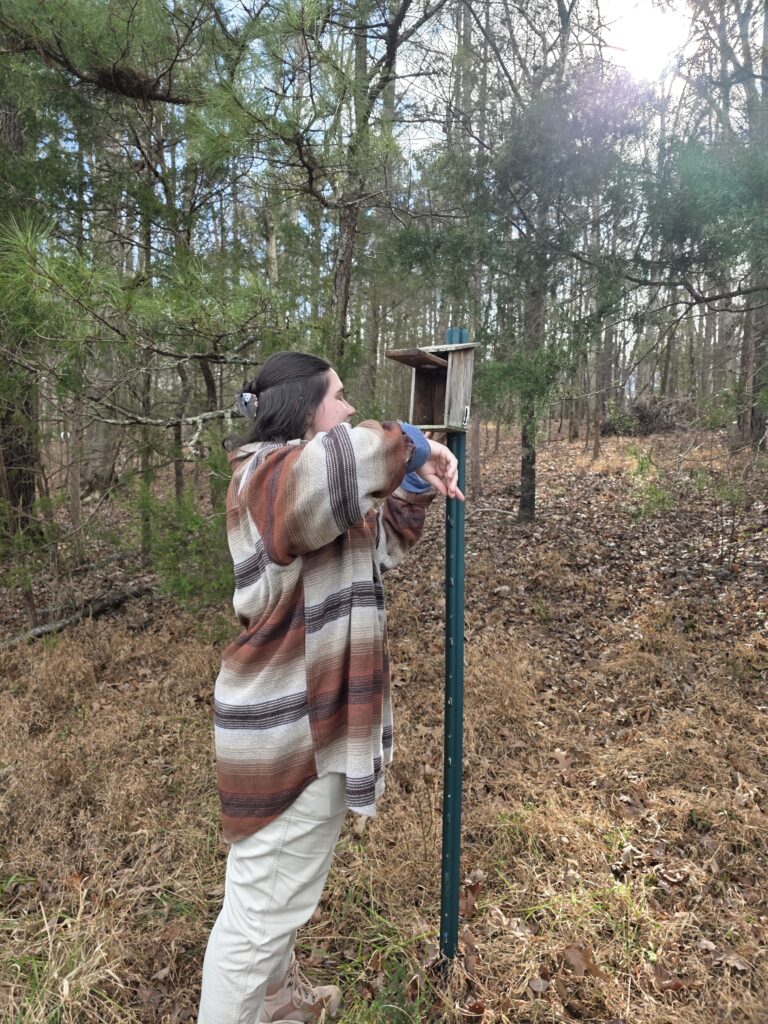
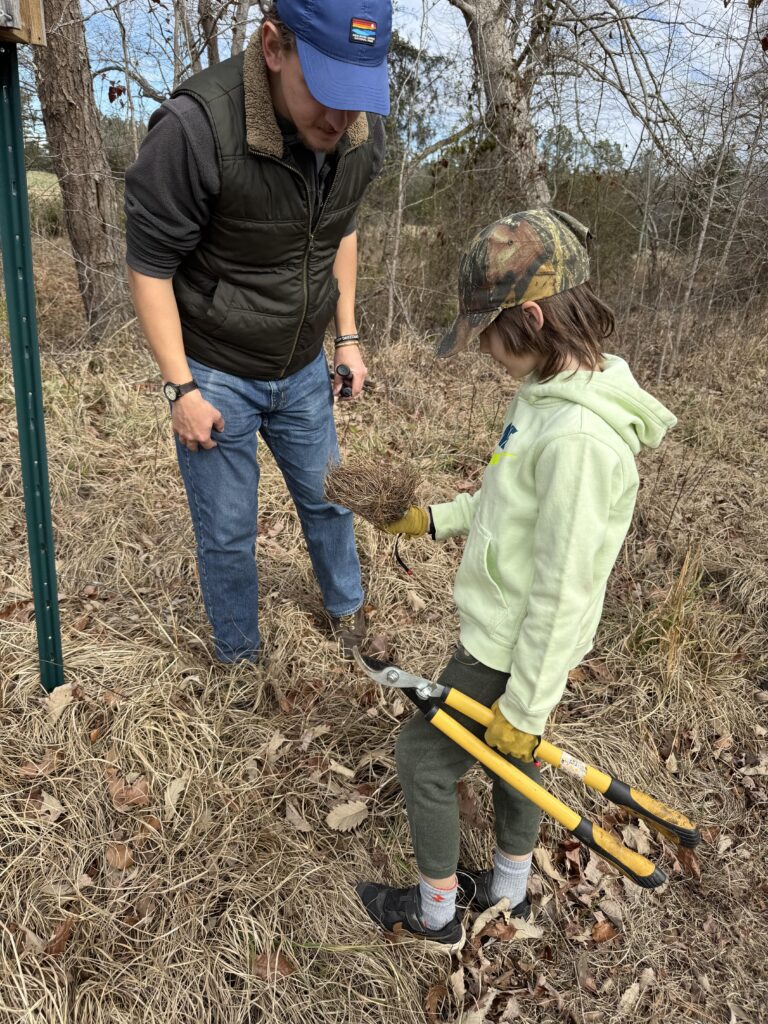
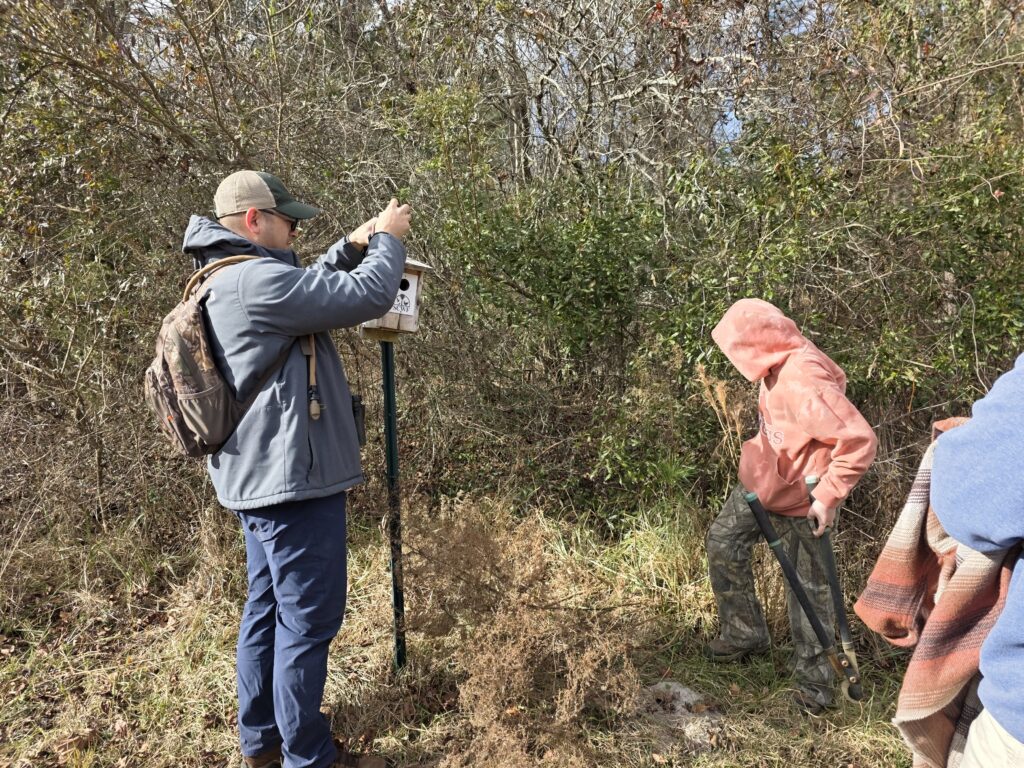
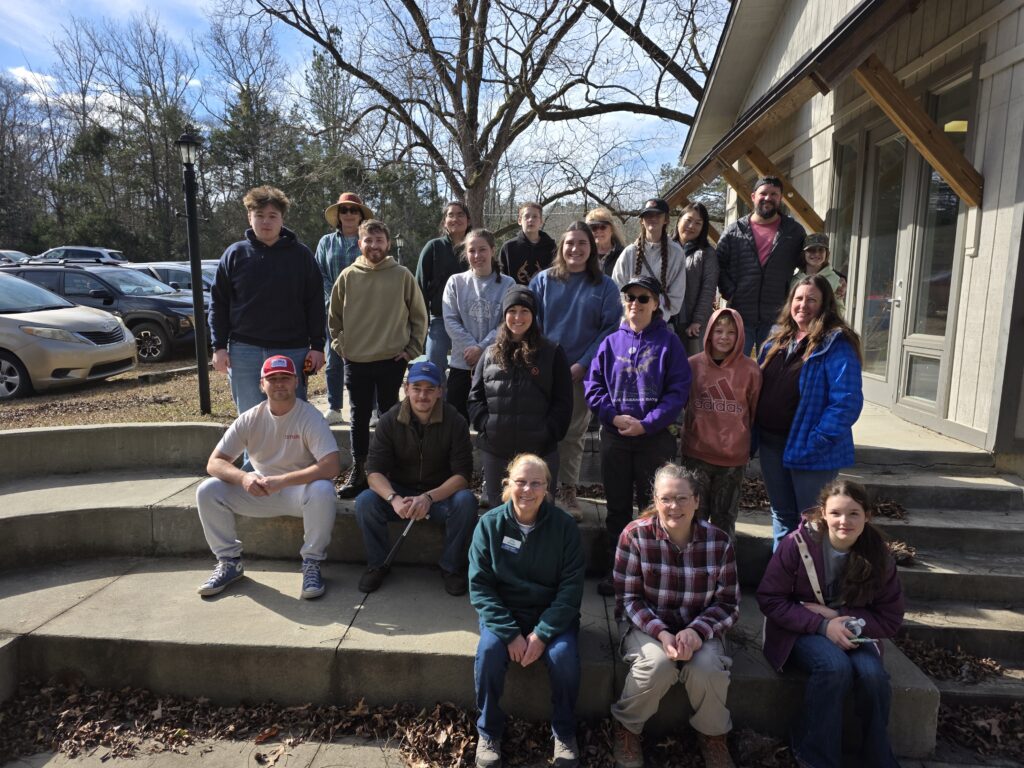
We had a great time earlier this month with a group of nature-loving employees from Whole Foods! Seventeen Whole Foods employees from their Columbia, SC location built ten eastern bluebird boxes which will be installed at schools, churches, or corporate sites around the state.
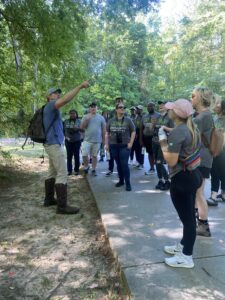
The group also went on a nature walk with SCWF’s Industry Habitat Manager, Jay Keck, who taught them about the local ecosystem as they listened to wood thrush and prothonotary warblers in the background.
Whole Foods purchased the materials from the South Carolina Bluebird Society, who makes pre-cut versions of the boxes for those interested in having an event of their own. (Lean more at: https://southcarolinabluebirds.org/sales/)
Thank you to the Whole Foods employees who took time out of their busy schedules to learn about conservation and wildlife!
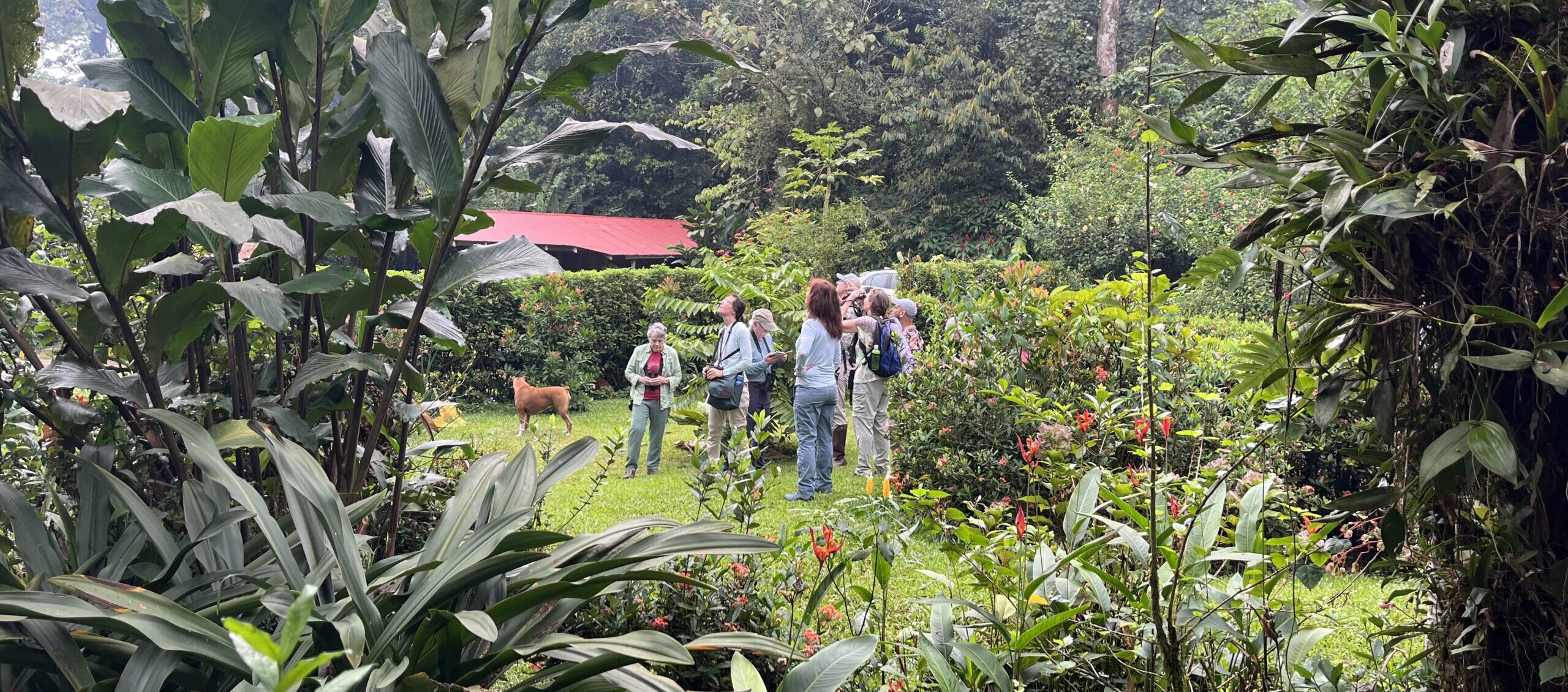
Earlier this month, SCWF took an amazing group of birders on a fantastic trip to Costa Rica! I got to tag along and help with logistics, and Jay Keck, our Industry Habitat Manager, speaks Spanish in addition to being a bird expert – so he was a great bird guide! These annual SCWF trips to Costa Rica help to tie together conservation efforts here in South Carolina with those in Costa Rica where several neotropical migrants spend their winters and/or migrate through Central America. We were inspired by the intentional emphasis that Costa Rica places on ecotourism, carefully managing wildlife preserves and training guides to take tourists to see the beautiful landscapes and incredible biodiversity while not jeopardizing the pristine areas.
Our group was excited to explore the northern, mountainous part of Costa Rica together, and we saw amazing birds and other wildlife. They had a variety of levels of birding experience, some chose to focus more on photography or hiking, and some checked “lifers” off their extensive bird lists.
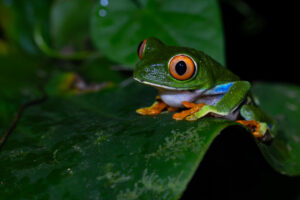
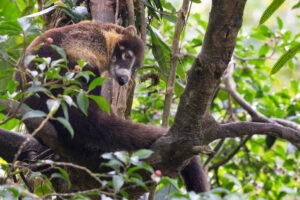
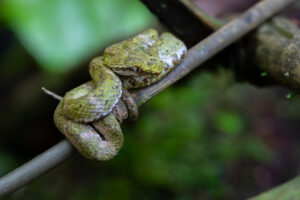
On this trip, we ended up with 162 species of birds (see entire list below), including 13 species of hummingbirds and 4 species of kingfishers! We also saw a few tapirs, howler monkeys, caimans, coatis, red-eyed treefrogs, eyelash vipers and even two fer-de-lances!
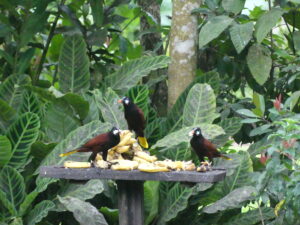
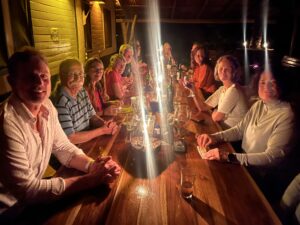
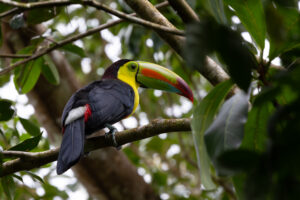
The wonderful nature-based La Carolina Lodge was our home base, and we took day trips to birding hot spots in the Guanacaste Region. The Lodge was built from wood on the property, and our meals were prepared deliciously with fruits, vegetables, eggs and meat from their farm and greenhouse. Every day, the staff would build fires for cooking and heating hot tubs, and they lit candles which lined the paths in the evenings, producing a beautiful and relaxing atmosphere to end the day. The sounds of the Montezuma oropendola were delightfully ever-present during the day, and toucans and honeycreepers came to the fruit feeders.
Montezuma oropendola at feeders by Jeff & Cindy Hekking
For our first day of birding, we stayed right there on the grounds of the Lodge – there were so many amazing habitat types and edges there! We hiked through meadows where horses and cows grazed, along the forested edges of the creek, and through the property’s numerous gardens. We met our amazing local guide, Jorge, from Bijagua Birdwatching, who was a wealth of knowledge about birds, as well as many plants, insects, etc., and the culture of the area. He brought along a spotting scope to allow us all to have a great view of the birds. This property was a great location for our group to begin to recognize many of the common birds at a leisurely pace.
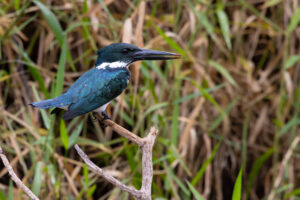
The Caño Negro Wildlife Refuge was our destination for day two, and we were treated to a boat ride through the Caño Negro Wetland – one of the most dynamic and biodiverse ecosystems in Costa Rica. Traveling to this Refuge allowed us to see numerous water birds that we would not otherwise have seen on this trip – bare-throated tiger heron, boat-billed heron, black-necked stilts, jabiru, and four species of kingfishers. This is where we saw numerous caimans and iguanas, in addition to a couple green basilisks and white-faced capuchin monkeys.
One of four species of kingfishers we saw – photo by Tracy Nunnery
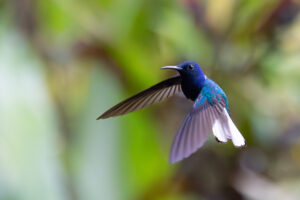
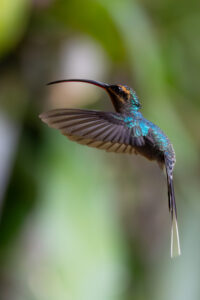
Day three took us to the Cataratas Bijagua Lodge which is set on the lush slopes of the Miravalles Volcano and the banks of the Bijagua River in the Guanacaste Province. The parking lot was surrounded by a garden which attracted a great variety of hummingbirds and the lodge had hummingbird feeders which gave us great looks at them up close. Highlights there were the violet saberwing and the black-crested coquette. We saw a white hawk perched on a low tree in the gardens for us to easily see and marvel at. A hike to see the Bijagua River waterfall tired us all out, and we had time to rest in the afternoon back at La Carolina Lodge.
White-necked jacobin, photo by Tracy Nunnery
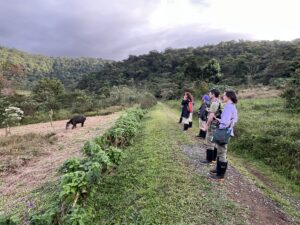
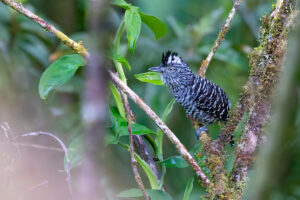
On day four, we drove a short distance to Tapir Valley, which is carefully managed for the native, nocturnal mammals for which the preserve was named. Upon arrival, we quickly hiked to catch a glimpse of 2 tapirs before they bedded down for the day. We then visited some areas in the valley where we saw several different species of hummingbirds (highlight – a snowcap!), and then our group was treated to delicious snacks at an overlook where we watched a great diversity of birds at the fruit feeders. We then continued the hike around the valley and saw many more new birds, another highlight was the barred antshrike, both male & female! On the way back to the Lodge, we stopped in the nearby town of Bijagua for souvenirs, snacks, and cash for tips. We were treated to a night hike back at Tapir Valley later that evening, and saw a tapir out in the open feeding, as well as several species of frogs, lizards and snakes!
Night hike at Tapir Valley, group members observing a tapir browsing, photo by Sara Green
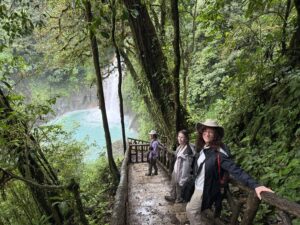
The fifth day was a planned “free” day and folks were free to make arrangements to visit nearby cocoa farms, go horseback riding or zip lining, rent a car and travel to another area, etc. Some folks went to visit Rio Celeste, Costa Rica’s most famous turquoise waterfall. Others went to the cocoa farm, and some went back to Catarata Bijagua for more birding, where they spotted a sloth, too!
Group members visited Rio Celeste, photo by Jeff Hekking
Each of those days, we rose early to go birding, usually taking “breakfast” with us in the form of granola bars, fruit and nuts. We’d typically be back to the Lodge by early- to mid-afternoon to rest and cool off in the river before dinner. Most days included 5+ hours of birding, 2-4 miles of hiking (sometimes with considerable elevation change and uneven footing), and we ended up with light rain each day, even though it was the dry season. We carried lots of water and snacks, and found some incredible places to eat when we were away from the Lodge.
Candlelit dinner at La Carolina Lodge, photo by Sara Green
The Lodge does not have air-conditioning, but every room has a ceiling fan and at least one floor fan, and multiple screened windows to help with airflow. The creek that runs through the property is nice and cold and refreshing, and has easy access by stairs. Dips in the creek, plenty of showers, and all the fans and open windows allowed us to keep cool. The beds also have mosquito nets above them, and I figured they were there for a reason, so I used them every night. But, we did not have much of an issue at all with insects, either at the Lodge or on any of our excursions.
This trip is definitely geared toward birding – while we did stop to check out all mammals and reptiles, we did not spend much time on all of the amazing tropical plants along our hikes. Our guides Jorge and Jay were very focused on helping the group see as many different birds as possible.
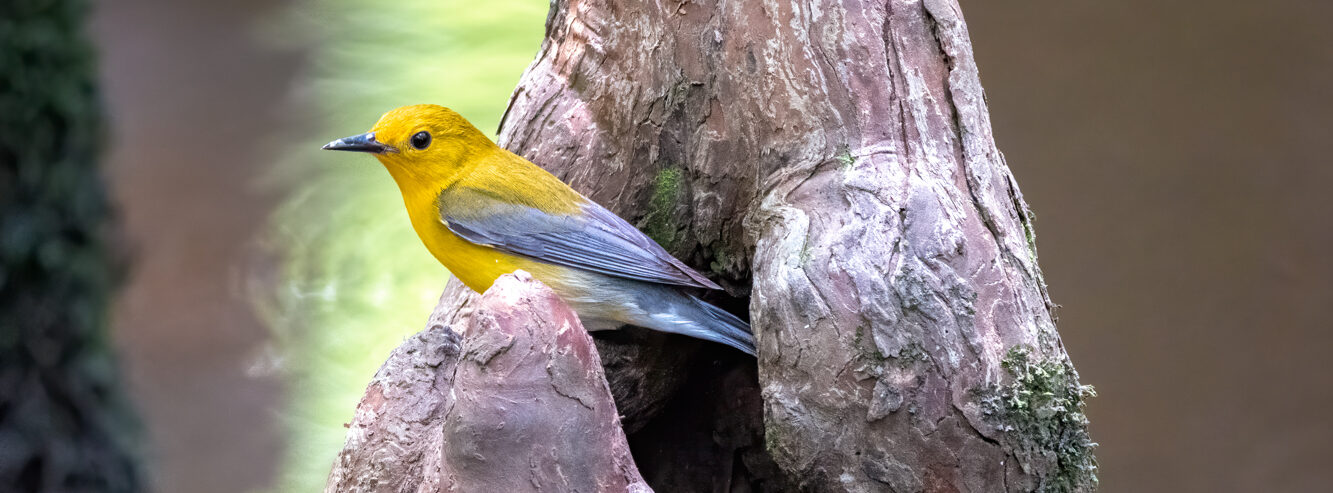
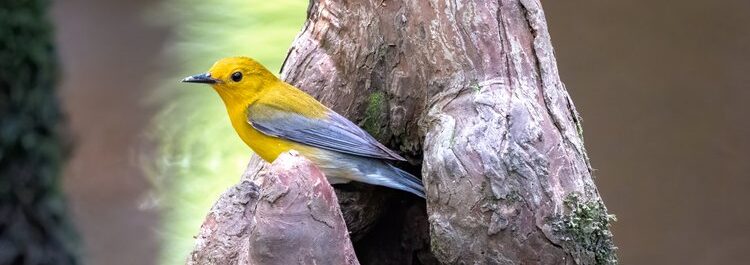
SCWF and our partners in the SC Conservation Coalition are celebrating the passage of SC Senate Bill 383—the “Prothonotary Warbler Recognition Act”—which designates the brilliant yellow, swamp-dwelling songbird as South Carolina’s official migratory bird. The legislation passed the South Carolina House and Senate unanimously, and is now headed to Gov. Henry McMaster to be signed into law.
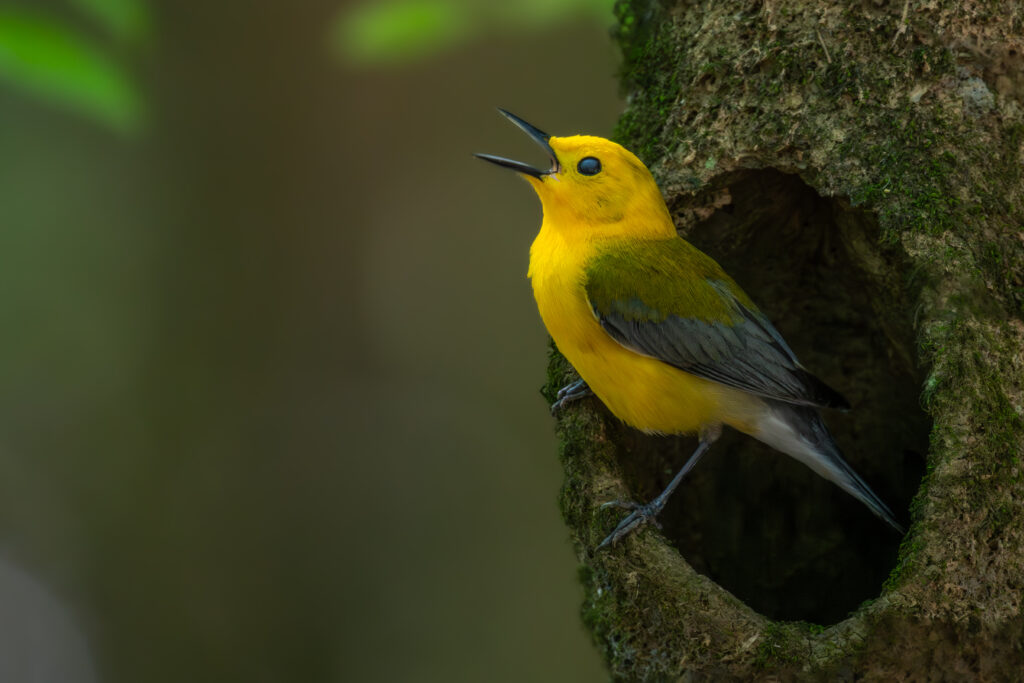
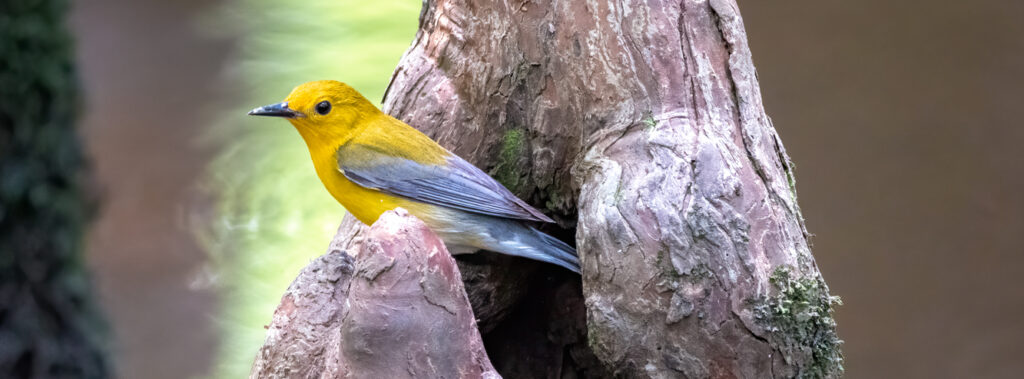
The Prothonotary Warbler, a bright yellow bird with a striking dark eye, is often one of the rock stars of our birding outings. As part of their natural behavior, they are often seen foraging and nesting right at eye level, and often in close proximity to trails, giving birdwatchers a close view of this beautifully colored bird.
During the spring and summer months, the Prothonotary Warbler calls South Carolina home to feast upon insects, spiders, and snails located in and around our forested wetlands, before returning to their wintering grounds as far south as Colombia, South America. They depend on healthy swamps and waterways, illustrating the need to protect our state’s wetlands.
Uncommon among warblers, this bird is a cavity nester, which presents us a great opportunity to help save this bird whose population has declined approximately 42% over the last 50 years. SCWF staff, volunteers, and partners have installed over 600 boxes on state, federal, and private land all throughout South Carolina over the past 4 years for this species.
As South Carolina’s human population continues to grow, all wildlife face continued threats from habitat destruction due to pollution, deforestation, and invasive species. This designation will help bring awareness to this amazingly bright and beautiful bird, and how we can all make a difference for wildlife by protecting and enhancing its habitat.
SC third graders studying the SC State Symbols will now get the opportunity to learn more about the iconic prothonotary warbler, its long-distance migration, and its habitat needs.
The song of the Prothonotary warbler is said to sound like: “sweet, sweet, sweet!” This designation will help us ensure that the “sweet” song of the Prothonotary Warbler is a sound our swamps and forested wetlands will have for generations to come.
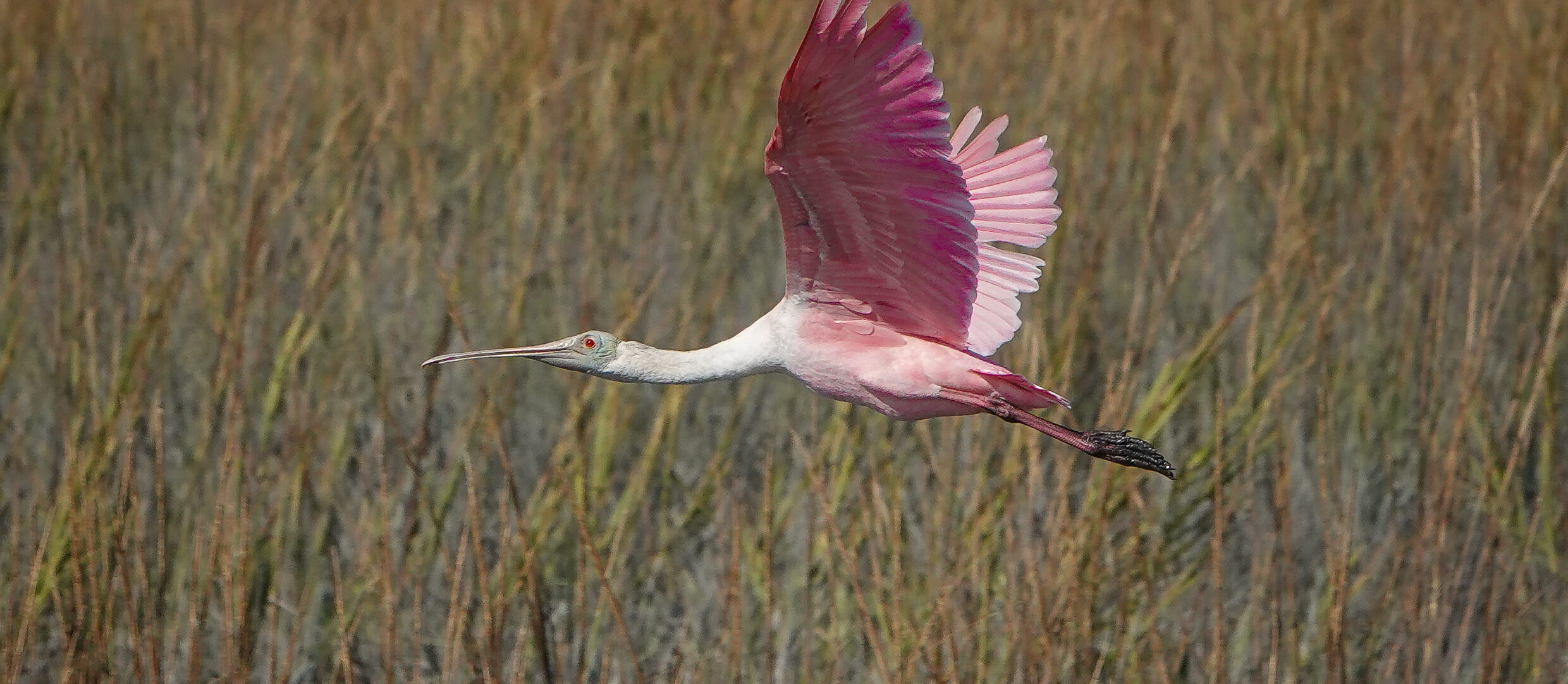
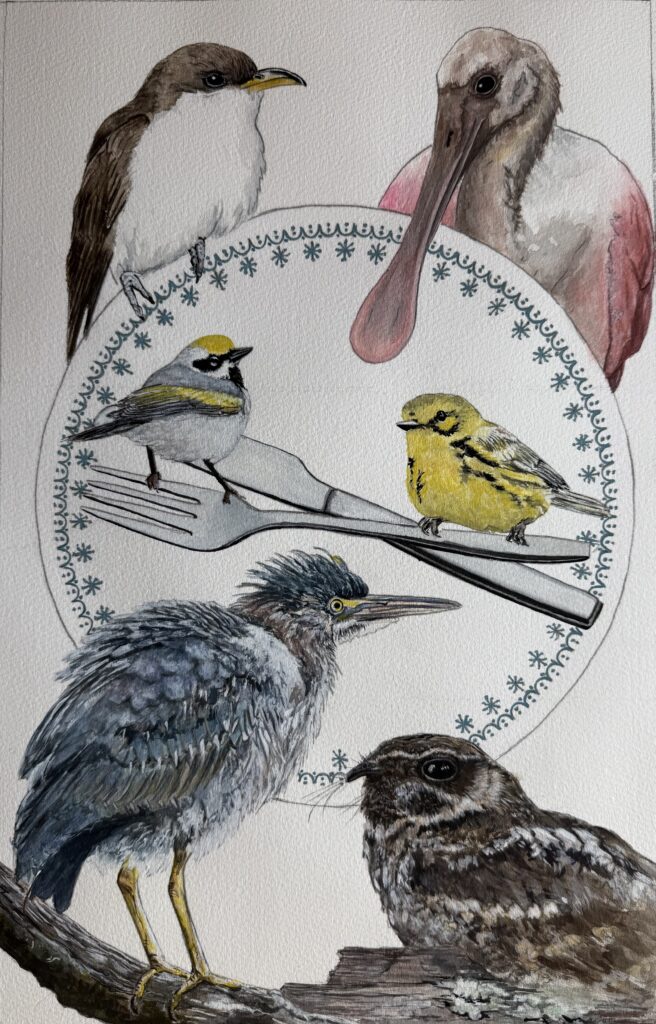
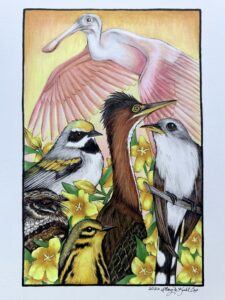
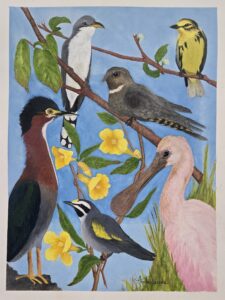
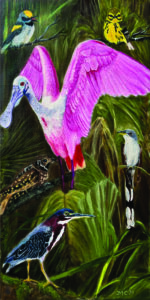
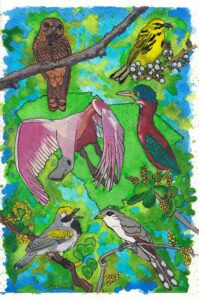
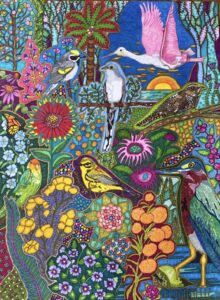
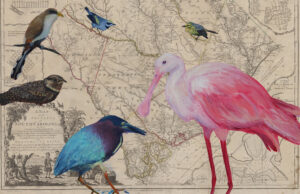
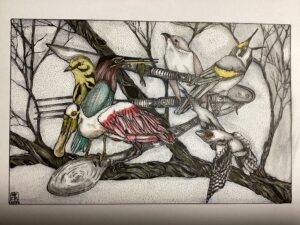
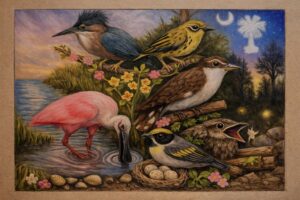
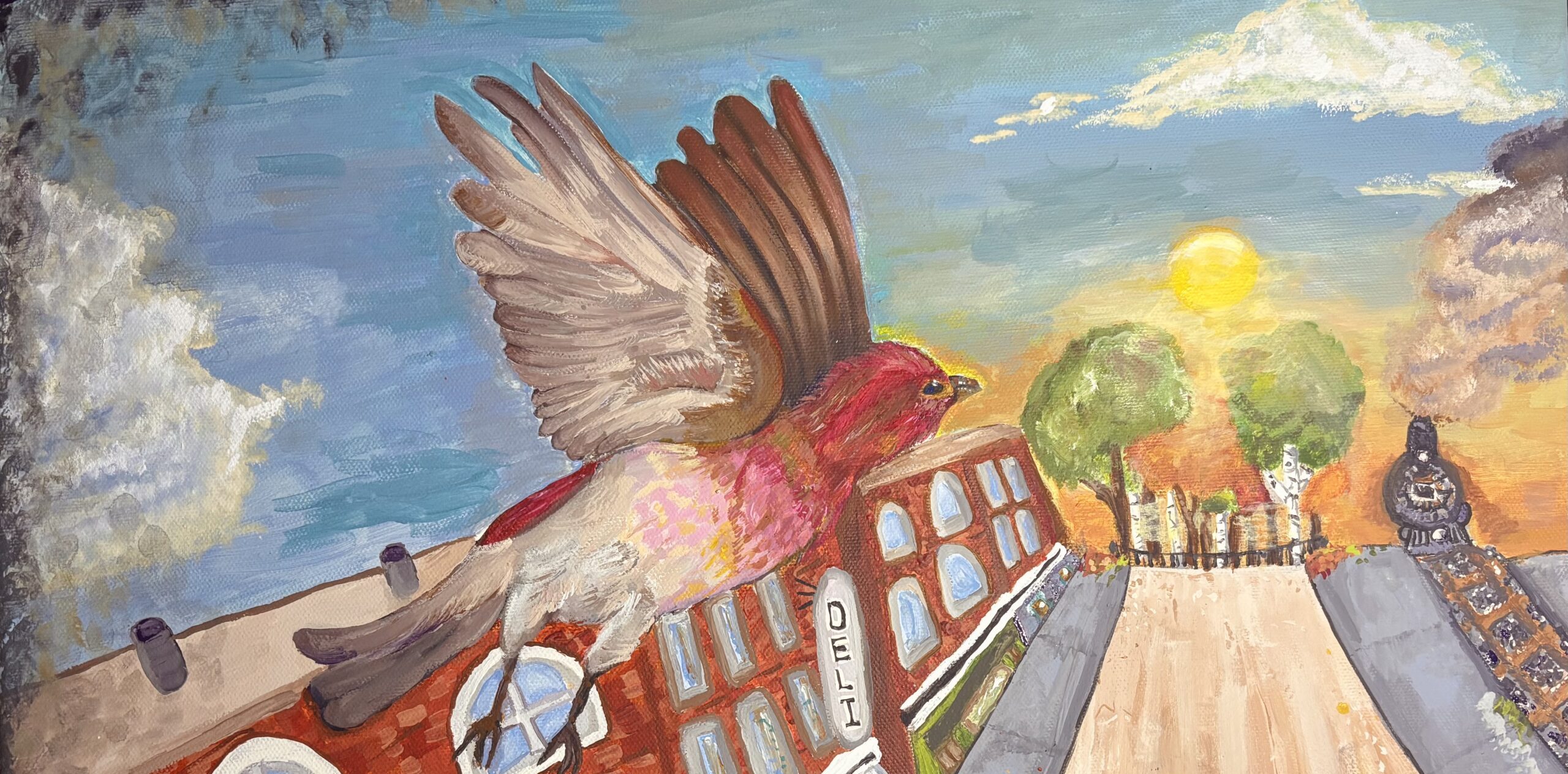
We are excited to announce that Liz List is the winner of the 2026 Forks, Knives, & Spoonbills art contest for her piece, Gathered Around the Plate! This statewide competition, hosted by the South Carolina Wildlife Federation, invited local artists to design unique artwork featuring the six imperiled wildlife species highlighted in this year’s conservation dinner series. This year’s featured species include the Eastern whip-poor-will, golden-winged warbler, green heron, prairie warbler, yellow-billed cuckoo, and of course, the roseate spoonbill, whose conservation story inspired this dinner series.
Thank you to everyone who submitted their creative work and helped make this contest our largest so far! We sincerely appreciate every artist who participated. The imaginative ways you brought this year’s featured species to life are truly inspiring.
Winning Entry
Gathered Around the Plate by Liz List.
About the winning image:
Because I work from photos, half the challenge is to be in the right place at the right time to capture an image that I can transform into a painting. The other half of the challenge is also the fun part. Painting often takes me right back to those precious encounters with birds and nature. My love of birds began when I was in the 8th grade and first experienced bird watching with my science teacher. I am especially fond of Canada Geese because they remind me of childhood trips to Horicon Marsh in Wisconsin to view the geese in migration.
When it comes to painting, I am fascinated by reflections and inspired by textures. In my “real life” job, I teach art at our state school for the blind, and much of my work involves using tactile materials that enable my students to experience art through their sense of touch. When I paint, I like to challenge myself to represent textures such as water, feathers, wood, and rocks simply through brushstrokes and layers of color. The common ground between my career as a teacher and my ambitions as an artist is my love of learning. Each new painting offers me another opportunity to grow, and this contest provided a challenge to consider the bird images as part of a design apart from their natural habitat. In this case, I chose to represent them gathered around a plate.
Our top selections are featured below.
Daydream View by Kaia Stone.
Spoonbill Sunset by Amy Kuhl Cox.
SCWF Featured Species by Amber Weeks.
Highly Revered by Mary Morris.
Still Here and Worth Protecting by Catrina Kennedy.
Forget Me Not by Karen Maston.
Plumage & Province by Melissa Junge.
Six Birds and Silver by Barbara Friedman.
Palmetto Nights by Ava McCarty.
Banner image credit: Roseate Spoonbill by Gretchen Locy.
COLUMBIA — Jack Ragley has always been interested in birds. The 9-year-old’s favorite is the blue jay.
But on Feb. 10, Jack stood inside the S.C. Statehouse to talk about another bird he cares deeply about and argue that lawmakers should officially recognize it as South Carolina’s migratory bird.
After all, the beautiful, bright yellow prothonotary warbler that lives in swamps and wetlands travels “really far” during its annual migration, he said.
Also, South Carolina is “one of the places it needs the most” to live and thrive, he told the lawmakers.
“This bird chooses South Carolina every year, and I think South Carolina should choose this bird, too,” Jack said.
State lawmakers are considering adding the prothonotary warbler to South Carolina’s list of official symbols, which would make it the state’s first officially designated migratory bird.
The prothonotary warbler is a “strikingly beautiful, golden-yellow” songbird that migrates annually between South Carolina and its wintering grounds in Central and South America, according to the bill’s text.
Image credit: Prothonotary warbler at Congaree National Park by John Martin.
South Carolina does not currently have an official migratory bird. The Carolina wren (Thryothorus ludovicianus) has been the state bird since 1948, when the designation was signed into law by then-Gov. Strom Thurmond.
Jack, a fourth grader from Columbia, wore his Scout uniform as he testified before the Agriculture, Natural Resources and Environmental Affairs House Subcommittee.
“I like birds because they’re beautiful to the eyes and to the ears,” Jack told the lawmakers. “They make being outside more fun and watching birds makes me feel relaxed.”
He is a Webelos, meaning “we will be loyal scouts,” in Pack 37 and has been an active member for five years. He said studying the local habitat at his school, Heathwood Hall Episcopal, has made him love nature “even more.”
“When you start noticing birds, you start noticing a lot more about what’s outside,” Jack said.
South Carolina provides critical breeding grounds and a stopover habitat during the bird’s annual life cycle, particularly in the state’s hardwood forests, swamps and wetlands.
Image credit: Prothonotary warbler and chicks by David Ramage.
Jay Keck, a naturalist with South Carolina Wildlife Federation, said the bird is easy to spot if you know where to look.
The bird has short legs and a short tail and is slightly larger than other warblers. Its song sounds like “sweet sweet sweet,” Keck said.
“This will help us ensure the sweet sound of the warbler is a sound our swamps, forests and wetlands will have for generations to come,” Keck said.
Sponsor of the bill, Sen. Tom Davis, R-Beaufort, wrote via text that designating it as the official state migratory bird draws attention to the role in conserving “interconnected ecosystems and promotes awareness and responsible land and water management practices.”
It’s also a “really cool-looking golden-yellow songbird,” Davis wrote.
Audubon, a nonprofit conservation organization that manages more than 30,000 acres of critical bird habitat statewide, helps maintain essential habitat for the birds by preserving tree cavities for nesting and ensuring an abundant supply of insects for food. This is all critical as the species travels thousands of miles.
Jack learned about the bill from his parents, Jay and Connelly-Anne Ragley, who both work in government. He also attended an Audubon-hosted event where he spoke with staff and learned more about the bird.
Connelly-Anne Ragley emailed just about everyone — Jack’s teacher, former teacher, head of school, science director and more — so the entire fourth grade knew he was headed to the Statehouse to talk about why the bird was important.
Lawmakers voted to advance the bill out of subcommittee, sending it to a full committee.
“I thought it was kind of heart-touching to me, because I kind of worked hard to do this,” Jack said of lawmakers’ response to his testimony.
He said designating the bird would help kids like him learn more about the state and “feel proud of it.”
“Designating a state migratory bird like the prothonotary warbler allows us to bring more awareness to our feathered friends, including what all South Carolinians can do to help birds,” Jen Tyrrell, community science and research manager at Audubon.
Jack hopes the bill will be signed by Gov. Henry McMaster this year.
After his speech, he celebrated with a lunch outing with his mom before heading back to his fourth-grade classroom for “peak,” an outdoor education program where students paddleboard on a pond and learn about the environment.
Lawmakers on the panel told Jack that Rep. Bill Hixon, R-North Augusta, the full committee’s chair, would write him a school excuse note.
When asked if he would return if the bill reached McMaster for signing, Jack smiled.
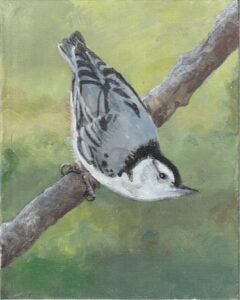
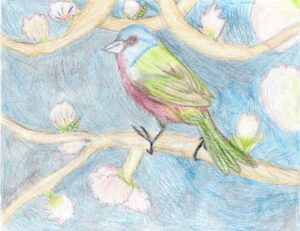
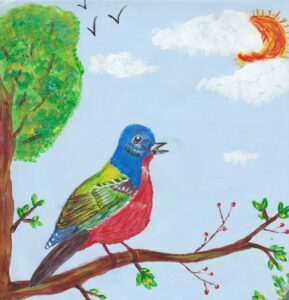
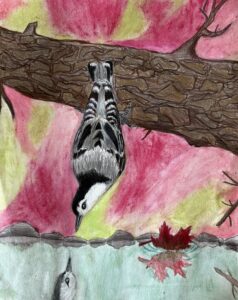
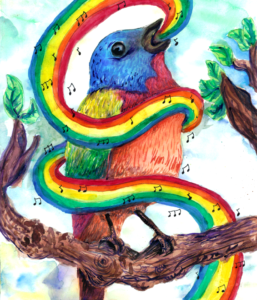
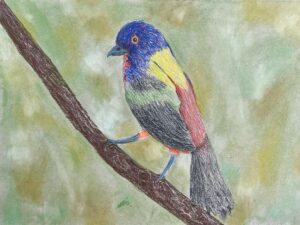
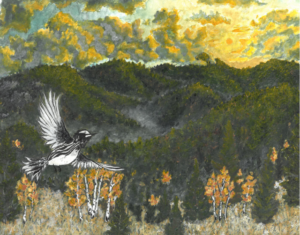
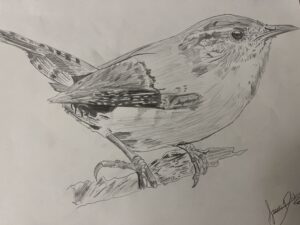
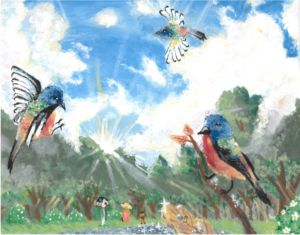
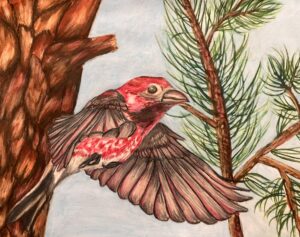
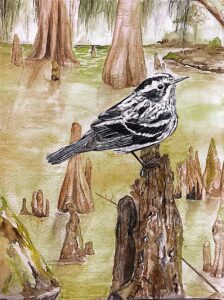
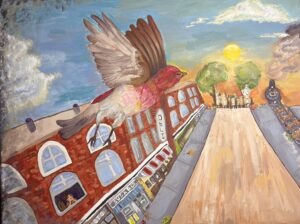
We are delighted to celebrate the talented students who participated in the 2025 South Carolina Songbird Art Contest, presented in partnership with Wildlife Forever. Congratulations to this year’s winners, and thank you to everyone who participated! This statewide contest invited K–12 students to explore South Carolina’s native songbirds through art, encouraging creativity while deepening students’ understanding of local wildlife and the habitats on which the birds depend.
By blending art with environmental education, the Songbird Art Contest helps students learn about bird identification, migration, and habitat conservation while fostering a sense of stewardship for South Carolina’s natural resources. These early connections to nature play a crucial role in building the next generation of conservationists and informed environmental leaders.
With 163 incredible submissions, selecting the winners was no easy task. Each piece reflected a unique perspective and a shared appreciation for South Carolina’s songbirds. We are grateful to every student, teacher, and family member who helped make this contest possible and joined us in advancing our mission to conserve and restore South Carolina’s wildlife and their habitats through education and advocacy.
Selected artwork will be featured throughout the year on our website and social media channels. Be sure to follow us on Facebookand Instagram@SCWildlifeFederation to see these incredible works and help us celebrate the next generation of conservation-minded artists.
Grade Winners: Kindergarten – Third
First place: Case Dorrell, grade 3.
Second place: Elana Cook, grade 1.
Third place: Mehar Tulsi, grade 3.
Grade Winners: Fourth – Sixth
First place: Amelie Rothrock, grade 6.
Second place: Caydence Vaughn, grade 6.
Third place: Adalyn Odom, grade 5.
Grade Winners: Seventh – Ninth
First place: Tori Shellenberger, grade 7.
Second place: Aarush Dubey, grade 9.
Third place: Tobias Shellenberger, grade 8.
Grade Winners: Tenth – Twelfth
First place (tie): Katherine Crowell, grade 11.
First place (tie): Sara Brunson, grade 11.
Second place: Michelle Kleich, grade 11.
Third place: Grayson Powell, grade 10.
We would also like to extend our sincere thanks to Dominion Energy for their generous support of the 2025 South Carolina Songbird Art Contest. Their commitment to education and environmental stewardship made this program possible, and helped connect students across South Carolina with wildlife conservation in a meaningful and creative way.
COPYRIGHT NOTICE: The photographs contained on this, and any other site under the scwf.org domain, are the property of SCWF and are protected by United States and International copyright laws. All copyright, trademark, and other intellectual property rights in this site, are the property of the South Carolina Wildlife Federation.
All Photographs on scwf.org are copyrighted. No permission, either express or implied, is granted for the electronic transmission, storage, retrieval, or printing of the photographs contained on scwf.org, other than that which is related to the normal “caching” practices of web browsers and activities such as downloading solely for your personal enjoyment. No parties/individuals visiting or viewing images from scwf.org, may otherwise copy, modify, publish, transmit, or distribute the contents of the photographs found herein. Express written permission must be granted in order to use these photographs for any purpose that is not outlined above.
Your use of scwf.org or viewing of this statement indicates your acceptance of these conditions.
Last Saturday, 25 dedicated volunteers gathered at Camp Discovery in Blythewood, South Carolina, to help monitor nest boxes and support local bird conservation efforts. Their hard work allowed us to inspect 37 nest boxes and document 17 nests, resulting in a 43% nesting success rate.
There were nine Eastern bluebird nests observed and seven Carolina chickadee nests, two cavity-nesting species that benefit from well-maintained nest boxes. The nest box checks also helped us assess maintenance needs across the site. We identified boxes that will need to be replaced and also some that require repairs to ensure they remain safe and usable for future nesting seasons. This information allows us to plan improvements that directly benefit wildlife.
In addition to collecting data, volunteers cleaned out old nesting material from boxes that were no longer in use. Regularly cleaning nest boxes is essential for bird health, as it helps reduce parasites and disease, prevents nest material from building up too high, and makes boxes more attractive to birds returning to nest in future seasons.
This important work wouldn’t be possible without our volunteers. Their time, care, and enthusiasm make a real difference for birds at Camp Discovery, and we’re grateful for their commitment to conservation.
Blog post by Allison Bugarin, SCWF Education and Outreach Manager.
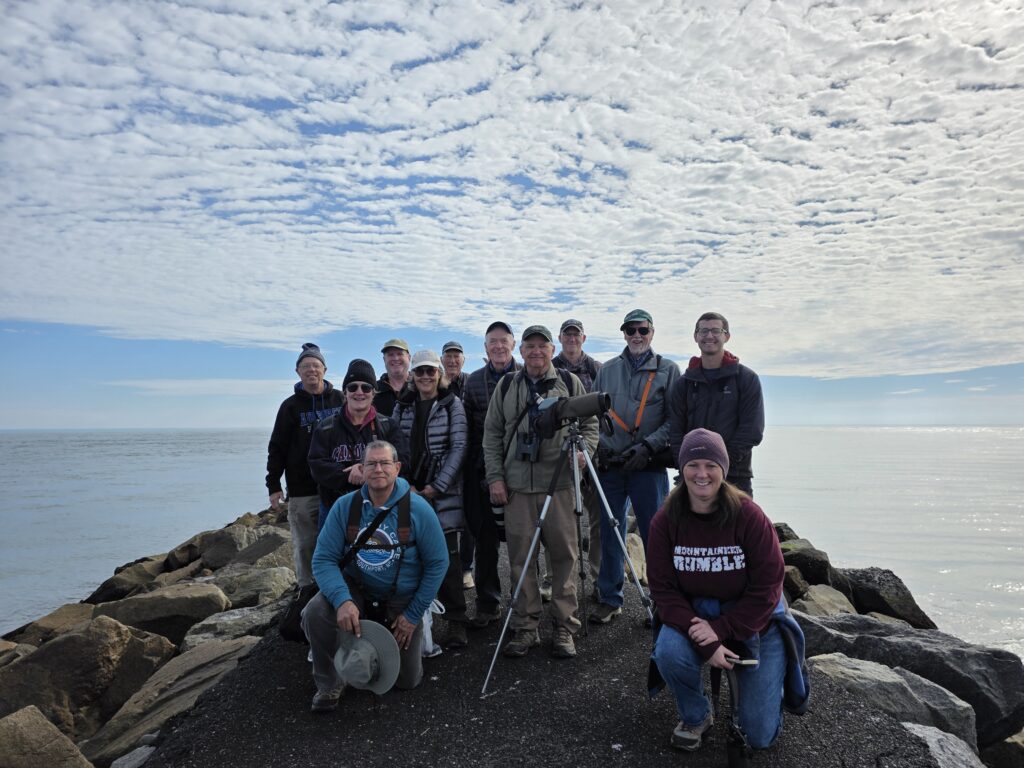
We had an incredible day exploring Huntington Beach State Park together! Winter birding along South Carolina’s coast never disappoints, but this trip delivered something truly special.
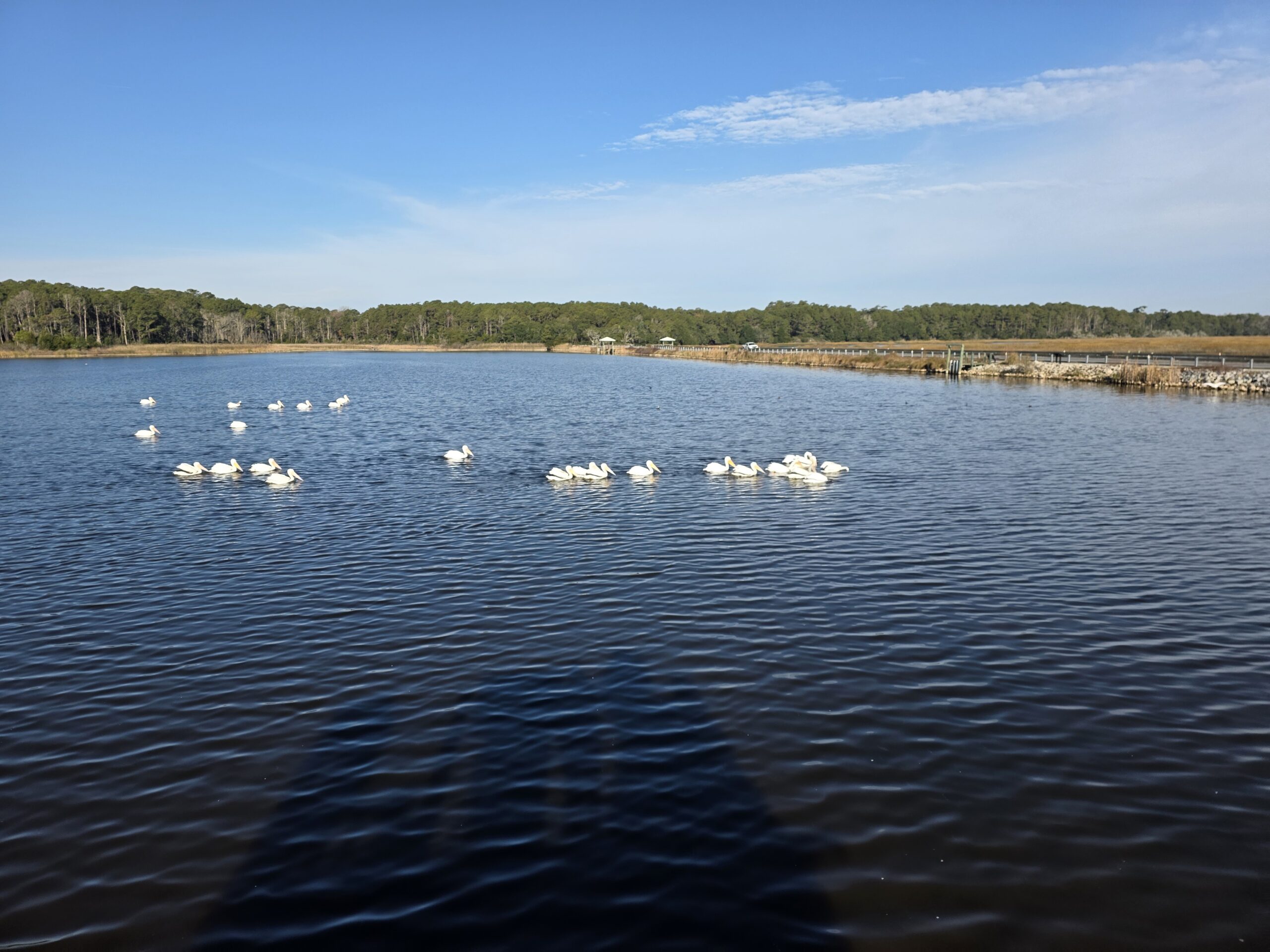
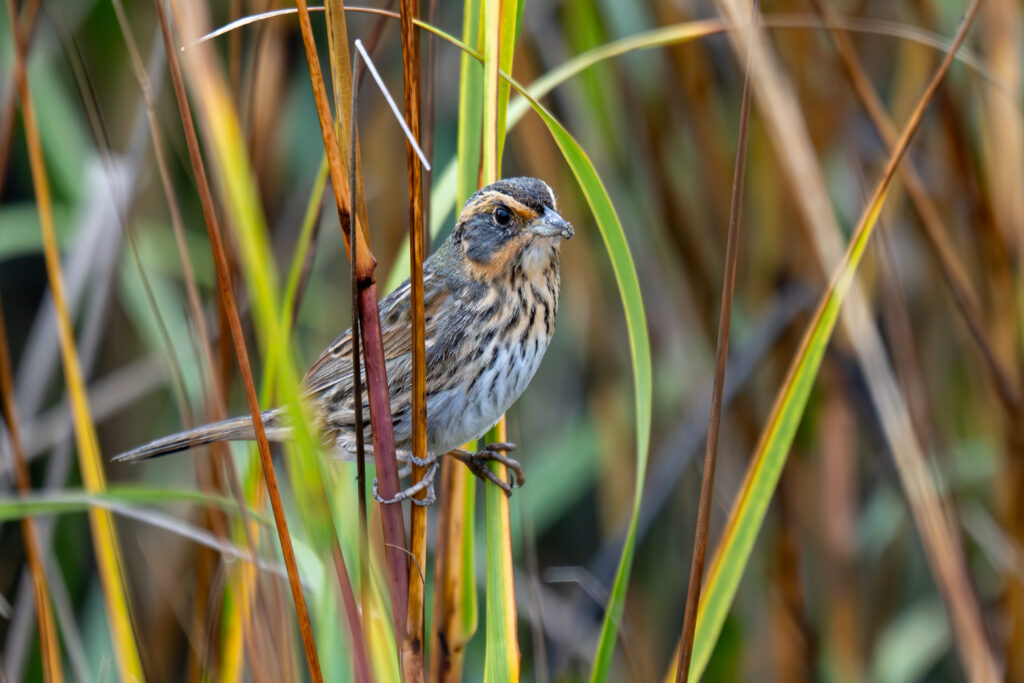
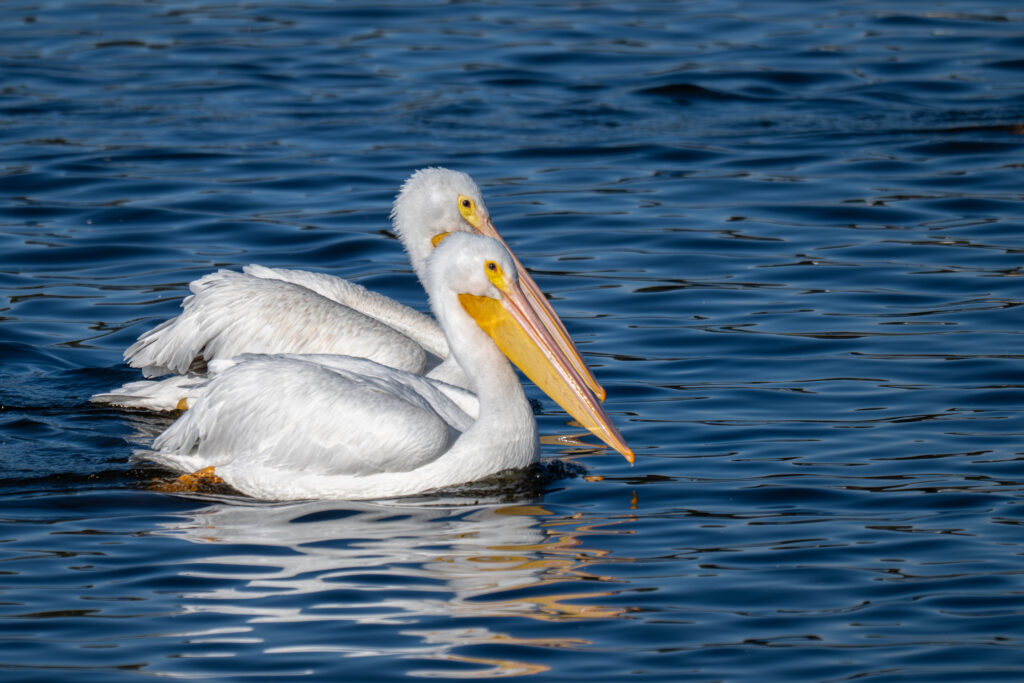
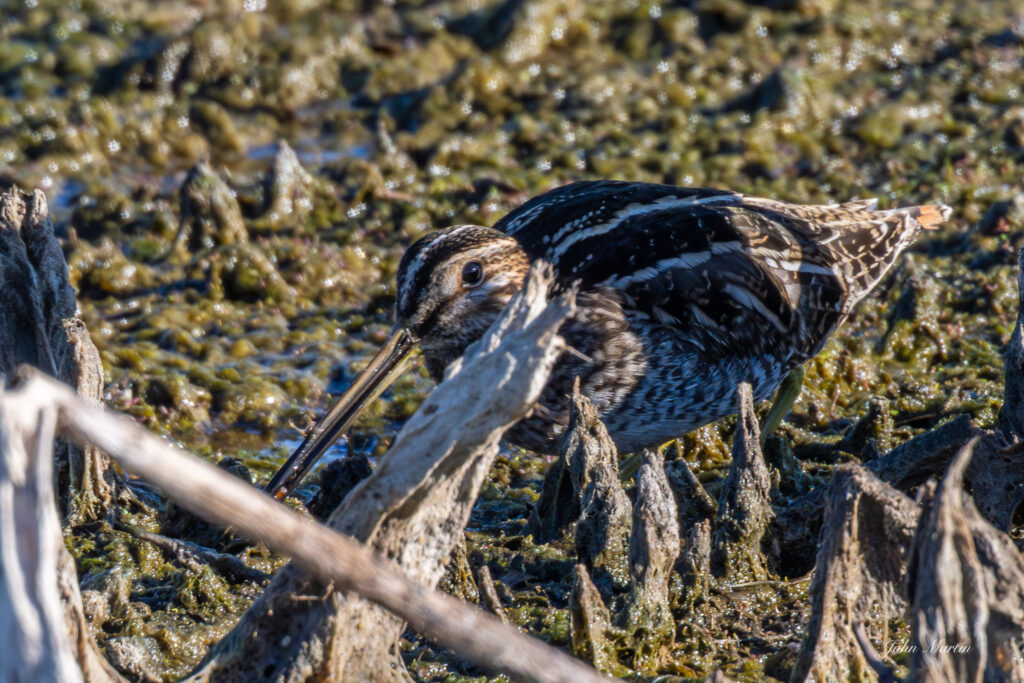
From the moment we stepped onto the woods to the last views leaving the park, we were surrounded by nonstop wildlife activity and unforgettable moments. Birds may have been our focus, but the park treated us to an outstanding mix of species—both feathered and not. We enjoyed amazing looks at saltmarsh sparrows! Some other species that we got great looks at were common loons, American white pelicans, green-winged teal, and a beautifully camouflaged Wilson’s snipe.
Image caption: Saltmarsh sparrow taken by a class participant.
Image caption: American white pelican taken by a class participant.
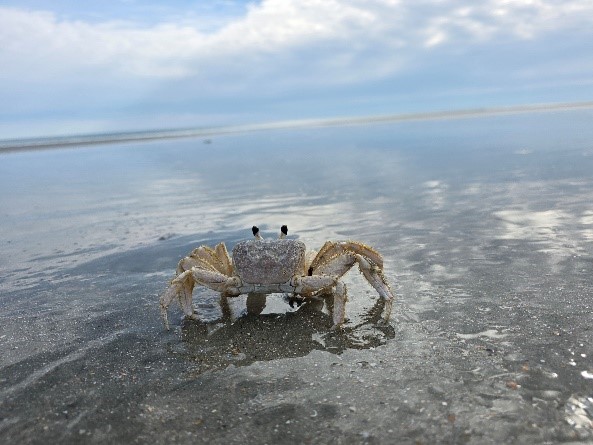
Beyond the birds, we were also lucky to encounter several fantastic non-bird species. A green sea turtle surfaced near the jetty, offering an unforgettable moment for everyone watching. A couple of minks darted in and out of the rocks along the jetty, and one of the largest Atlantic ghost crabs I’ve seen made an appearance on the beach on our walk back from the jetty.
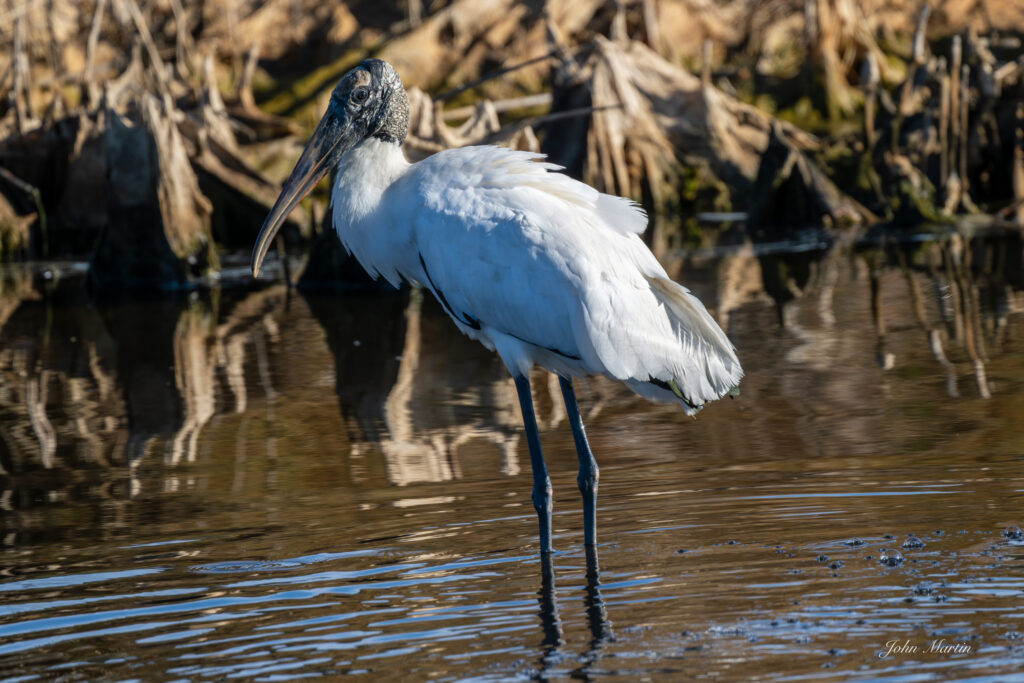
Image Caption: Wood stork by John Martin.
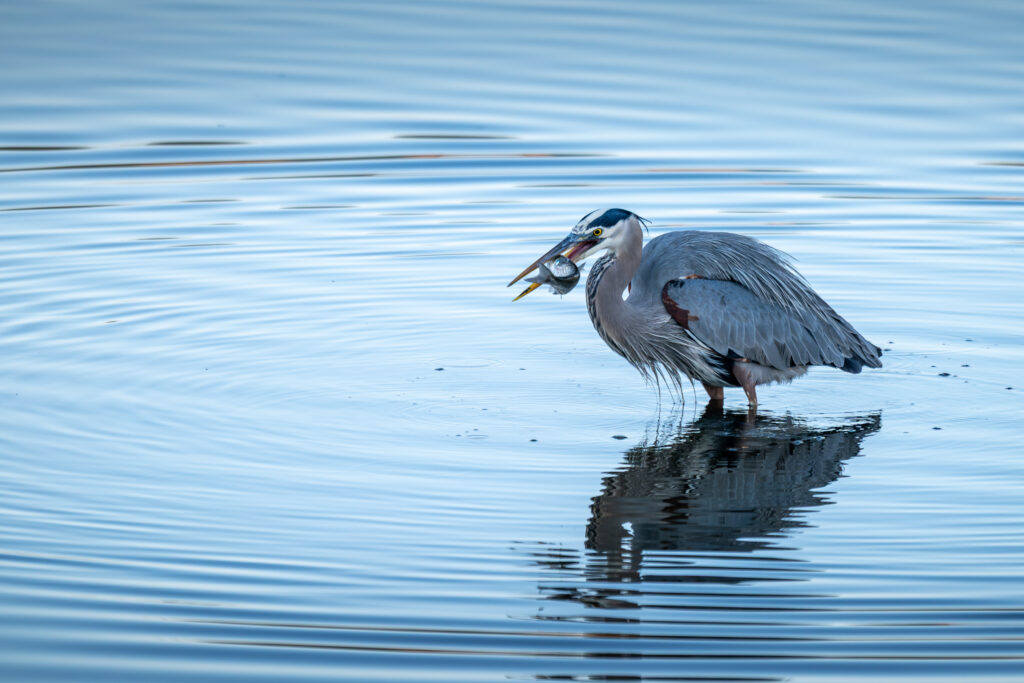
Image caption: Great blue heron photo taken by a class participant.
As if the day needed anything more, a few participants even caught a glimpse of a roosting Eastern Screech-Owl on their way out of the park! This was a perfect ending to an already magical outing.
Thanks to everyone’s sharp eyes and enthusiasm, we wrapped up the day with 79 species for the day. From waterfowl to songbirds, the diversity of habitats at Huntington Beach State Park gave us an incredible variety to enjoy.
Image caption: Wilson’s snipe by John Martin.
SCWF would like to say special thank you to Irvin Pitts for sharing his expertise and guidance throughout the trip. Birding alongside him was a rare treat, and we were incredibly fortunate to have his knowledge and sharp eyes with us for the day. Thank you to everyone who joined this trip. Your energy, curiosity, and camaraderie made the day truly memorable. I hope you enjoyed the experience as much as I did, and I can’t wait to see you again on our next adventure!
Image Credit: Atlantic ghost crab by Allison Bugarin.
This trip is part of our Palmetto ProBirder Program, which is at the heart of what we do at the South Carolina Wildlife Federation. By combining outdoor adventure, connection with others, and hands-on learning, we hope to inspire more people to become advocates for healthy wildlife habitats. Each time someone logs a bird sighting, plants a native plant, or supports conservation through a Duck Stamp or donation, it adds up to real and lasting change for the landscapes and species we love.
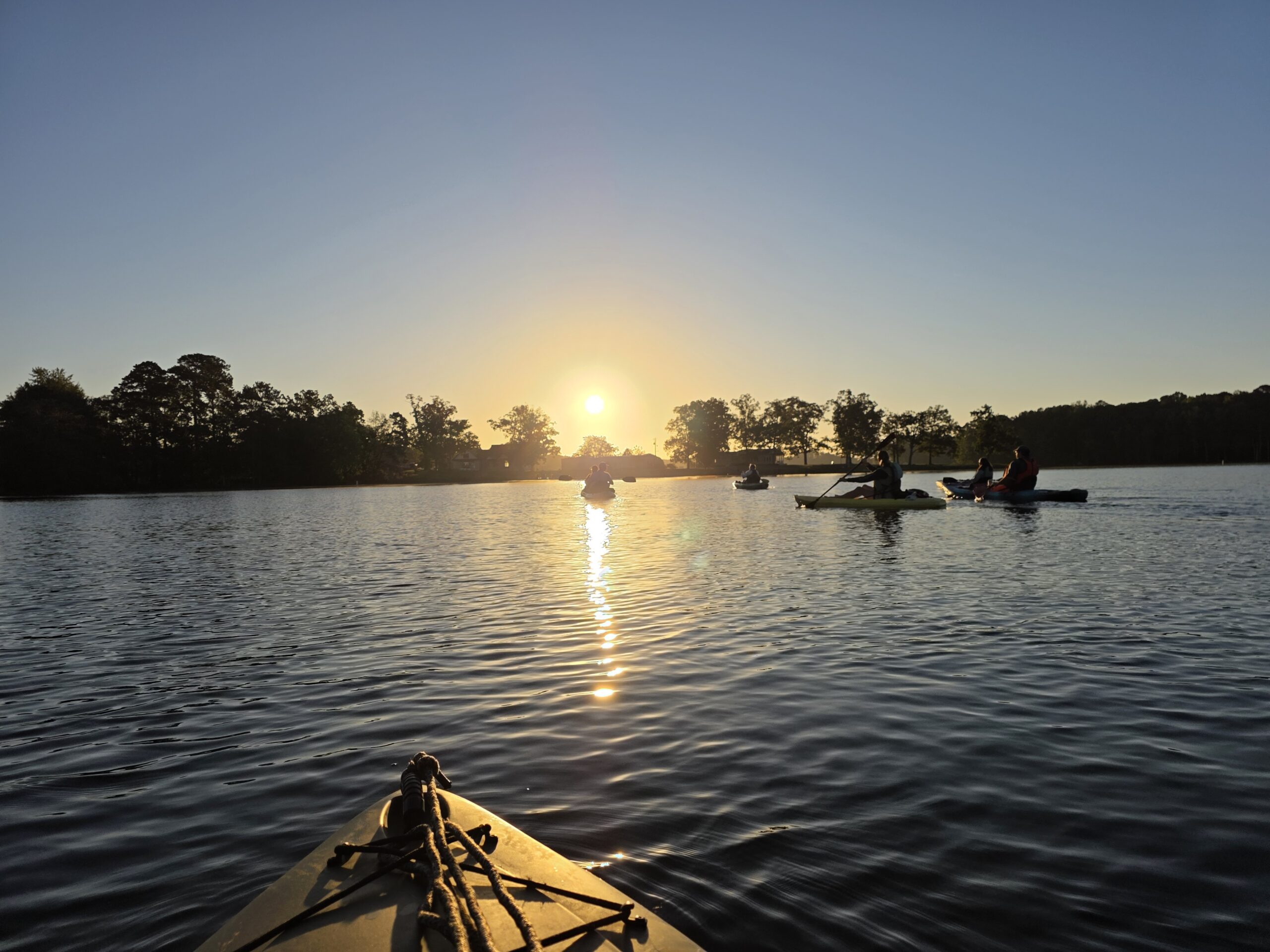
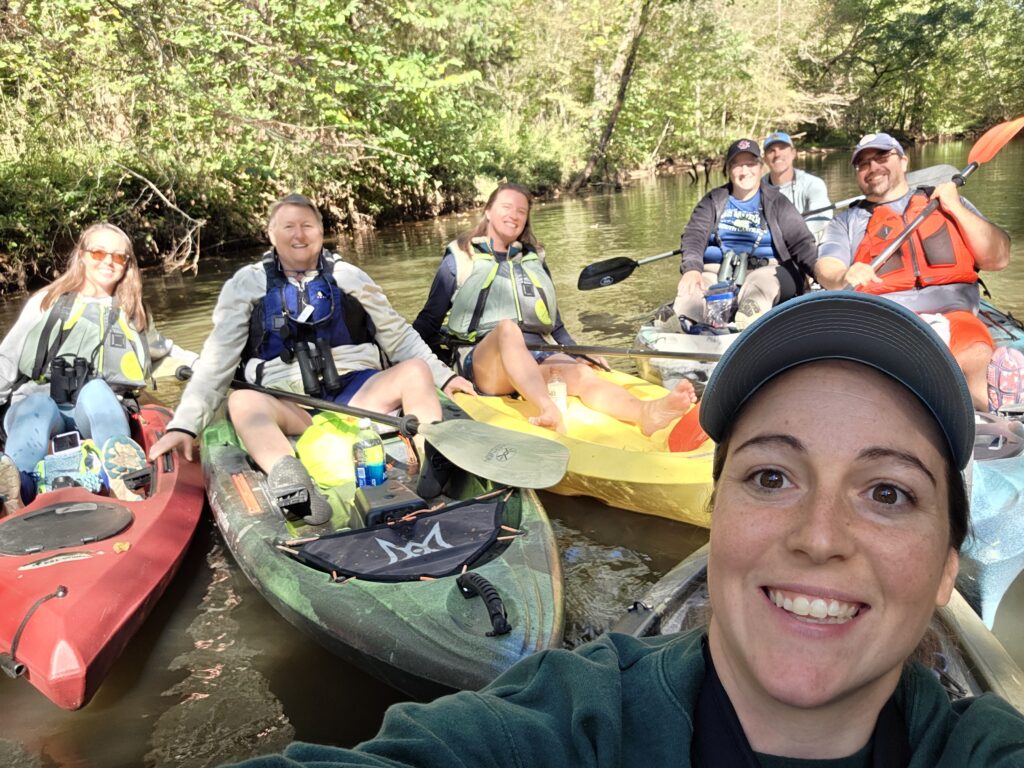
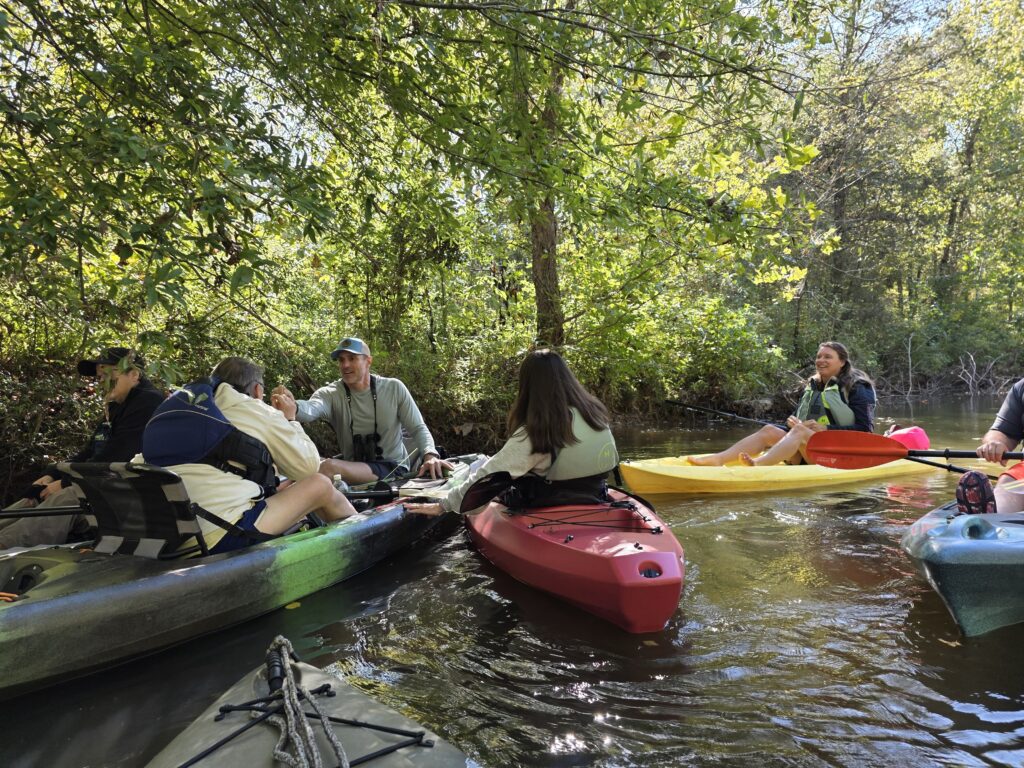
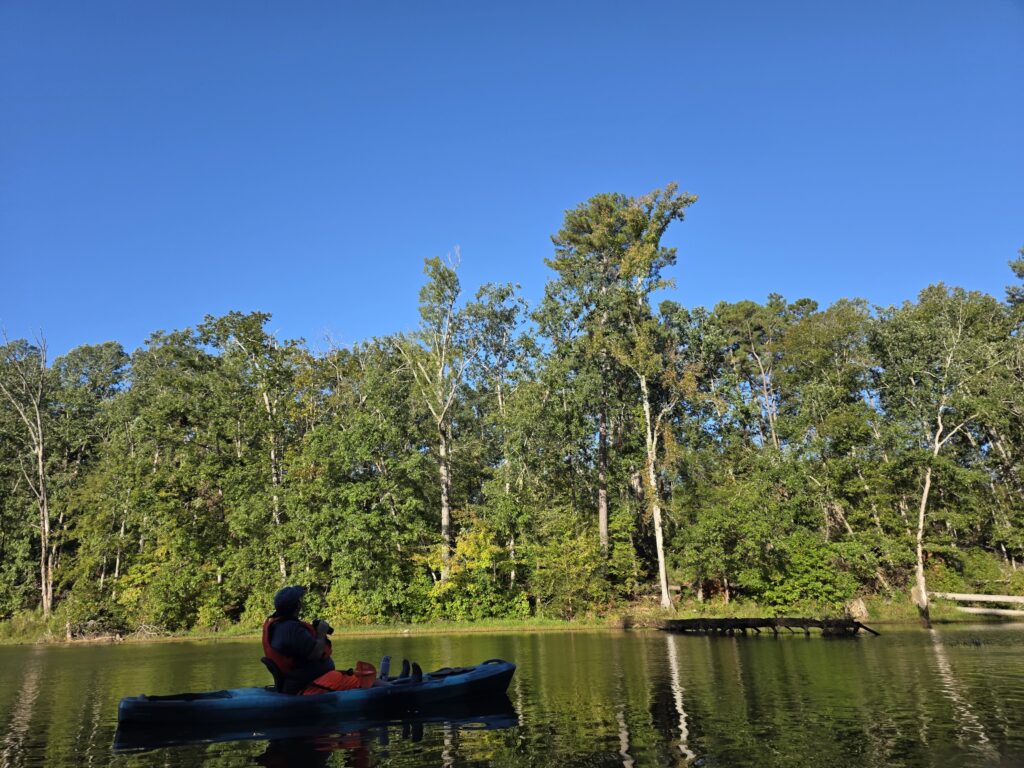
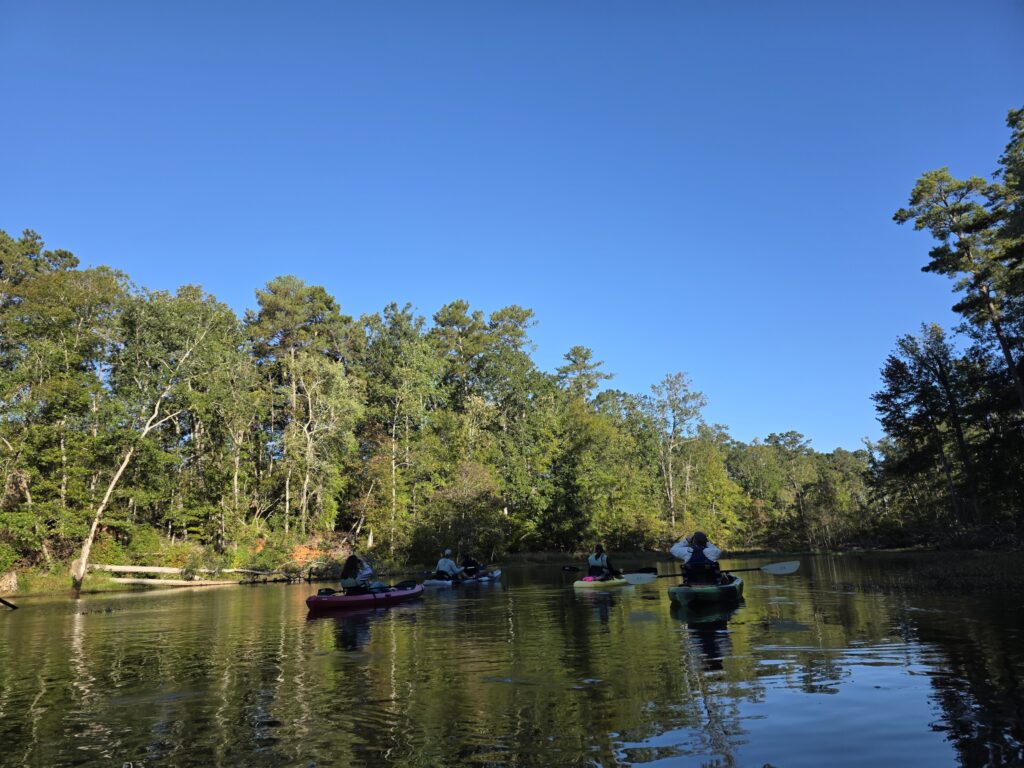
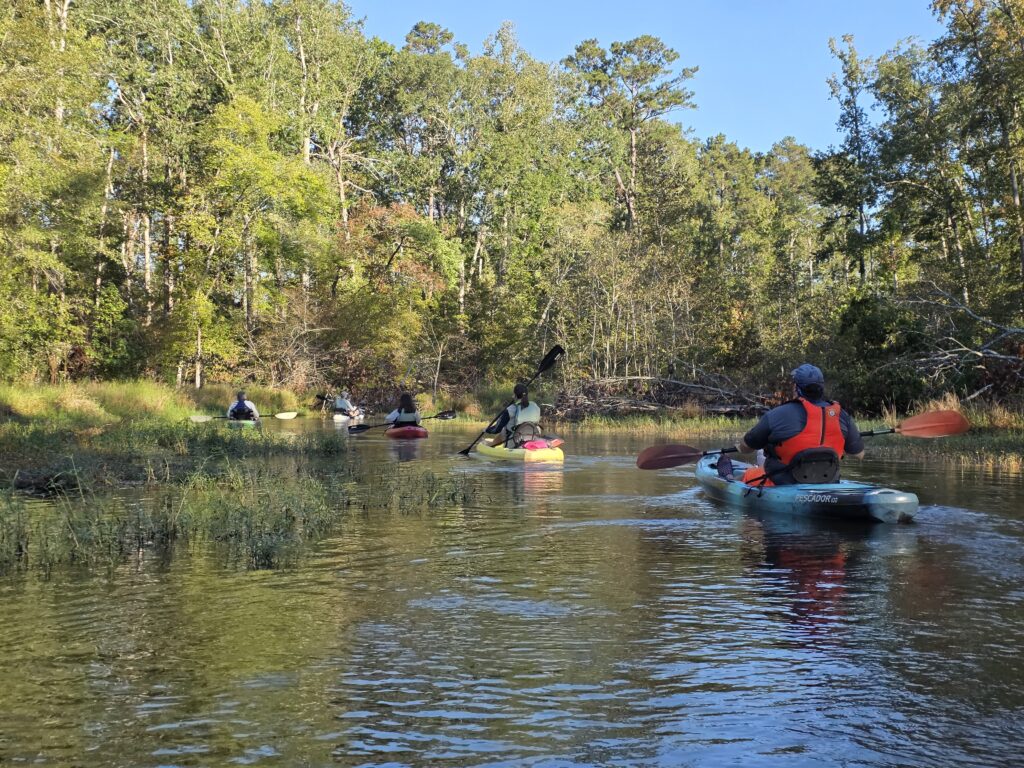
Thursday, October 2 was an incredible day on the water for our Palmetto Pro Birder Paddle, led by our Industry Habitat Manager and resident bird guru, Jay Keck. From the first push off the bank to the final call through the trees, the day was a reminder of how good it feels to slow down and enjoy nature with others.
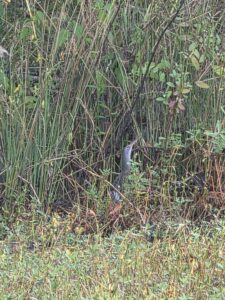
We tallied 37 bird species, including favorites like the wood duck, red-headed woodpecker, black-throated green warbler, and a clapper rail.
An elusive clapper rail.
We also heard a few species that stayed hidden in the trees, such as pileated woodpeckers and downy woodpeckers. Thank you to everyone who joined us for this fun and rewarding day in the field.
This paddle is part of our Palmetto ProBirder Program, which is at the heart of what we do at the South Carolina Wildlife Federation. By combining outdoor adventure, connection with others, and hands-on learning, we hope to inspire more people to become advocates for healthy wildlife habitats. Each time someone logs a bird sighting, plants a native plant, or supports conservation through a Duck Stamp or donation, it adds up to real and lasting change for the landscapes and species we love. We hope to see you on the next one! Until then, happy birding!
The South Carolina Wildlife Federation is known for many things: being the voice of residents who love wildlife, an advocate for our state’s outdoor spaces, and amazing wildlife education programs. There is an incredible line-up of classes we offer including Palmetto Pro-Birder, Naturalist, and Palmetto Outdoor Women’s Retreat events. New for 2025, SCWF is introducing our “Explores” programming. The “Explores” series is a new line of classes designed to introduce the outdoors to folks who may be new to outdoor experiences. BeBe Dalton Harrison, SCWF Director of Education says, “We want to welcome even more people to the outdoors. These classes and events will be beginner friendly, lower cost, and a great way to step outside in a safe environment.”
The Explores Series will consist of a variety of topics across the state and will change yearly. This inaugural year includes programs to introduce families to fishing and hiking, backyard wildlife habitats, winter wildlife, and more! In addition to being “beginner friendly”, these classes will be offered at a low price point and in some cases will be free for the public. Once each Explores classes is open for registration, it will be listed on our events page at www.scwf.org/events.