SCWF recently had the opportunity to represent South Carolina at the National Wildlife Federation (NWF) 90th Annual Meeting – the largest and oldest gathering of grassroots conservation leaders in the nation.
The South Carolina Wildlife Federation, previously the SC Game & Fish Association (formed in 1931), has been a state affiliate of the National Wildlife Federation (NWF) since NWF’s inception in 1936. The relationship between NWF and its state affiliates is unique among other conservation organizations because each affiliate functions as a completely separate organization concerning all aspects – finances, programs, policies, board governance, membership, etc. At the same time, NWF relies on the votes of its state affiliates to set policy and elect board members each year during NWF’s Annual Meeting.
This year, Rosemary Martin-Jones (SCWF Board Member & Affiliate Representative) and Sara Green (SCWF Executive Director & Alternate Affiliate Representative) represented SCWF and South Carolina at the recent NWF Annual Meeting held in Providence, RI. They not only voted on NWF resolutions and board members, but also had the opportunity to sit on committees and interact with colleagues at NWF and other state affiliate organizations. This meeting is always such a great opportunity for SCWF to learn from other affiliates, share our successes and brainstorm new ideas. They even got to hang out with Ranger Rick!
Resolutions were passed in different categories to set NWF policy regarding: data center regulatory and legislative safeguards and best practices; preservation of scientific and historical integrity in public lands; and restrictions on pesticide and rodenticide use.
SCWF co-sponsored the rodenticide resolution due to documented high rates of secondary poisoning in apex predators like raptors and mammalian predators from Second-Generation Anticoagulant Rodenticides (SGARs). This issue was recently brought to light in SC by biologists with the Town of Kiawah Island who noticed that their bobcat population declined dramatically due to SGAR poisoning (read more about that here). The newly passed resolution sets NWF policy to support strong federal and state restrictions on second generation anticoagulant rodenticides.
Chapin Garden Club Strives to turn Chapin into
South Carolina’s Largest Per Capita Community Wildlife Habitat
In 2000, Chapin Garden Club launched two initiatives supported by the Garden Club of South Carolina: a Carolina Fence Garden at the Chamber of Commerce and participation in the Backyard Habitat program. Both programs were a success… So Chapin Garden Club did what anyone in their position would typically do: moved the goal posts and upped the ante. Twenty six years later, they aim to turn Chapin into the largest per capita Community Wildlife Habitat in the state by 2030. But this time, they need your help…
How It Started
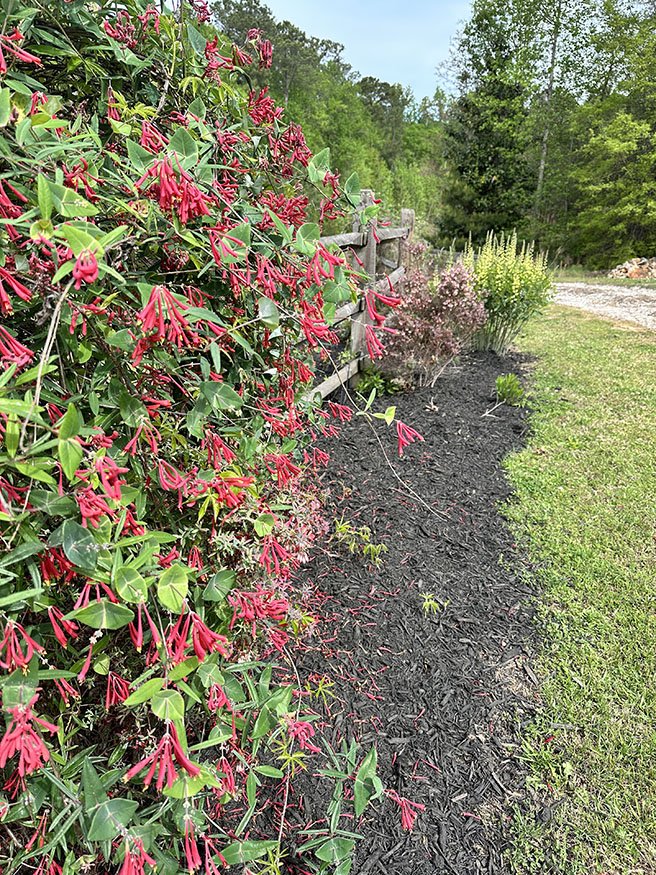
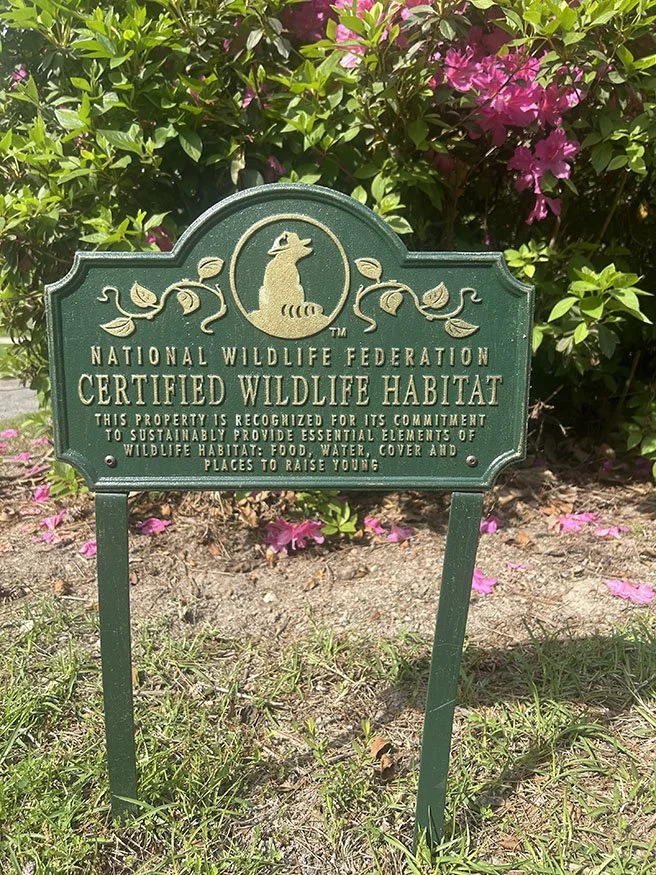
From the outset in 2000, CGC’s members embraced the challenges wholeheartedly—every member achieved certified habitat status to do their part in the Backyard Habitat program. The efforts established an enduring club tradition: membership meant maintaining a certified backyard. But what exactly is a “certified” backyard, and why does it matter? A Certified Wildlife Habitat® through the South Carolina Wildlife Federation (SCWF) is a greenspace that provides essential elements for local wildlife: food, water, cover, and places to raise young, while also utilizing sustainable practices such as reduced usage of chemical pesticides, the conservation of water, and a reduction in lawn area. Having these conditions in place helps combat habitat loss by supporting birds, butterflies, and pollinators with native plants.
For members of the Chapin Garden Club in the year 2000, the decision to get their yards certified was an easy one. By 2013, an influx of new members shifted focus temporarily; the yard certification tradition had begun to subside. To reignite interest, Bonnie Porter presented a refresher on habitat certification at the October meeting. Then-president Cindy Chin challenged members to certify their own yards and recruit others to do the same. The effort gained traction through flyers, local media, and community outreach.
Photo by Cindy Chin
The club’s commitment aligned with a broader goal—supporting South Carolina’s national leadership in wildlife habitats per capita. With guidance from Sarah Green of the South Carolina Wildlife Federation, Chapin added 32 new certified habitats by summer 2014. They celebrated with a gathering at Timberlake Country Club.
A pivotal moment came in 2019 when Jay Keck delivered a program on attracting birds and butterflies. His presentation sparked a lasting partnership with the South Carolina Wildlife Federation and deepened the club’s focus on conservation education.
Chapin Goes Green
In May 2021, Keck introduced the idea of designating Chapin (ZIP code 29036) as a Certified Community Wildlife Habitat. Recognizing the opportunity, the club launched “Chapin Goes Green” and registered with the National Wildlife Federation in June 2021.
Certification required community education, media engagement, and achieving 225 habitat points through certified properties. The club undertook a coordinated effort that included:
Publishing articles on wildlife, native plants, and habitat gardening
Hosting workshops, presentations, and an annual Wildlife Trivia Night
Partnering with local organizations, schools, churches, and civic groups
Securing official support from the mayor, town council, and community associations
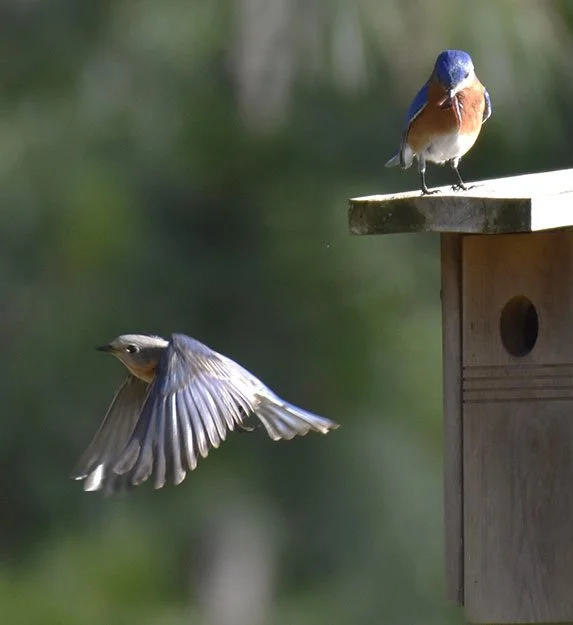
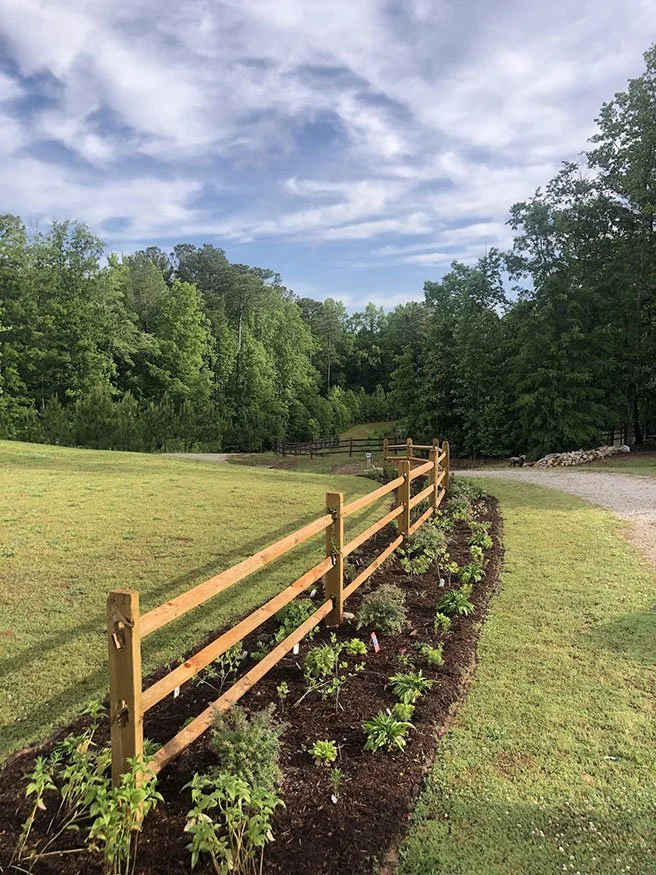
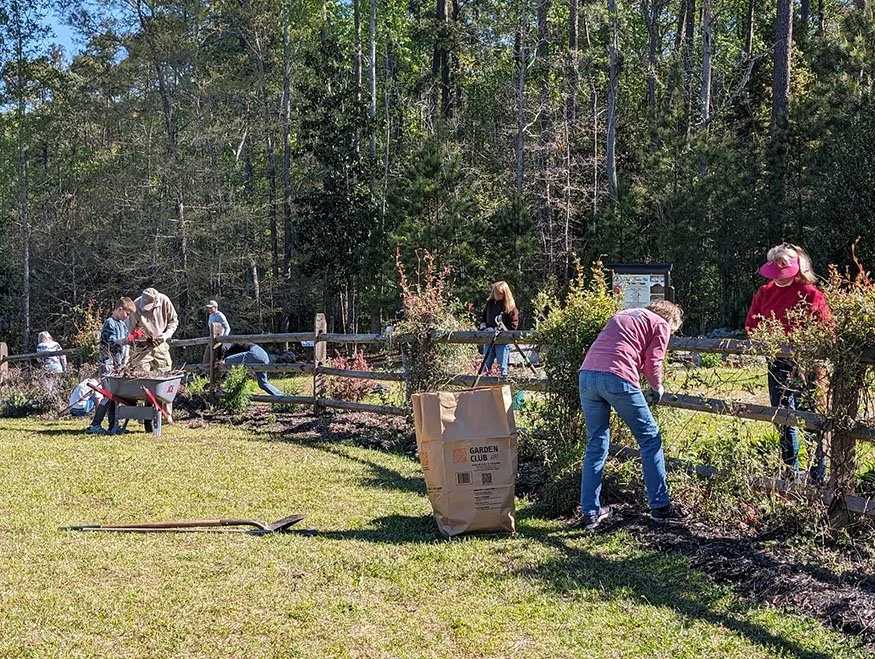
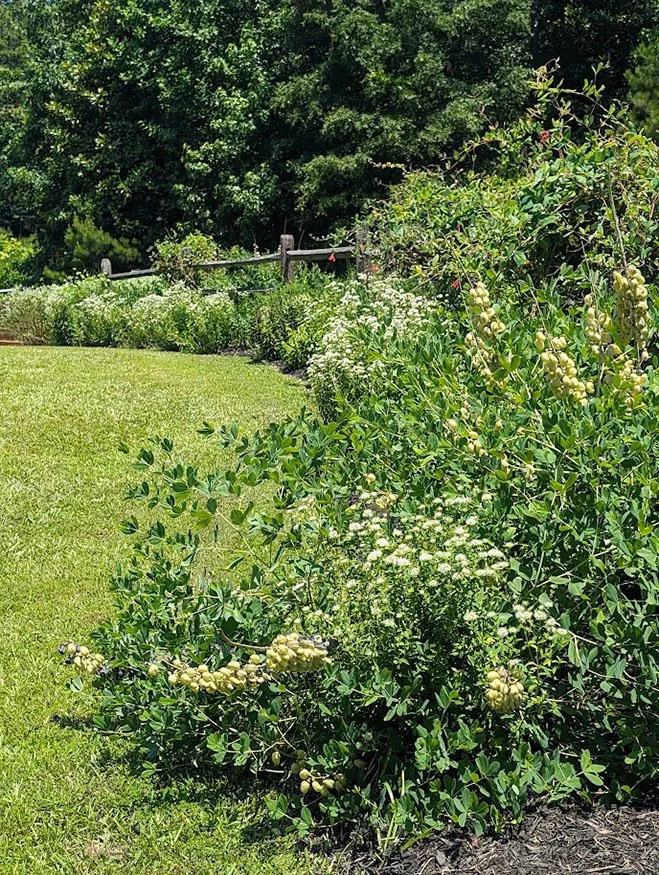
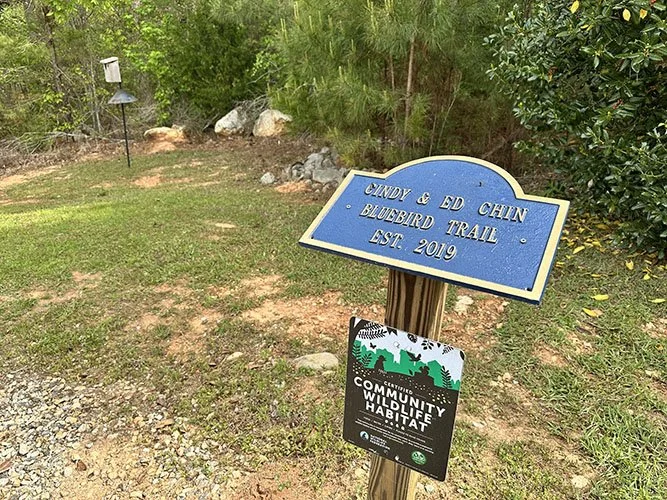
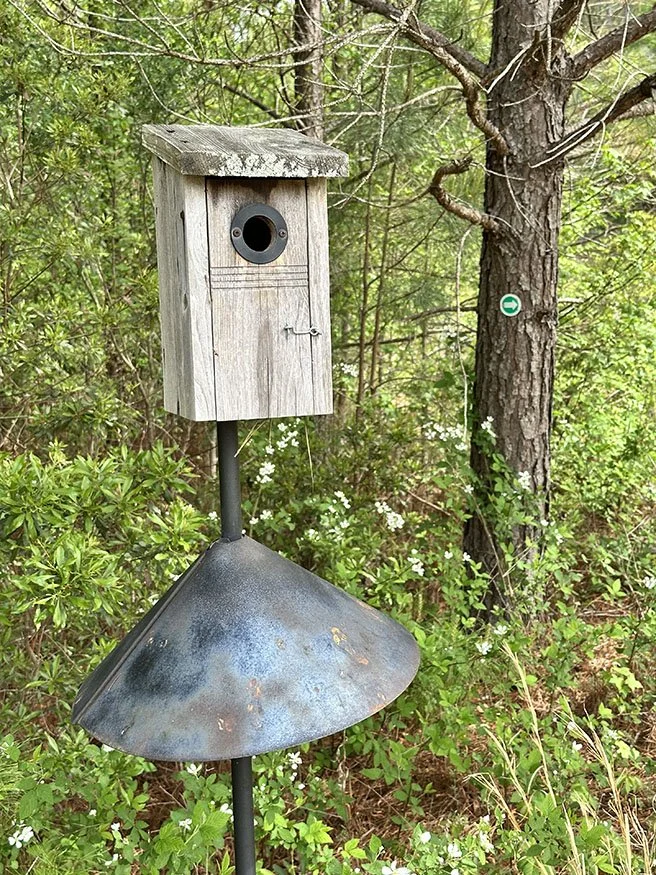
A major achievement was the creation of a 70-by-8-foot pollinator garden at Chapin Town Hall, developed in collaboration with multiple partners and supported by a Dominion Energy grant. The club also worked with the South Carolina Bluebird Society to establish a bluebird trail at Town Hall. Since 2021, the Cindy and Ed Chin Bluebird Trail and participating backyards have documented 153 successful fledglings. Additional enhancements included installing an outdoor message center and a bluestone seating wall at Town Hall, offering educational materials and trail maps to visitors.
“We are proud to work with our community to protect and connect critical habitats for wildlife.”
— Cindy Chin
Reaching the required number of certified properties proved the most challenging step. Engaging more than 200 property owners, businesses, and institutions required sustained outreach—but the effort succeeded. On February 15, 2024, Chapin was officially designated a Certified Community Wildlife Habitat by the National Wildlife Federation.
The community celebrated on June 18, 2024, with a ceremony at Town Hall featuring tours of the pollinator garden and bluebird trail. Mayor Al Koon issued a proclamation recognizing the project’s impact, and state leaders and conservation partners attended. Local students also contributed, creating a video to promote habitat certification.
The project drew inspiration from other successful communities. Kelly Long of the Camellia Garden Club in Greer shared insights from their five-year certification journey, highlighting initiatives such as distributing milkweed seeds to support Monarch butterflies and engaging residents of all ages in conservation.
Today, Chapin has 208 certified properties, including parks, schools, places of worship, government buildings, and private homes. Maintaining certification requires annual renewal, and the Chapin Garden Club remains committed to education, outreach, and expanding participation.
Cindy Chin, who chaired Chapin Goes Green, describes the multi-year effort as a labor of love: “It is an honor and privilege to have Chapin recognized by the National Wildlife Federation. Chapin is now the 161st Community Wildlife Habitat in the U.S., the 14th in South Carolina, and the first in Lexington County. We are proud to work with our community to protect and connect critical habitats for wildlife.”
Through sustained collaboration and grassroots engagement, Chapin Garden Club has created a model for how communities can preserve natural beauty while fostering meaningful connections between people and wildlife. Today they ask: Will you help them?
What is a Community Wildlife Habitat?
It’s Community
The Community Wildlife Habitat is a NWF program that helps communities create sustainable wildlife friendly spaces while engaging residents in conservation and education. They partner with cities, towns, and neighborhoods in urban and suburban areas to incorporate wildlife practice and promote biodiversity in communities across the United States. These practices include using native plants, reducing pesticides, conserving water, and integrating wildlife considerations that support insects, moths, butterflies, caterpillars, birds, etc.. Communities are recognized when property owners such as individual homeowners and businesses, churches, schools, parks, government properties, etc. certify their properties as Certified Wildlife Habitats.
What is a Certified Wildlife Habitat?
It’s Personal
The South Carolina Wildlife Federation (SCWF) was South Carolina’s first conservation group. Established in 1931, it has been safeguarding our state’s wildlife for nearly a century and relies on proven scientific methods to protect and preserve the health of delicate ecosystems. It is the SCWF that administers the Wildlife Habitat program to assist homeowners, businesses, churches, schools, parks, etc. to individually certify habitat. This requires providing 4 essential elements for wildlife: food, water, cover, and places to raise young plus incorporating some (not all) sustainable gardening practices. These practices can be very small changes that make a big difference and save time and money. Per the SCWF:
Stop Using Pesticides
Yes, they kill the bad critters, but also poison bees and butterflies, birds and other animals whose diet consists of insects. Without pesticides, your flowers and vegetables will pollinate more aggressively -that means more flowers and fruits.
Plant Native Plants and Trees
These plants are already adapted to our climate, and the native wildlife has adapted to these plants. Keystones native trees such as oaks support over 500 species of insects, moths, and butterflies. Native flowers such as goldenrod and asters also support over 100 species of the same. And, we have individual natives such as milk weed which is the only food for our beautiful monarch butterflies. Lastly, natives are generally more drought resistant and easier to grow.
Reduce Fertilizer Use
If you must use fertilizers, be sure to closely follow the directions. Excessive chemical fertilizer will not help your plants any more and will pollute our waterways. You can create your own organic fertilizer by beginning a compost pile.
Let One Tenth of Your Yard Grow Wild
Untouched areas left to their own devices support much healthier ecosystems allowing insects, moth, butterflies, fireflies, bird, etc. to proliferate and thrive.
Reduce the Amount of Turf
Grass is time consuming and expensive, and has no benefit to any wildlife whatsoever. Instead, increase the size and diversity of your flower beds which attracts a diversity of wildlife.
How to Certify Your Yard
Certifying one’s habitat is extremely easy and takes less than 20 minutes. Sign on to the South Carolina Wildlife Federation site and follow the link to certified wildlife habitat.
Certification is a one-time event; there’s no annual renewal. The cost is $25.00 and you can also purchase a sign which identifies your property as a wildlife habitat. Proudly display it where all your friends and neighbors will see it and ask –
“What is this about?” And you can answer, “Well, it’s about:
enhancing livability and health in our communities
saving wildlife
creating beautiful environments for our children and grandchildren
educating the public on wildlife conservation and sustainable practices
and increasing the economic value of our homes and neighborhoods… “
A Bold New Goal – 2030 Vision
There’s so much to gain, and little to lose by certifying your yard. Every individual habitat is the key to maintaining Chapin as a Community Wildlife Habitat. Chapin Garden Club President, Shawn Grover explains, “If Chapin residents do not continue to certify their properties, Chapin will lose this extremely valuable and important designation. That would just be so heartbreaking for our community. But our goal, be it lofty, is to build Chapin into the largest per capita Community Wildlife Habitat in the state by 2030!
Please help the Chapin Garden Club and the whole town by certifying your yard today. For more information about certification, what to plant with purpose, questions, or technical assistance, go to SCWF.org or contact:
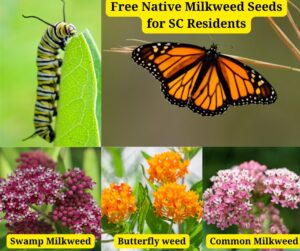
We are thrilled to announce the successful mailing of 5,000 packets of native milkweed seeds to residents across South Carolina, marking the eleventh year of the Milkweed for Monarch’s Program! This program allows residents of our state to sign up to receive packets of free native milkweed seeds (Common, Swamp, & Butterfly Milkweed).
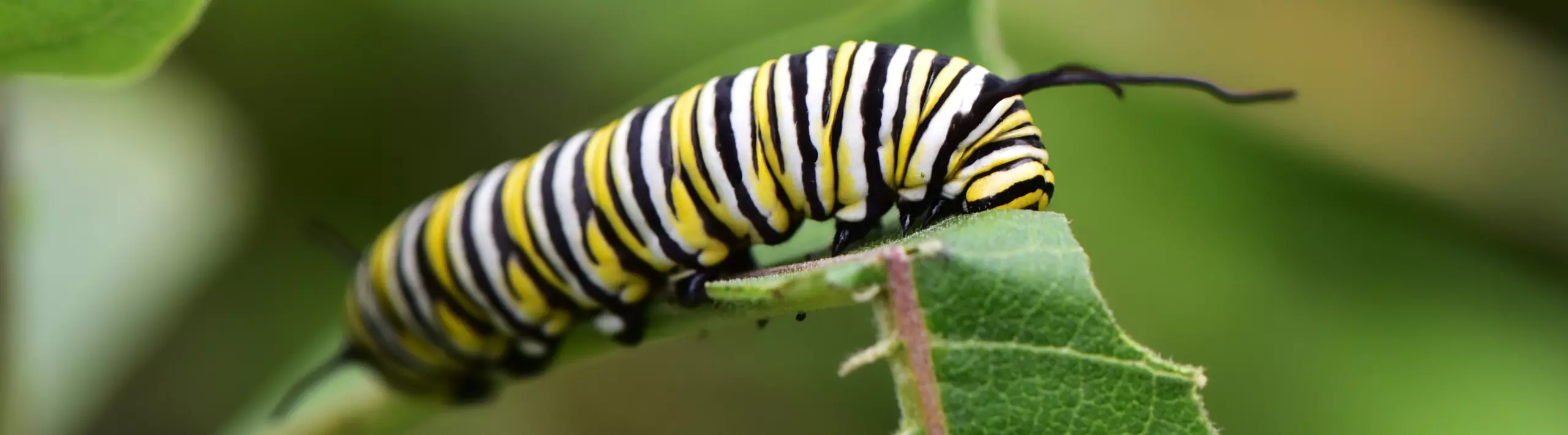
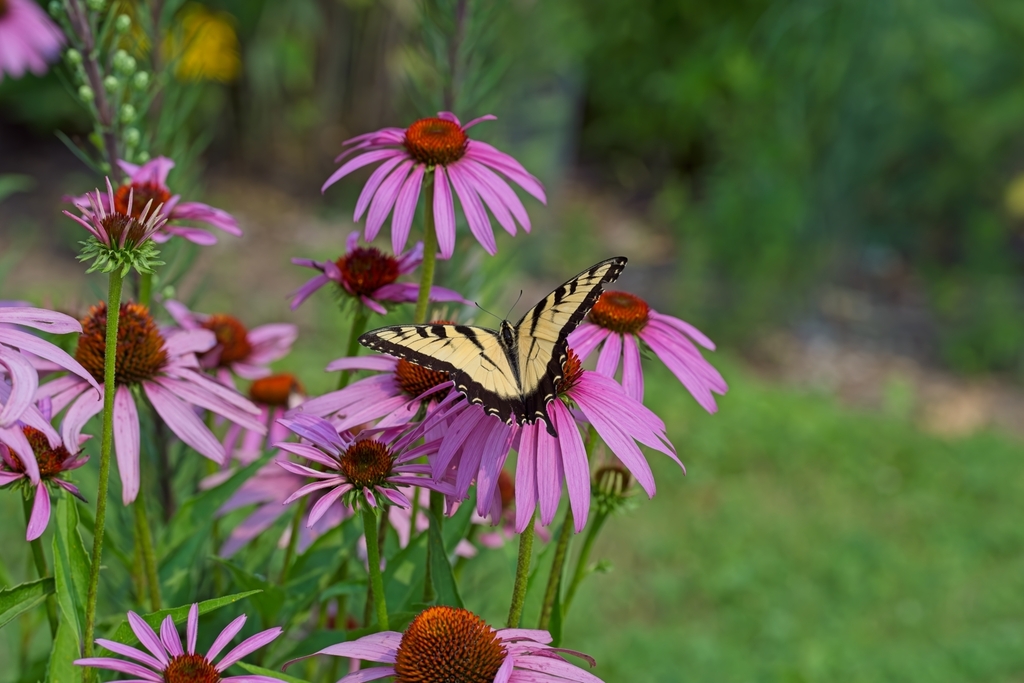
Because monarchs only lay eggs on milkweed plants, they must have native milkweed along their 3,000-mile journey to survive. Over the past twenty years, there has been a sharp decline in the monarch butterfly population along their normal migration routes from Canada to Mexico. During this time, these important pollinators have dwindled by almost 97 percent. Native milkweed plants, however, are the key to helping these iconic pollinators thrive.
This program helps SCWF make a statewide impact for monarchs, and we are so grateful to every single person who signs up to receive a seed packet. We recently received some photos from our milkweed seed recipients, and that is one of our favorite parts of this project! If you have any photos of monarchs that you would like to share with us, you can email us at mail@scwf.org.
We hosted 20 volunteer days dedicated to hand-mixing and packaging milkweed seeds this year! We are incredibly grateful to the many volunteers who generously donated their time to support this important effort. Thanks to their hard work, SCWF can continue providing milkweed seeds that help create habitat for monarch butterflies and other pollinators across South Carolina.
Thank you to Comporium for sponsoring the 2026 Milkweed for Monarchs Project!
Published in the Columbia Star on May 28, 2026 – https://www.thecolumbiastar.com/articles/columbias-downtown-pollinator-garden/
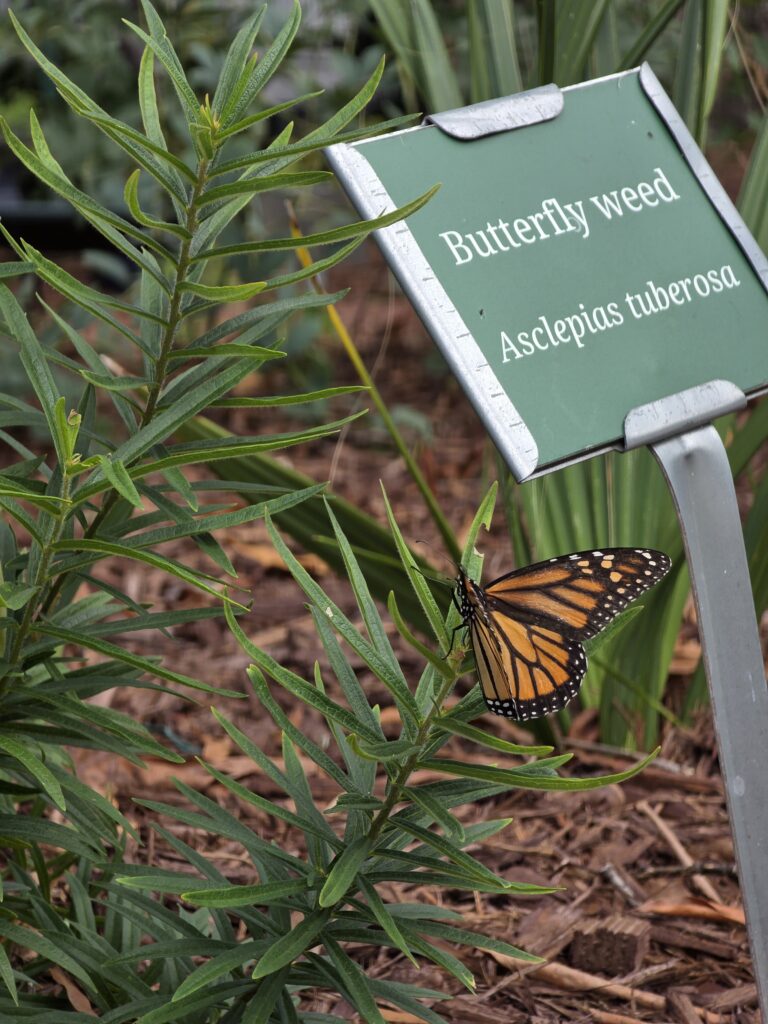
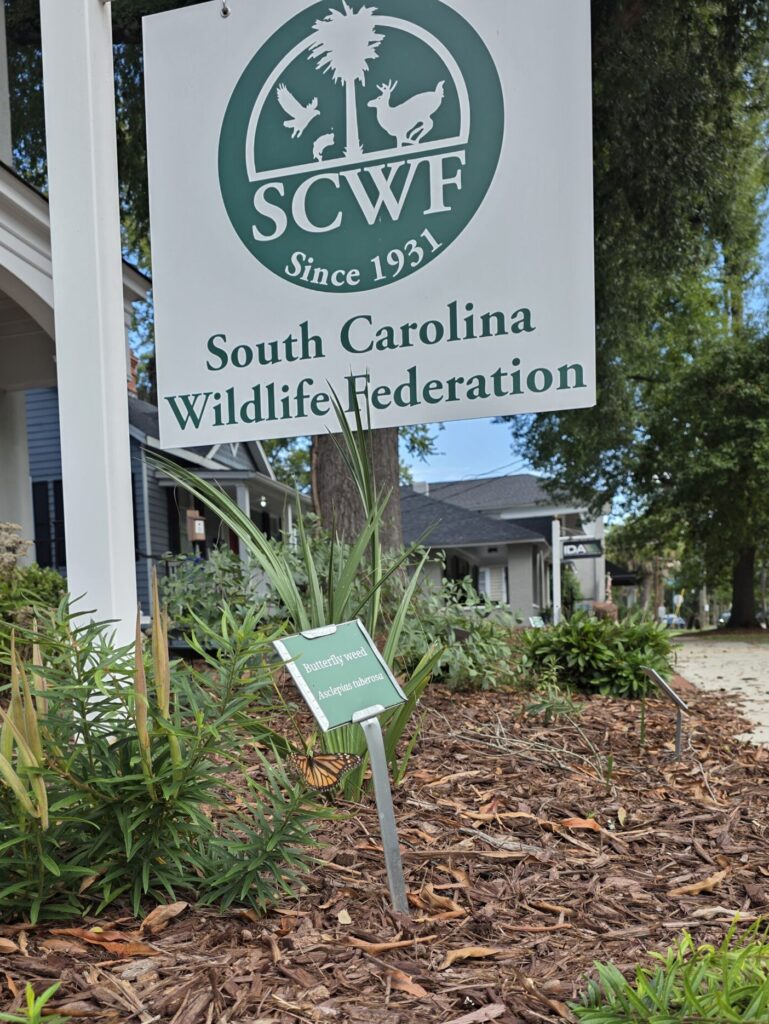
Volunteers with the South Carolina Wildlife Federation (SCWF) planted a native plant pollinator garden in their wildlife habitat in front of their downtown office at 1519 Richland Street. As spring transitions to summer, the plants are flowering and fruiting. In a relatively small space there are over 20 species attracting bees, butterflies, and hummingbirds. The garden also features the four basic wildlife habitat elements: food, water, cover, and places to raise young.
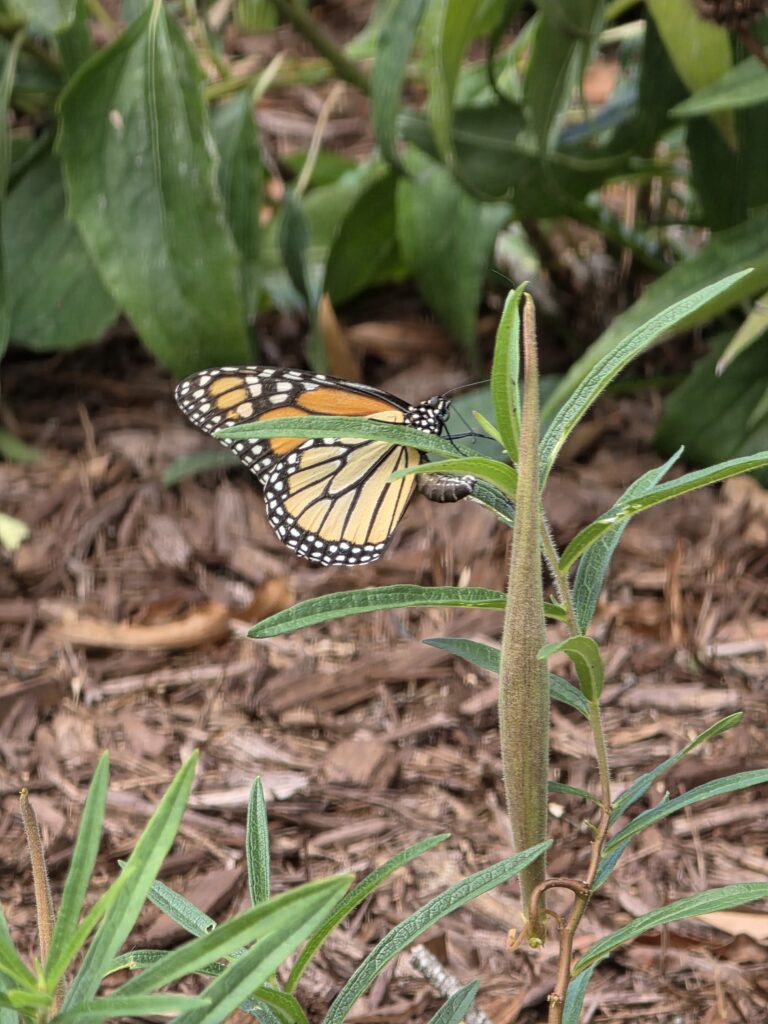
Three natives planted for monarch larvae are swamp milkweed, Asclepias incarnata; common milkweed, A. syriaca; and butterfly weed, A. tuberosa.
Passionvine, Passiflora incarnata, is deliberately planted in containers to keep it from spreading across the landscape via its underground rhizomatous roots and taking over the garden. The vine hosts the eggs and larvae of gulf fritillary and variegated fritillary butterflies.
A striking blue flowering perennial plant is false indigo, Baptisia australis. Native Americans and early colonists used the flower to produce a blue dye before the Asian indigo, aka true indigo, Indigofera tinctoria, was introduced to America.
False indigo is a host plant to many butterflies such as orange sulphur, clouded sulphur, frosted elfin, eastern tailed blue, hoary edge, and wild indigo duskywing.
Common yarrow, Achillea millefolium, is a flower attracting an incredible number of pollinators because of the design of the flower face. The nectar that bees and butterflies need is easy to access on the broad flat flower face making for perfect landing and feeding platforms. Insects can stay still and sip from the many tiny florets. American lady, checkerspots, fritillaries, hairstreaks, skippers, and sulphurs visit yarrow for nectar.
Common St. John’s Wort, Hypericum perforatum, is a host plant to the larvae of the gray hairstreak butterfly. Female azure butterflies lay their eggs on the flower buds and the caterpillars eat the flower parts and developing fruits. The plant also hosts moths like the wavylined emerald, scallop moth, and gray half-spot moth.
Coreopsis ‘Moonbeam,’ Coreopsis verticillata, will start blooming from mid-summer all the way until the first hard frost. Something to consider when planting a pollinator garden is to select a palette of plants for spring, summer, and autumn bloom.
Two varieties of blueberries grow in the pollinator garden: Vacinnium darrowii ‘Rosa’s Blush’ and Vacinnium x Perpetua. Planting blueberries in the garden creates a mutually beneficial relationship between the plants and pollinators. Blueberry flowers provide spring nectar for native bees and the bees perform “buzz pollination” to ensure a large, healthy harvest.
Visit the SCWF downtown pollinator garden to view the entire garden and take home ideas for your landscape.
Published in the Columbia Star on May 28, 2026 – https://www.thecolumbiastar.com/articles/columbias-downtown-pollinator-garden/
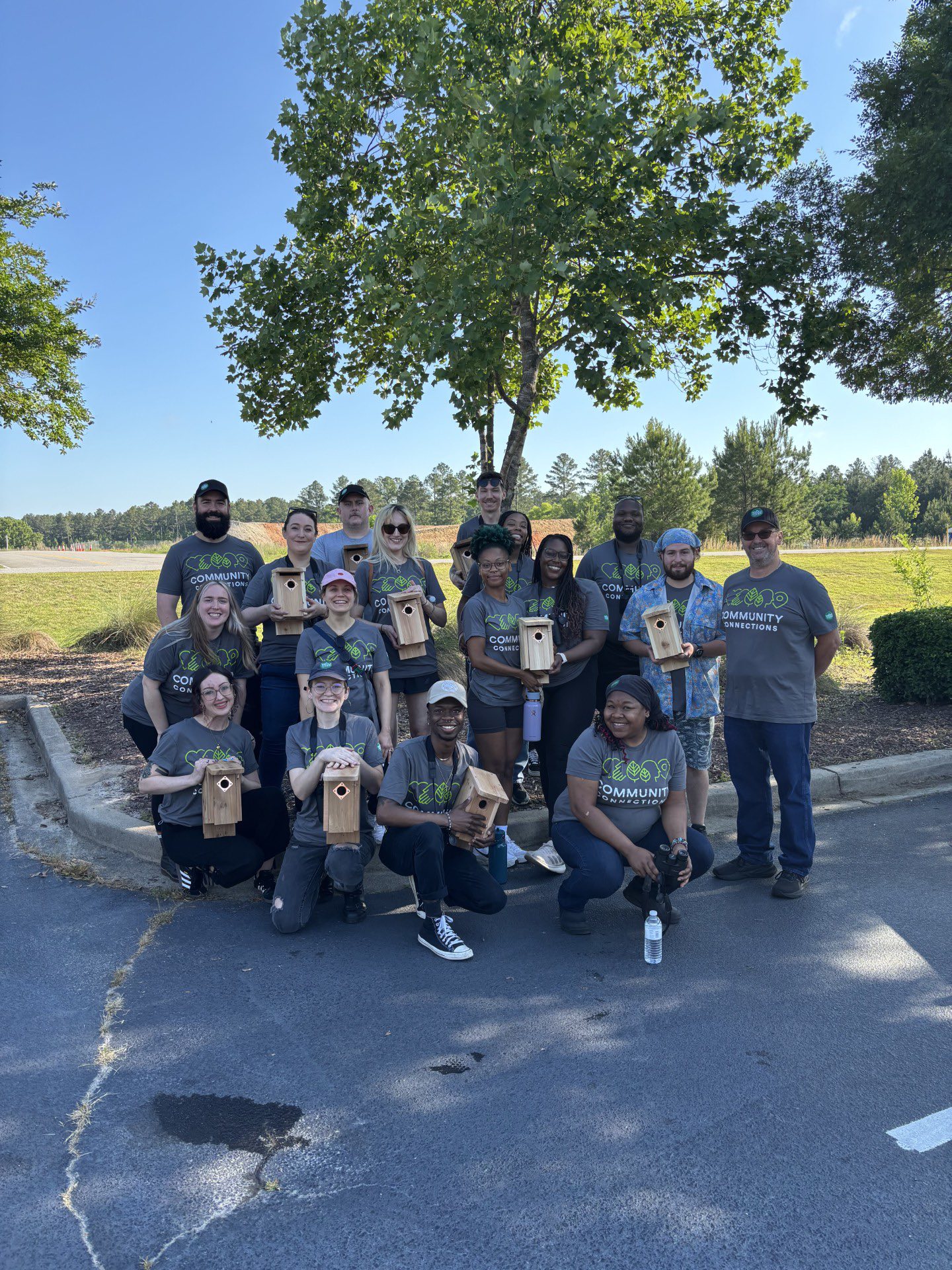
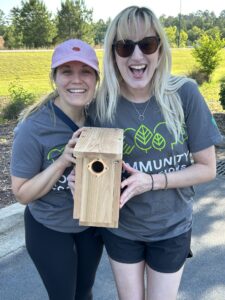
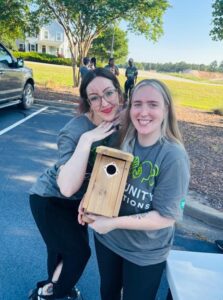
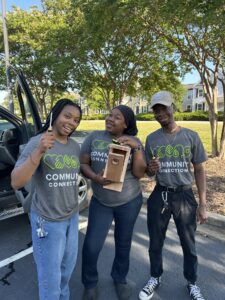
We had a great time earlier this month with a group of nature-loving employees from Whole Foods! Seventeen Whole Foods employees from their Columbia, SC location built ten eastern bluebird boxes which will be installed at schools, churches, or corporate sites around the state.
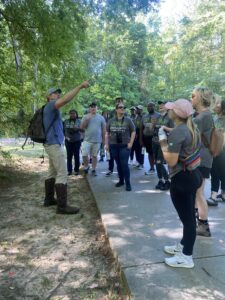
The group also went on a nature walk with SCWF’s Industry Habitat Manager, Jay Keck, who taught them about the local ecosystem as they listened to wood thrush and prothonotary warblers in the background.
Whole Foods purchased the materials from the South Carolina Bluebird Society, who makes pre-cut versions of the boxes for those interested in having an event of their own. (Lean more at: https://southcarolinabluebirds.org/sales/)
Thank you to the Whole Foods employees who took time out of their busy schedules to learn about conservation and wildlife!
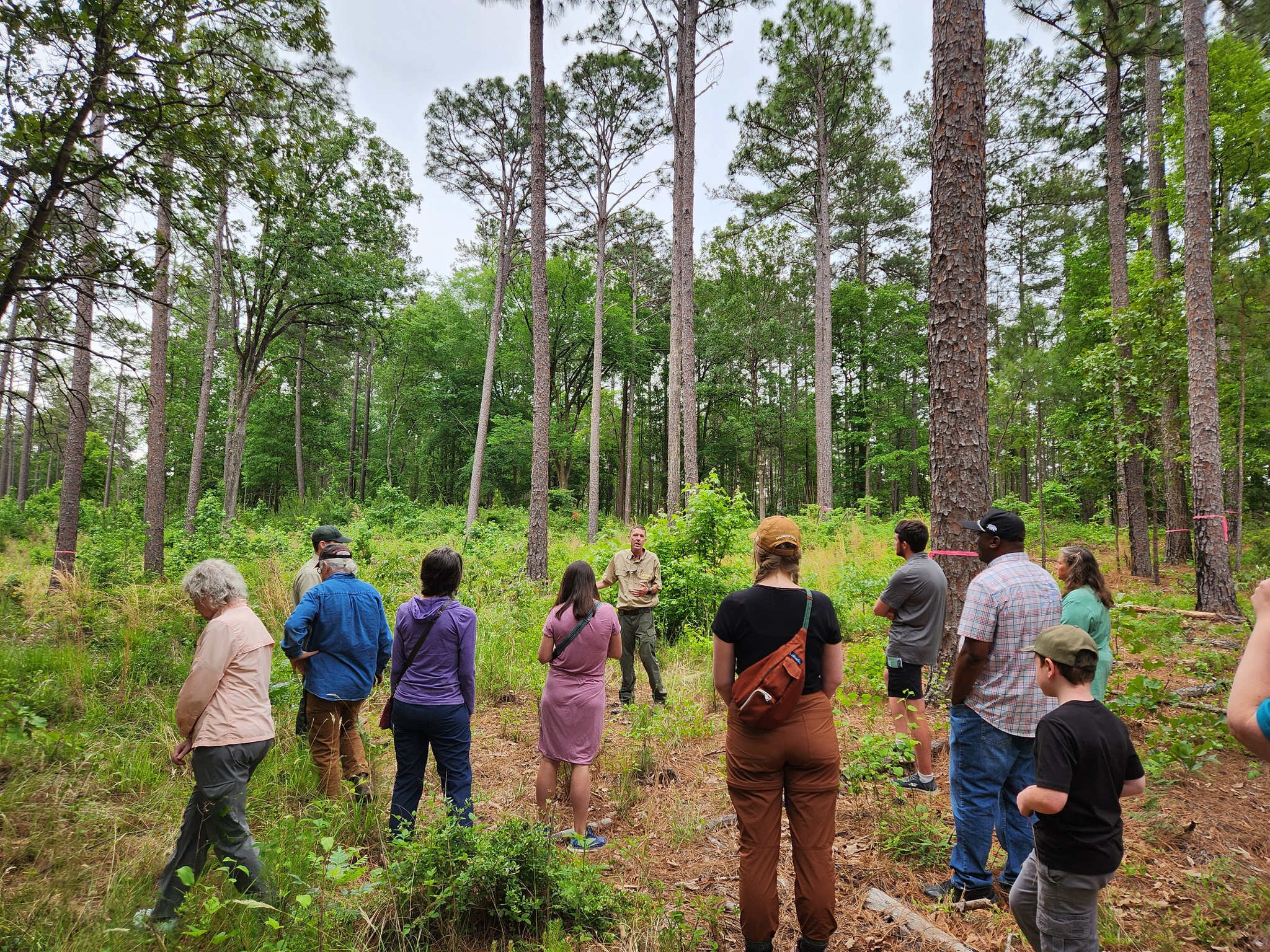
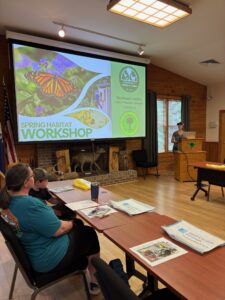
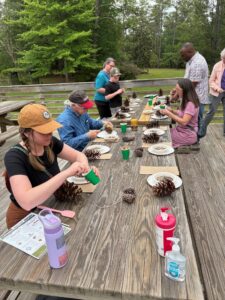
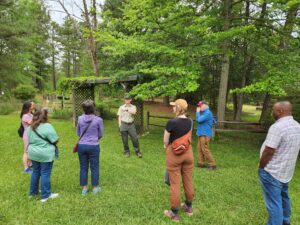
SCWF and the South Carolina Forestry Commission (SCFC) hosted a Spring Habitat Workshop on May 6th at Harbison State Forest. During this interactive workshop, participants learned how to create and enhance wildlife habitats by planting native plants, providing a water source, and adding feeders and nest boxes from SCWF Habitat Education Manager Savannah Jordan.
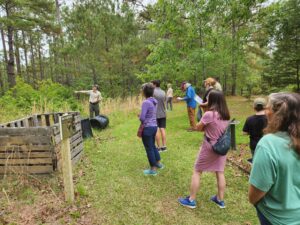
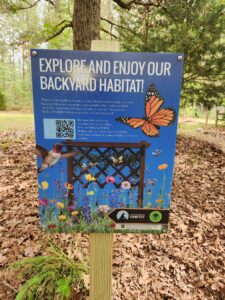
SCFC Environmental Program Manager Matt Schnabel led everyone on a tour of Harbison State Forest’s certified wildlife habitat garden and gave an overview presentation about SCFC. The event ended with a short hike, led by Manchester State Forest Director Daniel Tew, that included stops at three forested stands that show different management objectives and practices to teach people how forestry practices can affect and benefit wildlife populations. Learn more about how to certify your yard here!
The South Carolina General Assembly is set to adjourn at 5:00 pm on Thursday, May 14th thus ending a two-year Legislative Session. While there are several bills still pending that the South Carolina Wildlife Federation has an interest in, we have nevertheless successfully advocated for significant pieces of legislation that have already made it across the finish line. And, we anticipate, with only a few days left in the session, we’ll be able to help shepherd a few more bills into law.
SCWF, working closely with our advocacy partner Audubon South Carolina, was able to pass legislation that designated the Prothonotary Warbler as South Carolina’s Official State Migratory Bird. That legislation, Senate Bill S.383 now Act 98 of 2026, passed the both Senate and the House receiving a unanimous roll call vote in each chamber and was signed into law by the Governor on February 27th. Subsequently, we were honored to participate in a ceremonial bill signing ceremony with Governor McMaster at Audubon’s Francis Beidler Forest on April 20th. It was a very special occasion for a very special bird that calls South Carolina home each year after traveling thousands of miles on its annual migratory journey to and from Colombia, South America.
The “Hunting Heritage Protection Act”, House bill H.3872, is poised to receive final legislative approval this week after a minor amendment in the Senate. This legislation would ensure that there is no net loss in acreage for hunting opportunities on state-owned wildlife management areas managed by South Carolina’s Department of Natural Resources. This initiative was an undertaking by the Sportsman’s Caucus and was supported by and advocated for by SCWF.
Also pending is H.5069, the “South Carolina Protected Lands and Conservation Coordination Act.” This bill, which we expect will be given final approval by the General Assembly before adjournment, establishes a bold long-range State policy goal of increasing the number of protected lands to 7 million acres by the year 2050. Currently, approximately 3.5 million acres of South Carolina’s roughly 21 million acres total land mass are protected from development by one means or another. SCWF has been very active in its advocacy of this legislation and has worked behind the scenes with the sponsor, Representative Travis Moore, and other legislative leaders to fast-track this bill through the House and Senate this year.
As with any legislative session, there are good bill that we have supported and lent our voices to that simply don’t make it into law. One of these bills is H.3409. Introduced by Representative Patrick Haddon, this legislation would increase the qualified conservation income tax credit from $250 per acre to $1,000 per acre. The income tax credit rate available to those who are willing to place their property in a qualified conservation easement or make a qualified conservation contribution has stood at $250 per acre for more than 20 years. That rate has not been adjusted for inflation nor exploding property values and should be adjusted as H.3409 would do. Regrettably, Rep Haddon’s bill has stalled in the House Ways and Means Committee and will not pass this year.
While we enthusiastically supported the SC Conservation Education Act, which was enacted into law in 2025, neither the House Ways and Means Committee nor the Senate Finance Committee committed any money in the respective budgets for FY26-27 to fund this program. The Conservation Education Act, housed in the SC Department of Natural Resources, would fund third-party indoor and outdoor classroom conservation education programs specifically for youth. We hope that the General Assembly will provide adequate resources to DNR in the future to fund this important program.
While the FY2026-27 state budget has yet to be finalized, there is good news for conservation and land protection in the current spending plan. Both the House and Senate, respectively, included record “new” money for conservation grant programs, such as conservation easement funding through the SC Conservation Bank, and land acquisition funding for state resource agencies. In recent years, the Legislature has really stepped up to the plate to fund land protection efforts in our state and we thank the entire General Assembly for their efforts and Governor McMaster who has prioritized protecting our most precious natural resources, land and water, for generations yet to come.
Homeowners and NWF affiliates are fighting to change restrictive local landscaping laws in favor of native plants
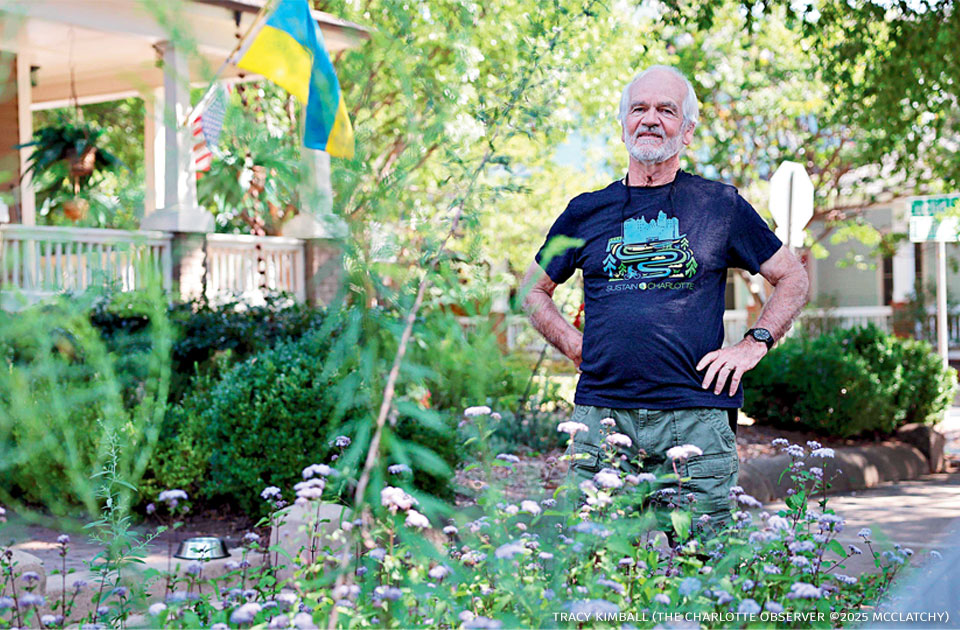
Lou Lesesne stands in his Charlotte, North Carolina, front yard (above), which brims with sundrops, coneflowers and other nectar-rich plants that support pollinators such as sweat bees.
FIVE YEARS AGO, when Lou Lesesne moved to a new house in Charlotte, North Carolina, he decided to “get rid of the grass and bring in the pollinators.” Today, his yard boasts expansive beds of ironweed, purple and cutleaf coneflower and other native plants that support native wildlife. “I like to do my part to help the birds and the insects find habitat,” Lesesne says.
This past June, however, Lesesne received a letter from the city of Charlotte warning him he was in violation of a property-maintenance code requiring homeowners to keep nonwoody plants shorter than 12 inches. The city told him to mow down his natural garden or pay a fine of up to $500.
His experience is hardly unique. Across the country, wildlife-friendly gardeners are running afoul of local laws that prioritize “nice, tidy green lawns that are mowed low to the ground,” says Patrick Fitzgerald, the National Wildlife Federation’s senior director of community habitat.
But thanks to advocacy efforts by homeowners like Lesesne—often in collaboration with NWF affiliates—such rules increasingly are being challenged and subsequently repealed or revised. “We’re seeing a lot of momentum to change local landscaping ordinances, especially as more people bump up against rules that don’t allow them to grow native plants,” Fitzgerald says.
Dating back to the early 1900s, municipal property maintenance ordinances are intended to keep neighborhoods looking cared for and neat. The rules often prohibit homeowners from growing nonwoody plants above a certain height, typically 10 to 12 inches. But that requirement stymies the efforts of gardeners who choose natural landscaping. Native plants can grow several feet high—and need to before they can flower and reseed. When mature, some of the ironweeds adorning Lesesne’s yard, for example, can stretch up to 10 feet tall. Allowing such plants to reach their full height provides the pollen, nectar, seeds and other food wildlife need, as well as vertical structure that creates habitat for a variety of species, from insects and birds to reptiles and amphibians.
When Lesesne received his citation, he contacted the North Carolina Wildlife Federation (NCWF), an NWF affiliate, for advice on how to save his native plants. He wasn’t the only one, and NCWF has been happy to help. Changing municipal ordinances to encourage natural landscaping is “commonsense conservation,” says Alden Picard, NCWF’s conservation coordinator, who has fielded dozens of calls, emails and visits from concerned native gardeners like Lesesne. “This is something everyone can get behind. It’s a gardening for wildlife campaign. It’s a campaign to let our milkweed, ironweed and joe-pye weed grow tall, flower and go to seed,” he says.
In July 2025, NCWF joined forces with six other local and state conservation groups to create the Coalition to Protect Our Urban Nature. The coalition successfully rallied residents of Charlotte to submit several hundred comments as well as attend public forums to lobby for exempting native gardens from the city’s vegetation-height requirement
Ed Murray, a Charlotte homeowner with more than 100 native plants in his yard, testified on behalf of the proposed change at a city council meeting in fall 2025. He framed native landscaping as a family issue that benefits children. “We live in a very urban area, so it’s not like you can drive 10 minutes and get a lot of biodiversity. But you can still have a place where your kids go out into the yard and see interesting things,” he says. Murray believes that interacting with the native plants, insects and birds in their yard gives his 4-year-old daughter “a significant leg up in understanding the way the world works.”
Charlotte Mayor Vi Lyles found such testimonies so convincing that, last October, she pledged to exempt native plant gardens from the vegetation-height requirement. This February, the city council approved the change, paving the way for homeowners in the nation’s 14th largest city to create more wildlife-friendly gardens.
Another North Carolina city, Winston-Salem, passed a similar ordinance in 2025. Next up, Murray hopes the Charlotte coalition sets its sights on requiring native plants—and prohibiting the planting of invasive species—on city-owned properties, a policy adopted by Greensboro, North Carolina, in 2024.
In South Carolina, another NWF affiliate, the South Carolina Wildlife Federation (SCWF), also is helping reshape rules in the state capital, Columbia, to help homeowners grow—not mow—native gardens. After hearing complaints that residents were being penalized for growing native plants, SCWF teamed up with the Gills Creek Watershed Association and the South Carolina Native Plant Society Midlands Chapter to lobby the city to change its property maintenance ordinance. In May 2025, Columbia amended its rules so that homeowners certified through a recognized program, such as NWF’s Certified Wildlife Habitat® program, can register their yard with the city to avoid fines.
“South Carolina is one of the fastest-growing states. It’s more important than ever that we are able to replace some of the habitat that’s removed when new neighborhoods are built,” says Sara Green, SCWF’s executive director. When homeowners re-create lost habitat by planting native gardens, she adds, it benefits at-risk wildlife, including songbirds and native pollinators. Green has received requests from several other NWF affiliates seeking to change their local landscaping rules.
To support such efforts, NWF published the Guide to Passing Wildlife-Friendly Property Maintenance Ordinances in 2021. “The National Wildlife Federation prioritizes landscaping ordinances because they represent a key lever for increasing native plant habitat in communities,” Fitzgerald says, adding that “there’s been a recent groundswell of interest in advancing local policy changes to benefit wildlife.” In the coming year, he says, NWF will survey its affiliates to assess local advocacy efforts underway, including which of them can be replicated elsewhere.
Legalizing protections for wildlife-friendly gardens at the city level “is a much better return on investment than trying to change rules one homeowners association at a time,” Picard says. “It’s time for local government to wake up, to move forward, so that we have monarchs and bumble bees and songbirds in our yards 50 years from now.”
A committee of the South Carolina Wildlife Federation board is proud to announce the selection of the 2025/2026 scholarship recipients. Congratulations to Ella Michel, Lily Addicot, and Anna Chobot for their selection as SCWF scholarship winners and to Hsuan Hsieh for being selected for the Nicole Chadwick Memorial Scholarship. These impressive young conservationists are all motivated to use science-based solutions to make an impact on the world around them.
Ella Michel is a senior at the South Carolina Honors College studying Environmental Policy and Conservation. Ella is passionate about innovating our energy systems to be more sustainable, with a specific focus on energy efficiency. Increasing energy efficiency has a wide range of benefits, reducing energy bills and emissions simultaneously. She plans to leverage her interdisciplinary degree to approach energy efficiency improvements from a multidimensional perspective, including policy, industry, utility, and community-based solutions. It is through this work that she envisions a future where people can access the energy they need, while our environment is protected.
Lily Addicott is a master’s student in the Environmental Studies and Sustainability program at the College of Charleston, with a bachelor’s degree in microbiology from Clemson University. Since arriving in Charleston, she has shown a particular passion for geospatial science and wildlife conservation. Her thesis project will focus on quantifying the anthropogenic disturbance on local bottlenose dolphin populations. In the future, she hopes to make her impact on the world by working for a non-profit organization focused on ecology and conservation. Lily spends her free time teaching the sport of orienteering and trying to get people outside reading maps and connecting with nature!
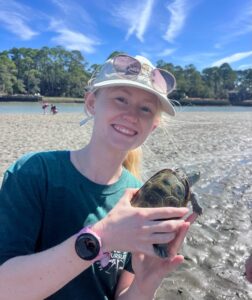
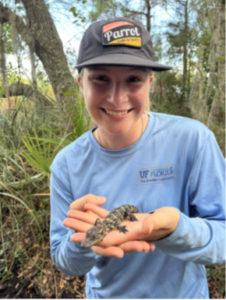
Anna Chobot is a senior Wildlife and Fisheries Biology major at Clemson University with an interest in herpetology and contaminant research. She has worked on two Clemson research projects so far: one studying microplastic abundance in the diet of the American alligator (Alligator mississippiensis) across the Southeastern United States, and the other analyzing the genetic demographics of patch-nosed salamanders (Urspelerpes brucei) within the Tugaloo River Basin. Over the summer, she developed and conducted an independent research project studying microplastic abundance and diversity in water, sediment, fish gastrointestinal, and alligator diet samples across four coastal South Carolina sites. She plans to publish these results and continue to pursue a career in research by attending graduate school after graduating from Clemson in the spring.
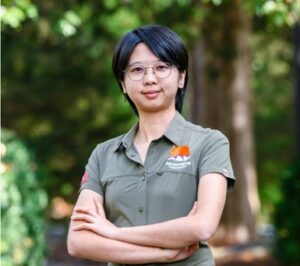
Hsuan Hsieh is a PhD candidate in Parks, Recreation, and Tourism Management at Clemson University, where her research focuses on forest therapy and nature-based approaches to improving health and well-being. She enjoys guiding forest therapy walks and believes in the idea of “healthy forests, healthy people,” hoping that forest therapy practice can foster greater environmental care and nurture a reciprocal relationship between humans and nature.
SCWF is honored to be able to distribute educational grants to full-time students pursuing a degree in any environmental field at South Carolina schools of higher education. Both undergraduate and graduate students are eligible, based on their performance in academia and in related community activities. These scholarships are funded by contributions from generous individual donors in addition to the ongoing support received from these funds:
D. L. Scurry Foundation provides educational scholarship funds for individuals attending colleges, universities and technical schools in South Carolina.
The Riverbanks Conservation Support Fund (CSF) provides financial assistance for conservation oriented projects/programs worldwide that promote preservation of the Earth’s biodiversity.
The Nicole Chadwick Memorial Fund honors the legacy of an endangered species biologist who made a long-lasting impact on wildlife conservation in South Carolina.
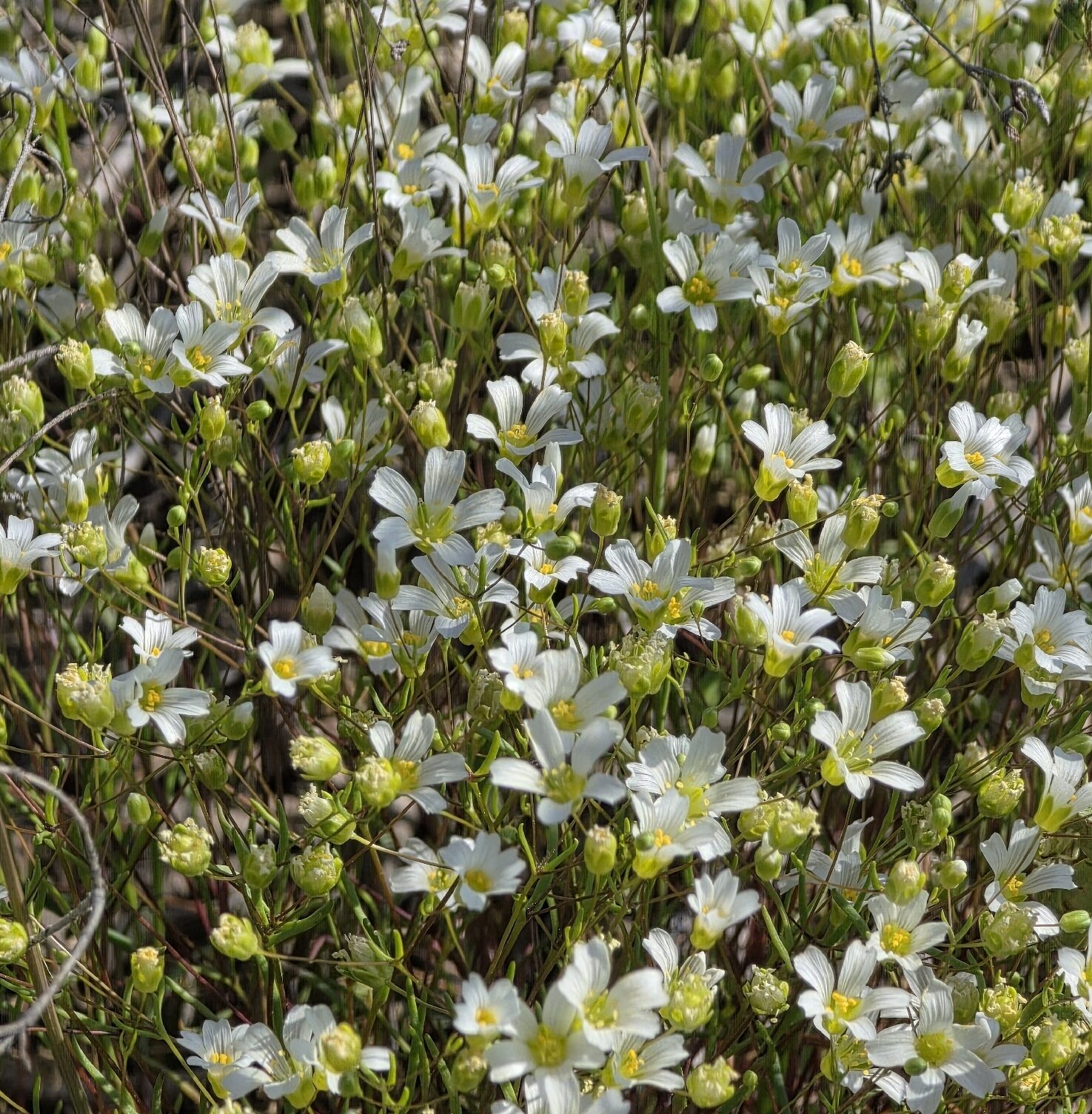
Banner Image Credit: Piedmont Sandwort by Allison Bugarin
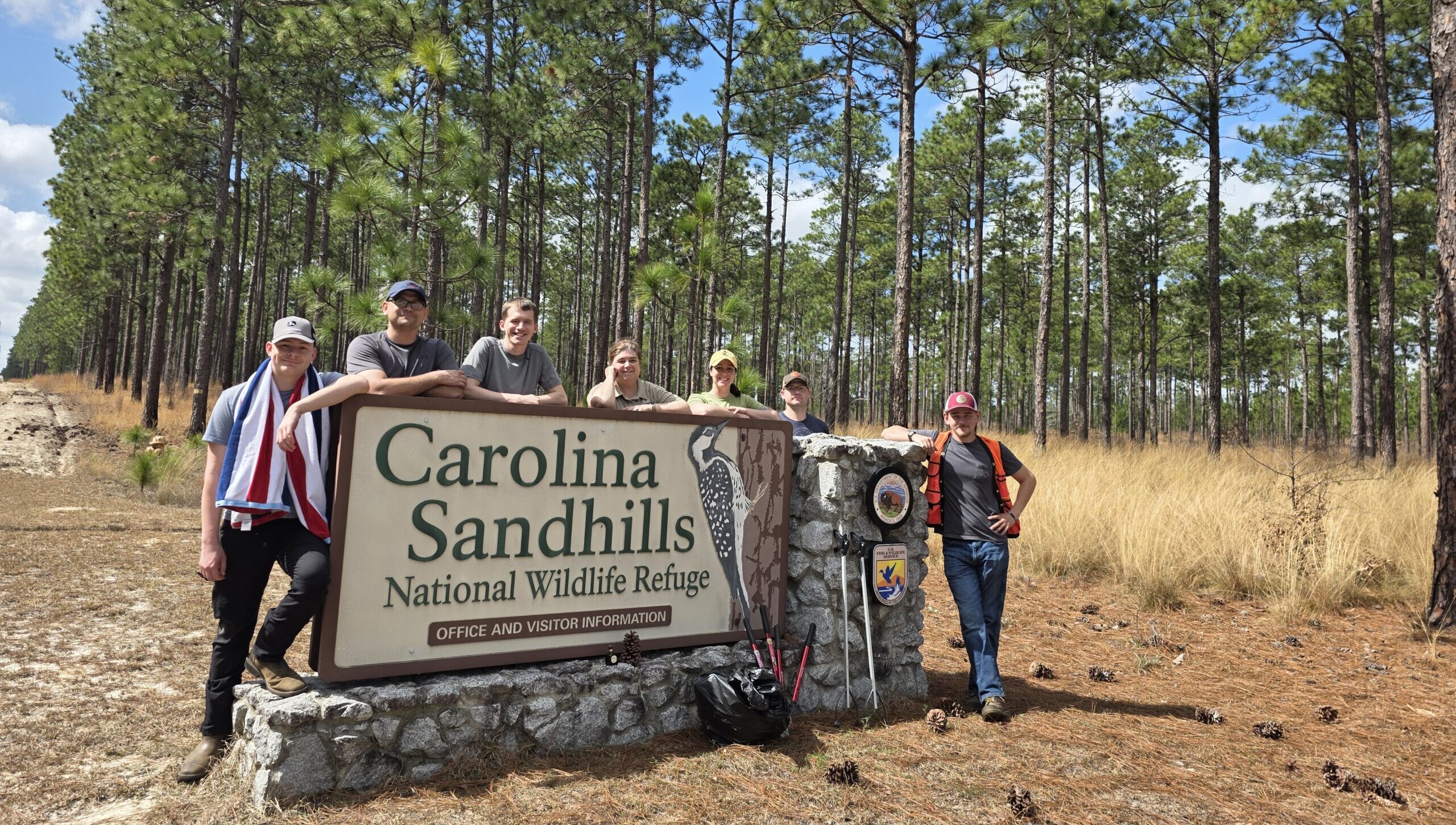
Volunteers, partners, and staff gathered once again for the annual Working for Wildlife Day, a hands-on volunteer event hosted by the South Carolina Wildlife Federation in partnership with the Carolina Sandhills National Wildlife Refuge. The event continues a long-standing tradition of conservation work at the refuge, where volunteers help maintain and protect habitat for native wildlife.
This year’s workday brought together a dedicated group of volunteers ready to roll up their sleeves and make a difference. After gathering at the refuge headquarters in the morning, participants split into teams and headed out to tackle a variety of stewardship projects across the refuge.
Supporting Habitat and Wildlife
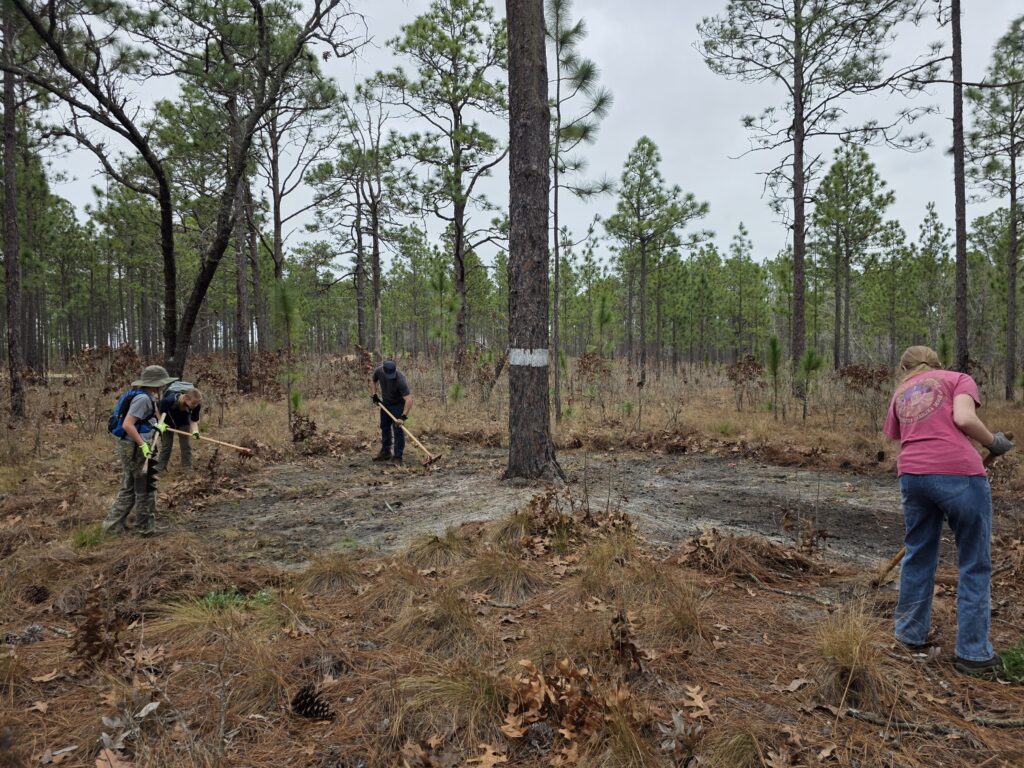
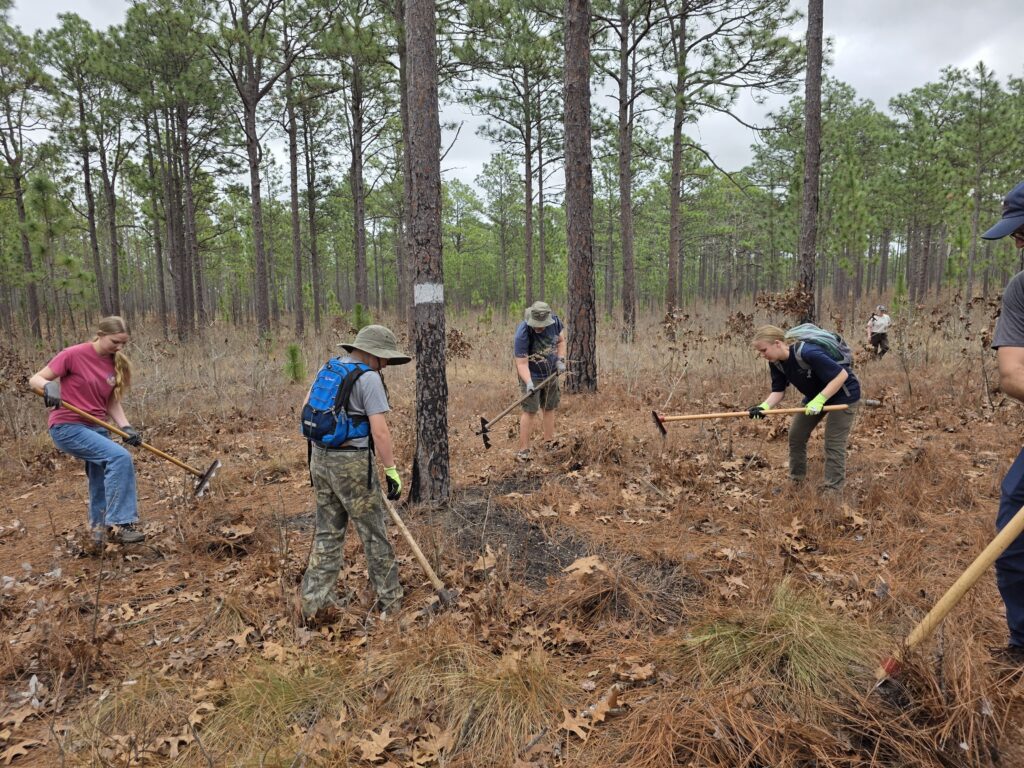
One of the tasks of the day involved raking around Red‑cockaded Woodpecker cavity trees. This endangered species depends on mature longleaf pine forests for nesting, and maintaining the areas around their cavity trees helps protect these sites during prescribed burns and keeps habitat conditions suitable for the birds.
Another group of volunteers helped check and maintain duck nest boxes throughout the refuge. These boxes provide important nesting opportunities for species such as the Wood Duck, which rely on cavities near wetlands to raise their young.
Volunteers also assisted with installing and maintaining signage around the refuge. These signs help guide visitors, protect sensitive areas, and share important information about the wildlife and habitats found within the refuge.
Volunteers raking red-cockaded woodpecker trees.
Volunteers removing fire fuel from around cavity trees.
A Landscape Worth Protecting
The Carolina Sandhills National Wildlife Refuge protects a unique sandhills ecosystem dominated by longleaf pine and wiregrass habitat. The refuge supports an incredible diversity of wildlife, including more than 190 species of birds and dozens of mammals, reptiles, and amphibians.
By assisting with habitat maintenance and conservation projects, volunteers play an important role in helping refuge staff protect these species and the landscapes they depend on.
Thank You to Our Volunteers
Events like Working for Wildlife Day would not be possible without the dedication of volunteers who give their time and energy to conservation. Their efforts help ensure that South Carolina’s wildlife and wild places remain healthy for generations to come.
We had a great group of volunteers this year!
We are grateful to everyone who joined us this year and helped make the day a success. Whether raking around woodpecker trees, checking duck boxes, or installing signage, each project contributed to the continued stewardship of this special place.
We hope to see everyone again next year for another day of working together for wildlife!

 SCWF recently had the opportunity to represent South Carolina at the National Wildlife Federation (NWF) 90th Annual Meeting – the largest and oldest gathering of grassroots conservation leaders in the nation.
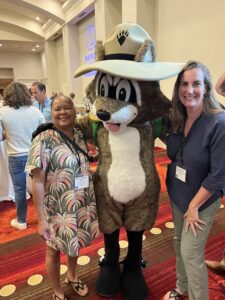 This year, Rosemary Martin-Jones (SCWF Board Member & Affiliate Representative) and Sara Green (SCWF Executive Director & Alternate Affiliate Representative) represented SCWF and South Carolina at the recent NWF Annual Meeting held in Providence, RI. They not only voted on NWF resolutions and board members, but also had the opportunity to sit on committees and interact with colleagues at NWF and other state affiliate organizations. This meeting is always such a great opportunity for SCWF to learn from other affiliates, share our successes and brainstorm new ideas. They even got to hang out with Ranger Rick!