COLUMBIA — Senator Lindsey Graham has signed onto a bipartisan wildlife conservation bill, the Recovering America’s Wildlife Act, that will dedicate $1.4 billion annually to locally-led efforts to help at-risk wildlife species nationwide.
“America’s wildlife are in crisis. This ground-breaking legislation tackles the problem at the scale necessary,” said Sara Green, Executive Director of the South Carolina Wildlife Federation. “We thank Senator Graham for cosponsoring this fiscally responsible effort to help at-risk wildlife with collaborative, conservation measures across every state, territory and Tribal nation.”
“This bill is modeled after historic laws passed decades ago that have long helped keep our game and sportfish populations healthy,” said Robert H. Boyles, Jr., Director of the South Carolina Department of Natural Resources. “Today, most people don’t know that wild turkey or inland striped bass were ever in trouble. Funding from this bill will allow us to do the same kind of work on behalf of South Carolina’s at-risk species like gopher tortoises, wood storks, and loggerhead sea turtles. We wholeheartedly thank Senator Graham for supporting this legislation that will benefit our state’s wildlife and our way of life.”
Loggerhead sea turtle hatchlings, photo by Peggy Lucas.
“Saving the thousands of at-risk wildlife species will require bold, bipartisan leadership,” said Collin O’Mara, president and CEO of the National Wildlife Federation. “We are so grateful to Senator Graham for leading the way on the historic Recovering America’s Wildlife Act. This bill will have an immediate impact – saving species, creating jobs and protecting our way of life in South Carolina and all across the country.”
A similar bill passed the House last session, with support from Representative Jim Clyburn. Senator Graham also cosponsored a Senate version last session. It passed out of committee but never received a floor vote, despite having 47 bipartisan cosponsors.
“Preserving the wildlife and natural resources of South Carolina is crucial not only for the benefit of future generations, but it’s a vital source of local economic growth. Furthermore, by providing important resources, this legislation will support habitat restoration across South Carolina by voluntarily bringing together private and public stakeholders,” said Senator Graham in a press release put out by Senator Heinrich’s office.
Federally recognized tribal nations, including South Carolina’s Catawba Indian Nation, would share $97.5 million annually to fund wildlife conservation efforts in the lands they manage.
“Wildlife conservation is an issue that unites all Americans. We hope Senator Scott and the rest of the South Carolina delegation will join Senator Graham in cosponsoring this commonsense bill and help it get across the finish line,” said Green.
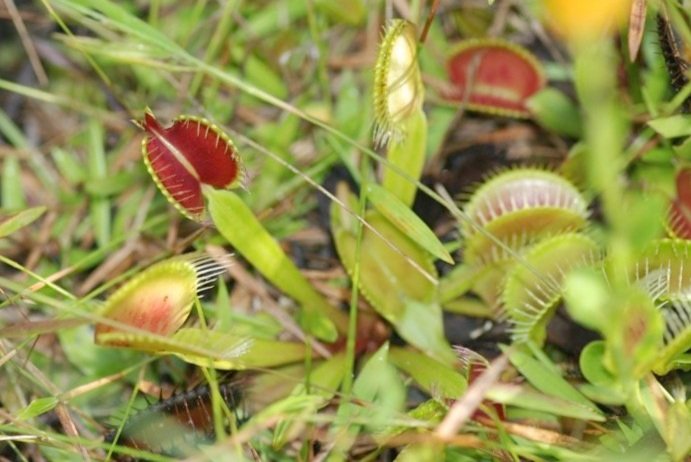
Senator Hembree of Horry County has introduced a bill (S.581) which would designate the Venus Flytrap as South Carolina’s Official State Carnivorous Plant. SCWF spoke in support of this bill at a recent sub-committee meeting, where it passed unanimously out, and will next be considered by the full Senate Family & Veterans’ Services Committee. If approved by the Committee, it will be placed on the Senate calendar for a floor vote.
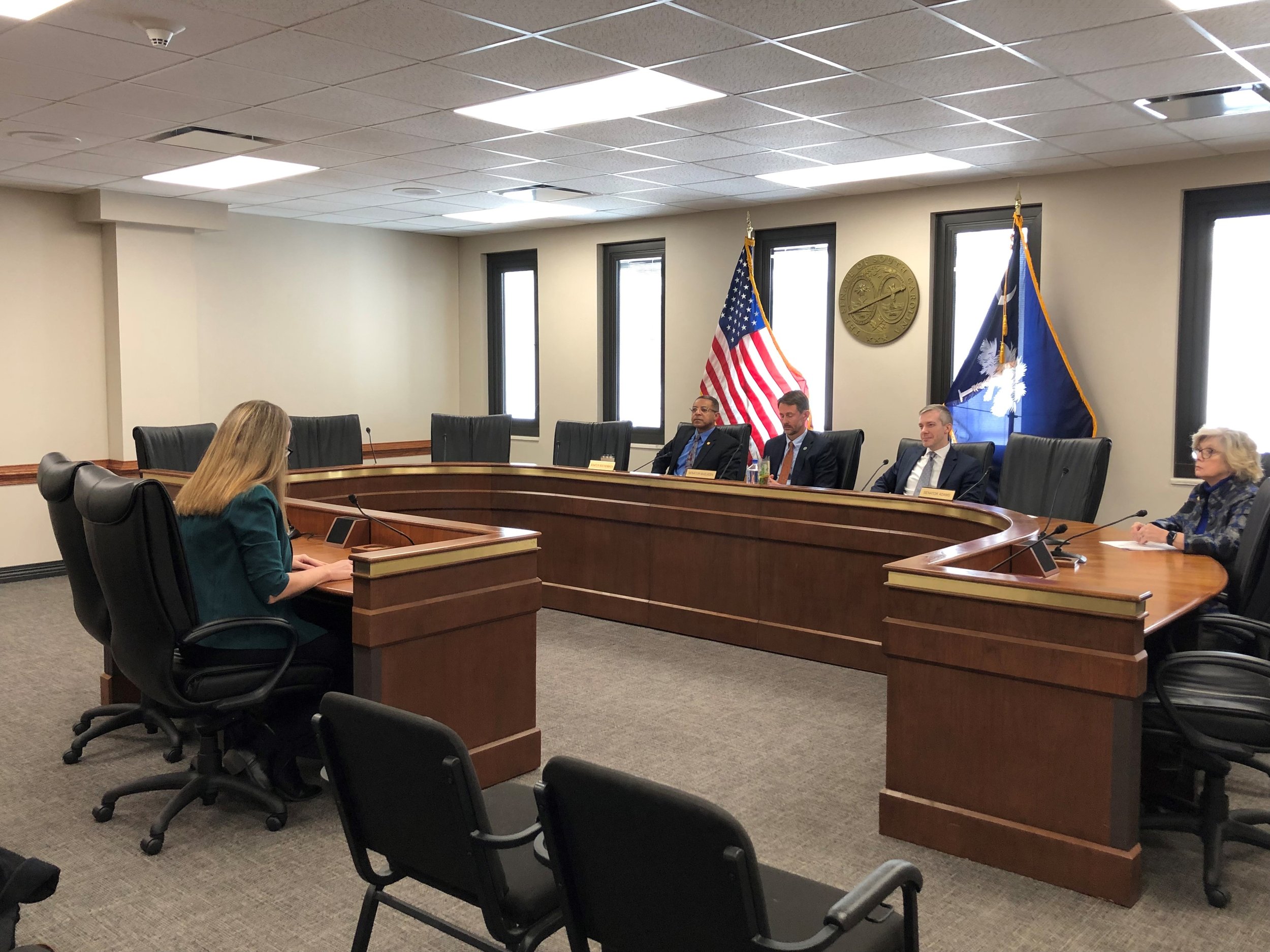
Here is a copy of remarks from Sara Green, Executive Director, at the sub-committee hearing:
Thank you, Mr. Chairman, and members of the subcommittee, for the opportunity to speak with you this morning. I am the Executive Director of the South Carolina Wildlife Federation. We are the oldest conservation organization in the state, founded in 1931 by Harry Hampton and Zan Heyward.
Our mission is to conserve and restore habitat for wildlife through education and advocacy.
We hold classes and events throughout the state to teach people of all ages about our beautiful state’s natural resources, and how they are connected with the local ecosystem, as a way to inspire folks to take action to preserve our natural treasures
We have taken people to see and experience many of the special gems all across South Carolina, and this includes the Venus Flytraps in Horry County.
Like all plants, the Venus flytrap gets its energy from the sun through photosynthesis. However, it lives in very nutrient-poor soil, so it has adapted a method of luring insects with sweet nectar, and capturing and digesting insects and arachnids to get nutrients that are not available in the surrounding environment.
The “trap” is made of two hinged lobes at the end of each leaf. On the inner surfaces of the lobes are hair-like projections that cause the lobes to snap shut when prey comes in contact with them. The hinged traps are edged with small bristles that interlock when the trap shuts to ensure the prey can’t squirm out. There are other carnivorous plants in the wild, but the Venus flytrap is one of the very few that exhibits motion to actively trap its prey.
Once the trap closes, the digestive glands that line the inside of the leaf secrete fluids that dissolve the soft parts of the prey, kill bacteria and fungi, and break down the insect with enzymes to extract the essential nutrients. These nutrients are absorbed into the leaf, and five to 12 days following capture, the trap will reopen to release the leftover exoskeleton.
These plants were historically found as far south as Charleston, but many threats have limited its range to today’s small populations.
This species is often poached because there is a market for these plants for backyard gardens. There are specific guidelines online for how to buy plants which were farmed rather than ones that were illegally dug up from native populations.
New housing developments are a threat due to clearing of land and draining of the boggy habitats where this species thrives.
This is a highly fire-dependent species and it flourishes best when the landscape is burned every 2-3 years. Managing habitat for this one species with fire protects many other species of plants and animals including maintaining viable habitat for our game species like quail, turkey, and deer.
This designation will help promote education and awareness of this globally unique and rare species found in our state, and help to promote stewardship and conservation. Since our state symbols are part of an education standard taught in elementary schools across the state, this designation will also help develop curriculum in our schools for a species that is right here in our own state, and is sure to capture the attention of students!
I thank you for your consideration of this bill this morning. The South Carolina Wildlife Federation fully supports passage of this bill.
SCWF’s Sara Green speaks in support of the bill – photo by Trip King.
SCWF Executive Director, Sara Green, had the opportunity to speak on behalf of the SC Conservation Coalition about land conservation at the recent “Conversations with Conservationists” Senate Briefing.
You can find the recording from this event in the State House website’s video archives through the button below – it’s titled “Conversation with Conservationists”:
SCWF’s Sara Green speaking at the Senate Briefing. Photo by Trip King.
Good morning, I thank each of you for being here today. I am Sara Green, Executive Director of the South Carolina Wildlife Federation – the oldest conservation organization in the state just recently having celebrated our 90th year as a trusted voice on conservation issues.
I’m here this morning to ask for your support for the Conservation Enhancement Act – S.280.
This bill would reinstate the initial funding source for the South Carolina Conservation Bank and significantly increase this agency’s ability to conserve private land. The Bank is the single most important tool the state has to ensure South Carolina’s most iconic and precious natural resources are preserved and protected for future generations.
From the scenic vistas of the Blue Ridge, rolling piedmont and sandhills, giant towering trees of the coastal plain, productive marshes and expansive beaches – we all know that South Carolina is blessed with an incredible diversity of natural resources that are both beautiful and accessible.
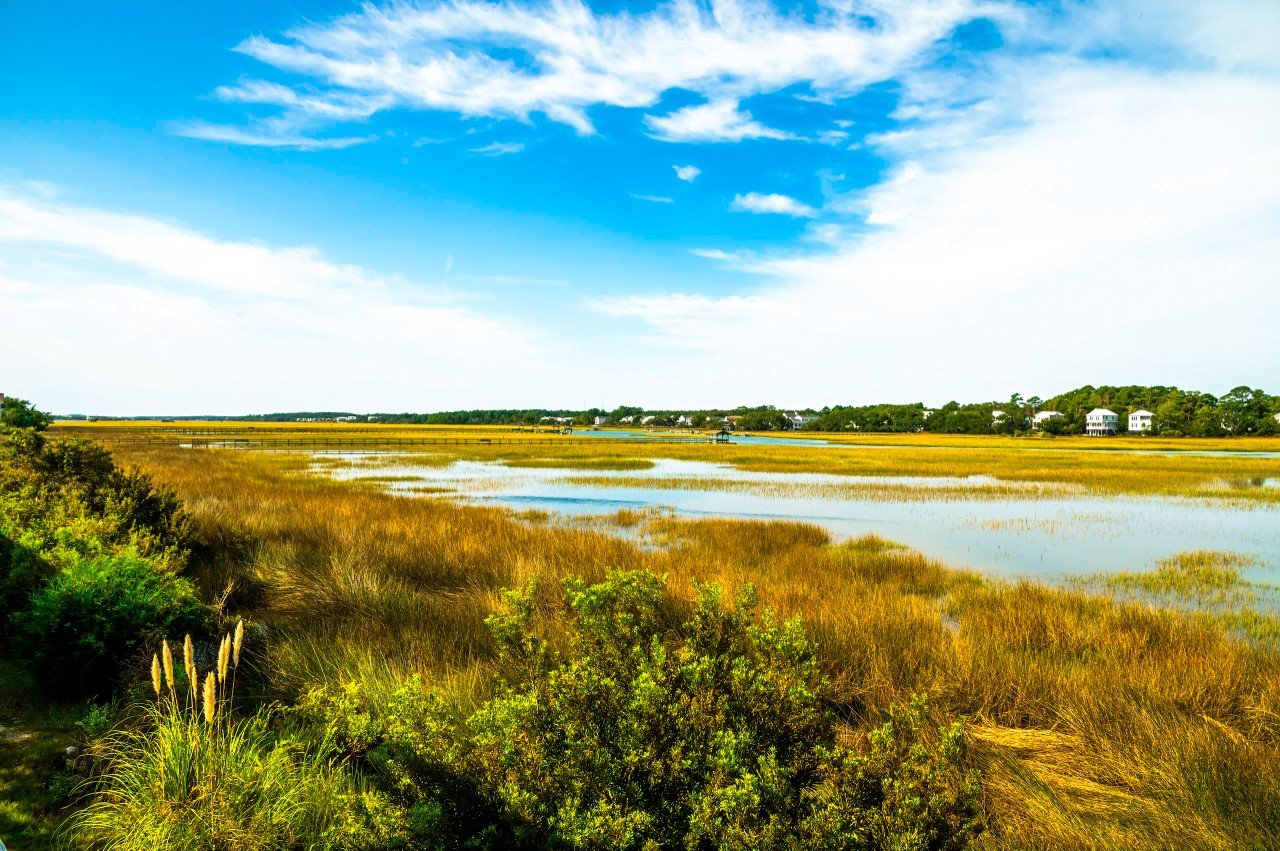
Photo Credits: Inlet Point Marsh on Pawley’s Island by Carl Beard; Lake Jocassee by Ellen Haynes; Reedy River by Adam Roberto.
But this treasure trove of land and water is not immune from destruction or neglect; we must be vigilant to protect these amazing places and the wildlife they sustain. It is our duty to protect, nurture, and safeguard these irreplaceable ecosystems so that they may be enjoyed for generations to come. And South Carolinians from all walks of life have spoken; they want their fishing holes, hiking trails, vista views, lakes and streams protected from unwanted and ever-increasing development.
Originally established by the General Assembly in 2002 and funded in 2004, the SC Conservation Bank has helped preserve more than 300,000 acres of threatened lands in our state since its inception by providing funding for fee simple land purchases and conservation easements. And we’re talking mostly about private land conservation. Since 90% of our state’s land is privately held, the Conservation Bank is uniquely qualified to lead the state in private land conservation because it’s grants process was specifically designed for the protection of private lands. The Bank has financially supported some of the largest conservation easement deals in South Carolina’s history.
The Bank was due to sunset in June 2018. The re-authorization bill which extended the life of the Bank, made it a permanent state agency for the first time ever, and also removed the historically dedicated deed stamp funding for the Bank in favor of an annual appropriations through the legislative state budgeting process.
While we sincerely appreciate the General Assembly’s work to make the Bank a permanent agency, in the course of doing so, the dedicated, reliable funding from the deep stamp was repealed. Last session, the Conservation Enhancement Act was introduced in the House and Senate to reinstate that funding mechanism. That bill was introduced late in the session and ultimately did not pass either body before adjournment.
The Senate version of the bill last year also included language directing revenues from the state sales tax on outdoor recreational equipment to be set aside for use by the Department of Parks, Recreation & Tourism, the Forestry Commission and the Department of Natural Resources, to enhance lands owned or managed by those agencies.
This year, these two aspects have been introduced by Senator Campsen and Senator Davis separately – the Public Lands Enhancement Act (S.281) deals with setting aside the tax on outdoor recreational equipment, while the Conservation Enhancement Act focuses on reinstatement of the deed stamp funding. Just yesterday, Representative Phil Lowe, a member of the House Ways and Means Committee, introduced a companion bill to the Conservation Enhancement Act and we anticipate early movement in the House on this measure.
Over the years, the General Assembly has been very conservation-minded. Last year, the General Assembly appropriated $40M to DNR for land acquisition, which was incredibly helpful for public lands in our state. And the Conservation Bank received $25M of non-recurring funds to help with private land conservation. We are very appreciative of your leadership in providing such funding and hope you will continue to allocate more financial resources as growth in our state continues to explode.
Also last year, the Green Space Sales Tax bill passed the General Assembly which enabled Counties to approve by referendum an up-to 1% sales tax dedicated to land acquisition for green space, so we greatly thank the legislature for passing that bill as well. Beaufort County has already enacted and passed this measure. Counties that take advantage of this can then leverage their funds with Conservation Bank funds to get more bang for their buck and have a greater impact for their communities.
The SC Conservation Bank has been incredibly effective with the funds available to them so far – The Bank has conserved over 329,000 acres of significant lands statewide at an average price of $527 per acre, while the appraised value of their land conservation grants up to this point is $1.15 billion. That represents a 7 to 1 rate of return on the investment as a ratio of what the Bank expended, as compared to the fair market value of the property.
Passing the Conservation Enhancement Act, S.280, and reinstating the deed stamp funding is the best way to sustain these efforts and significantly increase private land conservation in our beautiful state.
I thank you for your time and consideration. I hope the Senate will advance the Conservation Enhancement Act and other measures that may come up that will promote public and private land conservation, and protect our beautiful state.
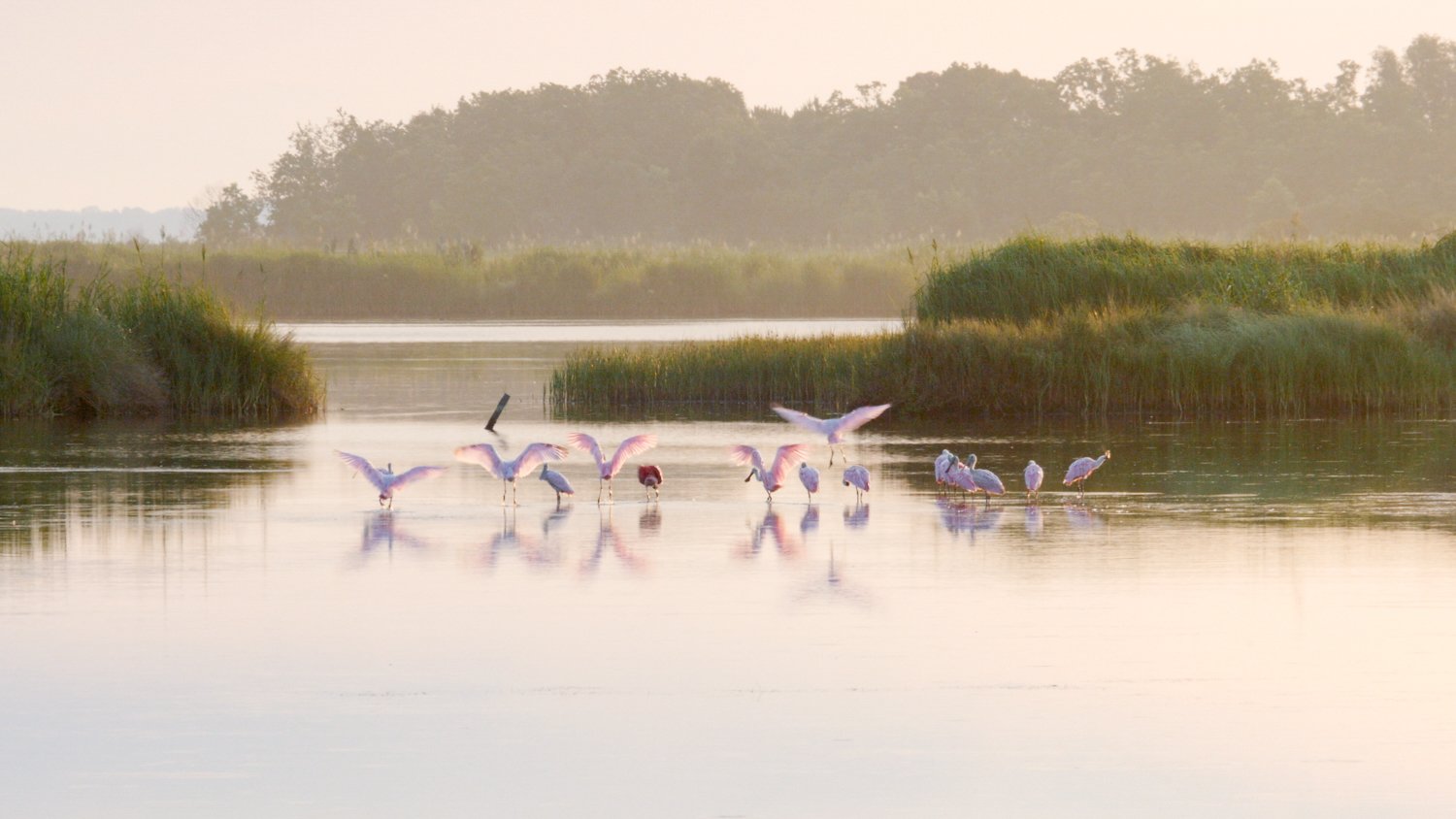
Bear Island with Roseate Spoonbills by David Ramage.
Reviewing several new large developments in the Charleston area, I have become convinced that it is far past time for developers to shift development practices in order to achieve new sustainable development in light of higher flooding potentials and large losses of valuable ecosystem elements.
Two large recently proposed developments (and likely many more I have not reviewed) have been planned with problematic design standard practices. These practices include attempting to fit unrealistically high numbers of dwellings including placing residential dwellings in the 100-year floodplain (which these days is probably now closer to a 50-year floodplain). In addition, these practices result in destruction of large acreages (approximately 200+ acres at each site) of onsite wetlands that provide wildlife habitat and naturally detain, retain and filter runoff destined for our streams and rivers. They also often result in loss of valuable forested habitat, natural drainage and carbon storage patterns and attempt to control onsite flooding by building large retention ponds in areas with a high-water table.
To achieve sustainable development, avoid future flooding in new developments, loss of important habitats, and harmful discharges to our state waters, we must shift our development strategies in many ways.
We can not continue to fill large acreages of wetlands and replace them with retention ponds especially in areas like the Lowcountry that have a high- water table that is often not adequately considered when sizing retention ponds. We also need to have developments utilize pervious surfaces for roads and driveways, elevate houses for water movement where appropriate, consider using constructed wetlands instead of retention ponds when necessary, leave more large trees and wetlands for carbon sequestration and reject building in our floodplains.
Steve Gilbert, of Charleston, is the Special Project Manager for the South Carolina Wildlife Federation.
SCWF and other conservation groups are working to ensure that new housing developments conserve critical wildlife habitat and protect residents from increased flooding. The article below describes our challenging of a permit for the almost 10,000-acre proposed Cainhoy development, near the Francis Marion National Forest, which would destroy nearly 200 acres of wetlands that offer critical protection from flooding by storing flood waters.
“Not only does the planned development put new residents in the direct path of flood waters, but it will also impact the nearby national forest and wildlife,” said Sara Green, Executive Director of the South Carolina Wildlife Federation. “The development will remove critical habitat for animals like the red-cockaded woodpecker on the Cainhoy site and negatively impact the national forest, an invaluable natural resource for all.”
Federal regulators have approved plans for a city-sized development on the Cainhoy Peninsula. Environmental groups say the project will make the area more vulnerable to flooding. File/Staff
CAINHOY — Environmental advocacy groups in South Carolina filed a lawsuit challenging a permit for a proposed 9,000-acre community along Clements Ferry Road they say would make the area more vulnerable to flooding.
The Point Hope project has been approved for as many as 18,000 homes on land that straddles Clements Ferry Road between S.C. Highway 41 and Interstate 526. Permits were authorized by the U.S. Army Corps of Engineers on May 11.
The lawsuit filed Aug. 17 claims issuance of the Army Corps permit violates the federal Clean Water Act’s prohibition on filling wetlands if there is a less environmentally damaging alternative.
Environmentalists said the project would destroy nearly 200 acres of wetlands needed for floodwater storage, plus place about 45 percent of the planned housing in the floodplain. And more than 45,000 people would be added to the Cainhoy Peninsula beyond Daniel Island, according to a news release from the Southern Environmental Law Center detailing the case.
The center filed the suit in federal court in Charleston on behalf of the Coastal Conservation League, Charleston Waterkeeper and the South Carolina Wildlife Federation.
The Corps referred requests for comments on the lawsuit to the U.S. Department of Justice. A DOJ spokeswoman declined to comment through an email sent on Aug. 18.
Charleston Waterkeeper Director Andrew Wunderley said the developers should be doing everything they can to minimize destroying wetlands that protect residents from floodwaters.
“Damaging hundreds of acres of wetlands is clearly reckless for future occupants of the development,” Wunderley said in the news release.
Several other defendants and issues of concern were also listed in the complaint.
The Environmental Protection Agency is being sued because of its failure to veto the Corps’ permit, the plaintiffs said. The U.S. Fish and Wildlife Service is listed in the complaint because it “unlawfully issued a biological opinion authorizing the extirpation (elimination) of endangered red-cockaded woodpeckers from the property.”
“It’s the biggest poster child for a bad idea with filling a wetlands, housing in a floodplain and endangered species,” said Catherine Wannamaker, a senior attorney for the Southern Environmental Law Center.
In addition, the development is planned on an already-crowded road that has its share of traffic issues, environmentalists said.
Because of its proximity to the Francis Marion National Forest, wildlife there, like the red-cockaded woodpecker, could be impacted by city-sized development.
Red-cockaded woodpeckers nest in live trees and depend on mature pine trees to build their internal nests. The Francis Marion once had the nation’s second-largest naturally increasing population. The animals were listed as endangered in 1970, and about half of the population in the forest here was displaced after Hurricane Hugo in 1989.
Point Hope could further remove critical habitat for animals like the woodpecker and negatively impact the forest, environmentalists said.
The environmental groups say they are not opposed to development occurring on the Point Hope property. Instead, they are advocating for a development plan that is resilient and sustainable, said Jason Crowley, a senior program director for the Coastal Conservation League.
He said environmentalists hope to work with the federal agencies and developers on a resolution that substantially minimizes the impacts to natural resources and avoids putting homes in the floodplain “at the same time that the Army Corps is trying to build a billion-dollar seawall downtown.”
The federal government has 60 days to file an answer to the suit, Wannamaker said.
Editor’s note: This story has been updated to include Department of Justice confirmation it would not be commenting on the lawsuit.
By Shamira McCray smccray@postandcourier.com – Shamira McCray covers climate change and the environment for the Post and Courier. Follow her on Twitter at @ShamiraTweets.
Update 9/24/20: GREAT NEWS!! The Beaufort County Zoning Board of Appeals voted 5-0 to reject the proposed Bay Point development. Thank you to all who spoke up for the vast amount of wildlife that depend on our barrier islands for their survival!
Bay Point Island, a vulnerable barrier island bordering Port Royal Sound in Beaufort County, is the site of a proposed “ecotourism” development which will include fifty beach bungalows, four spa and wellness centers, several restaurants, and areas for listening to music and watching movies—all to be constructed on the island. A solar field is included in preliminary designs, however it is insufficient to generate the amount of electricity the resort indicates it will use. Ten septic fields are also planned on the small island, along with stormwater ponds – and 33,000 gallons per day will need to be withdrawn from a local aquifer, straining already depleted groundwater resources and exacerbating saltwater intrusion.
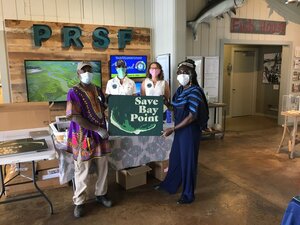
SCWF is proud to stand with our partners at the Coastal Conservation League and the Gullah/Geechee Nation to oppose this project.
Development on barrier islands in general is short-sighted, as they are highly erosional. This island is also a nationally-designated “Important Bird Area,” holding up to 8,000 shorebirds at some times. It provides critical habitat for threatened Loggerhead Sea Turtles and adjoins sensitive salt-marsh areas which are a nursery ground for shrimp, crabs, oysters, and many species of bony fish which are important to South Carolina’s seafood industry, as well as being extremely valuable to the culture and livelihood of the Gullah/Geechee Nation.
Bay Point Island, in its natural state, is ecologically essential for its wildlife habitat value, economically valuable to the seafood industry in South Carolina, and culturally significant to the people of the Gullah/Geechee Nation as well as the people of Beaufort.
You can learn more about the proposed development at the Coastal Conservation League’s website here, and see links above and below to sign a petition opposing this project.
How can you help save bay point island?
Please sign the petition linked below – we are hoping to get 35,000 signatures before the Zoning Board of Appeals meeting Thursday!!
In addition, you may attend the next meeting of the Beaufort County Zoning Board of Appeals where they will discuss this issue – details below. Also below is a letter from SCWF Executive Director, Sara Green, to the Zoning Board members urging them to deny this application.
Beaufort County Zoning Board of Appeals meeting
September 24, 2020 at 5 pm
Burton Wells County Park Gymnasium
1 Middleton Recreation Drive
Beaufort, SC 29906
MASKS ARE REQUIRED TO ATTEND.
The County will be providing socially-distanced seating and hand sanitizer.
UPDATE 9/23: This meeting will ALSO be live-streamed over Beaufort County’s Facebook Page HERE. Virtual attendees can submit comments using Facebook’s chat feature during the live stream. While attending in person is the best way to ensure your comments are heard, this option provides a way to comment for those who don’t feel they can attend safely.
Related News Stories:
09/20/20 – Editorial: Don’t let Bay Point Island fall – Post and Courier
09/16/20 – Beaufort County should reject Bay Point development – The Island News
09/14/20 – Gov. McMaster’s Bay Point Island letter – Post and Courier
08/19/20 – Gov. McMaster calls for luxury ‘ecoresort’ plan for SC barrier island to be rejected – Post and Courier
07/21/20 – Contested SC eco-resort plan, flagged as ‘greenwashing,’ up for key decision soon – Post and Courier
07/07/20 – Commentary: Bay Point Island is no place to put a resort – Post and Courier
05/11/20 – Editorial: Oppose barrier island development – Post and Courier
05/06/20 – Resort plan for SC barrier island advances with county now saying it’s ecotourism – Post and Courier
12/20/19 (updated 04/24/20) – $100M resort plan for undeveloped SC barrier island isn’t ‘ecotourism,’ county staff says – Post and Courier
Bay Point Island, a vulnerable barrier island bordering Port Royal Sound, is the site of proposed “ecotourism” development. Photo credit: Richard Porcher/Post and Courier
On behalf of over 10,000 supporters of the South Carolina Wildlife Federation, I write to you today to urge you to deny the application to build an “ecotourism” resort on Bay Point Island.
Barrier islands, such as Bay Point, serve to protect our coastline and our communities from the impacts of major storms and sea level rise. In this case, Bay Point Island is acting as a natural buffer to Parris Island Marine Base and other Beaufort communities. Alteration of this barrier island could result in less protection for these communities.
The very nature of barrier islands is highly erosional, often “migrating” on shifting sands. To see the intense natural erosion of barrier islands, you can look at the undeveloped Pritchards Island nearby as an example. Having spent much time there several years ago as a marine science undergrad at the University of South Carolina, I can testify to how much it has changed since then. The research station facility (my home for a summer), which now stands precariously in the surf, used to be approximately 100 yards from the dunes, situated deep in the maritime forest.
With the increasing intensity and frequency of hurricanes recently, scientists anticipate faster erosion on barrier islands in the future. If any structures are built on Bay Point Island, you can be assured that Beaufort County will be investing a significant amount of money in erosion control measures. Those measures will absolutely destroy valuable habitat for federally threatened sea turtles, as well as nesting shorebirds, and many other species which depend on the fragile ecosystem of our coasts.
Bay Point Island is a nationally-designated “Important Bird Area” sometimes holding up to 8,000 shorebirds! Wilson’s Plovers have been observed on the island – these shorebirds are listed as federally threatened. The natural areas on our coast are also a critical stopping point for Red Knot shorebirds on their 19,000 mile roundtrip migration from the southernmost tip of Argentina to the tundra of the Canadian Arctic. They stop to rest in South Carolina and fatten up on the eggs of Horseshoe crabs which come up on our beaches to spawn. Undisturbed areas like Bay Point are critical feeding grounds for this bird on its incredible annual journey.
In addition to the certainty of erosion issues and disturbance of important habitat for vulnerable wildlife on the island, the transportation of supplies for, and waste from, this resort would assuredly go through sensitive estuary/marsh habitat which is an important nursery area and critical habitat for shrimp, crabs, oysters, and many species of bony fish which are important to South Carolina’s seafood industry, as well as being extremely valuable to the culture and livelihood of the Gullah/Geechee Nation.
The amount of water that developers plan to extract from the already depleted groundwater in the area would also exacerbate saltwater intrusion already happening as evidenced by the loss of 50% of the island’s former tree canopy. Any disruption to the natural balance of the salinity of the marsh could have disastrous effects on the plants and animals which depend on this fragile environment.
Bay Point Island, in its natural state, is ecologically essential for its wildlife habitat value, economically valuable to the seafood industry in South Carolina, and culturally significant to the people of the Gullah/Geechee Nation as well as the people of Beaufort. The South Carolina Wildlife Federation urges you to protect this valuable natural resource from development.
Thank you for your consideration of this very important issue.
Contact: Mary Jo Brooks, National Wildlife Federation, brooksm@nwf.org, 303-549-8351
Sep 16, 2020
WASHINGTON, D.C. — The overwhelming bipartisan support in the U.S. Senate for America’s Conservation Enhancement (ACE) Act is a tremendous win for America’s wildlife and sporting traditions. Championed by Senators John Barrasso (R-Wyo.), Tom Carper (D-Del.), and Martin Heinrich (D-N.M.), the bill invests in wetlands, fisheries, Chronic Wasting Disease research, and habitat restoration projects in the Chesapeake Bay and throughout the country. The U.S. House of Representatives should quickly follow suit and pass this important legislation so it can be signed into law.
“It’s no secret that our wildlife populations are stressed with a third of all species at risk of extinction. This act will restore wildlife habitat, encourage partnerships with state and tribal leaders for wildlife and disease management, and promote coexistence with wildlife on working lands,” said Mike Leahy, director of wildlife, hunting, and fishing policy at the National Wildlife Federation. “This is good news for all Americans who enjoy outdoor recreation, particularly our sportsmen and women.”
“At a time when our nation is divided over so many issues, this bill shows once again that Americans come together over concerns about wildlife, public lands, and conservation,” said Jesse Deubel, executive director of the New Mexico Wildlife Federation. “This common-sense bill will help wildlife and fish populations flourish through better management practices, habitat restoration, and disease research.”
Key provisions of the ACE Act include:
Establishing a Chronic Wasting Disease task force to develop an interstate action plan for state and federal cooperation relating to the disease
Commissioning a study by the National Academy of Sciences regarding the pathways and mechanisms of the transmission of Chronic Wasting Disease in the United States;
Reauthorizing the North American Wetlands Conservation Act until 2025;
Encouraging partnerships among public agencies and other interested parties for promoting fish conservation;
Reauthorizing the Chesapeake Bay Program until 2025;
Reauthorizing the Chesapeake Bay Gateways and Watertrails Network and the Chesapeake Bay Gateways Grants Assistance Program until 2025;
Reauthorizing the National Fish and Wildlife Foundation Act until 2025;
Establishing a program to provide grants to states and Indian tribes to compensate livestock producers for losses due to predation by federally protected species such as wolves or grizzly bears;
Establishing a Theodore Roosevelt Genius Prize for technological innovation to reduce human-predator conflict using non-lethal means.
A year ago this week, War was declared on America’s lands when President Trump signed Executive Order 13792. This unprecedented action put 26 National Monuments on the chopping block for review and possible reduction in size. The President had already appointed Ryan Zinke as Interior Department Secretary, and he became the point person for carrying out the executive order. Over the past year, Secretary Zinke has expanded the war on numerous fronts through his political appointments, his department re-organization fumbling, his shunning of wildlife management and sound science and his devotion to energy conglomerates and large-scale agriculture.
The principal “party line” for executing the executive order was that past presidents named these national monuments without public input: an Interior press release justifying the Order stated: “Secretary Zinke and President Trump both strongly believe that local input is a critical component of federal land management.”
And there was more about how important the public is: “The Department of the Interior is the steward of America’s greatest treasures and the manager of one-fifth of our land. Part of being a good steward is being a good neighbor and listening to the American people who we represent,” said Secretary Zinke. “Today’s action, initiating a formal public comment process finally gives a voice to local communities and states when it comes to Antiquities Act monument designations.”
So for 60 days, local communities, outdoor businesses and citizens responded, and at the end of the day there were almost 3 million comments and over 99% opposed changing any of the National Monument boundaries. National Parks and Monuments are often called “America’s Best Idea”, and almost unanimously millions of Americans from across the nation agreed.
Although Zinke and his closest political aides had no doubt intended to make large rollbacks in most if not all of the 26 monuments, the only opening they saw to take action was in Utah where some of that state’s federal and state officials were marching to a different drum than the vast majority (time will tell at the ballot box whether Utah voters were in lockstep with those officials). Large parts of Grand Escalante and Bears Ears Monuments were named for development by Interior, but lawsuits closely followed alleging the executive order and the reductions in Utah are against the law.
And thanks to recent Freedom of Information requests, we now know the real motivation for the ill-fated executive order – internal documents confirm the potential for oil, gas and uranium development within the monument borders was paramount (as if we didn’t intuitively know before!).
Americans want to be a part of these lands that belong to them, and after the beauty and amazing geology of the Utah monuments received glowing reviews in numerous articles last year, thousands more Americans are now vacationing in Utah to see Escalante and Bears Ears.
Meanwhile, the executive order was the first volley in a war that continues on numerous fronts led by Zinke and his newly-appointed Interior officials who are fresh from lobbying and lawyering for fossil fuel, petrochemical and mining interests. Conflict of interest is a forgotten prohibition these days. Meanwhile, a majority of Congress simply provides a nod and a blink during committee hearings when these matters are raised. For more details check out this from the Wilderness Society: https://wilderness.org/zinke-year-one-14-misdeeds-show-why-hes-worst-interior-secretary-ever.
This War pits lots of money and generals against an overwhelming super-majority of citizens. It’s David vs. Goliath, and I believe from the bottom of my heart that David will be victorious.
The good news is Americans now realize they can’t take their own public outdoor experiences for granted any longer. More and more folks in South Carolina and around the nation are seeking out public lands for inspiration, refuge, health and pure enjoyment in U.S. parks, forests, monuments and wildlife refuges. Can you believe that over 2% of the entire US economy is from the out-of-doors? And guess what – that figure is larger than the entire US mining industry and it’s growing by leaps and bounds!