SCWF and other conservation groups are working to ensure that new housing developments conserve critical wildlife habitat and protect residents from increased flooding. The commentary below by Coastal Conservation League founder, Dana Beach, describes the almost 10,000-acre proposed Cainhoy development in Charleston, near the Francis Marion National Forest. Not only will it significantly increase traffic headaches, it will destroy nearly 200 acres of wetlands which offer critical habitat as well as protection from flooding.
One of my first experiences visiting the Cainhoy community was in the mid-1980s when I drove out to eat supper at a Cajun restaurant called La Tasha’s. The trip took more than an hour from downtown Charleston — across the old Cooper River Bridge, through Mount Pleasant, up Highway 41, across the Wando River, and then down Cainhoy Road to a modest white building beside a peaceful road in the forest.
At the time, I could not have imagined that within a few decades the Cainhoy peninsula would be practically destroyed — paved over by sprawling development enabled by the city of Charleston.
Thirty-five years ago, this peninsula, just to the northeast of historic Charleston, was a remote, authentic and beautiful place: Its people and culture were carefully documented by Charleston journalist and author Herb Frazier in “Behind God’s Back,” a collection of historical notes and personal interviews. Picture majestic live oaks and longleaf pine forests, farm fields, marshes and creeks, interspersed with historic Gullah communities such as Yellow House, St. Thomas and Jack Primus.
For more than a century, Cainhoy residents had made their living mostly from the land and water, farming and raising livestock, or fishing and oystering in the creeks and marshes of the Cooper and Wando rivers. Despite the challenges of life in those days, Cainhoy residents built strong families and resilient communities that have contributed to the Charleston area in countless ways.
Sadly, Charleston has not repaid the favor. Today’s Cainhoy peninsula would be unrecognizable to anyone whose last visit was in 1990. The historic Clements Ferry Road is now a five-lane highway lined with strip malls, gas stations and subdivisions.
Instead of navigating rivers, creeks and familiar roads, residents wade through immobilizing traffic congestion every weekday morning and afternoon.
If today’s traffic problems on the Cainhoy peninsula seem almost intolerable, they don’t begin to approximate the disruption that will plague the area in the coming years. As development progresses on Cainhoy Plantation — now called Point Hope — it will add 9,000 more houses to the peninsula. Clements Ferry Road and Highway 41 will be further burdened by 45,000 to 60,000 additional vehicle trips daily, tripling the number of cars on these roads now.
The Berkeley-Charleston-Dorchester Council of Governments transportation model of the road system is bleak and unequivocal: When Point Hope is built out, these roads will operate at what transportation planners call “Level of Service F.” In lay terms, this means gridlock.
It didn’t have to turn out this way.
In 1991, Charleston Mayor Joe Riley moved to annex Daniel Island into the city. Five years later, the owners agreed to let the city annex the considerably larger Cainhoy Plantation, extending to the border of the Francis Marion National Forest.
The owners were enticed with lavish public subsidies. According to a spokesperson from Daniel Island, “In excess of $250 million has been committed (in the area) by city, county and the state in terms of schools here, the roads, the bridges, water and sewer, public safety and all of those things.”
Perhaps most importantly, Charleston signed a contract with the Guggenheims that restricted the city from substantially modifying the Cainhoy Plantation plan for 50 years. The agreement included the right to build 18,000 houses and condominiums on the property. Thus, the stage was set for the wholesale transformation of one of the most beautiful and historic places in the Southeast.
While the future of Daniel Island was the subject of years of public hearings and benefited from the expertise of some of the nation’s most talented land planners, Cainhoy was afforded no such careful attention. Unlike Daniel Island, the Cainhoy owners began dismembering the property, selling it piecemeal to national tract homebuilders such as Pulte Homes.
For more than two decades conservation groups, along with courageous residents of the Cainhoy community, have advocated for improvements to the development plan that would reduce the crush of traffic and lessen some of the environmental and cultural damage.
The recent protection of Blessing plantation, just up the river, provides an inspirational example of land owners working collaboratively with the community, local government and environmental groups to secure a beautiful destination for centuries to come. In contrast, the Guggenheim family and their development company have consistently rejected virtually every conservation proposal.
It is critical that citizens understand that the unfolding Cainhoy catastrophe was not inevitable nor is it irreversible. There is still time for City Council to make substantial changes to the Cainhoy-Point Hope project — changes that are justified by the threat the development poses to public health, safety and welfare.
But time is of the essence. The fate of the Cainhoy peninsula hangs in the balance.
Dana Beach is a longtime conservation leader who lives in Charleston.
On the hunt: South Carolina is wild about game by Becky Lacy was published in the Charleston City Paper on November 13, 2025.
Be it deer, duck or quail, hundreds of thousands of South Carolinians hunt annually. It’s a way of life for many. And the vast majority of those who hunt do so for the meat.
Whether preparing duck in a restaurant kitchen or raising birds at the country’s largest quail farm, hunting is intrinsic for many in South Carolina.
A lifelong love of duck
River Hill, executive chef at Charleston’s Honeysuckle Rose, grew up in Florence where he spent a lot of time outside. Whether exploring the woods behind his house or fishing and camping at one of the area’s rivers, he loves the land.
“Connecting with nature has always been an integral part of my life,” he said. “My love of duck hunting started at a very young age as it was something that my dad and I did together. It almost felt like a special event.”
Image Credit: Early Teachings by Donna Brookshire.
Since duck season in South Carolina only lasts for about two months each year, he recalls spending most of the year looking forward to the next season. He and his dad would wake up at 4 a.m. and be in the woods an hour later, waiting for the ducks to fly over. Sometimes they would bring home ducks and prepare them for breakfast with bacon and cheddar grits. And sometimes they wouldn’t see a single bird fly. But the outcome didn’t matter.
“There’s something truly humbling about being immersed in nature, especially when everything is dark and quiet around you,” Hill said. “Even more so when you’re experiencing the moment with people you love. I learned it’s more important to appreciate the time spent together than what you’re trying to hunt.”
Image Credit: Minding our Business by Tammie Miller.
Now at the helm of the Honeysuckle Rose kitchen, he said he feels a great responsibility serving duck.
“I think, if you are going to take an animal’s life, you should pay it the respect it deserves by using every part of it,” Hill shared. “Since I started cooking, butchery has always interested me. Using technique and knowledge of anatomy, you can turn every part of an animal into an ingredient in a recipe that not only feeds people, but makes them happy.”
While breast and leg meat are the most frequently used parts of a duck, Hill said he finds creative ways to use the whole animal to make sure nothing goes to waste. One of his favorite parts of being a chef is getting imaginative with parts that people aren’t really used to eating.
He takes the liver and sweats it down with aromatics like shallot, garlic and thyme. He emulsifies it with cream and butter for a duck liver mousse. He then serves the mousse with a watermelon rind mostarda, grilled sourdough and fresh herbs. He also uses the neck to make a roulade and the feet and wings as the base of a flavorful stock in his duck confit and buttermilk dumplings dish.
While Hill can make magic out of any part of a duck, it is duck breast that he loves cooking most. He starts it in a cold cast iron pan and slowly renders the fat. Once the fat is mostly out and the skin starts to brown, he turns the heat up to crisp the skin before basting the duck in its own fat.
“Cooking duck breast is similar to cooking fish,” Hill said. “You want to do about 90% of the cooking on one side then flip it right at the end. After flipping, I throw in a good knob of butter, some thyme and a couple of smashed garlic cloves. As the butter browns and gets foamy, I keep basting. It adds so much flavor.”
Hill’s love of game is lifelong, both in the woods and in the kitchen. “I absolutely love working with wild game,” he said. “You can really taste the terroir and what the animal’s diet consisted of. A lot of people have certain preconceived notions about what wild game animals are going to taste like, and I love the challenge of presenting a wild game dish in a way that is approachable and delicious.”
Quail yeah
Manchester Farms outside of Columbia was founded in 1974 by Bill Odom. It was the first quail farm in the United States and today remains one of the largest quail producers in the country. The second-generation, family-owned farm is now owned and operated by Odom’s daughter and her husband, Brittney and Matt Miller.
Manchester raises Pharaoh quail, a breed that originated in Asia. These birds are adaptable to a farm environment and are less susceptible to disease. They grow from chick to full-sized adult in just five weeks, and the females can produce up to 300 eggs per year. Manchester breeds, hatches, raises and harvests around 3 million birds annually.
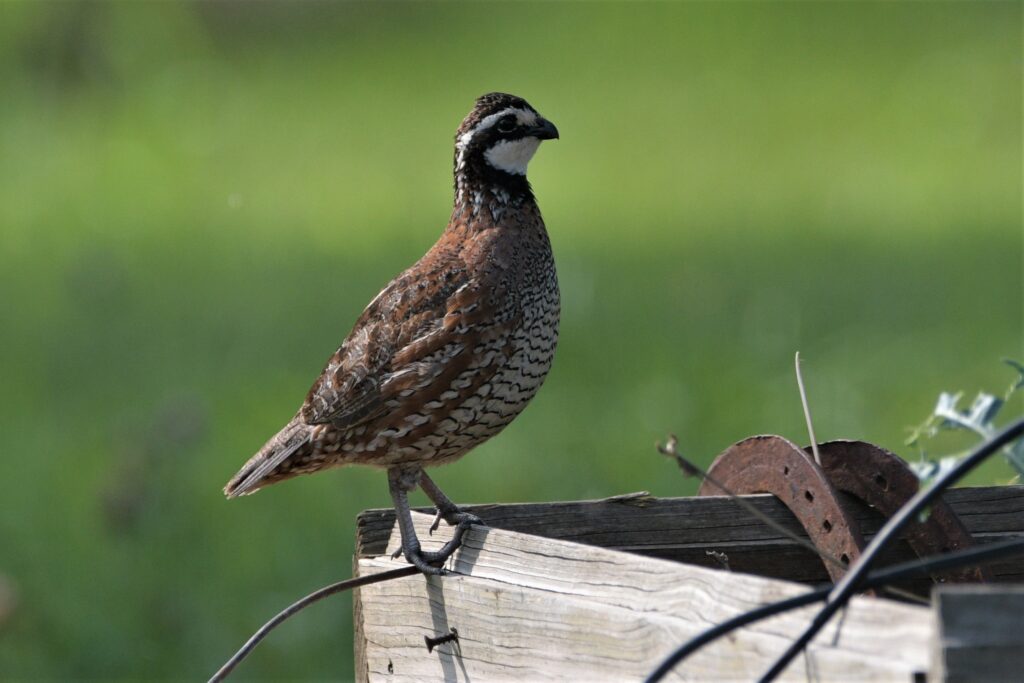
Image Credit: Someone Call Bobwhite by James Edwards.
“When my dad was asked to interview with a company in the early 1970s, they flew him to New Jersey,” said Brittney. “At the end of the interview, he asked ‘how long is your hunting season?’ They responded, ‘two weeks’ and he replied, ‘Thank you for your time and flew home.’
“That’s when my dad started Manchester Farms. He is an avid quail hunter and started dressing quail in our backyard for neighbors almost 55 years ago. Game and South Carolina are yin and yang. Much of South Carolina’s population is largely hunters or their family members hunt.
“Protecting the land from being overdeveloped to protect the nature and game of South Carolina is critical. Manchester Farms is deeply rooted with game as that is our heritage and our love for hunters and DNR (the S.C.Department of Natural Resources).”
Today, food service companies are big buyers of quail meat. Top-tier distributors like Sysco, US Foods, Shamrock and smaller specialty businesses carry Manchester Farms quail.
Due to the health benefits of quail eggs, there has been huge mainstream growth for the product. Quail eggs are rich in protein, vitamins (A, B12 and D) and minerals like iron, selenium and zinc. They also have antioxidants and essential fatty acids. All these components help boost immunity, strengthen bone health, regulate blood sugar and improve brain function and eye health. Quail eggs and meat truly are superfoods.
Quail season in South Carolina lasts from late fall and into winter, starting the Monday before Thanksgiving and running until March 1. While people still hunt wild quail, there are very few wild birds in the state. Manchester often ships frozen quail to hunting camps to serve to guests so hunters can take home any wild birds they shoot.
Quail is versatile in the kitchen. While fried quail is very popular, you can also grill, bake and sauté it, similar to how you would treat other poultry. And if cooking quail at home isn’t for you, Manchester Farms product can be found at some of Charleston’s best restaurants including The Glass Onion, Halls Chophouse, Husk and Lowland.
Conservation, education and licensing
Sara Green is the executive director of the South Carolina Wildlife Federation (SCWF), founded in 1931 by hunters and anglers who were concerned about the impact that humans were having on wildlife habitat. It’s the state’s oldest conservation group. Green worries that that the decline of any wildlife population is habitat loss. The clear-cutting of land as well as air and water pollution contribute to habitat loss, and SCWF actively works to conserve land and enhance wildlife habitat.
Photo of Sara Green by Ashley Medlin.
“In South Carolina, and across the country, sportsmen were responsible for starting the conservation movement and pressing for hunting regulations based on science to protect game species from over-harvest,” Green said. “Ensuring that future generations would also be able to hunt and fish was a major motivating factor.”
Green noted hunters still play a significant role in conservation efforts. They buy hunting licenses and tags, and pay taxes on related equipment, which means considerable funding for state wildlife management. This, in turn, supports habitat restoration, research and land acquisition for wildlife preservation. The impact from conservation dollars from hunters for habitat management far outweighs the harvests of individual animals, she said.
“Most South Carolina hunters are hunting for game species to use the meat to feed their families,” she said. “Deer, turkey and ducks are the main species hunted. [Hunters] greatly appreciate the opportunity to carry on a tradition that often goes back several generations, and also to connect with the land, notice the birds, squirrels and plants, observe the mist on the lake as the sun rises, and just experience the peace and serenity of nature.”
Duck and dumplings
Recipe by River Hill, executive chef, Honeysuckle Rose
Yield: 4 to 6 servings
3 cloves garlic, minced (reserve scrapes for stock)
In a cold, dry cast iron pan, add the duck breasts and place over medium-low heat, allowing the fat to render slowly.
When the skin begins to crisp, turn the heat up to medium high. Using a spoon, baste the breast in its own fat.
Flip the breast. Add butter and fresh herbs and baste until the internal temperature of the duck is around 135 degrees Fahrenheit, or until the skin is golden brown and crispy to
the touch.
Remove the duck from heat. Allow to rest until internal temperature reaches
145 degrees Fahrenheit. While the breast is resting, make the dumplings.
Chef’s note: 90% of the cooking will be done on the skin side. Once flipped, pay careful attention as to not overcook.
To make the dumplings
1 cup self-rising flour
¾ cups buttermilk
2 tablespoons fresh chives, finely chopped
1 tablespoon salt
1 teaspoon ground black pepper
In a large mixing bowl, add flour, buttermilk, chives, salt and pepper. Mix until all ingredients are fully incorporated.
To finish the dish
2 tablespoons Canola oil
2 Vidalia sweet onions, small diced
3 large carrots, peeled and small diced
3 ribs celery, small diced (reserve celery leaves for garnish)
In a stock pot or Dutch oven, add oil and put over medium heat.
Add diced onion, carrots and celery and sweat until onions are translucent,
but not browned.
Add garlic and sweat until soft, add chicken stock and bring to a simmer.
Using 2 spoons, scoop a spoon full of the dumpling dough and carefully place it into the simmering duck stock. Repeat this step, one dumpling at a time, until the surface of the pot is full and there’s no more space to drop the dumplings in.
Cover the pot and let the dumplings simmer for about 8 mins or until the dumplings are slightly firm but still pillowy.
Using a spoon, push dumplings to the side and make a hole to add pulled duck confit meat into the duck stock.
Remove pot from heat. Add salt and pepper, hot sauce and fresh lemon juice to taste.
To plate and serve
Using a ladle, spoon out some of the dumplings and duck confit from the pot into desired serving bowls.
Thinly slice the duck breasts. Layer four to five slices on one side of each bowl.
To finish, roughly chop the fine herbs and celery leaves and garnish your bowl of duck and dumplings to your liking.
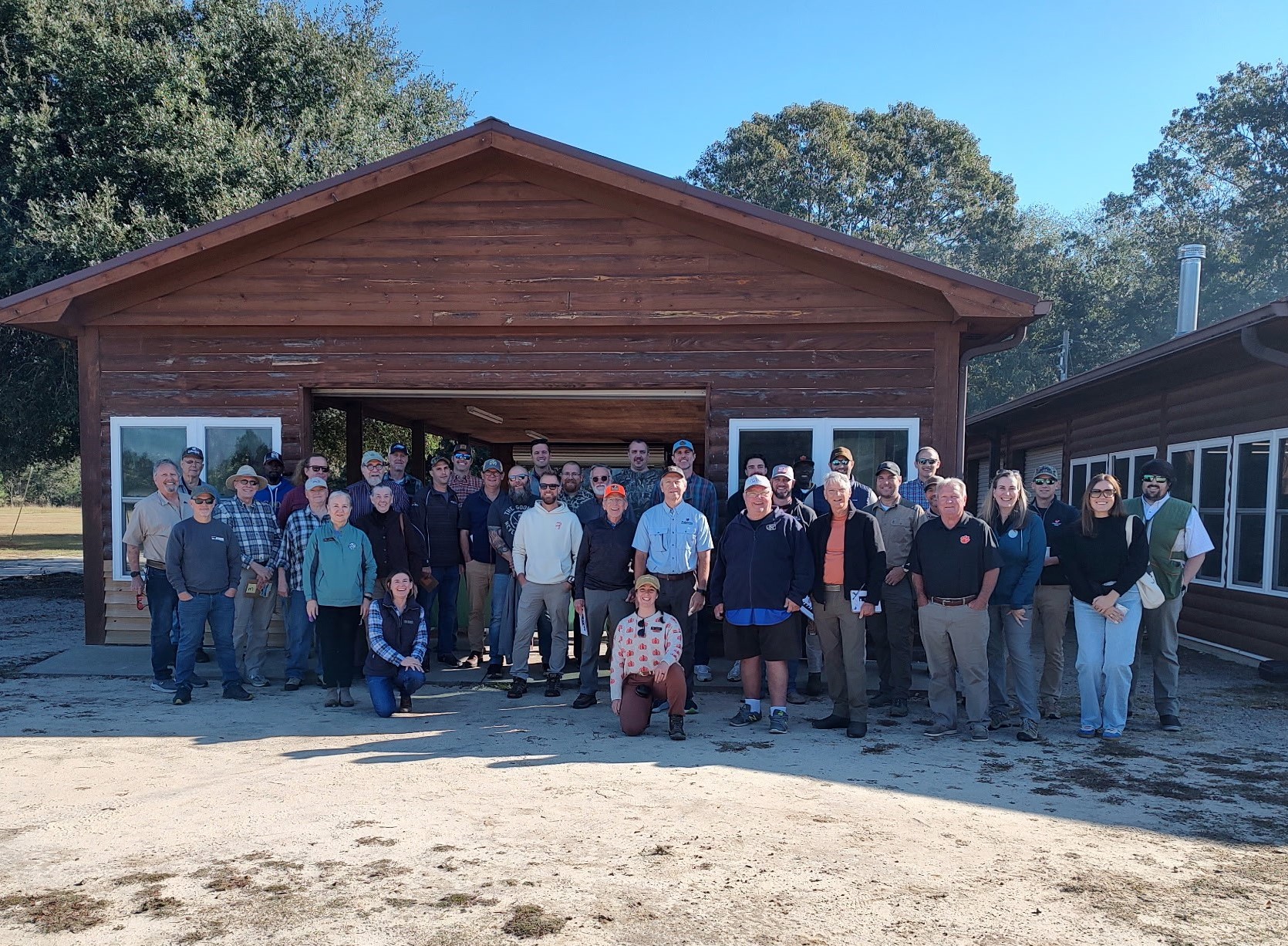
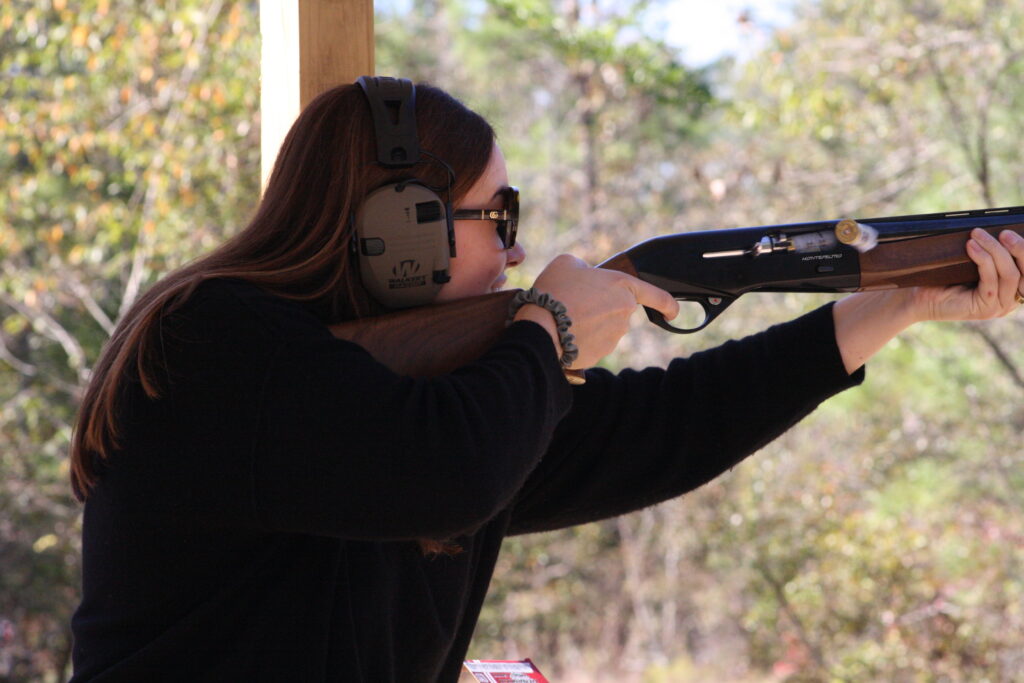
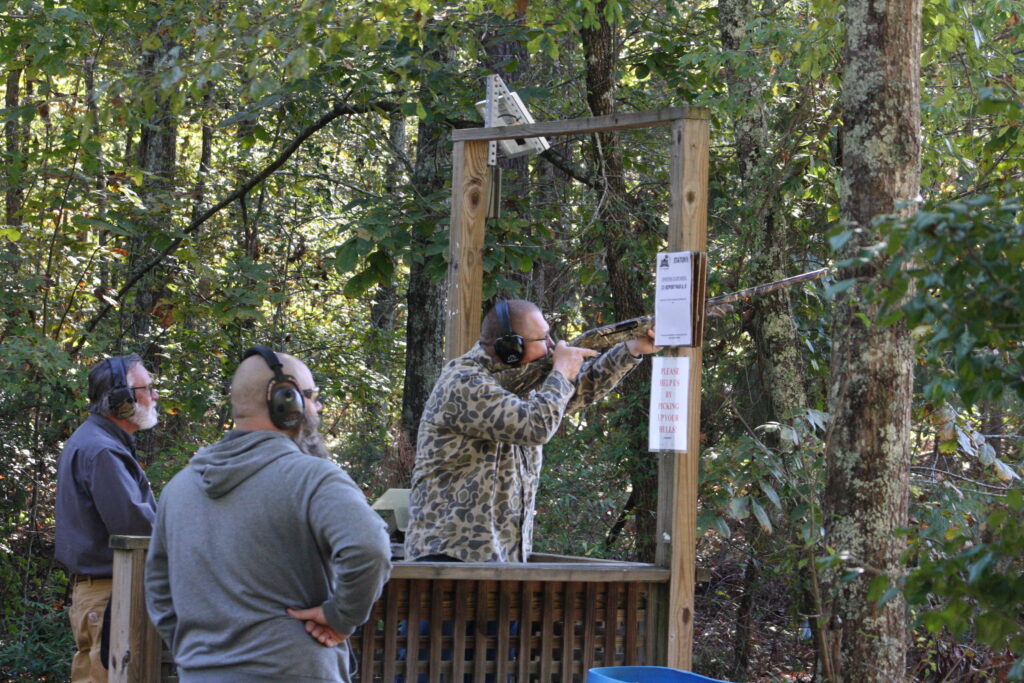
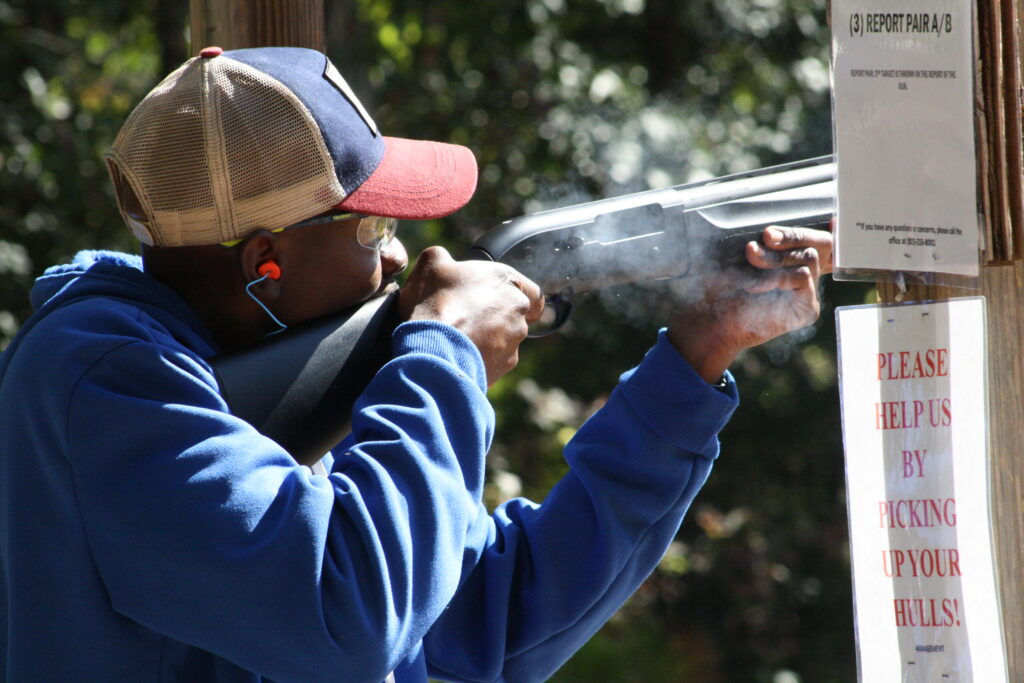
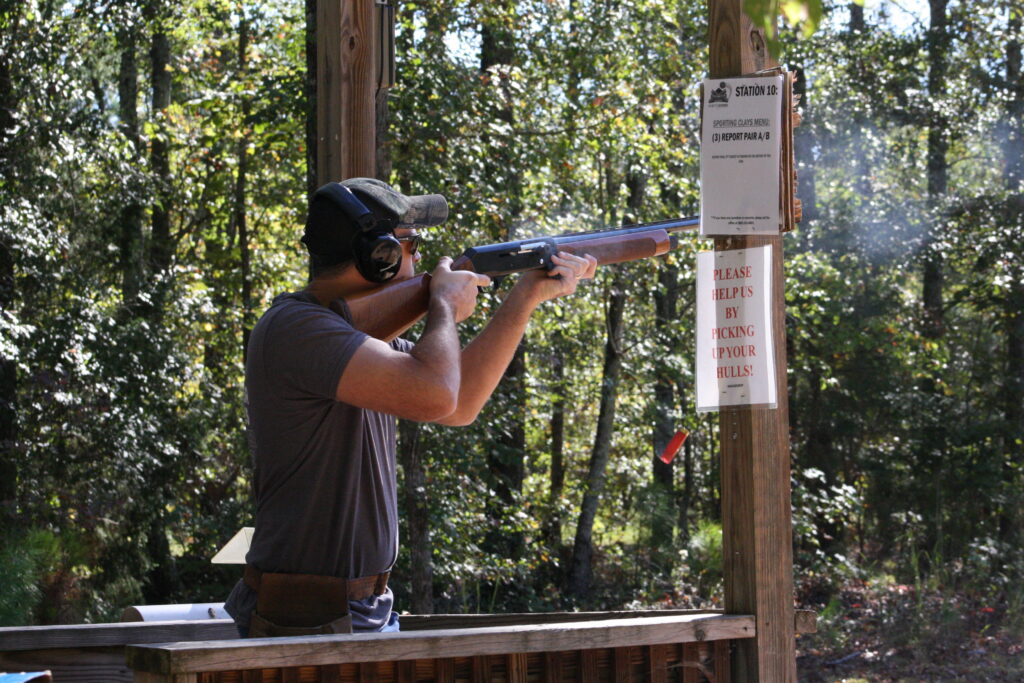
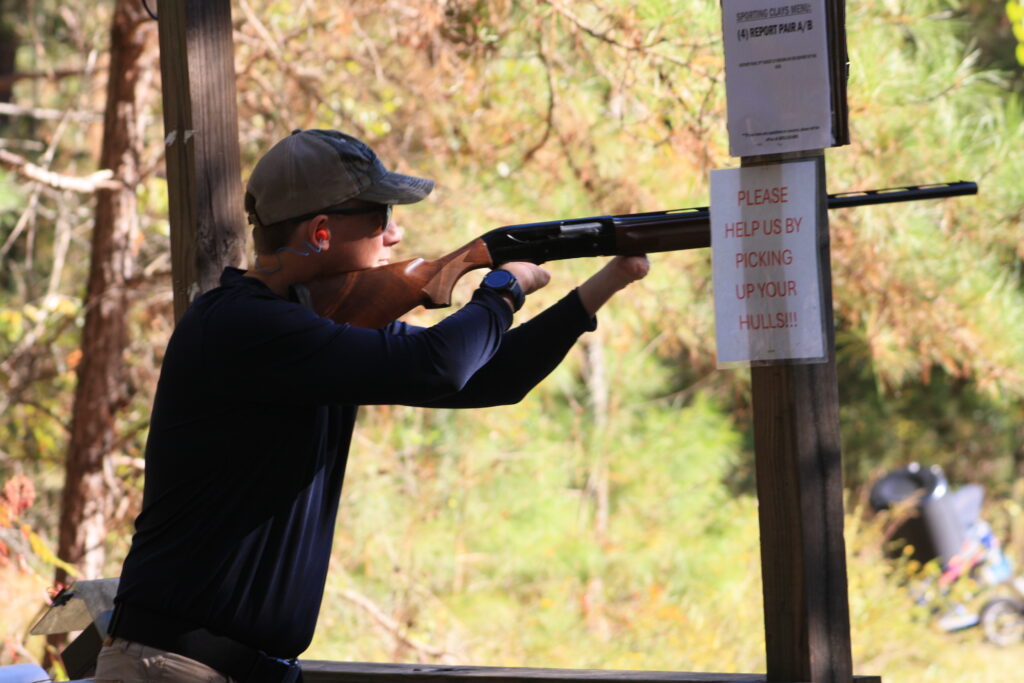
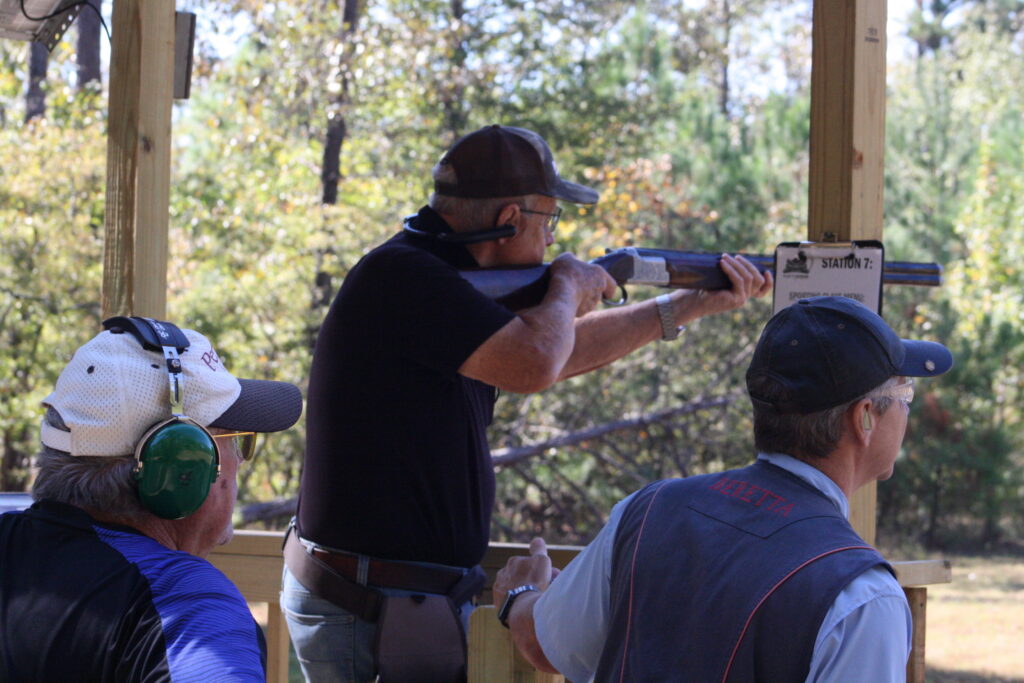
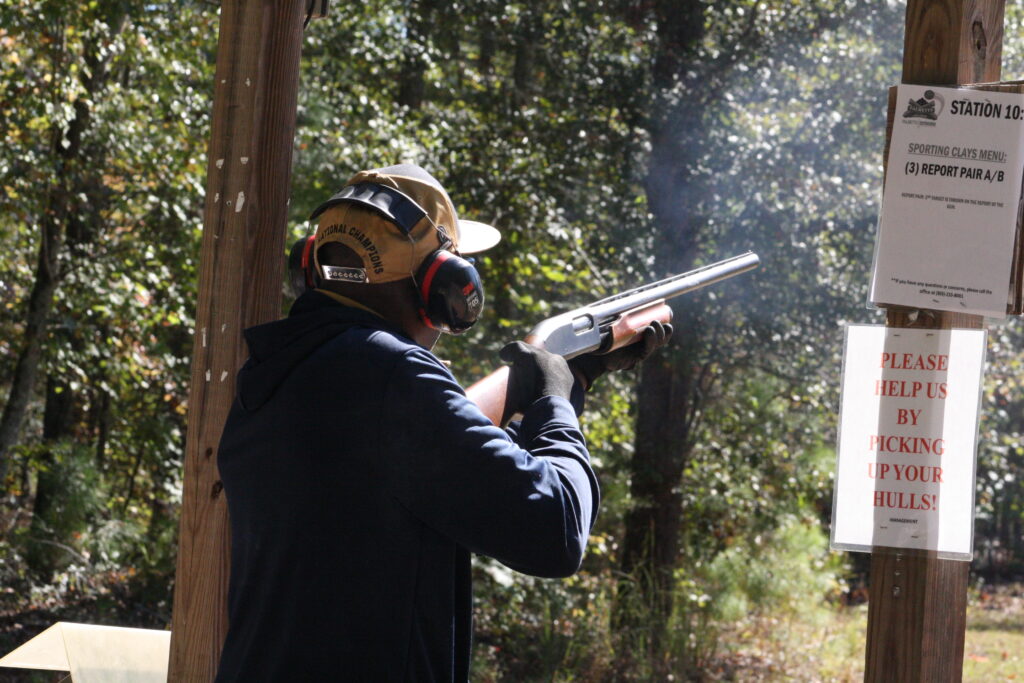
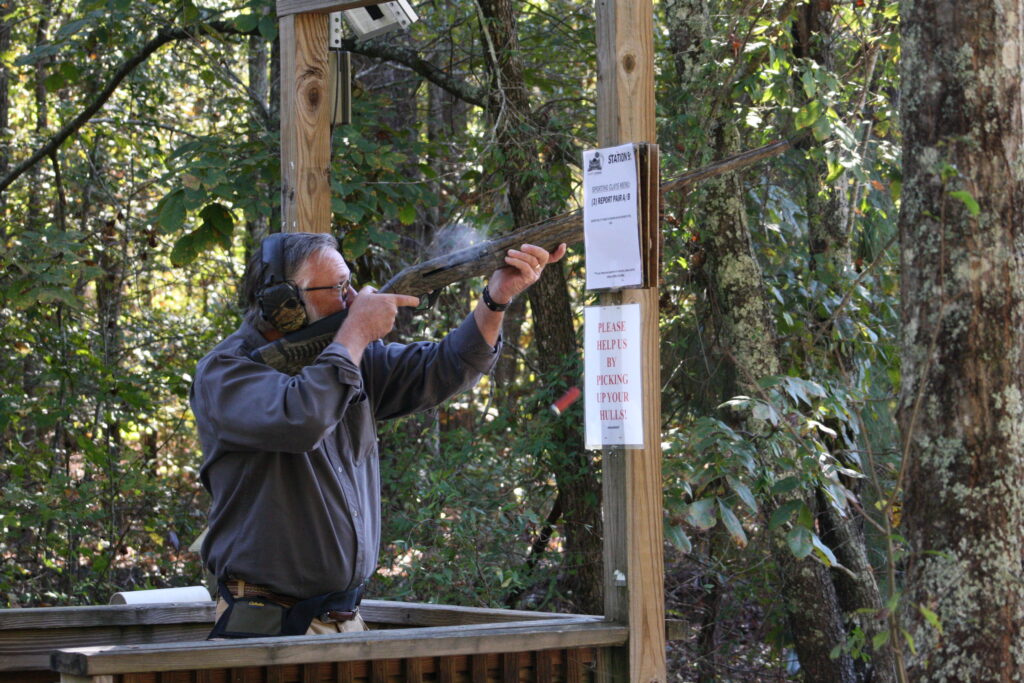
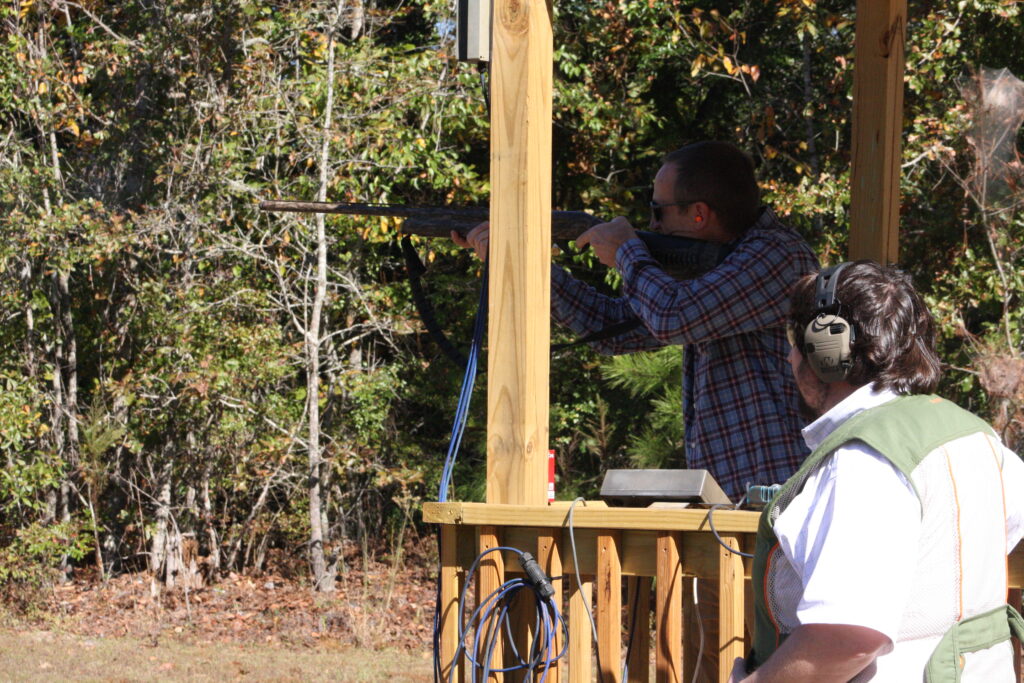
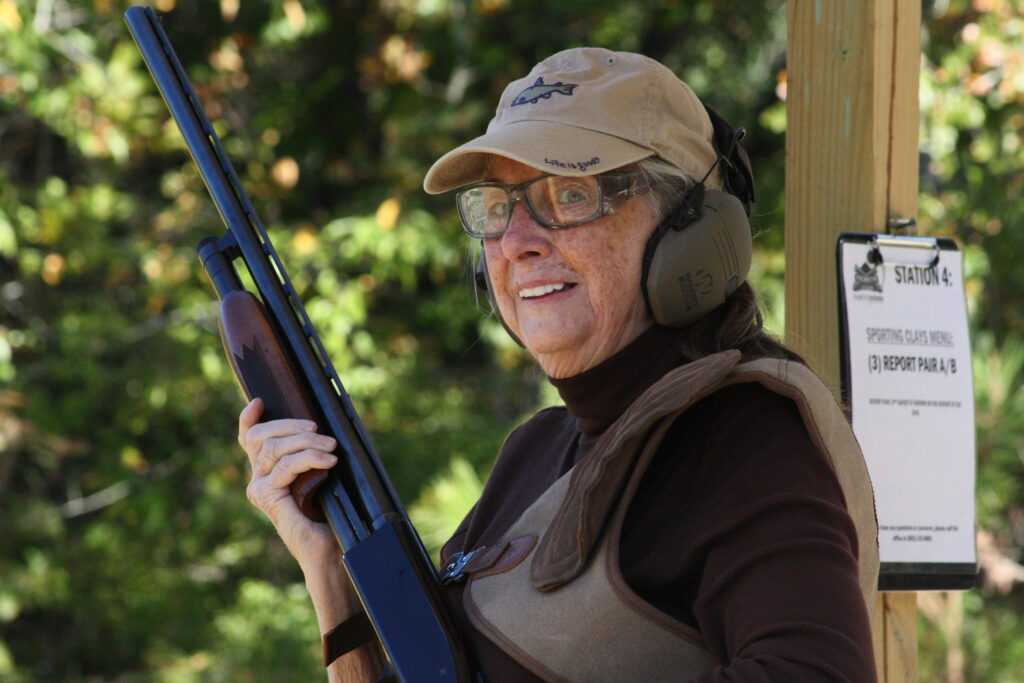
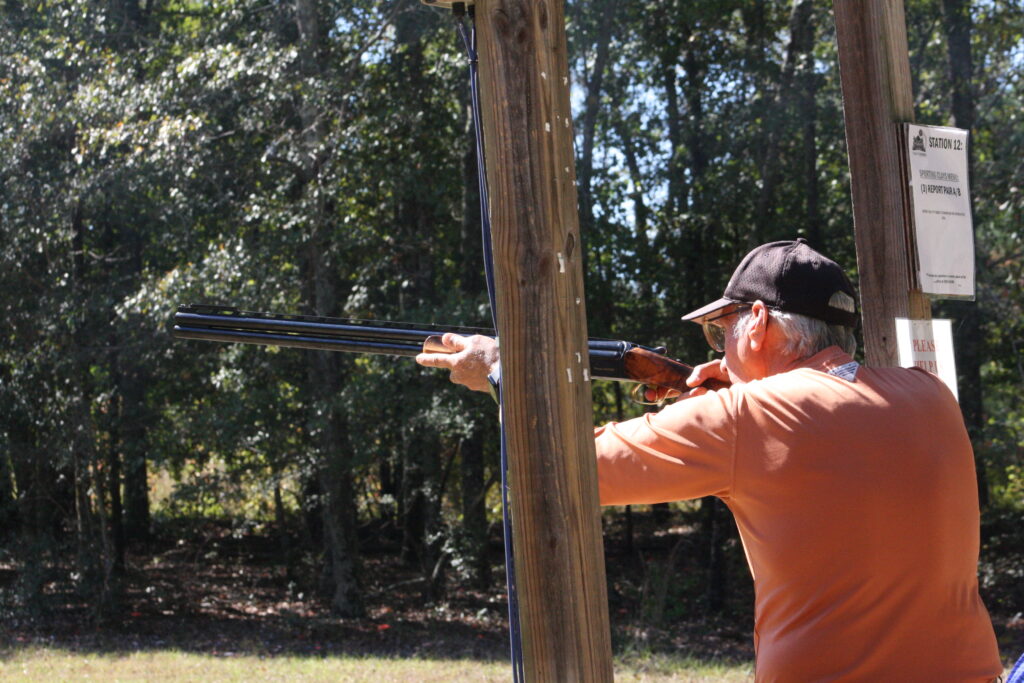
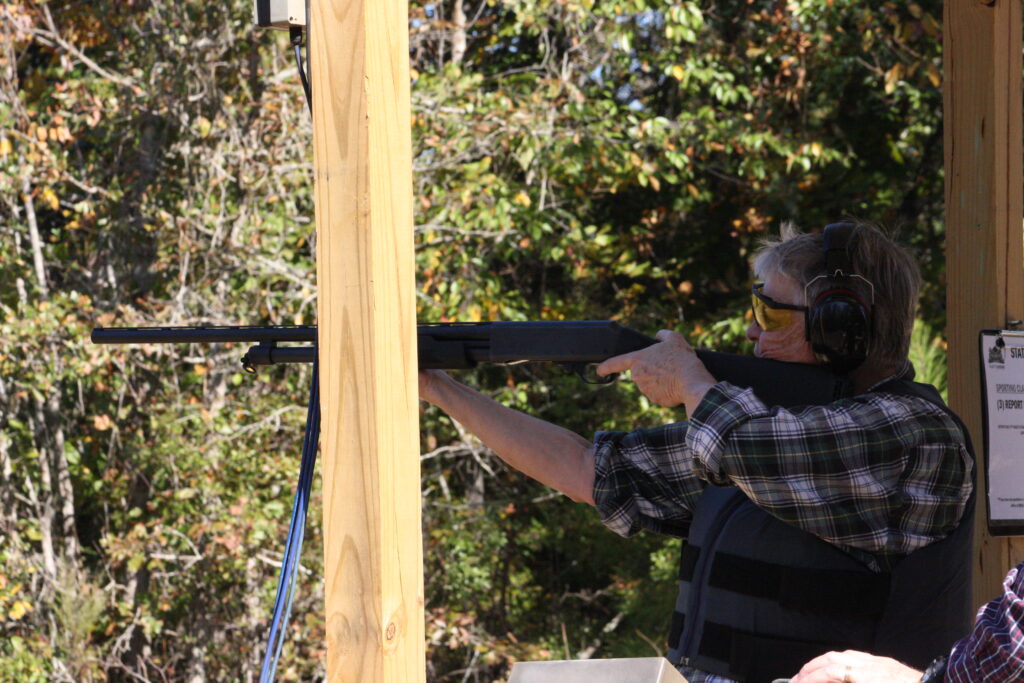
On a beautiful fall day in October, nine four-person teams from across South Carolina competed in a friendly sporting clays competition at the Palmetto Outdoors Shooting Facility in Swansea. The challenging 15-station course offered a variety of high and low shots that a shooter might need to make while hunting. After the competition concluded, everyone came together to enjoy a BBQ lunch from the Palmetto Pig.
This year’s competition included teams who shoot sporting clays regularly as well as some experienced shooters who were newer to clay shooting. We were also glad to have staff from several of our WAIT (Wildlife And Industry Together) partner sites join us. The Mid-Carolina Gun Club edged out the Bebber Boys by just one point to win this year’s inaugural event, with the team from Whiting-Turner coming in third place. We hope all the participants were inspired to spend time on the range with fellow shooting sports enthusiasts.
An important cause like wildlife conservation has a way of bringing us together, and it was great to see long-time supporters and meet new friends who came out to support our mission. Thank you to all the outdoorsmen and outdoorswomen who participated in and sponsored this fundraiser. Proceeds will directly benefit SCWF’s ongoing conservation efforts, including habitat enhancement, land conservation, and educational programs that teach South Carolinians of all ages how to responsibly enjoy and protect the outdoors.
Winning teams:
1st Mid-Carolina Gun Club – 306 points
2nd Bebber Boys – 305 points
3rd Whiting-Turner – 239 points
Honorable mention team: National Land Realty/Jim Taylor – 238 points
Highest individual scores:
1st Rich Gadbois, Mid-Carolina Gun Club – 87 points
2nd (tie) Rodney Rained, Mid-Carolina Gun Club – 82 points
-Matt Bebber, Bebber Boys – 82 points
3rd (tie) Rick Scholz, Mid-Carolina Gun Club – 79 points
-Tony Bebber, Bebber Boys – 79 points
We are especially grateful to our sponsors for helping us increase our impact.
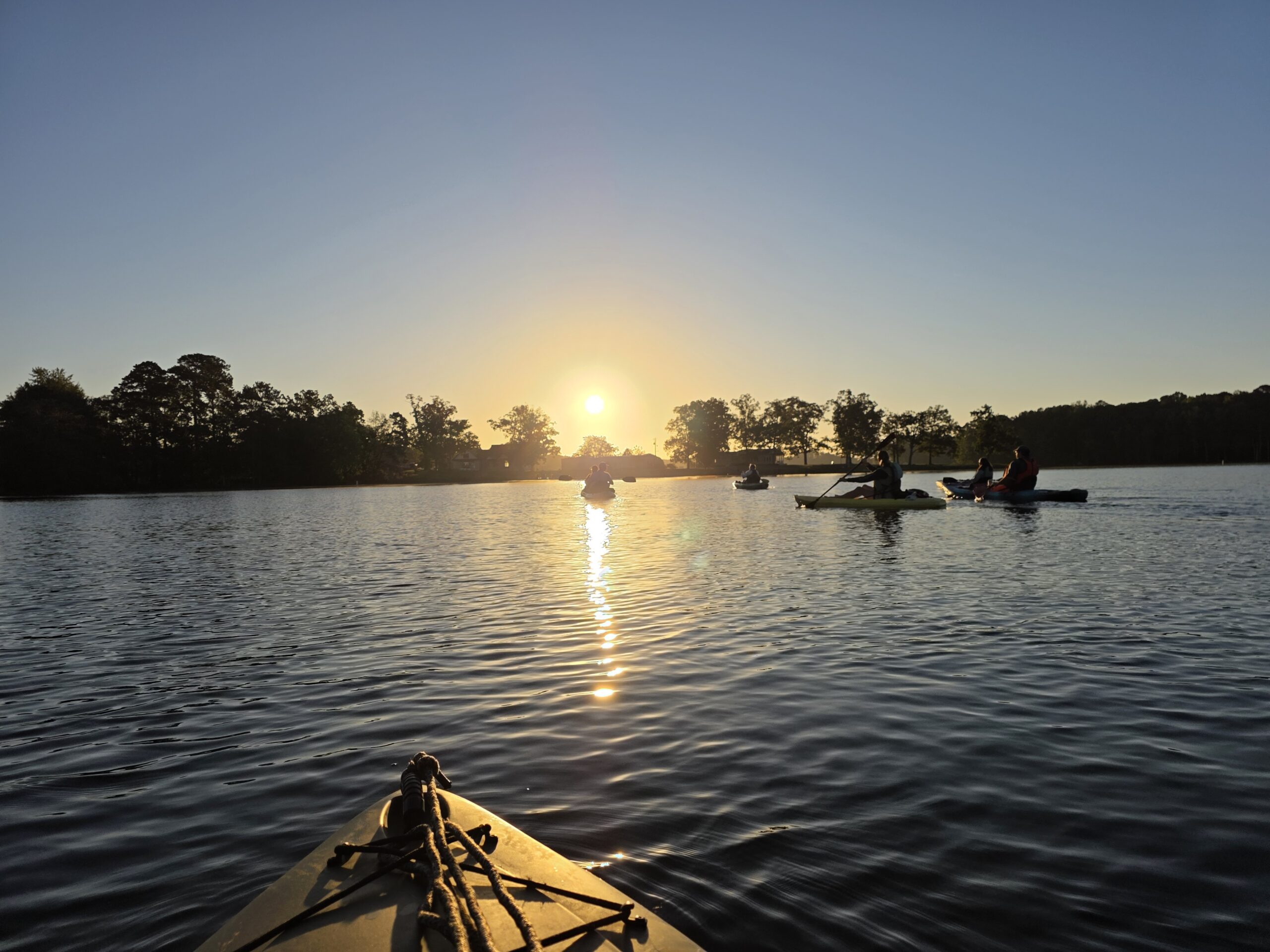
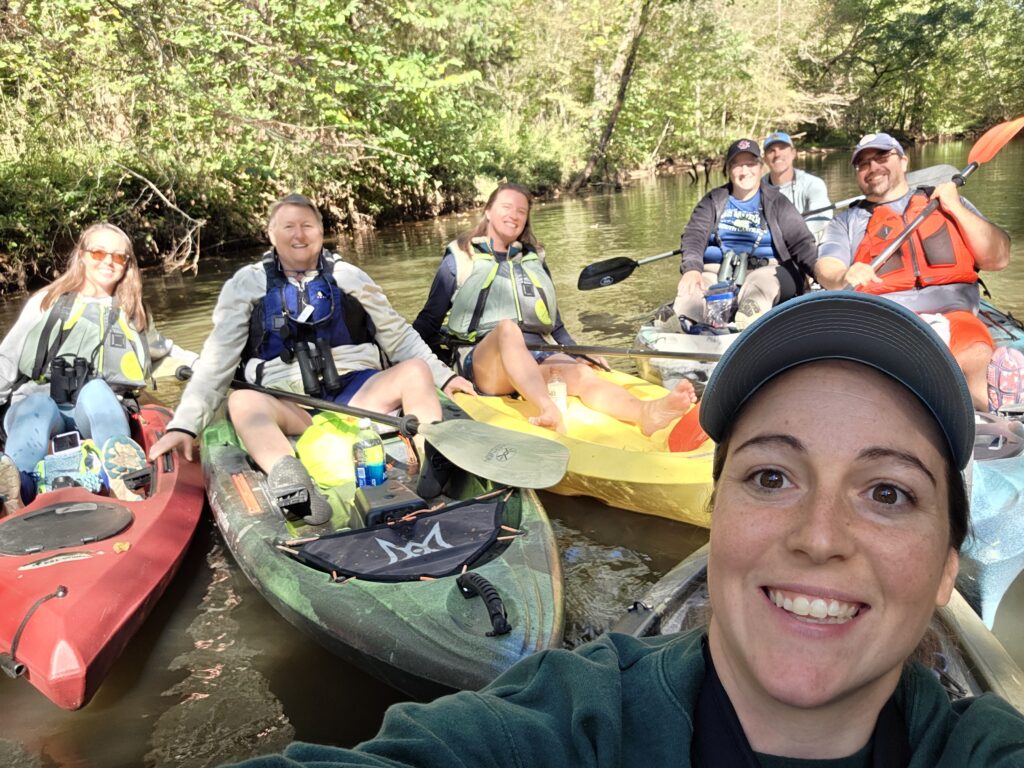
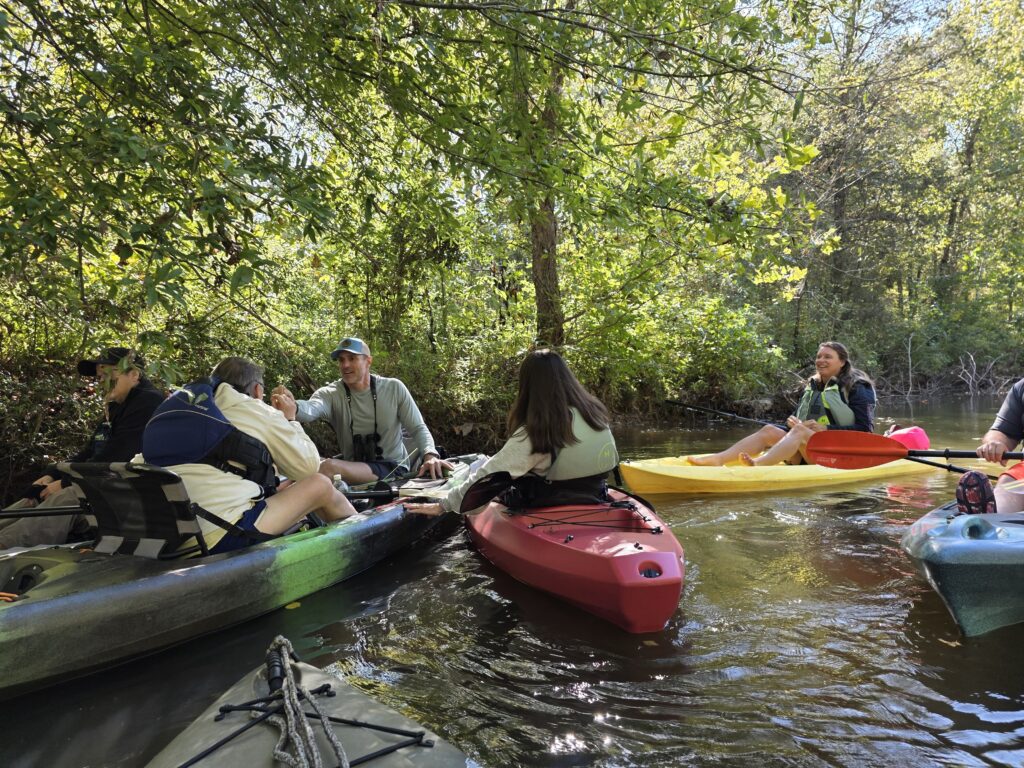
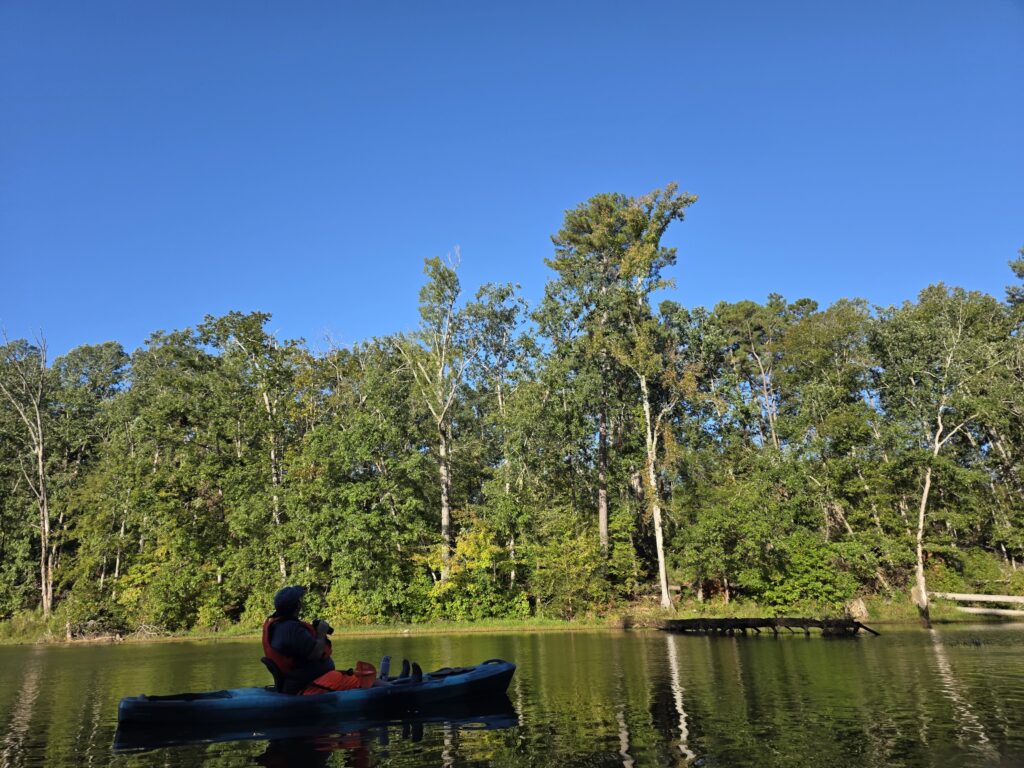
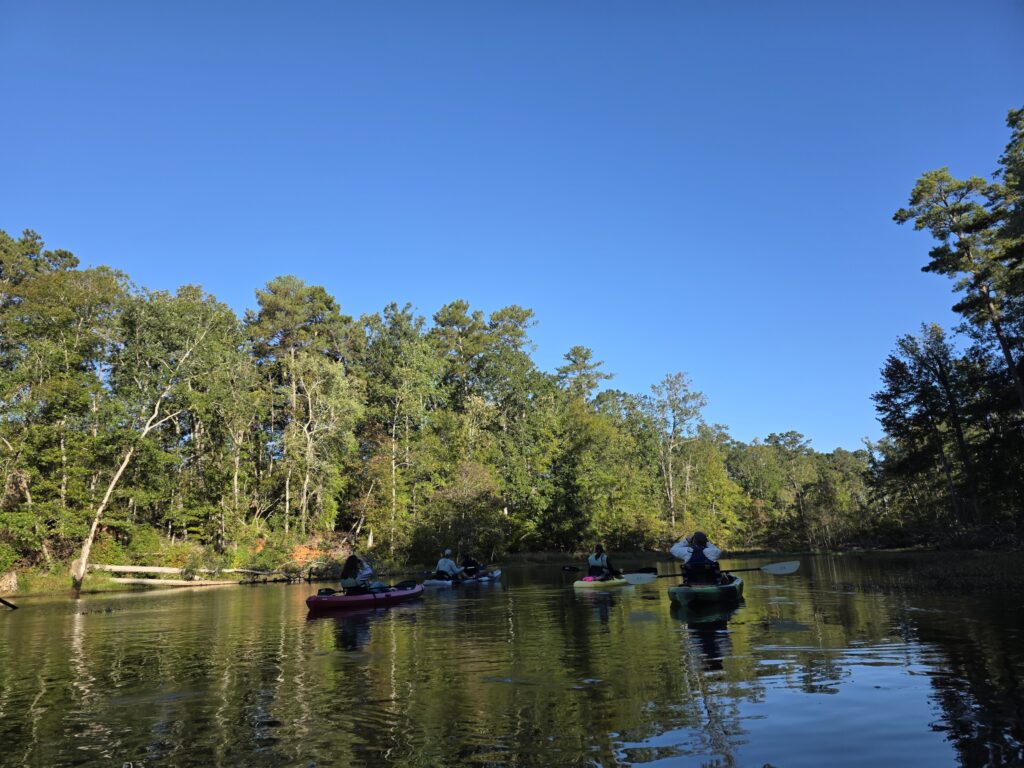
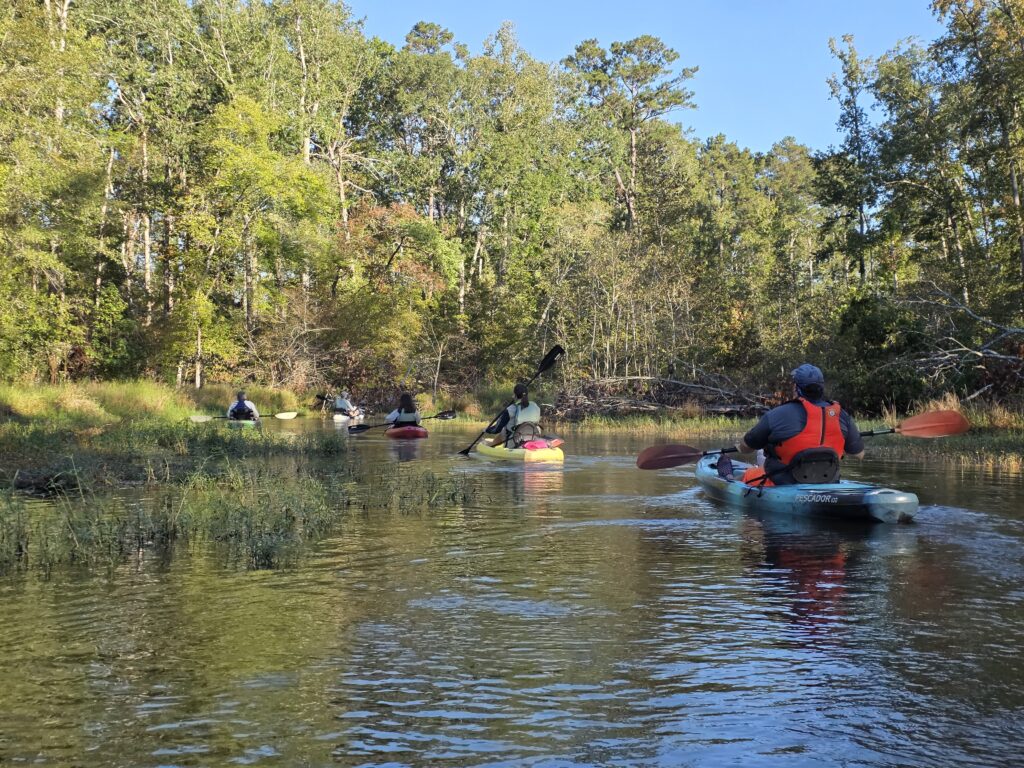
Thursday, October 2 was an incredible day on the water for our Palmetto Pro Birder Paddle, led by our Industry Habitat Manager and resident bird guru, Jay Keck. From the first push off the bank to the final call through the trees, the day was a reminder of how good it feels to slow down and enjoy nature with others.
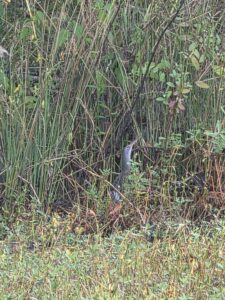
We tallied 37 bird species, including favorites like the wood duck, red-headed woodpecker, black-throated green warbler, and a clapper rail.
An elusive clapper rail.
We also heard a few species that stayed hidden in the trees, such as pileated woodpeckers and downy woodpeckers. Thank you to everyone who joined us for this fun and rewarding day in the field.
This paddle is part of our Palmetto ProBirder Program, which is at the heart of what we do at the South Carolina Wildlife Federation. By combining outdoor adventure, connection with others, and hands-on learning, we hope to inspire more people to become advocates for healthy wildlife habitats. Each time someone logs a bird sighting, plants a native plant, or supports conservation through a Duck Stamp or donation, it adds up to real and lasting change for the landscapes and species we love. We hope to see you on the next one! Until then, happy birding!
“One reason this program is valuable is because it is accessible for all residents of our state. Also, because SCWF sends these seeds statewide, we are able to offer monarchs many options along their long journey!”
–Connor Chilton, 2025 Monarchs & Milkweed Program Lead
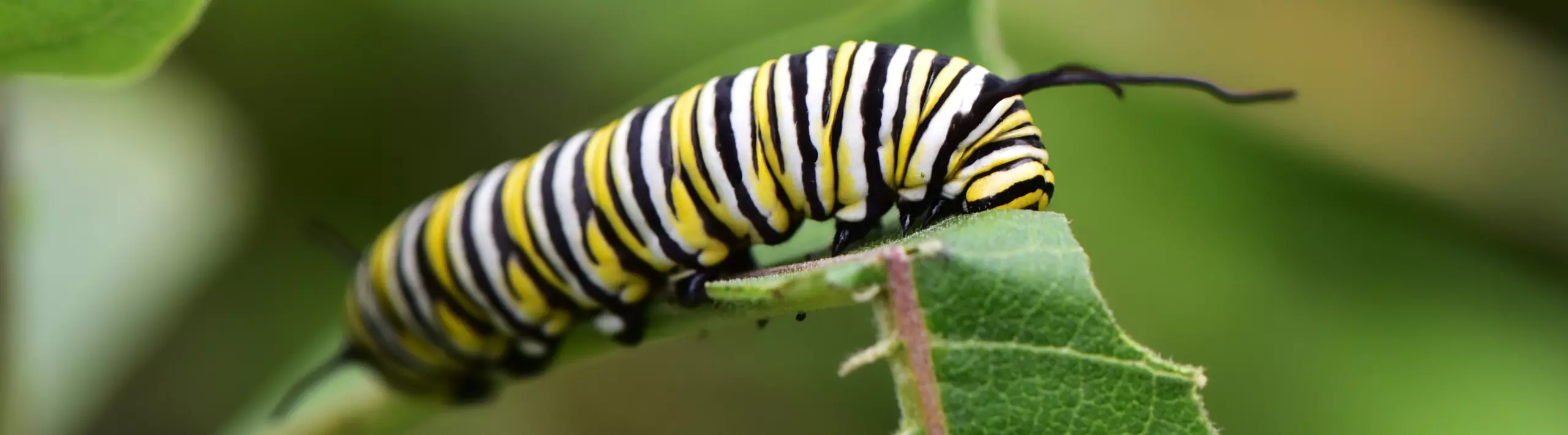
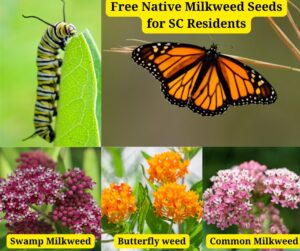
We are thrilled to announce the successful mailing of 5,000 packets of native milkweed seeds to residents across South Carolina, marking the tenth year of the Milkweed for Monarch’s Program! This program allows residents of our state to sign up to receive packets of free native milkweed seeds (Common, Swamp, & Butterfly Milkweed).
Because monarchs only lay eggs on milkweed plants, they must have native milkweed along their 3,000-mile journey to survive. Over the past twenty years, there has been a sharp decline in the monarch butterfly population along their normal migration routes from Canada to Mexico. During this time, these important pollinators have dwindled by almost 97 percent. Native milkweed plants, however, are the key to helping these iconic pollinators thrive.
This program helps SCWF make a statewide impact for monarchs, and we are so grateful to every single person who signs up to receive a seed packet. We recently received some photos from our milkweed seed recipients, and that is one of our favorite parts of this project! If you have any photos of monarchs that you would like to share with us, you can email us at mail@scwf.org.
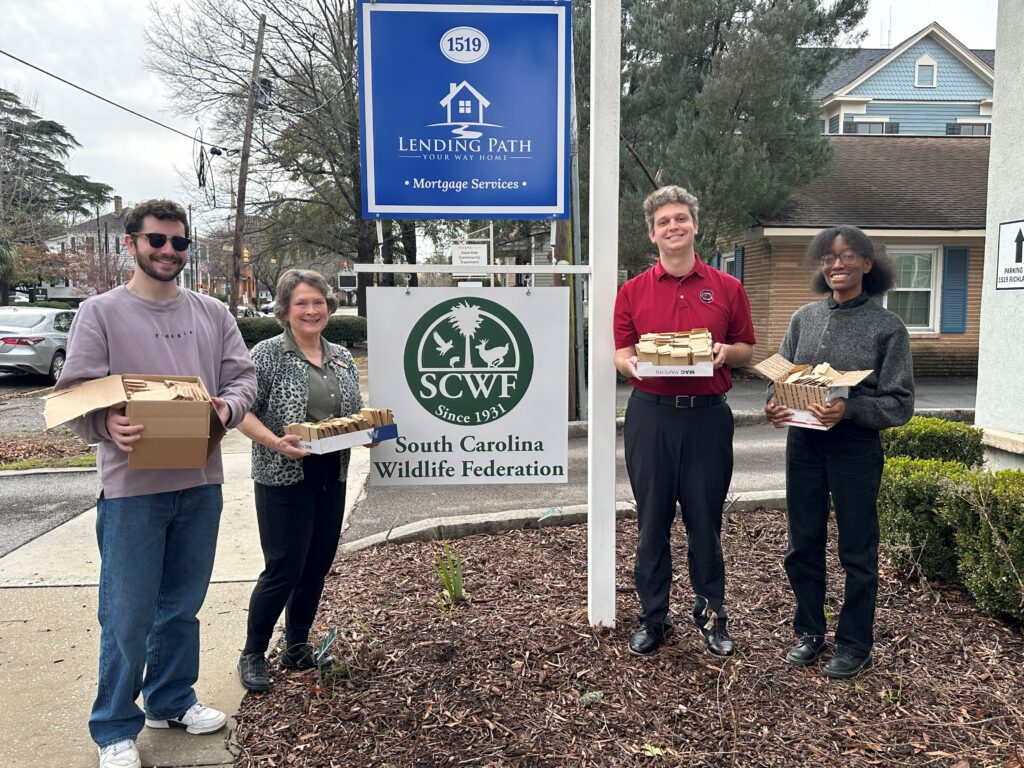
We are grateful to all the volunteers who have helped SCWF hand-mix and package the milkweed seeds.
Thank you to Comporium for sponsoring the 2025 Milkweed for Monarchs Project!
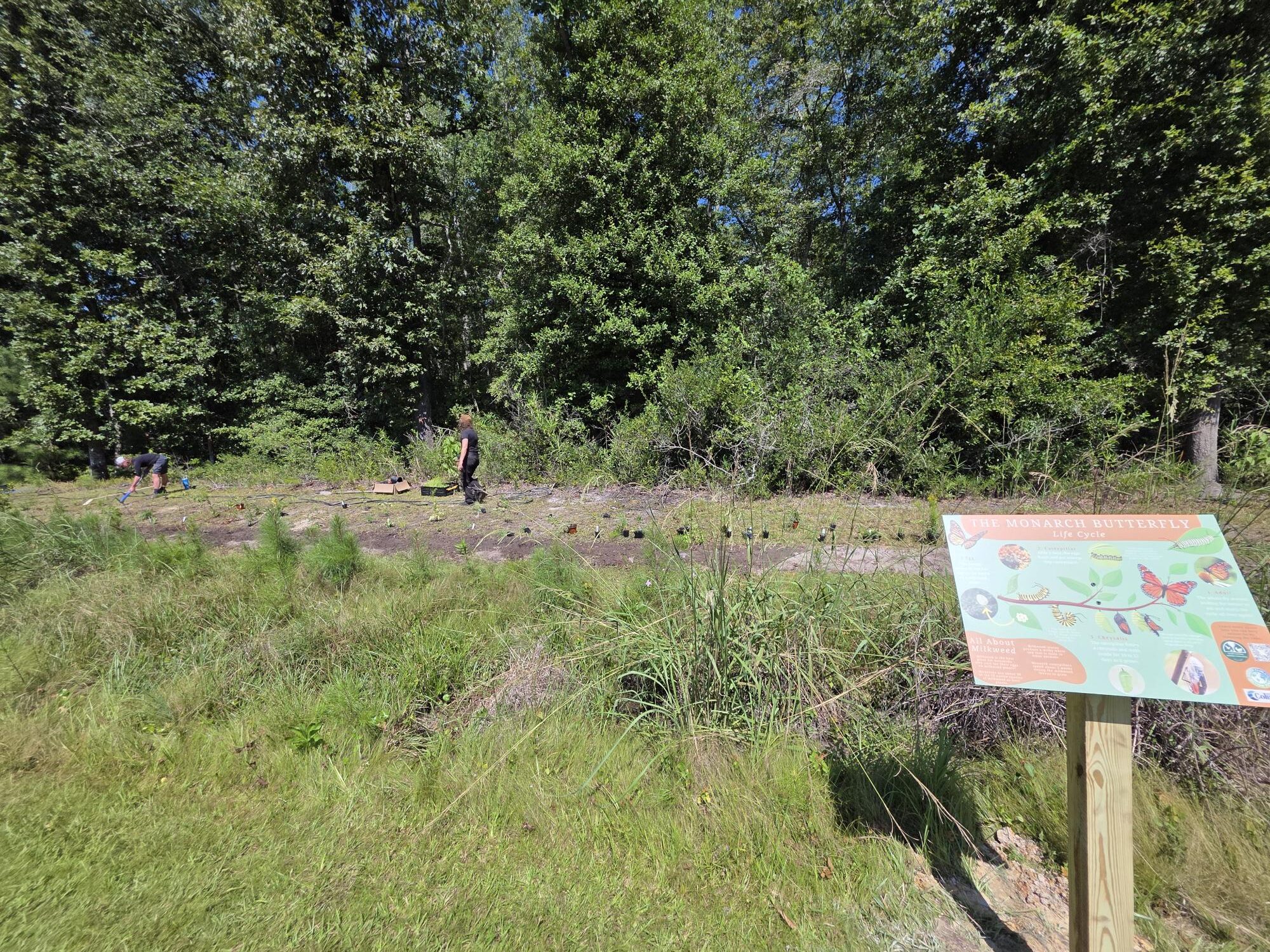
SCWF held an EcoLeaders event at Sesquicentennial State Park in Columbia on Monday, July 21st, where youth planted 750 native plants for wildlife habitat, installed a nesting box for Eastern bluebirds, and installed four interpretive signs. From start to finish, this was a youth-led event.
SCWF’s Education Assistant, Mason Eslinger, planned and executed this ambitious project. At age 20, Mason is already making an impact for conservation, and we know that his passion will also inspire other young people to get involved in the stewardship and protection of our natural resources.
“It is truly a privilege to find myself in a position that can make such profound impacts on not only the environment, but also on communities. This event in particular carried a different gravity to it, having just become an uncle. Being able to hold the “future generations” that I work so hard for allowed me to utilize my renewed sense of purpose on this project. Thank you to all that made something of this magnitude possible and I look forward to watching that little piece of me prosper at Sesqui!” – Mason Eslinger
The native plant garden covers approximately 300 linear feet and will be certified as a wildlife habitat by the National Wildlife Federation. In addition to helping wildlife, these plants will also serve as carbon storage. Carbon dioxide in our atmosphere is a leading cause of climate change and plants are great at taking CO2 out of our atmosphere and storing it in the ground. Click on the “Learn More” button below to see a list of the plants that were planted and how these plants benefit wildlife. The plants for this project were sourced from Charleston Aquatic and Environmental, Creekside Native Grass & Design, and Primitive by Design.
Thank you to Mason for leading this effort! We would also like to thank staff from Sesquicentennial State Park, the Palmetto Trail, and the South Carolina Department of Natural Resources for assisting with this project.
Thank you to the Bloomberg Philanthropies & the City of Columbia for sponsoring this project!
Thank YOU to every single person who participated in Wild Summer Nights Online auction. You were vital to making this year’s auction our best yet!
This year’s auction was record-breaking, raising $118,044 in support of our education and conservation programs—making it our most successful auction to date! We’re incredibly grateful to all our bidders, sponsors, auction item donors, and to everyone who helped spread the word by sharing our social media posts, forwarding our emails, or telling a friend.
As always, all auction proceeds will support our mission to conserve and restore wildlife right here in SC through education and advocacy. SCWF’s inspirational education classes and events connect people of all ages to nature. We hope you can join us at one – or several – in the coming year! Check out our event page here to see current offerings.
Image Credit: “Sleeping Alligator” by Pamela Tennant.
Thank you to all of our sponsors who help us increase our impact for local wildlife!
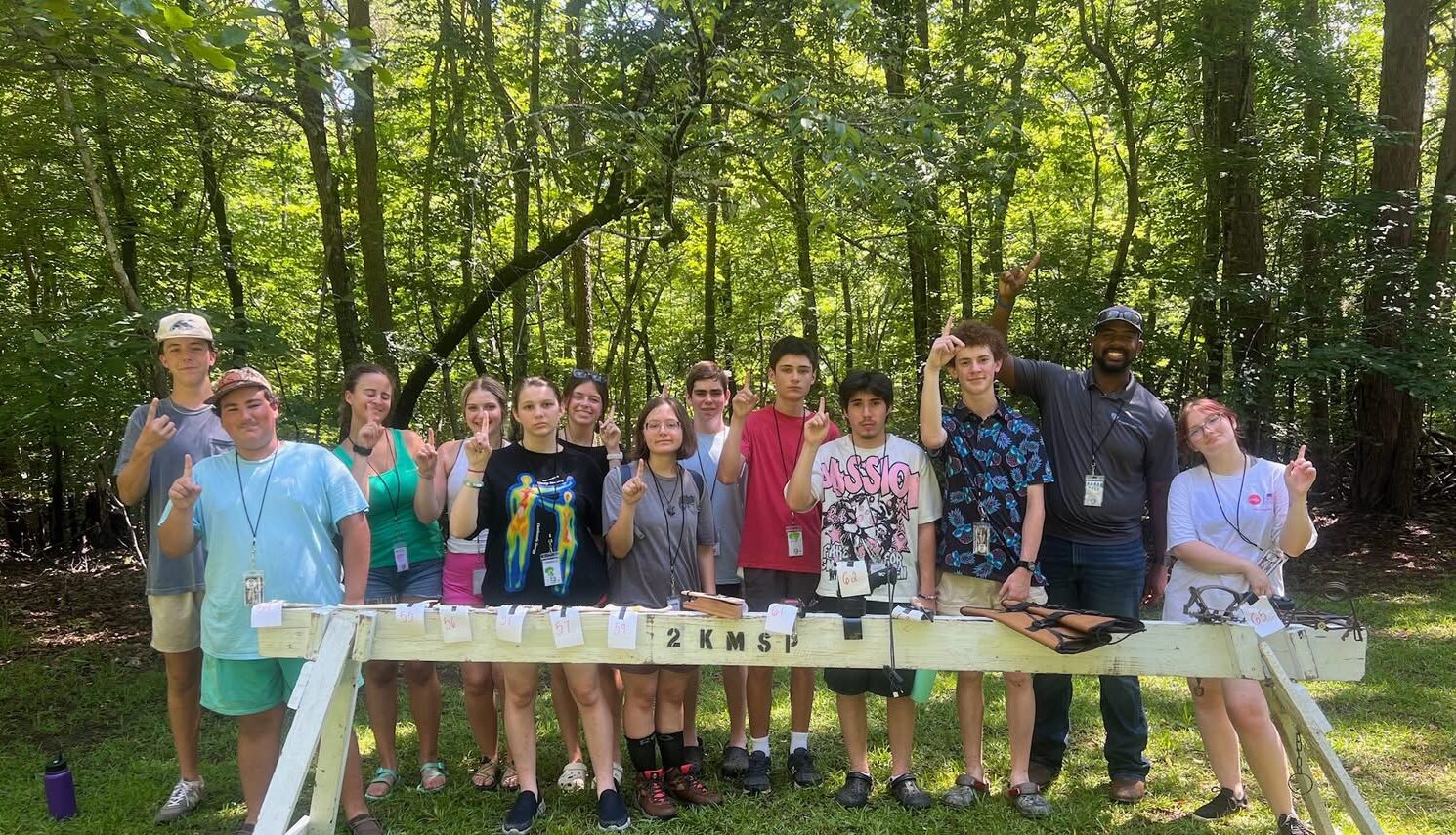
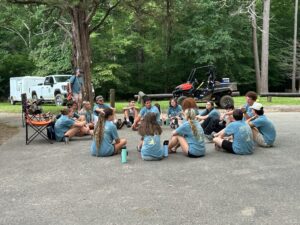
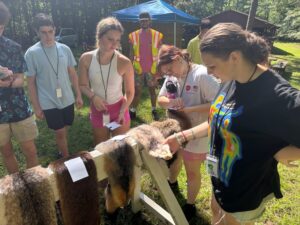
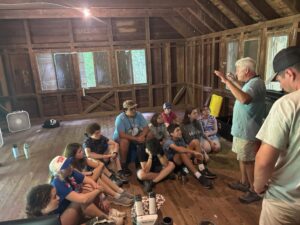
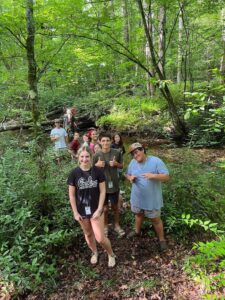
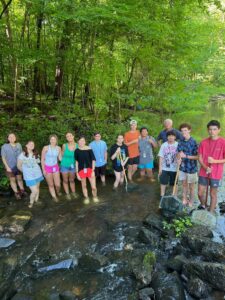
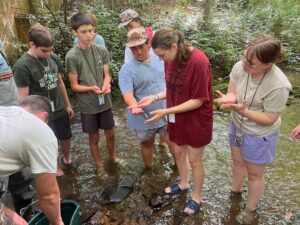
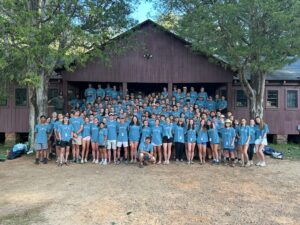
The South Carolina Wildlife Federation is proud to have been one of the sponsors of Camp Wildwood for more than 70 years! This annual event is an outdoor environmental camp that is a fun-filled week during which high school students can experience the many aspects of their natural environment. This year’s Camp was held June 15th through the 21st.
These pictures from this year’s camp show how Camp Wildwood helps the campers to discover that we are part of nature and everything we do in some way affects the natural balance. At Camp Wildwood, you acquire the knowledge and appreciation needed for the protection and wise use of our natural resources.
The Trump administration is seeking to rescind the definition of “harm” as it’s currently applied under the Endangered Species Act. Conservation groups worry the move could spell trouble for endangered species near Charleston and across South Carolina’s rapidly developing coast.
The debate focuses on a central question: Does the term “take” in the Act mean a direct, intentional effort to injure or kill a specific animal, or does it also refer to activities that might indirectly affect wildlife populations?
Under the Endangered Species Act as it currently stands, “taking” includes killing, harassing, hunting, pursuing or harming a listed species. The Act’s current definition of “harm” includes habitat destruction or modification. As such, the law essentially forces developers and local governments building in a protected habitat area to look before they leap, and places restrictions on projects that could hurt federally threatened or endangered species.
The proposed revision would remove that prohibition from the federal law. Several federal wildlife agencies — including the U.S. Fish and Wildlife Service and National Oceanic and Atmospheric Administration — said that previous rule changes have improperly expanded the meanings of “take” and “harm” outside of their original, congressionally approved scope.
The rationale for the change, according to NOAA, is to clarify the definition of “take” and align it with “the plain text of the (Endangered Species Act), as informed by historical and legal interpretations as an affirmative act directly affecting wildlife.”
Catherine Wannamaker, a senior attorney with the Southern Environmental Law Center’s Charleston office, called the proposal a “sweeping change” that would turn the act “on its head.”
“In any area where endangered species overlap with rapid development this is going to have a big impact,” Wannamaker said. While some parts of the state are seeing rapid depopulation, many areas of South Carolina are seeing their population skyrocket.
South Carolina is adding about 90,000 new people every year, The Post and Courier previously reported. But the state still has a negative birth rate (more deaths than births), meaning all of the growth comes from transplants. As those new residents arrive, construction is booming to meet housing and commercial demand.
“South Carolina is one of the fastest growing states, and the new development is really just changing the landscape of our beautiful state — which is the reason a lot of people move here,” said Sara Green, the executive director of the South Carolina Wildlife Federation. “The habitat protections that the Endangered Species Act currently provides are really critical to preserving that landscape.”
The Palmetto State is home to 43 federally threatened or endangered species, according to the U.S. Fish and Wildlife Service — including migratory birds, flowers, amphibians, reptiles and mammals. Charleston County is home to many of those vulnerable species.
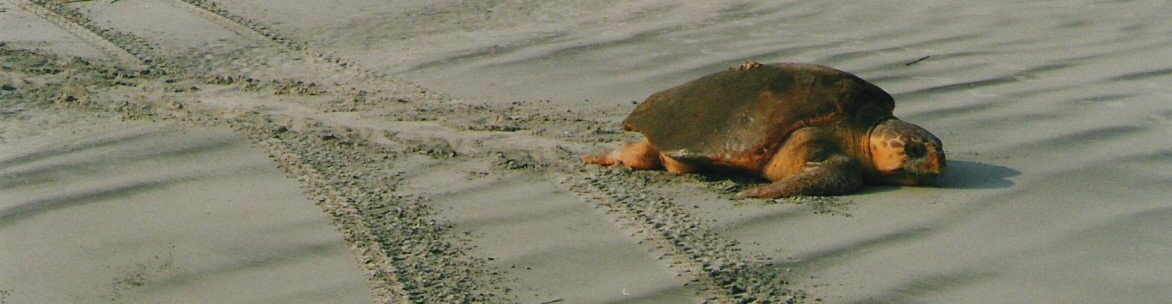
Northern long-eared bats and red-cockaded woodpeckers sail through the canopy of the Francis Marion National Forest. The woodpeckers were downgraded from “endangered” to “threatened” last October, after decades of concerted habitat restoration work. Across the region’s barrier islands, three distinct species of sea turtles — all either threatened or endangered — arrive each spring to nest. Rufa red knots depend on the South Carolina coast as a critical stop-over point on their 19,000 mile voyage to the arctic circle.
Without the permitting process that comes with the harm rule, it’s possible that vulnerable habitats could be cleared and destroyed without the public ever receiving a full assessment of how a project could harm locally listed species, Wannamaker said.
“From woodpeckers and bats to turtles to red knots, keeping a space for these critters is really the only hope that they have of recovery,” she said. “This proposal is just a complete death knell to the Endangered Species Act as we know it.”
Many of those species are facing additional pressures from a changing climate. Sea turtle nesting sites are eroding away because of higher tides, more frequent severe weather events like hurricanes are threatening the coastal woodland habitats of bats and woodpeckers, and more turbulent winds could be throwing off the red knots’ epic migration.
The public comment period on the harm revision proposal rule change closed in May. But Green said South Carolina residents still can get involved in the process by sharing concerns with their representatives in Congress. The red-cockaded woodpecker is a resident of the nearby Francis Marion Forest.
If the proposed rule goes through, harming or killing federally listed species through hunting, trapping or other intentional pursuit methods still would be illegal.
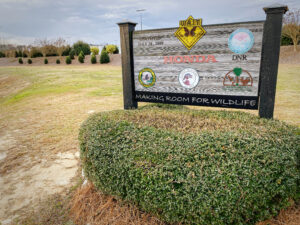
For nearly 20 years, Honda’s S.C. Manufacturing (SCM) facility has been committed to wildlife conservation, completing over 175 activities for Wildlife & Industry Together (WAIT), a South Carolina Wildlife Federation program. From planting and relocating trees to creating food plots and installing birdhouses, wood duck boxes and beehives, we’re helping to enhance biodiversity.
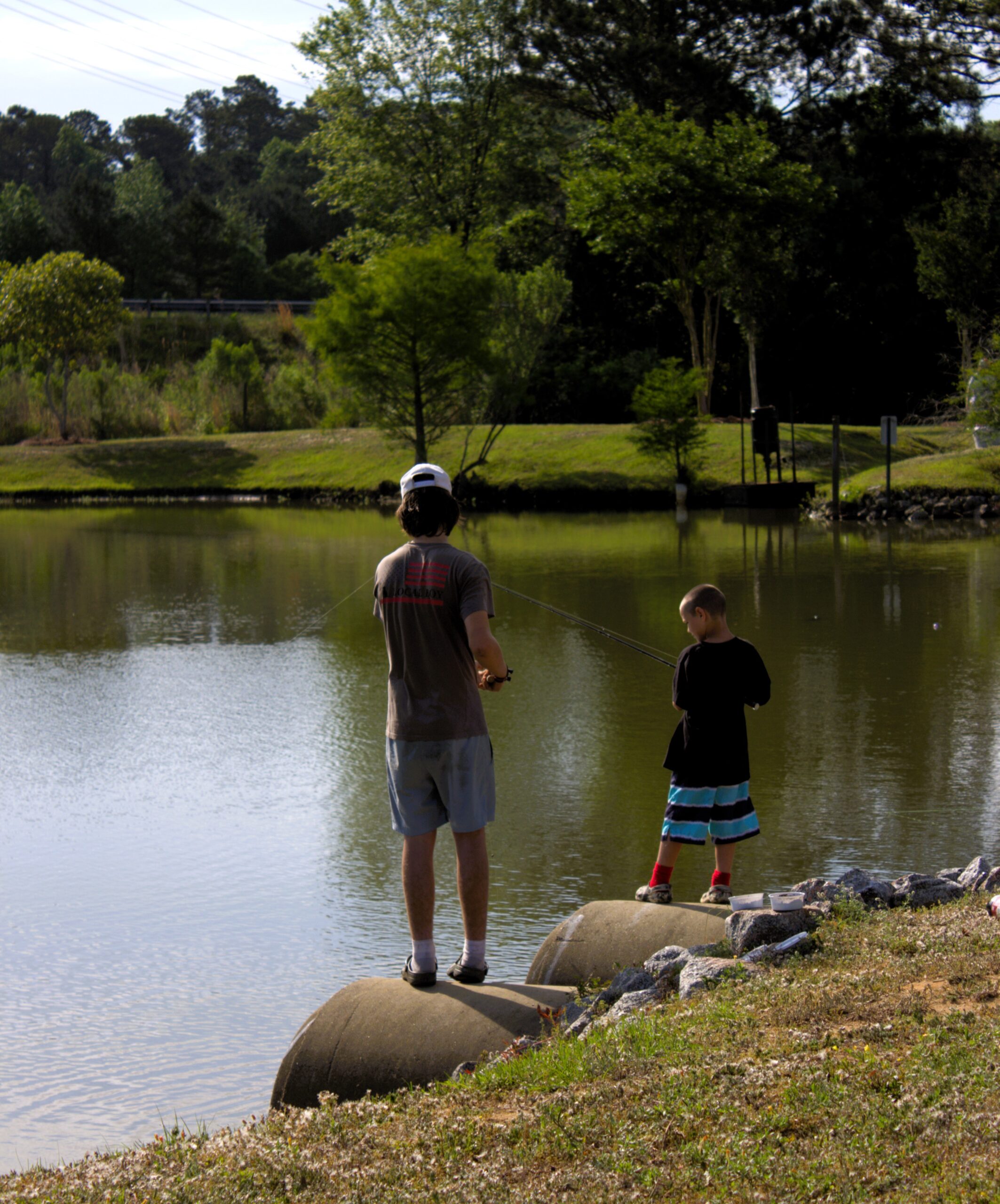
In May, SCM teamed up with WAIT for a fishing day event, bringing together youth and SCM associates to fish from the shore of the stocked pond on property while enjoying the great outdoors with family and friends. Participants enjoyed a complimentary lunch, and all youth took home their catch along with door prizes!
Thank you to Honda South Carolian Mfg for this update.
Why WAIT?
SCWF partners with conservation-minded businesses throughout the state who want to help wildlife thrive by enhancing their properties and providing educational opportunities for their employees and communities. Read more about the WAIT Program and how to join here.