Published by Post & Courier: https://www.postandcourier.com/environment/south-carolina-wetlands-at-risk-sackett/article_e6dd35ee-c453-11ee-a97b-4f61260eafe4.html
By Toby Cox tcox@postandcourier.com
A recent U.S. Supreme Court decision rolled back federal wetlands protection, making it easier for developers to backfill marshes and streams. Officials are worried this will contribute to South Carolina’s already worsening flood risks.
Conservationists and officials are still trying to make sense of the 2023 ruling’s implications, but one thing is clear: Millions of acres of critical ecosystems are now at risk, putting flood-prone communities at risk as well, they say.
Sackett v. the Environmental Protection Agency was the Supreme Court’s most recent attempt to clarify what defines a wetland protected under the Clean Water Act.
In 2007, Michael and Chantall Sackett wanted to build a home on their residential lot in Idaho and began to fill the wetlands on the property with sand and gravel. The EPA ordered them to stop and restore the wetlands, which were near a ditch connected to a creek that fed the large, navigable Priest Lake, located approximately 300 feet from the Sacketts’ lot. If the Sacketts didn’t comply, they faced penalties exceeding $40,000 a day. A 16-year legal battled followed.
In a 5-4 decision that favored the Sacketts, the court ruled that the Clean Water Act only applies to wetlands that have a “continuous surface connection” with “waters of the United States” — or navigable and relatively permanent bodies of water, such as lakes and rivers.
The decision did not define “continuous,” which leaves room for interpretation, said Kelly Moser, a North Carolina-based senior attorney at the Southern Environmental Law Center.
“How continuous is continuous?” she said. “Is it to be (connected) all the time? … Does it have to be connected during all the months except the arid summer months?”
The exact number of acres of wetlands in South Carolina that may lose protection is unknown, but experts are taking educated guesses.
The S.C. Office of Resilience estimated that approximately 2.8 million acres out of the state’s roughly 7.5 million total acres stand to lose protections — or about 37 percent. This estimate, however, is based on a quick mapping analysis and probably isn’t altogether accurate, said Alex Butler, SCOR’s resilience planning director.
“That’s the best data we had for a very quick analysis for how we think (wetlands are) distributed across the state to the different watersheds,” he said.
Moser estimated it’s probably closer to half or more of the state’s wetlands that are at risk of losing protections.
“All of our mapping of wetlands is incomplete, and so any estimate is really conservative,” she said.
SCOR is working with the National Oceanic and Atmospheric Administration to secure funding to map the state’s wetlands at a higher resolution, which could reveal more or fewer at-risk wetlands, Butler said.
But any estimate, however conservative, means far too many wetlands could be compromised in a region plagued by flooding, Moser said.
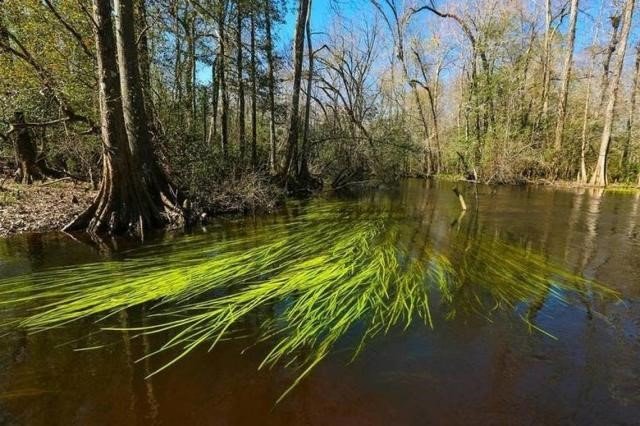
In an area with increasing tidal and riverine flood risks, the loss of wetlands can be devastating for communities prone to flooding: NOAA estimates that 1 acre of wetlands can store up to 1.5 million gallons of floodwater.
Isolated wetlands that connect to larger bodies of water only during rainy seasons or flood stages — which stand to lose protections under the Sackett decision — also hold and channel excess water, Butler said.
High stakes
When wetlands are protected under the Clean Water Act, developers must get authorization before filling them in.
“It doesn’t mean you can’t dig in those (protected) wetlands,” Moser said. “It just means that you have to get a permit for doing those things.”
The Clean Water Act is enforced by the EPA and Army Corps of Engineers, the permitting agency that determines whether a wetland is protected under the act. The permitting process also notifies the public and provides opportunity for community input.
“It’s one of the best ways that the public can participate in making sure their waters stay clean,” Moser said, noting that the Sackett decision removes this level of oversight.
Since a lot of construction takes place on private land, developers could take advantage of the decision’s vagueness and skip applying for a permit altogether, she added.
“It’s really hard to keep track of what’s happening on the ground unless you happen to drive by something and see a big development and see it’s in wetlands, but that doesn’t happen very often,” she said.
It’s unclear how much of South Carolina’s wetlands already have been impacted as a result of the decision or how the decision has changed the number of permits requested from the Army Corps.
“(The Army Corps) continues to evaluate the effects that the Sackett decision may have on permit requests,” said Matt Wilson, manager of the Army Corps’ Regulatory Program, in a written statement.
The Sackett decision’s vagueness means that future lawsuits are likely.
“There’s a lot of room in the Supreme Court decision for interpretation, which likely means there will be litigation — other cases trying to interpret what the Supreme Court test means,” said Chris DeScherer, office director for the South Carolina office of Southern Environmental Law Center.
For an example of how Sackett may play out on the ground, Moser suggested looking to the Okefenokee Swamp.
The swamp is roughly half the size of Rhode Island, spanning the Florida-Georgia border, said Bill Sapp, a Georgia-based senior attorney at the Southern Environmental Law Center.
Home to “extraordinary” wildlife, including the endangered red-headed woodpecker, white storks and a large population of alligators, it became a national refuge in 1937, he said. But this refuge status doesn’t extend to Trail Ridge, a high sandy ridge that runs along the eastern edge of the swamp that formed approximately 250,000 years ago, according the Georgia Conservancy.
In 2018, a mining company from Alabama sought permits to extract heavy minerals on the ridge. These minerals are refined to make titanium and titanium dioxide, which is used to make white pigments in everything from paint to Oreo cookies’ cream center, Sapp said.
When wetlands protections were rolled back by the Trump administration in 2020, the Army Corps determined the mining company no longer needed permits. Even after the Biden administration restored wetlands protections, the Army Corps’ decision held, Sapp said.
This wasn’t the direct result of the Sackett decision, but the Sackett test reinforces this outcome and uses similar reasoning, he said, noting that the mine would destroy hundreds of acres of wetlands without oversight, accountability or public input.
No new lawsuits have been filed since Sackett, but future litigation is possible; the Southern Environmental Law Center and 50 other organizations nationwide are pushing for stronger legal protections of the swamp, Sapp said.
“All the advocates that are fighting the mine are very clear on that point that they’re not against mining, per se,” Sapp said. “They’re against mining for a common mineral next to a very uncommon natural resource.”
At the time of publication, no lawsuits were pending over the Sackett decision in South Carolina, but that doesn’t mean there won’t be. No state is immune from what’s happening in the Okefenokee Swamp, Moser said.
“It could happen anywhere,” she said. “It can happen in South Carolina.”
An uncertain future
Weaker federal protections mean states may have to come up with their own solutions. Various South Carolina groups — environmentalists, hunters, fishermen and wetland consulting firms — are invested in wetland protections, said Josh Eagle, law professor at the University of South Carolina.
“All these people have something big to lose,” he said.
But these protections wouldn’t fully offset the impacts of the Sackett decision, Moser said.
The main issue with state-level protections is that they require full participation from every state within the watershed. Virginia, for example, has some of the strongest state-level protections for wetlands in the region, but the water quality of the Chesapeake Bay depends on the health of the water flowing to the bay from multiple states, she said.
“No matter how comprehensively one state regulates its waters, if a neighboring state doesn’t, everyone suffers,” Moser added.
Conservationists say the Sackett decision misses the mark, doing little to clarify when a wetland deserves protection and presenting new unknowns, including how many acres of South Carolina’s wetlands are at risk, how the test will be applied on the ground and how the state can protect its natural resources.
After attempts by multiple generations to finagle these complex and critical ecosystems into a concise legal definition, only two things remain certain: Where a body of water begins and ends remains difficult to determine, and water remains famously unbound.
A short history of defining wetlands rights
1948: The Federal Water Pollution Control Act of 1948 passed, becoming the first major law to address water pollution in the U.S.
1972: As concern over the country’s deteriorating water quality increased, the law was amended and expanded, becoming known as the Clean Water Act.
1985: In United States v. Riverside Bayview Homes, the Supreme Court unanimously ruled that “waters of the United States” include wetlands adjacent to other open waters.
2001: In Solid Waste Agency of Northern Cook County v. United States Army Corps of Engineers, the Supreme Court ruled that providing migratory bird habitat alone is not enough to protect isolated wetlands under the Clean Water Act.
2006: In John A. Rapanos et ux. et al. v. The United States, the Supreme Court sought to determine how “adjacent” to navigable waters a wetland must be to qualify for protection under the Clean Water Act.
Rapanos wanted to fill-in three wetland areas on his property in Michigan to build a shopping center. The EPA argued that the wetlands were protected because they drained into man-made ditches, which emptied into navigable rivers and lakes.
The court was divided in a 4-1-4 decision, resulting in two tests that could be applied to wetlands to determine whether they were “adjacent” enough to a body of water to be protected under the Clean Water Act.
-
The “continuous surface connection” test, which emphasized visible connections.
-
The “significant nexus” test, which deemphasized visible surface connection. This test held that wetlands and streams that could impact the water quality of larger bodies were protected under the Clean Water Act, acknowledging the unseen ways waterways are connected.
2023: In a 5-4 decision, Sackett v. EPA upheld the “continuous surface connection” test and rejected the “significant nexus test,” overturning the Rapanos case.