Over the last few months our inboxes have been full of beautiful pictures of birds from all over the state! We love seeing all of the colorful visitors our supporters are spotting in their own backyards.
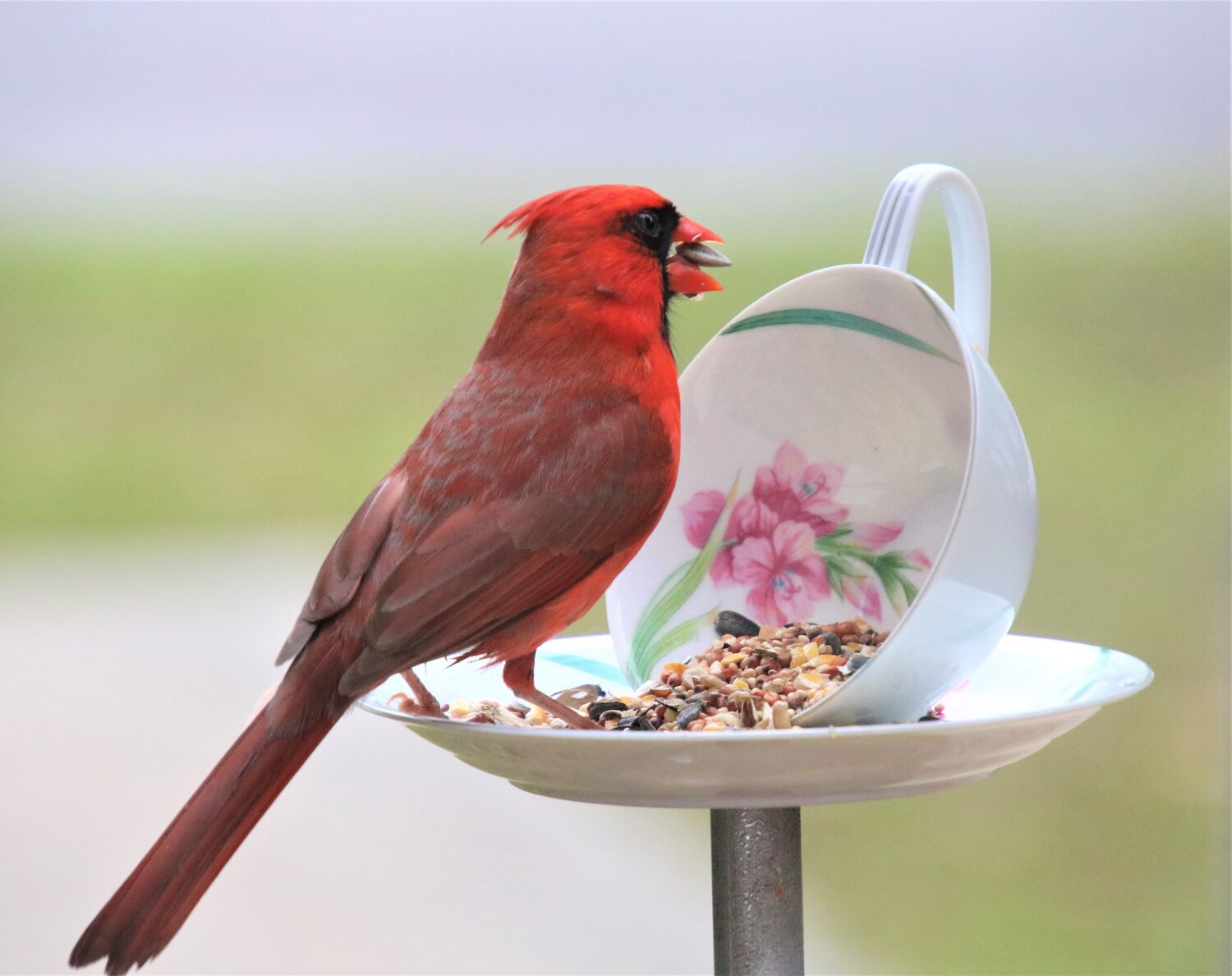
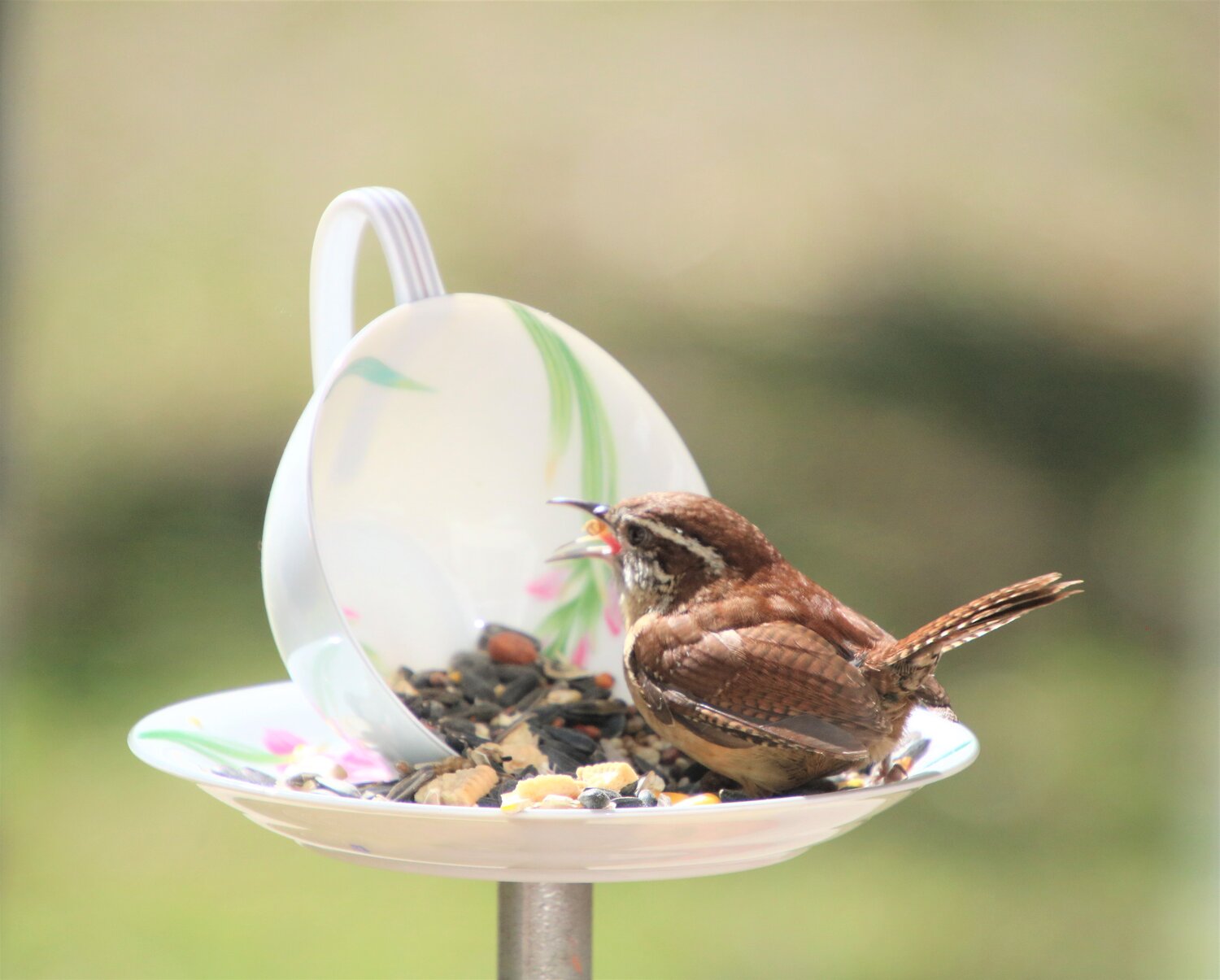
Today we wanted to share a unique DIY project anyone can do! It is a lovely way to spruce up your backyard, especially if you don’t mind using a vintage teacup and saucer you already have in your house. Our supporter and friend, Jenny Cox, shared her downloadable directions as well as a few pictures of the birds her teacup bird feeder attracts!
Carolina Wren feeding on teacup feeder by Jenny Cox
What You Will Need:
-Teacup
-saucer (or a small dish)
-1/2 inch conduit pipe cut to preferred length (Jenny’s are 5ft)
-5/16 – 18 X 1 1/2 elevator bolt and nut to fit
-Epoxy glue or E6000 glue
Directions:
1. Decide how you want to arrange your teacup on the saucer, upright or tipped over.
2. Glue the teacup in place on the saucer. You will have to firmly hold the teacup in place for several minutes until the glue begins to set. Let the glue completely dry for 24 – 48 hours. Avoid using deep tea cups that birds may have difficulty reaching into for food.
3. Glue the flat part of the elevator bolt to the bottom of the saucer. Hold in place firmly for a few minutes until glue begins to set. Put a dab of glue inside the nut and screw it onto the bolt just until it is level with the end of the bolt. Let completely dry for 24 hours. The nut keeps the teacup from being so wobbly when placed onto the pipe.
4. Firmly place conduit pipe into ground.
5. Place the teacup onto the conduit pipe by inserting the bolt into the top end of the pipe. Fill with bird feed or use for a small bird bath.
Make sure to post pictures of your finished project and tag us on social media! (@SCwildlifeFederation on Facebook + Instagram)
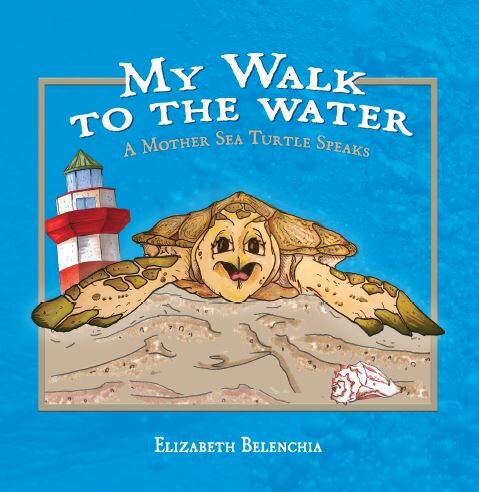
The South Carolina Wildlife Federation has partnered with Hilton Head Author, Elizabeth Belenchia to bring awareness to the challenges of loggerhead turtles as they return to coastal beaches to nest. Released in 2017, “My Walk to the Water” highlights the challenges the turtles face and the need to “put the beaches to sleep” to help the adult turtles and their hatchlings. Follow along as Elizabeth reads her book in the video below!
If you would like to purchase a signed copy of “My Walk to the Water,” click here.
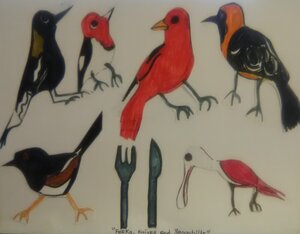
When coronavirus delayed our special dinner event (Forks, Knives, and Spoonbills: A Dinner Celebrating
Conservation), we decided to create a free state-wide art contest. We felt this would be a wonderful opportunity for
artists of all ages to explore some of the imperiled bird species found within South Carolina.
The criteria:
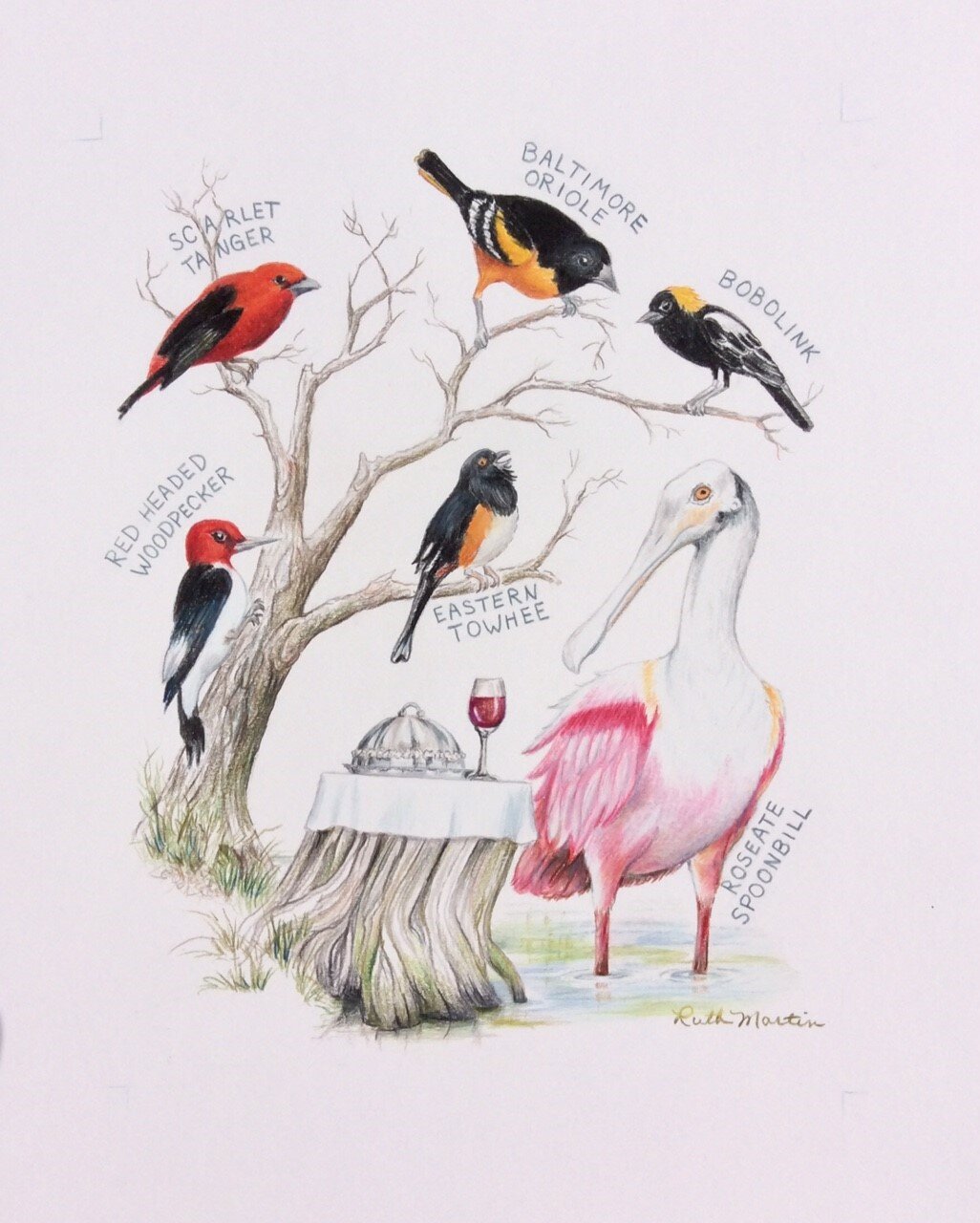
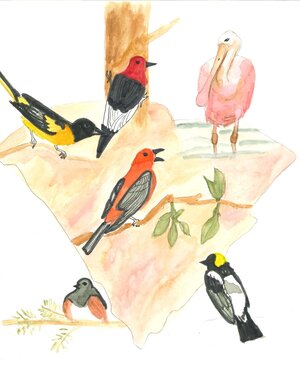
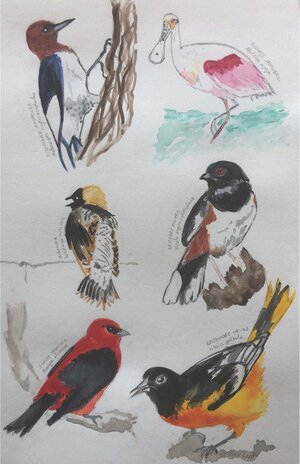
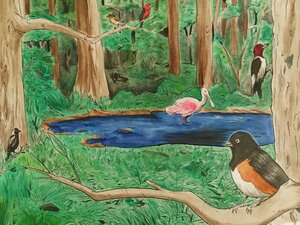
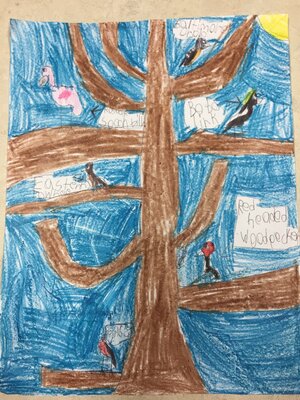
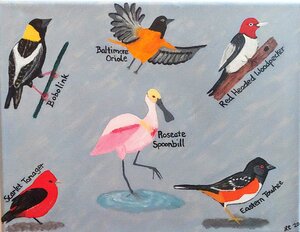
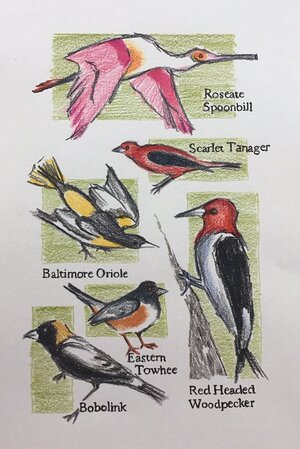
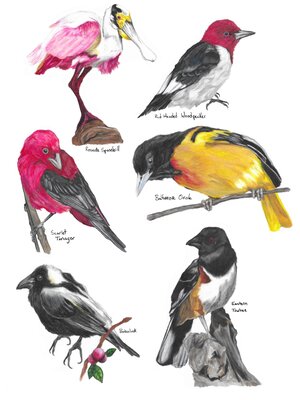
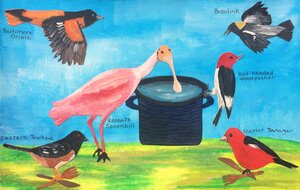
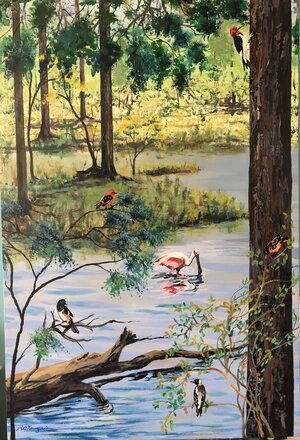
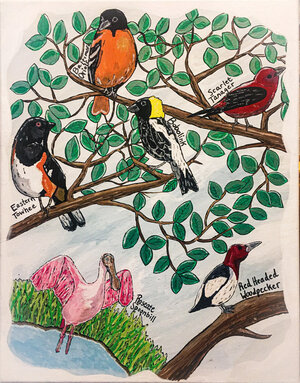
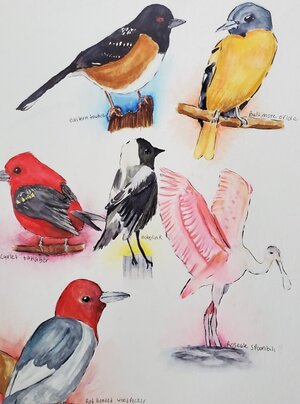
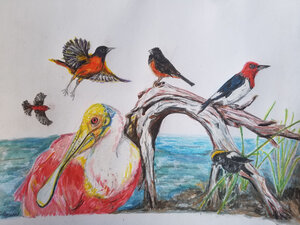
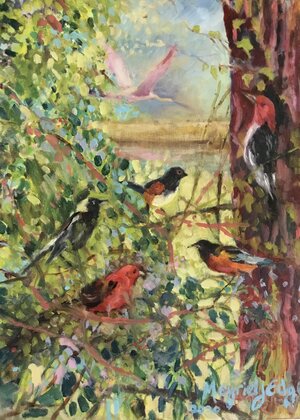
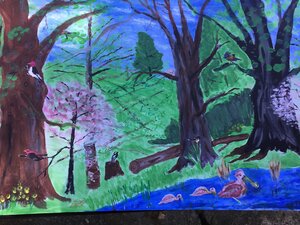
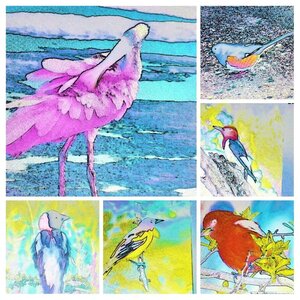
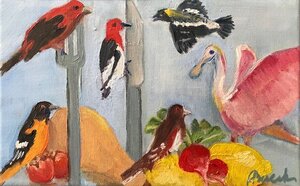
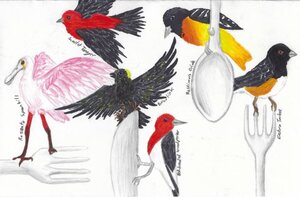
Design the menu art for our delayed event. The artwork should include all six imperiled birds (Roseate Spoonbill,
Red-headed Woodpecker, Bobolink, Eastern Towhee, Scarlet Tanager, and the Baltimore Oriole) and could be completed
in any art medium. We opened the contest up to artists of all ages within South Carolina.
The results:
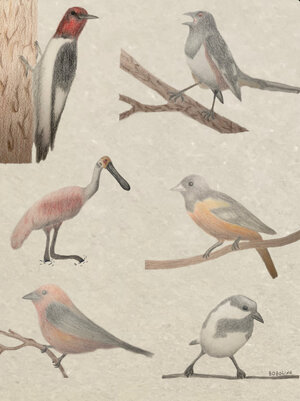
We received over 20 beautiful submissions! We were completely blown away by the talent and creativity from each
artist. We received art from individuals aged 8 to 76 from all across South Carolina. It was hard to chose just one
winner!
One of our favorite parts of the contest was the feedback we received from some of the artists:
“I live in a wooded area by the Ashley River outside of Summerville, and this contest gave me the
opportunity to paint what I see every day and research birds with which I am not very familiar. I have spent my
life studying and drawing animals and landscapes, but have tended to avoid birds. During this unnerving time, I
found it to be a delightful distraction and challenge, so, thank you SCWF!” -Meyriel Edge
Now…for the winner!
The winning piece of art by Ruth Martin will be featured on our upcoming “Forks, Knives, and Spoonbills”
menu at Passerelle Bistro in Greenville, SC.
Artist: Ruth
Martin of Sumter, SC (age: 73)
Tristan Lotter of Lexington, SC (age 12)
Lani Mustard Stringer of Charleston, SC (age: 50)
Jasmine Hoveyda of Columbia, SC (age: 27)
Hannah E. Marx of Greenville, SC (age: 35)
Ruben Garcia of Columbia, SC (age: 23)
Keresa Shelby of Elgin, SC (age: 8)
Leslie Carter of Lexington, SC (age: 41)
Carrie Brazell of Piedmot, SC (age: 57)
Reagan Taylor of Irmo, SC (age: 15)
Maggie Gardner of Mt. Pleasant, SC (age: 27)
Lyda C. Weston of Columbia, SC (age: 72)
Raewyn Tougas of Ninety Six, SC (age: 66)
Anna Wyman of Columbia, SC (age: 25)
Houston Lee of Irmo, SC (age: 14)
Diane Babuin of Columbia, SC (age: 60)
Meyriel Edge of Summerville, SC (age: Senior Citizen)
Russell Lynn Kelley of Columbia, SC (age: 76)
Lori Grant of Johns Island, SC (age: 58)
Pamela Bulak of Columbia, SC (age: 70)
Olivia Schreiber of Pelzer, SC (age: 13)
COPYRIGHT NOTICE:
The artwork contained on this, and any other site under the scwf.org domain, are the property of SCWF and are protected
by United States and International copyright laws. All copyright, trademark, and other intellectual property rights in
this site, are the property of the South Carolina Wildlife Federation.
All artwork on scwf.org is copyrighted.
No permission, either express or implied, is granted for the electronic transmission, storage, retrieval, or printing of
the artwork contained on scwf.org, other than that which is related to the normal “caching” practices of web browsers
and activities such as downloading solely for your personal enjoyment. No parties/individuals visiting or viewing
artwork from scwf.org, may otherwise copy, modify, publish, transmit, or distribute the contents of the artwork found
herein. Express written permission must be granted in order to use artwork for any purpose that is not outlined above.
Your use of scwf.org or viewing of this statement indicates your acceptance of these conditions.
As you may know, one of the many ways we positively impact South Carolina’s wildlife and wildlife habitat is through our lobbying efforts at the state house.
Our Government Relations Manager, Trip King, recently provided us with an update we wanted to share with you:
Picture of Trip King
The second session of 123rd South Carolina General Assembly convened on Tuesday, January 14, 2020 and, under normal circumstances, would adjourn May 14, 2020. We are now past the mid-way point in the legislative session. For the first seven weeks of the session, the Senate was basically tied up debating their version of an education improvement and reform bill, S.419, “The South Carolina Career Opportunity and Access For All” Act, which they eventually passed on March 3 allowing them to return to other legislative matters. Meanwhile, the House of Representatives was a bit more productive early in the session passing a number of consequential bills before they began debate on the state budget. On Wednesday, March 11, the House passed their version of the state appropriations act sending it over to the Senate for their consideration.
As we have all recently learned, South Carolina and our fellow citizens are no longer operating under “normal” circumstances. As the COVID-19 emergency gripped our state forcing changes in our normal lifestyles and temporarily shuttering many of our state’s businesses, so it is with the legislative process as the General Assembly has ground to a halt and is currently not in session. On Tuesday, March 17, at the request of Governor McMaster, the Senate convened and passed an emergency spending measure allocating $45M from the state’s Contingency Reserve Fund to be used immediately in dealing with the COVID-19 crisis. The Senate then adjourned for an indefinite period. Likewise, the House of Representatives convened on Thursday, March 19, and concurred with the Senate’s emergency spending bill and sent it to the Governor for his signature. The House then adjourned at the Call of the Chair. Speaker Jay Lucas has said that the House would be out for at least two weeks and probably longer. Senate President Harvey Peeler has not signaled when the Senate may come back into session but is looking at the situation on a week to week basis. Bottom line, at this juncture it is unclear when either chamber may return to the State House to resume their legislative work. Obviously, there are a number of significant bills that are awaiting further action by one or both chambers before the mandated May 14 adjournment. Most pressing is the need for passage of a state budget before July 1, 2020, the beginning of the new fiscal year.
As we monitor the situation and await further guidance from our legislative leaders, here is a description and update on some of the legislative initiatives SCWF has been tracking and advocating in favor of, or against.
Conservation and Land Protection – SCWF has long been a champion of the South Carolina Conservation Bank and over the years has consistently advocated for increased funding for the agency. The Conservation Bank is the single most important tool the state and the conservation community has to protect some of South Carolina’s most iconic landscapes and natural resources from development. While the Bank does not own a single piece of property, it has helped protect more than 300,000 acres of land in our state since its inception in 2004 by contributing to the funding of fee simple land purchases and conservation easements by qualified land trust entities. After several years of uncertainty as to its future, the Bank is now on solid footing having been re-authorized and made a permanent state agency by the Legislature in 2018 and the recently House-passed state budget increases the funding for the Bank to roughly $18.6M, the highest level it has seen in recent years. Additionally, the Bank is under the new and capable leadership of Raleigh West who was nominated by the Bank’s board and confirmed by the Senate last year to serve as Executive Director. Raleigh most recently served as Executive Director of the Lord Berkeley Conservation Trust.
Earlier this year Senate Vincent Sheheen (D-Kershaw) introduced S.1024, The South Carolina Thirty-by-Thirty Conservation Act, which would set a goal for the State of South Carolina to protect thirty percent of the State not later than 2030 by the use of enduring conservation measures on lands and waters in the State. Senator Sheheen’s legislation would also create the Thirty-By-Thirty Interagency Taskforce to provide for the development and implementation of plans by state agencies to achieve this goal. This legislation is pending in the Senate Agriculture and Natural Resources Committee. It is estimated that roughly fifteen percent of South Carolina’s land is currently protected by state ownership or held by land trusts or under conservation easements. SCWF supports the concept of Senator Sheheen’s bold land protection initiative for our state.
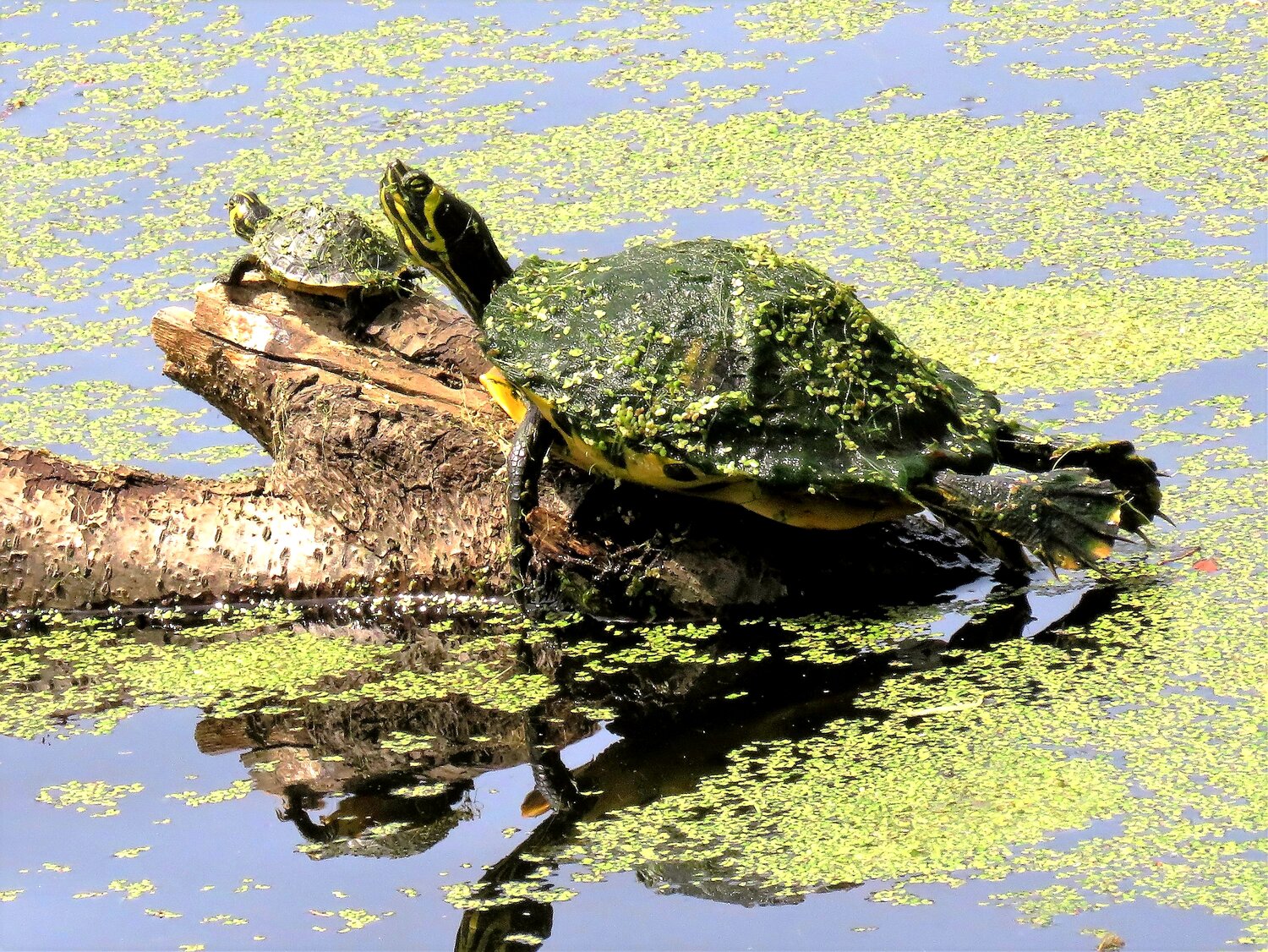
Photo of two turtles on a log. “Raising the Next Generation” by Jo Frkovich
Native Reptile and Amphibian Protection – After recent in-depth reporting by numerous media outlets on the illegal trade of some of South Carolina’s most iconic native reptiles and amphibians, legislation has been introduced that would give the SC Department of Natural Resources and other state agencies more enforcement power to crack down on the black market wildlife trade which has grown and flourished in our state. Dubbed the “Turtle Bill”, S.885, introduced by Senator Sheheen and others in the Senate, would tighten lax wildlife laws and increase penalties for those who seek to trap and sell for profit our state’s rare turtle population and other precious native wildlife. A companion bill, H.4831, was introduced by Rep. Bill Hixon (R-Aiken) and others in the House of Representatives. SCWF has voiced its support for these legislative initiatives as the work their way through the legislative process. H.4831 was passed in the House in early February and, along with S.885, is currently under consideration by the Senate Fish, Game and Forestry Committee.
South Carolina Resiliency Revolving Fund Act S.259 – Introduced by Senator Stephen Goldfinch (R-Georgetown) and approved by the Senate last year 44-1, this bill would establish a state low-interest revolving loan fund to help counties and municipalities finance the purchase of repetitive loss properties due to flooding from homeowners who willingly wish to relocate out of harm’s way. The state funding would provide local communities with the twenty-five percent local match necessary to participate in the Federal Emergency Management Agency’s (FEMA) homeowner buyout program of repetitively flooded properties. S.259 is currently pending in the House Ways and Means Committee and we are hopeful that the bill will move forward in the House later this session. This bill, and the concept of more funding for statewide resiliency infrastructure upgrades in the wake of years of devastating flood activity in South Carolina, has the support of Ways and Means Chairman Murrell Smith (R-Sumter). Chairman Smith recently included $50M in the House-passed budget to be used for “disaster relief assistance, hazard mitigation and infrastructure improvements, and statewide resilience planning”. SCWF, along with our advocacy partner Audubon South Carolina and numerous other conservation organizations, has been a strong proponent of S.259 as well as other legislative measures dealing with extreme weather resilience planning and mitigation.
Plastics and the Environment – In recent years, there have been several attempts by members of the General Assembly to pass legislation that would prohibit city and county governments from enacting local ordinances that would ban or restrict the use of plastic bags and other single-use auxiliary containers as a way to deal with the proliferation of plastic waste and pollution in their communities. S.394, introduced by Senator Wes Climer (R-York) in 2019, is the latest attempt to restrict local government’s ability to effectively deal with the ever-increasing stream of plastic waste in the absence of a statewide solution. Fortunately, it now appears that public opposition to this bill, and others that preceded it, is so great that there are not enough votes to move it in the Legislature. SCWF has been very supportive of our state’s local governments and their ability under our Home Rule doctrine to enact local ordinances that protect their citizens’ health, welfare and environment.
Speaking of plastic, we are closely following S.1023, a bill that was introduced by Senator Sheheen that, if passed, would direct the Department of Natural Resources and the SC Department of Health and Environmental Control to form a joint task force to research microplastic contamination in our state. The study would include such things as the extent of microplastic contamination in the environment, including soil, water, air and wildlife, and identification of best practices for manufacturers and consumers to reduce the production and release of microplastics into the environment. The task force would also be charged with making recommendations back to the General Assembly by December 31, 2021 as to the efficacy of methods for removing micro plastics from our environment and what legislative or regulatory actions the State can pursue to protect human health and the environment from microplastics. SCWF likes Senator Sheheen’s approach to this ever-growing problem and concern.
Banner Photo: Sunset Over the Catawba by Jacque Weir
The South Carolina Wildlife Federation is honored to be in a position to distribute educational grants to full-time students pursuing environmental education at South Carolina schools of higher education. Both undergraduate and graduate students are eligible, based on their performance in academia and in related community activities.
The winners of the 2019-2020 SCWF Scholarships are:
Lauren Diaz, Graduate in Wildlife and Fisheries Biology, Clemson University
In her final year of her Masters degree program, Lauren plans on beginning a PhD program in the fall and seeking a teaching position in the southeast. There, she hopes to start a freshwater ecology lab and train the next generation of graduate students in population dynamics of aquatic organisms with a focus on lotic water systems. Lauren’s research has focused on the critically imperiled eastern hellbender salamander (Cryptobranchus alleganienses) in North Carolina where she studies the habitat selection patterns of larval hellbenders and the use of artificial nest structures, and mentors undergraduate students who have constructed and deployed over 100 artificial hellbender shelters in mountain streams. Prior to her graduate position, she was a herpetology technician at the Jones Ecological Research Center, a field technician for the University of Florida (UF) researching multi-species songbird flocks, a field technician for the University of Wyoming releasing and monitoring captive bred Wyoming toads, an intern with the Florida Fish and Wildlife Commission (FWC) conducting larval gopher frog surveys and radio-tracking adults, and a student assistant to the UF Cooperative Fish and Wildlife Research Unit’s snail kite monitoring program. Lauren is a natural born leader who has held leadership roles as vice president of Clemson’s Natural Resource Graduate Student Association (NRGSA) and as a senator representing Wildlife and Fisheries Biology at Clemson’s Graduate Student Government (GSG). For her tremendous accomplishments, SCWF is proud to honor Lauren Diaz with the first annual Nicole Chadwick Memorial Scholarship.
Jordan James, Sophomore in Geology/Environmental and Sustainability Studies, College of Charleston Upon graduation, Jordan plans to attend graduate school to obtain a Master’s Degree in Hydrology or Environmental Science. She eventually hopes to work within the nonprofit sector to help provide clean water to developing countries through testing for pollutants in drinking water, locating their sources, and strategizing how to provide a safe and sustainable alternative. Jordan is a lead intern for the 71% Project at the Center for Sustainability at the College of Charleston, where she coordinates litter sweeps and events such as the Sustainable Seafood Dinner. She also conducts laboratory work and collaborates with Charleston Waterkeeper to help their network of volunteers to collect pre-consumer microplastic pellets (nurdles) used for production of plastic products. She is applying analytical techniques to identify the polymer resin type and cataloging this information to be used potentially for source-tracking of nurdle spills into Charleston Harbor. As part of a field study in her geology program, Jordan will be studying abroad in India to study water resources and pollution in the Ganges River.
Sarah Zaunbrecher, Graduate in Marine Science, University of South Carolina
Sarah has been interested in wetlands and the coast since she was young, and as she grew older she began to see the disconnect between those conducting ecological research and those utilizing natural resources. She has been heavily involved in environmental outreach and education, serving as a volunteer at youth summer camps, river cleanups with Congaree Riverkeeper, and trail maintenance for Harbison State Forest. One of her goals is to work in coastal resource management and she is gaining a better understanding of the ecological processes within the world’s oceans and coasts as a marine science graduate researching phytoplankton ecology. Sarah’s current graduate research is on phytoplankton ecology and how it can be used to explain food web dynamics in the Atlantic. As the base of the coastal food web and rapid respondents to changes in water quality and other environmental conditions, phytoplankton can be used as benchmarks in wetlands and coastal management. Her research is essential for understanding how fisheries may be impacted by sand mining, trawling, oil exploration, and increasing ocean temperatures. After graduation, Sarah plans to apply for the 2020 Knauss Marine Policy Fellowship in Washington, D.C., where she can get hands-on experience in how scientific research can lead to changes in policy and management in the federal government.
Suzanna Ellison, Junior in Biology and Environmental Studies, College of Charleston
Suzanna has a demonstrated history of service to her community and dedication to environmental sustainability. She plans to obtain her Masters degree and is interested in incorporating community gardens into cities for human health. While working at Clemson Extension Vegetable Lab she studied how great the impact of plant health is to insects, how soil health can affect the type of insects that make a home in an ecosystem, and of course, how central insects are to agriculture. As a part of a Summer Undergraduate Research with Faculty (SURF) Grant Research Project, Suzanna proposed and conducted an independent study on how the age and seasonality of burns in the Francis Marion Forest affects the population of four species of swallowtail butterflies. She also has worked as a Sustainable Agriculture Downtown Garden Manager at the College of Charleston, where she managed and cultivated on-campus and off-campus gardens, led workshops, and gave tours of the gardens. Suzanna has served as the president for Alliance for Planet Earth (APE) and a farmhand/site intern with World Wide Opportunities on Organic Farms, and co-founded Buy Nothing Charleston, a community designed to eliminate currency and increase generosity between neighbors.
SCWF Scholarship Program:
The SCWF receives contributions from our members; however, a large portion of the funds for these scholarships are received from these three funders:
Nicole Chadwick Memorial Scholarship Fund – honoring the legacy of an endangered species biologist who made a long-lasting impact on wildlife conservation in South Carolina, this fund was created in 2019 out of a desire by community members to honor the long-lasting impact of Nicole Chadwick’s work for wildlife conservation. The new scholarship fund will specifically be awarded to female students studying environmental fields in South Carolina.
D. L. Scurry Foundation – In 1969, Mr. D. L. Scurry and his CPA, Mr. J. F. Burgess, created a non-profit foundation which emphasized providing educational scholarship funds for individuals attending colleges, universities and technical schools in South Carolina. Since that time, the D. L. Scurry Foundation has helped further the educational goals of thousands of students and many organizations within the state.
The Riverbanks Conservation Support Fund (CSF) – This Fund was created to provide financial assistance for conservation oriented projects/programs worldwide that promote preservation of the Earth’s biodiversity.
Knowledge lays the groundwork for analyzing environmental problems, resolving conflicts, and preventing new problems from arising. The South Carolina Wildlife Federation is committed to supporting future leaders by helping to provide the financial resources necessary to lay the groundwork for more responsible decision-making tomorrow.
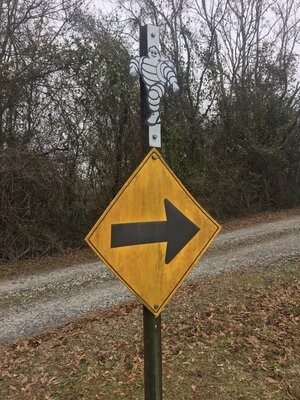
W.A.I.T. Spotlight Feature Banner with Michelin Logo
The South Carolina Wildlife Federation (SCWF) is fortunate to partner with companies all over the state for the Wildlife and Industry Together (W.A.I.T.) Program. W.A.I.T. creates an opportunity for organizations to restore wildlife habitat on their properties, provide educational opportunities for their staff, and participate in community outreach with their local schools and/or neighborhoods.
This month, SCWF is shining a spotlight on W.A.I.T. partner Michelin US2 in Sandy Springs, South Carolina. Read our
Q&A with their W.A.I.T. team to learn more about the awesome work they are doing!
Tell us a bit about Michelin US2: Michelin in Sandy Springs, SC (US2) manufactures rubber products that are used in the tire-making process at our other Manufacturing facilities. US2 operates 24 hours each day and approximately 350 days per year to keep up with demand. Michelin offers great benefits to employees including access to an onsite medical center, an onsite gym, an onsite outdoor nature trail, and many more amenities. Leading a healthy lifestyle and participating in community events is a high priority and proves to be very fulfilling for many employees. US2 proudly sponsors three main local organizations each year: Anderson County United Way, March of Dimes, and a partnership with Townville
Elementary. As of 2017, US2 has reached a goal of Zero Waste to Landfill by reducing waste generated and by sending various waste streams to be recycled into other cool products.
What was your organization’s motivation for partnering with SCWF and the W.A.I.T. program? Being a part of the Manufacturing Industry, it can be difficult to overcome the common mindset that
you can make a great product and still care about the environmental impact that is made around you. At US2
we have a beautiful property of trees and natural springs that is perfect for supporting a wildlife habitat.
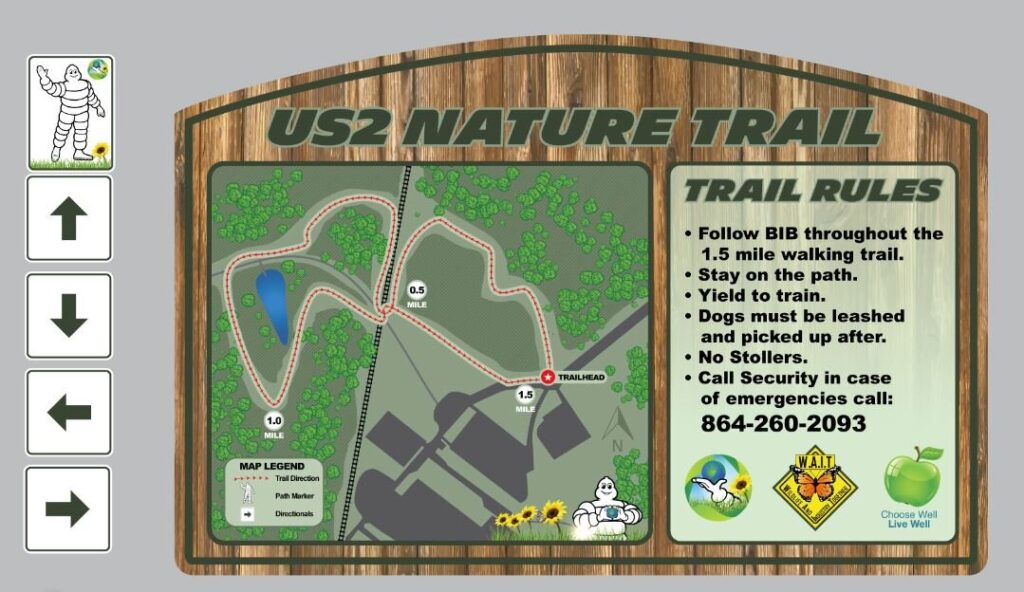
What is your team’s favorite element of their wildlife habitat? The 1.5-mile nature
trail allows employees and their families to get outside and enjoy native vegetation and wildlife right in
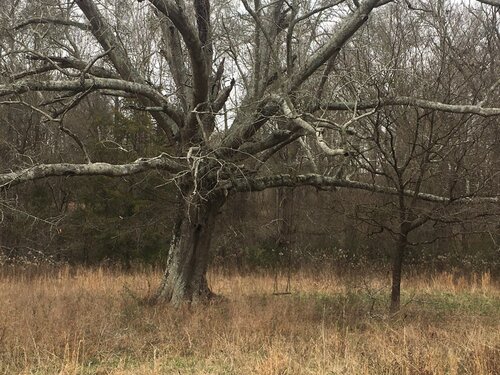
our front yard. The trail walks you through a field of orchard trees and by a huge Oak with a tree swing
that makes you feel like a kid again. You will cross multiple bridges to enjoy the natural springs that run
to 3&20 creek all while sighting the hawks flying through the air and enjoying the various birds chirp
in the woods.
How has your participation in the W.A.I.T. program impacted your community? US2 has
partnered with one of our local elementary schools, Townville Elementary, and we have helped them build an
outdoor class room. This allows students the opportunity to enjoy a breath of fresh air on a beautiful day
while learning in a fun, outdoor environment. They can also actively participate in growing their own food
in the gardening beds that were put in place.
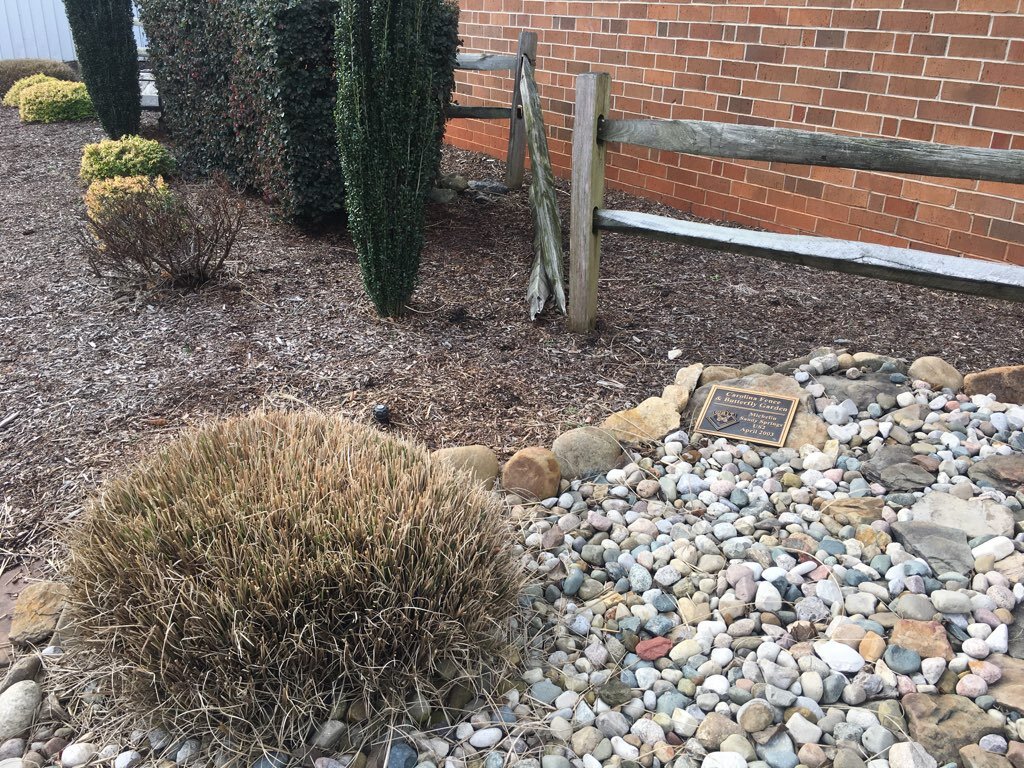
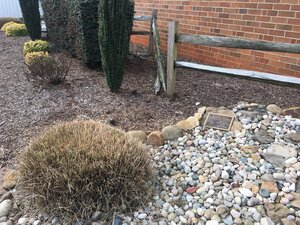
What wildlife, or wildlife centered event (on your property) does your team enjoy the most? Our Carolina Fence Garden, constructed over 20 years ago, remains a staple at the entrance of our
building. It is a nice green space for employees to see and contains elements of our State icons including a
split rail fence, yellow jasmine, bird houses, and a water feature.
Where can people go to keep up with your organization (website, social media, etc.)? US2 does not have an individual website, but please check out ourMichelin website to keep updated on the latest
news and to browse through our tire selection!
Did you like learning about Michelin US2 and think your business might be a fit for the W.A.I.T. program?
ContactJay Keck to learn more!
One of SCWF’s education outreach series is the Palmetto Pro Birder program. The program teaches participants to identify birds in their own backyards and around the state! It is a wonderful way to take on the role of a citizen scientist and teaches individuals about ways to help save birds and the diverse array of habitats that exist in the Palmetto State.
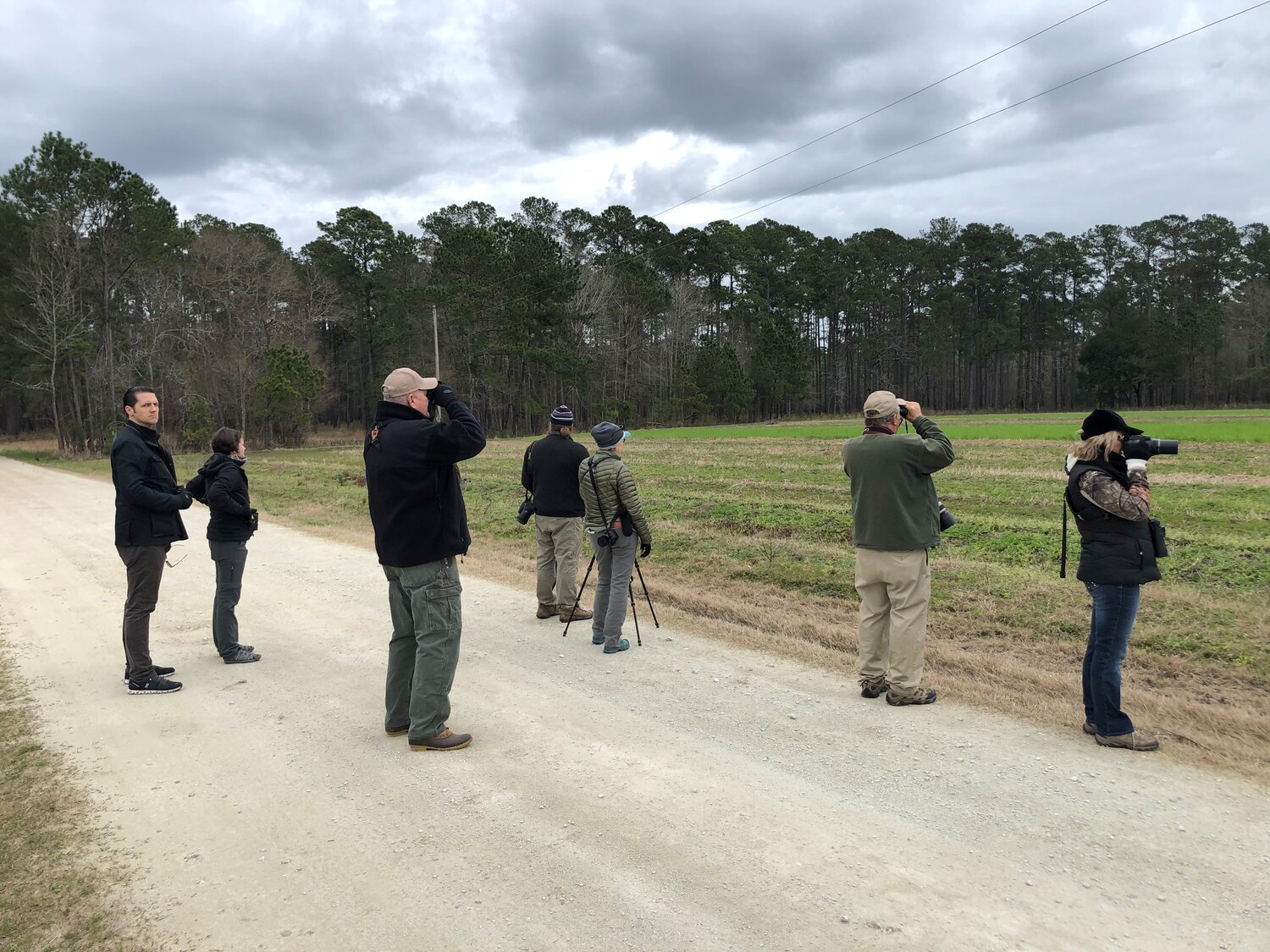
Over Valentine’s weekend, SCWF led a Palmetto Pro Birder module in the ACE Basin (one of the largest wetland ecosystems on the Atlantic Coast located along US17 between Charleston and Hilton Head Island). The 2-day training module on Bear Island was led by retired SCPRT Chief of Resource Management Irvin Pitts. SCWF Habitat Education Manager Jay Keck attended the module and experienced one of our most successful birding trips to date!
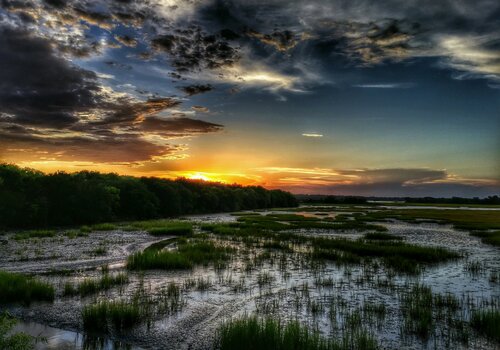
Photo of Bear Island Sunset
The full list of birds spotted (in alphabetical order) is included below:
Congratulations to these winners of our 2019 Photo Contest! We had great participation in the contest this year and we
are grateful to all who entered. Visit our Flickr page here to view all the entries. Our board and staff had a particularly difficult time choosing
winners because there were so many fantastic photos! Well done to all of you, and we hope to see more of your beautiful
pictures in our 2020 Photo Contest!
Scenes of South Carolina Category Winners:
1st Place: Ben Sumrell
2nd Place: Tony Ackerman
3rd Place: Leonard Billie
Carolina Critters Category Winners:
1st Place: Michael Summer
2nd Place: Rick Dandridge
3rd Place: Cameron Foster
Backyard Habitat Category Winners:
1st Place: Shelby Derrick
2nd Place: Jo Frkovich
3rd Place: Dolly Montgomery
COPYRIGHT NOTICE:
The photographs contained on this, and any other site under the scwf.org domain, are the property of SCWF and are
protected by United States and International copyright laws. All copyright, trademark, and other intellectual property
rights in this site, are the property of the South Carolina Wildlife Federation.
All Photographs on scwf.org are copyrighted.
No permission, either express or implied, is granted for the electronic transmission, storage, retrieval, or printing of
the photographs contained on scwf.org, other than that which is related to the normal “caching” practices of web
browsers and activities such as downloading solely for your personal enjoyment. No parties/individuals visiting or
viewing images from scwf.org, may otherwise copy, modify, publish, transmit, or distribute the contents of the
photographs found herein. Express written permission must be granted in order to use these photographs for any purpose
that is not outlined above.
Your use of scwf.org or viewing of this statement indicates your acceptance of these conditions.
We hear the words time and time again, “I can’t believe how fast this year has flown by.” And yet, the phrase continues to ring true. As days or weeks may seem long, the months and years continue to speed up at rapid pace. In looking back on 2019, I am extremely proud of SCWF’s accomplishments for our state’s wildlife and wildlife habitat.
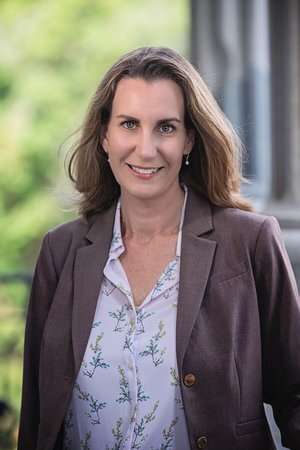
Sara Green, Executive Director of SCWF Credit: Ashley Medlin
Many of you may be familiar with our mission statement, or perhaps you participated in one of our programs and still are not 100% sure what we do. The official mission of the South Carolina Wildlife Federation is to conserve and restore South Carolina’s wildlife and wildlife habitat through education and advocacy. In short, we conserve, we advocate, we restore, and we educate. We CARE about our state’s natural heritage and are working to ensure the future of our amazing wildlife and wildlife habitat for generations to come.
Included below, you will find an outline of our key initiatives from 2019. We hope this gives all of our supporters a greater understanding of SCWF’s mission and outreach.
As we look to 2020, I want to thank everyone for their support this year. We cannot wait to share all of the exciting plans, classes, and events we have been planning for next year!
-Sara Green, SCWF Executive Director
CONSERVATION
Without conservation efforts, our wildlife populations would dwindle. The recent findings published by The Cornell Lab of Ornithology are a staggering example of the importance of conservation work. We’ve lost 2.5 billion migratory birds since the 1970s, which means we have a lot of work to do! Below are some of the real examples of conservation work SCWF is currently undertaking:
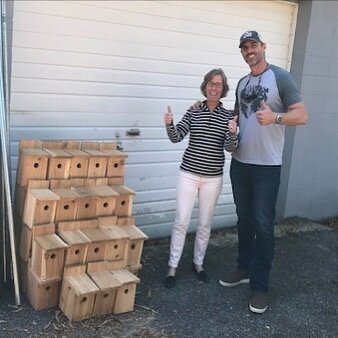
SCWF’s Jay Keck with Palmetto Conservation Foundation Interim Executive Director Mary Roe. Credit: Palmetto Conservation Foundation
Prothonotary Warbler Boxes: During the spring and summer months, the Prothonotary Warbler calls South Carolina home to feast upon insects, spiders, and snails located in and around our forested wetlands, before returning to their wintering grounds as far south as Colombia, South America. Uncommon among warblers, it is a cavity nester, which presents us a great opportunity to help save this bird whose population has declined approximately 42% over the last 50 years. SCWF is working with private and corporate landowners in enhancing key breeding habitat areas with hundreds of nest boxes. SCWF has installed 225 Prothonotary Warbler Boxes this year, including gifting 50 to Palmetto Conservation Foundation to increase habitat along the Palmetto Trail. We currently have another 50 being built thanks to a donation from the Kooken Family Foundation.
Best Fishing Practices for Snapper/Grouper Complex Species: Thanks to a NOAA grant, the South Carolina Wildlife Federation and the South Atlantic Marine Fisheries Council have partnered to develop a tutorial for saltwater anglers to help reduce bycatch mortality in snapper/grouper complex species and thereby enhance fisheries stocks for more fishing opportunities. Through special training seminars and an online tutorial, SCWF has been able to provide over 475 SeaQualizer descending devices which is projected to drastically increase our snapper populations in the Atlantic coast.
Catawba-Wateree Wood Duck Box Program: Once threatened with near extinction from habitat destruction and overharvesting, wood duck populations are now steady or increasing. The South Carolina Wildlife Federation is partnering with Duke Energy, SCDNR and the Lake Wateree Association to increase wood duck populations by constructing and erecting 80 wood duck nesting boxes in the on the shorelines of Lake Wateree, Fishing Creek Reservoir, Rocky Creek, Cedar Creek Reservoirs, the Wateree River, and smaller ponds in between. SCWF has been coordinating with property owners, volunteers, biologists, and rangers to determine suitable sites for wood ducks. Boxes have been placed in locations that are convenient for monitoring and maintenance.
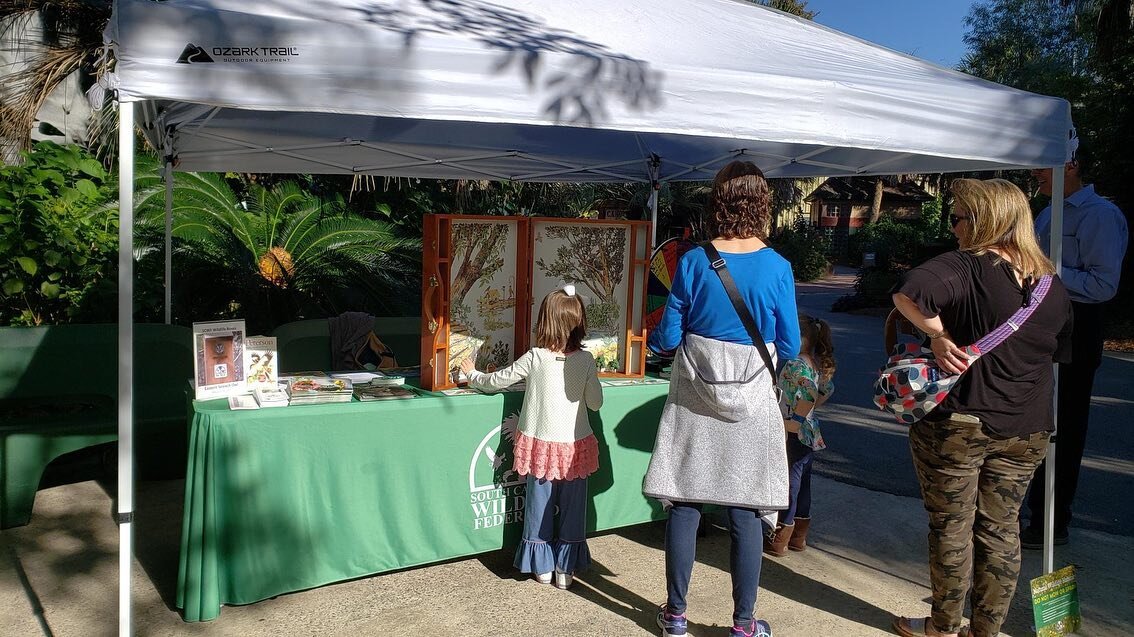
World Migratory Bird Day: On October 12th, SCWF partnered with Riverbanks Zoo to host their first World Migratory Bird Day. Together, they invited other partner organizations to educate more than 7,000 visitors on ways to create a better world for birds.
Children stop by SCWF’s booth at World Migratory Bird Day to learn about creating Wildlife Habitats.
ADVOCACY
The South Carolina Wildlife Federation works with state legislators to protect precious wildlife habitat and ensure that sound scientific data is used to make decisions which affect wildlife. Our Government Relations Manager, Trip King, represents the SCWF, as well as our conservation partner, Audubon South Carolina (ASC) at the State House. For national matters, SCWF works closely with the National Wildlife Federation and other state affiliates to ensure our voices are heard.
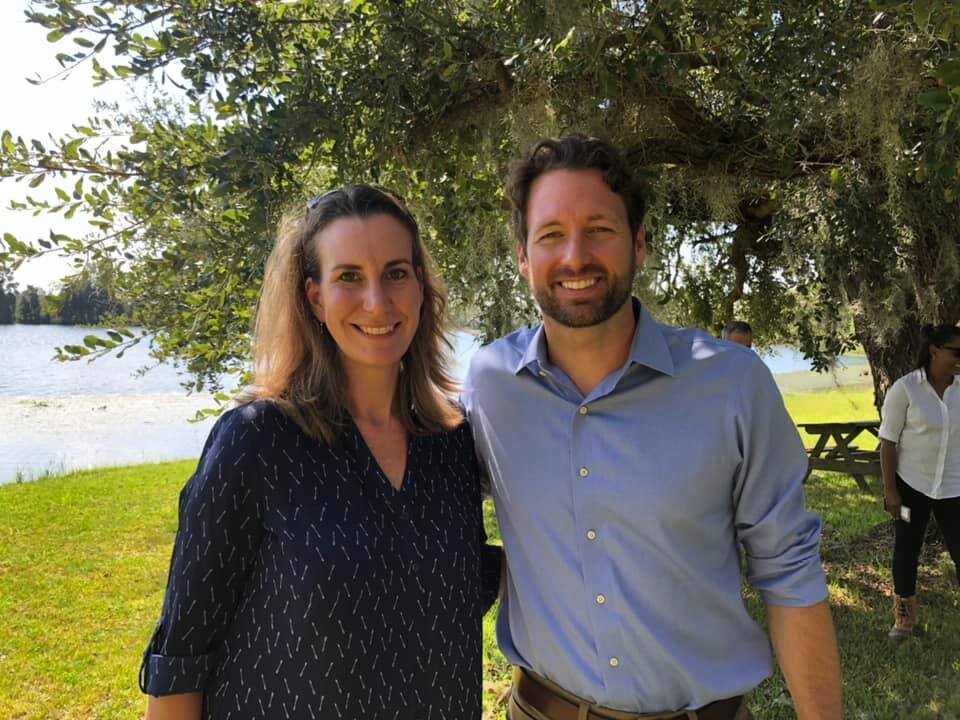
SCWF Executive Director Sara Green with United States House Representative Joe Cunningham.
Joe Cunningham Lowcountry Walk: On September 16th, SCWF organized a walk with United States House Representative Joe Cunningham, SCDOT, Lord Berkeley Conservation Trust and the South Carolina Conservation Bank. It was a successful media event and opportunity to have real conversations about climate, conservation and natural infrastructure in Berkeley County to reduce flooding impacts.
Climate Strike: On September 20th, SCWF staff and students from the University of South Carolina SCWF Chapter attended the Climate Strike at the State House.
Meetings with South Carolina Representatives: in August of 2019, Sara Green & Trip King met with team members from the offices of U. S. Senator Lindsey Graham and U. S. Senator Tim Scott. They discussed federal issues such as our opposition to offshore drilling, support of full funding for the Land & Water Conservation Fund, and upholding the Endangered Species Act.
The 16th Annual Conservation Lobby Day: On March 19th, the SC Conservation Coalition held its annual Lobby Day, which is a wonderful opportunity for citizens to meet with their representatives face-to-face and ask them to support or vote against issues the conservation community is currently working on. It was a fantastic day of training for our staff and provided a direct opportunity for us to speak with our conservation partners, legislators, and community leaders.
Current issues SCWF is taking a stance on with legislators:
Funding of the South Carolina Conservation Bank
Bans on plastic bags & auxiliary containers
Opposing offshore drilling & seismic testing
Pushing for energy reform & solar growth
Needed climate resiliency
Funding for the Land & Water Conservation Fund
Upholding the Endangered Species Act
Passing Recovering America’s Wildlife Act
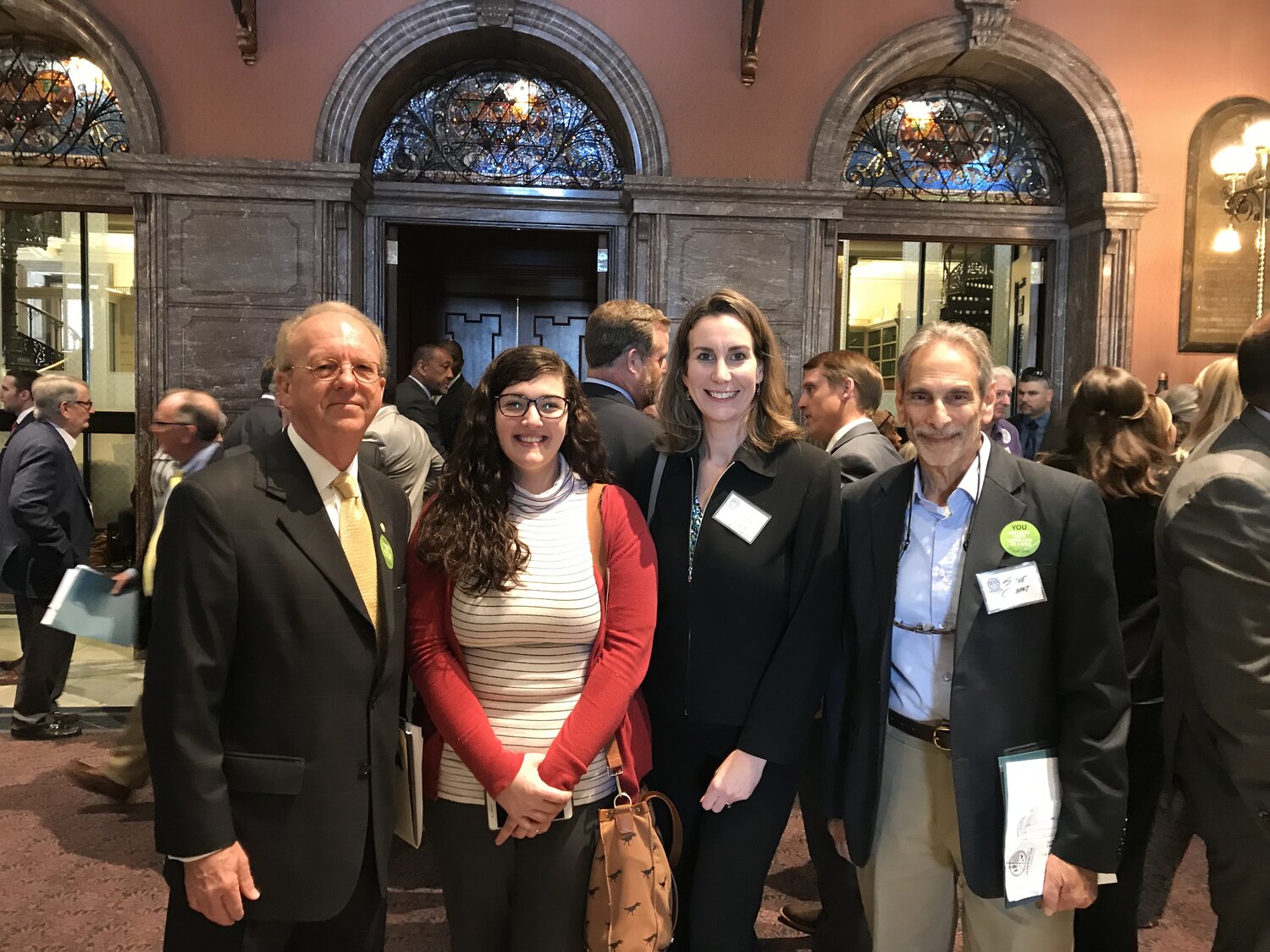
SCWF Staff from left to right: Trip King, Kristin Loughlin (former SCWF staff member), Sara Green, Steve Gilbert attend 16th Annual Conservation Lobby Day.
RESTORATION
South Carolina’s native wildlife is losing habitat at rapid rates due to climate change, human population growth, as well as private and commercial development. Here is a list of some of the ways SCWF is fighting to restore wildlife and wildlife habitat.
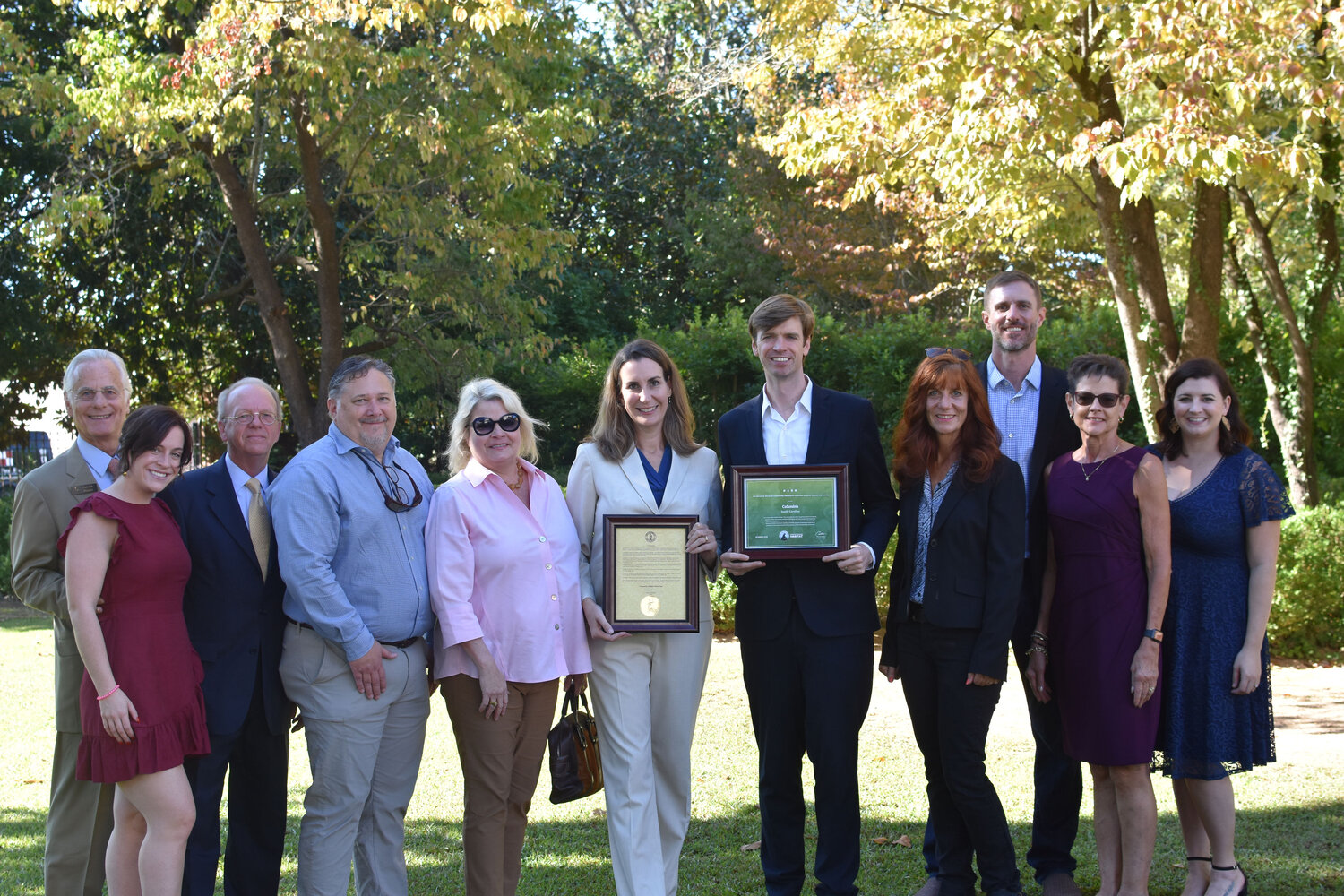
SCWF staff and board members are joined by National Wildlife Federation CEO and President Collin O’Mara for the City of Columbia’s Community Wildlife Habitat celebration.
Wildlife Habitat Programs: Through our joint program with the National Wildlife Federation, individuals, churches and schools are able to register their backyard or garden as a Certified Wildlife Habitat®. In order to qualify, participants must fill out an application stating their green space provides each of the following: food sources, water sources, places for cover and places to raise their young. We also encourage everyone to practice sustainable gardening. To date, there are more than 8,000 Certified Wildlife Habitat® spaces in South Carolina. We also have the ability to certify communities as a Community Wildlife Habitat. To date, South Carolina has seven certified communities including the recently announced City of Columbia.
Wildlife and Industry Together (W.A.I.T.) Program: As South Carolina becomes increasingly developed, there is less land available for wildlife. Corporate landowners offset habitat loss by devoting their under-utilized lands to wildlife. This is achieved by matching site employees who are interested in wildlife with community partners to develop habitat plans. The W.A.I.T. program assists corporations, employees, facility neighbors, and other groups who desire to develop environmental projects in partnership with each other. Our industry partners are providing new wildlife habitat and creating community education programs throughout our state. To date, SCWF has over 30 W.A.I.T. partners and is continuing to add more each year.
Monarchs & Milkweed: There has recently been a sharp decline in Monarch overwintering numbers which may represent the shrinking of their migratory route. The 97% decline from their high over the past 20 years has researchers very concerned. It takes more than one milkweed plant for each surviving adult due to natural predators. That is an enormous amount of milkweed! Most North Americans were very lucky to have seen even one Monarch Butterfly over the past few years.In order to help educate and create more homes for our monarch populations, SCWF has given over 1,500 individuals in South Carolina milkweed and pollinator seed packets to plant. We plan to provide this program again in 2020.
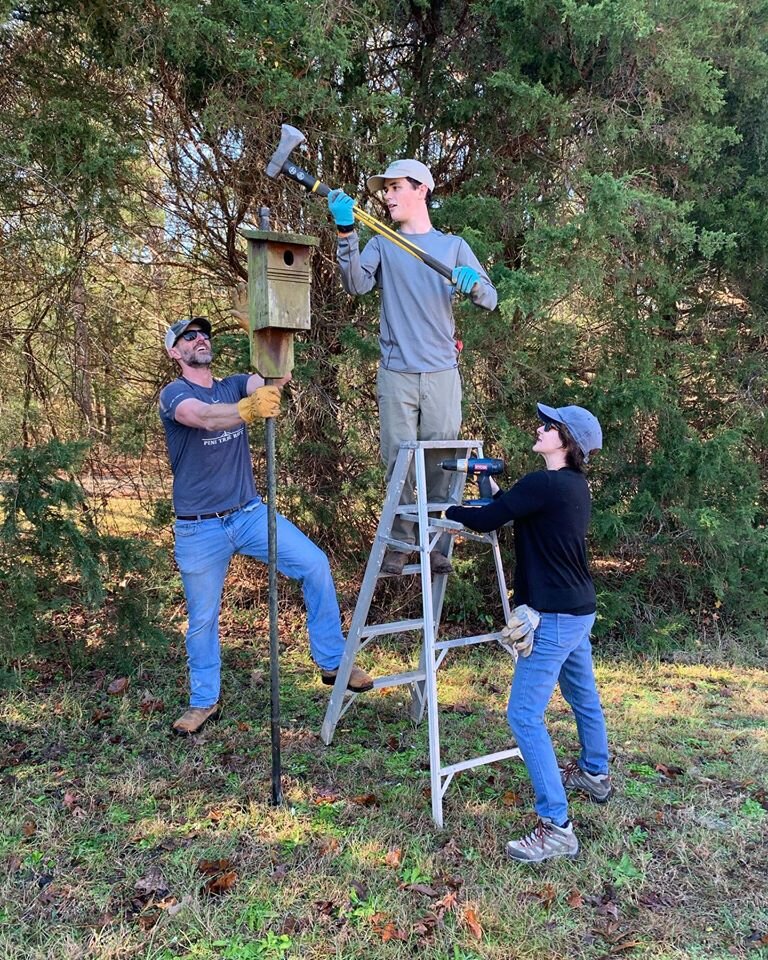
Volunteer Workdays: On December 15th SCWF hosted our annual volunteer work day at Carolina Sandhills National Wildlife Refuge. SCWF staff and more than 35 volunteers worked on projects to clean the trail and replace trail signs. On December 16th, SCWF staff and four volunteers helped repair and clean 40 bluebird boxes at Camp Discovery in Blythewood, South Carolina. By cleaning out old nests and moving the boxes to safe locations, the boxes will be ideal habitats for birds mating in the spring.
SCWF’s Jay Keck and volunteers move a nesting box to a safe location at Camp Discovery.
EDUCATION
Education is one of the most important factors to protecting South Carolina’s wildlife and wildlife habitat. Current generations and future generations need to have a solid understanding of the wildlife around them, as well as their own effects on nature, in order to make a lasting impact.
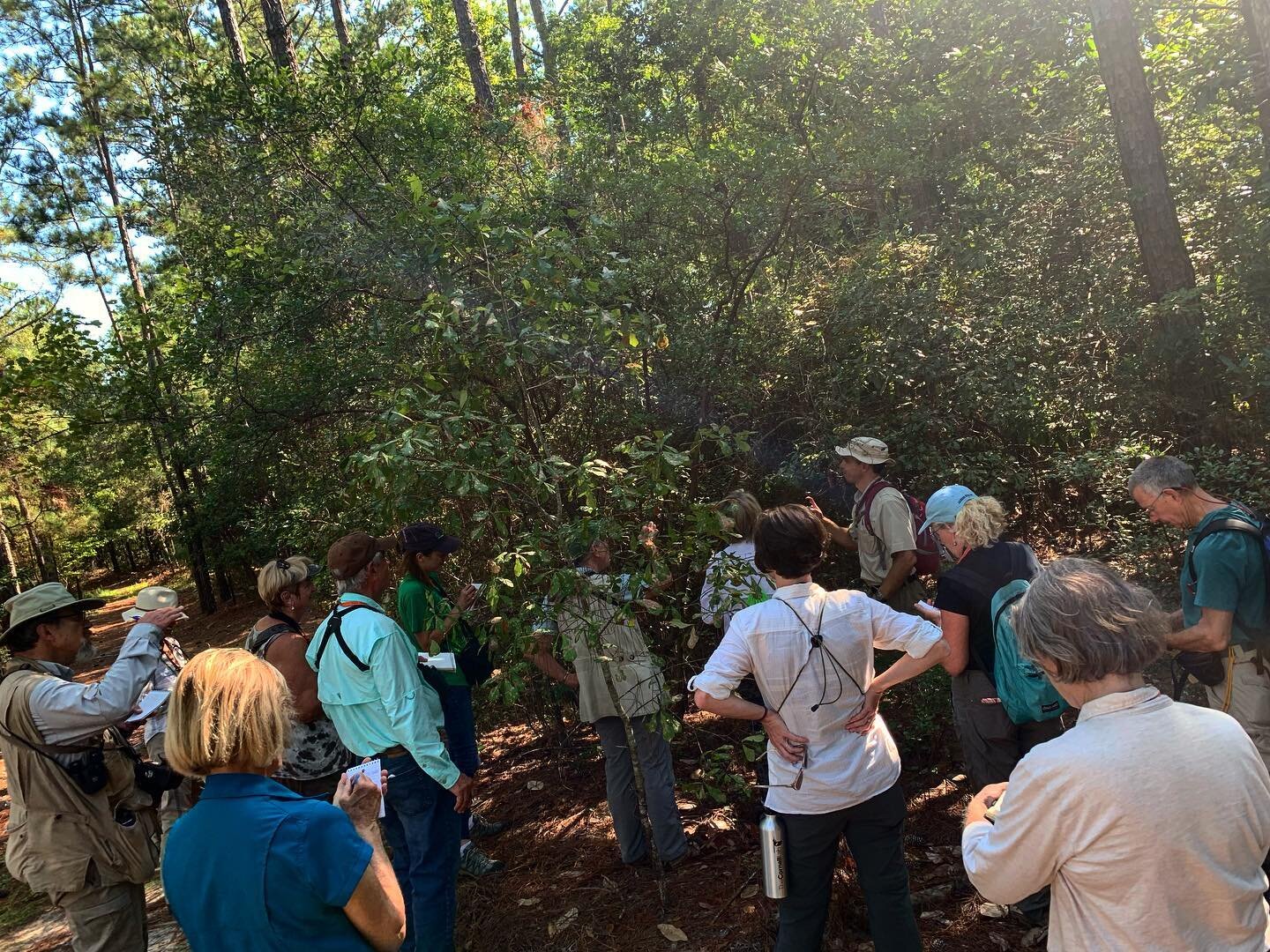
SCWF class participants gather at Goodale State Park while learning about the “Spiders of September.”
School & Garden Club Talks: SCWF Habitat Education Manager Jay Keck is rarely seen in the office, because he is usually leading an education class or talking to schools and garden clubs about the importance of protecting wildlife. On average, Jay participates in a minimum 5 educational programs a month around the entire state.
Master Naturalist Training: In partnership with Midlands Master Naturalist Association, SCWF offers the 12-week training course based in the Midlands. Students learn identification skills, ecological concepts, and natural history of the plants, animals, and ecosystems encountered. Students will see how this knowledge can be applied to manage for wildlife and to ensure that human impacts on our Earth are sustainable.
Skills Classes and Advanced Trainings: Each month, SCWF offers a number of wildlife and outdoor skills classes. From early morning kayak paddles to look for birds, Spiders of September, fishing clinics and archery, there is always something new to learn with SCWF!
Women’s Outdoor Retreat:Each year, over 200 women from all over South Carolina gather at Hickory Knob State Park for the South Carolina Wildlife Federation’s Women’s Outdoor Retreat (WOR). The Women’s Outdoor Retreat is one of the most beloved programs hosted by SCWF and 2019 tickets sold out in a record 3 hours! Women ages 16 and up came to experience the best of the outdoors with 30 class options featuring: Archery, backyard habitats, camping, kayaking/canoeing, birding, freshwater fishing, understanding maps, outdoor cooking, outdoor ethics, skeet shooting, and so much more!
Scholarships: The South Carolina Wildlife Federation is honored to be in a position to distribute educational grants to full-time students pursuing a degree in any environmental field at South Carolina schools of higher education. Both undergraduate and graduate students are eligible, based on their performance in academia and in related community activities. In 2019, SCWF announced a new scholarship fund,The Nicole Chadwick Memorial Fund, to honor the life of an endangered species biologist who made a long-lasting impact on wildlife conservation in South Carolina. This year 43 students submitted applications and we look forward to announcing the recipients in 2020.
Forks, Knives, & Spoonbills: A Dinner Celebrating Conservation: As a way to educate and engage a new audience on the realities of our imperiled bird species, SCWF hosted a 6-course dinner at Columbia’s Spotted Salamander. The program is expanding in 2020 with dinners in Beaufort, Columbiaand Greenville. Each dinner features a six-course meal containing unique dishes inspired by imperiled species of birds. Participants will be led through each course by SCWF Habitat Education Manager, Jay Keck, and will learn about each bird species and the conservation efforts needed to help it thrive.
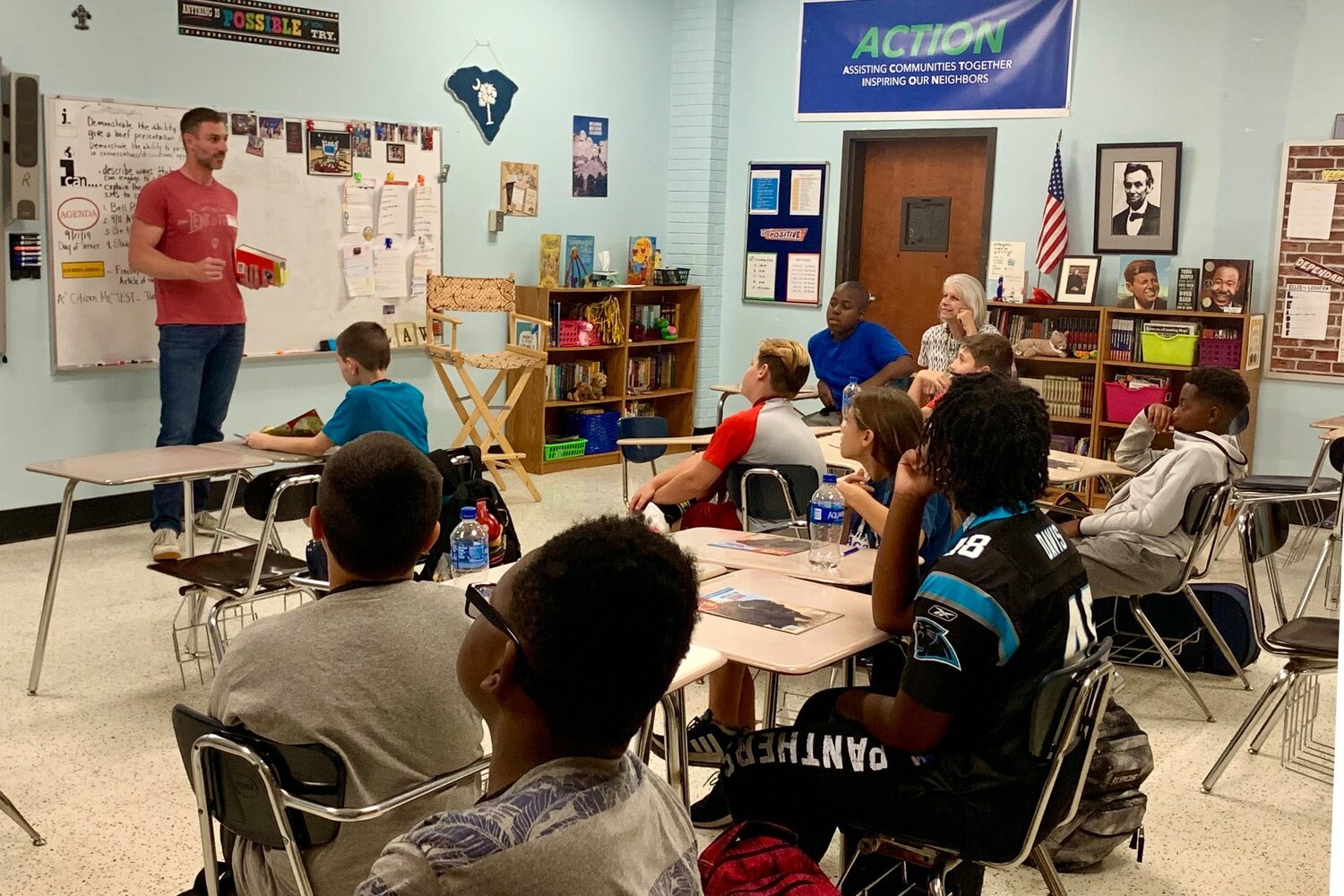
SCWF’s Jay Keck talks to a group of students about native plants. Credit: Action for Unity
OUR PROMISE
We could not carry out our mission without the help of our generous supporters. We already have exciting programming in place for 2020 and your tax-deductible gift today will give us an important boost. As a donor with SCWF, we promise:
We willkeep improving our increasingly popular outdoor education programs including our Backyard Wildlife Habitat, Women’s Outdoor Retreat and Pro Birder outings.
We will advocate for banning and limiting practices that damage natural populations of fish and wildlife.
We will accelerate our work to protect and enhance critical habitat for threatened insects, birds, reptiles, and amphibians.
We will re-double our efforts in providing opportunities for young people to spend more time outside learning about and enjoying the natural world.
We will continue our unique presence at the State House as legislation critical to the outdoor community is debated.
We will demand that science, not politics, be the guiding force behind key decisions about our conservation future.
“Never doubt that a small group of thoughtful committed citizens can change the world: indeed, it’s the only thing that ever has.” -Margaret Mead
Image from 2019 Spoonbills dinner at Spotted Salamander
Tickets are now on sale for the six-course dining experiences in Columbia, Beaufort and Greenville
FOR IMMEDIATE RELEASE: (December 9, 2019) – The South Carolina Wildlife Federation (SCWF) is expanding their event “Forks, Knives, and Spoonbills: A Dinner Celebrating Conservation” by hosting three dinners in the spring of 2020. Partnering restaurants include Spotted Salamander (Columbia), The Anchorage 1770’s Ribaut Social Club (Beaufort) and Passerelle Bistro (Greenville). Each dinner will feature a six-course meal containing unique dishes inspired by imperiled species of birds. Participants will be led through each course by SCWF Habitat Education Manager, Jay Keck, and will learn about each bird species and the conservation efforts needed to help it thrive.
“Spotted Salamander took a chance on this dinner in 2019 and we were thrilled with the results,” said Keck. “We are so excited to expand the dinner series in 2020 with talented chefs all across the state while educating participants on the impact they can have on our threatened bird species.”
Each “Forks, Knives, and Spoonbills” dinner will be an entirely different experience as the executive chefs from each restaurant will feature their own unique dishes to represent bird species including: Roseate Spoonbill, Scarlet Tanager, Red-headed Woodpecker and more. Alcohol pairings will also be provided with each course.
“Forks, Knives, and Spoonbills: A Dinner Celebrating Conservation” dates: