Keep South Carolina Wild

SCWF Wood Duck Box Program

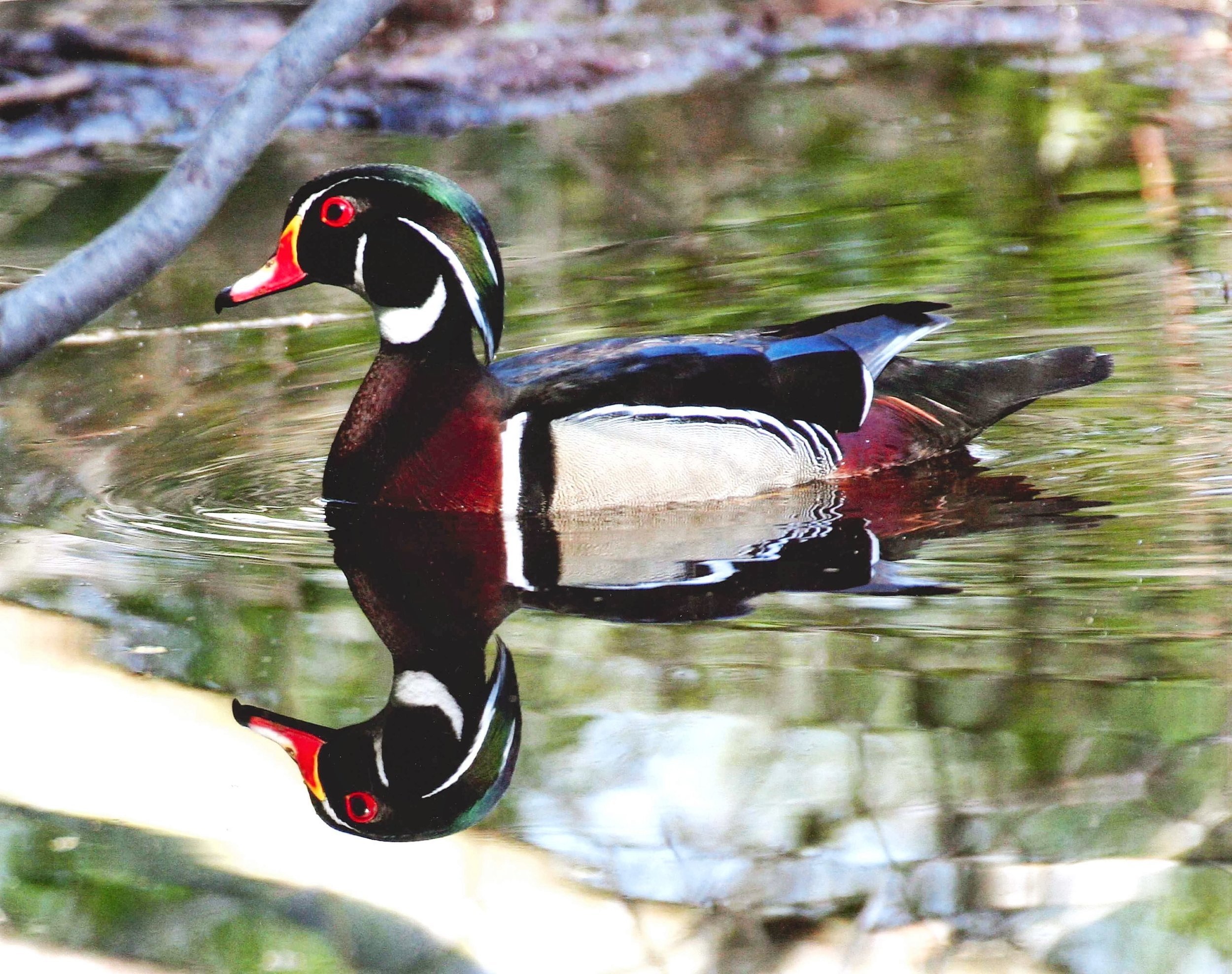
Once threatened with near extinction from habitat destruction and overharvesting, wood duck populations are now steady or increasing. The South Carolina Wildlife Federation is partnering with Duke Energy, SCDNR and the Lake Wateree Association to increase wood duck populations by constructing and erecting 80 wood duck nesting boxes in the on the shorelines of Lake Wateree, Fishing Creek Reservoir, Rocky Creek, Cedar Creek Reservoirs, the Wateree River, and smaller ponds in between.

SCWF will coordinate with property owners, volunteers, biologists, and rangers to determine suitable sites for wood ducks. The goal is to install boxes prior to the start of the 2019 nesting season. Wood ducks begin to pair with each other starting mid-October. Once a nest box is used, it will likely help raise many broods over the years to come. Boxes will be placed in locations that are convenient for monitoring and maintenance.

Volunteer involvement is integral in helping to foster community-wide awareness and appreciation for the project. The wood duck project aims to engage the community in long-term and sustained conservation actions. This project is great for people of all ages. SCWF is actively searching to recruit volunteers to assist in all facets of the project, including nest monitoring, data recording, and witnessing first hand the life cycle of the wood duck.

Photo by Richard Sasnett

Update on Public Lands

A year ago this week, War was declared on America’s lands when President Trump signed Executive Order 13792. This unprecedented action put 26 National Monuments on the chopping block for review and possible reduction in size. The President had already appointed Ryan Zinke as Interior Department Secretary, and he became the point person for carrying out the executive order. Over the past year, Secretary Zinke has expanded the war on numerous fronts through his political appointments, his department re-organization fumbling, his shunning of wildlife management and sound science and his devotion to energy conglomerates and large-scale agriculture.

And we haven’t even mentioned the Secretary’s  personal ethical challenges and his oversized ego.  Try this on for size: https://www.washingtonpost.com/opinions/2018/03/19/6ba3b4e4-2bba-11e8-8ad6-fbc50284fce8_story.html?utm_term=.bfa3c8c3bb31.

The principal “party line” for executing the executive order was that past presidents named these national monuments without public input: an Interior press release justifying the Order stated: “Secretary Zinke and President Trump both strongly believe that local input is a critical component of federal land management.”

And there was more about how important the public is: “The Department of the Interior is the steward of America’s greatest treasures and the manager of one-fifth of our land. Part of being a good steward is being a good neighbor and listening to the American people who we represent,” said Secretary Zinke. “Today’s action, initiating a formal public comment process finally gives a voice to local communities and states when it comes to Antiquities Act monument designations.”

So for 60 days, local communities, outdoor businesses and citizens responded, and at the end of the day there were almost 3 million comments and over 99% opposed changing any of the National Monument boundaries. National Parks and Monuments are often called “America’s Best Idea”, and almost unanimously millions of Americans from across the nation agreed.

Although Zinke and his closest political aides had no doubt intended to make large rollbacks in most if not all of the 26 monuments, the only opening they saw to take action was in Utah where some of that state’s federal and state officials were marching to a different drum than the vast majority (time will tell at the ballot box whether Utah voters were in lockstep with those officials). Large parts of Grand Escalante and Bears Ears Monuments were named for development by Interior, but lawsuits closely followed alleging the executive order and the reductions in Utah are against the law.

And thanks to recent Freedom of Information requests, we now know the real motivation for the ill-fated executive order – internal documents confirm the potential for oil, gas and uranium development within the monument borders was paramount (as if we didn’t intuitively know before!).

Americans want to be a part of these lands that belong to them, and after the beauty and amazing geology of the Utah monuments received glowing reviews in numerous articles last year, thousands more Americans are now vacationing in Utah to see Escalante and Bears Ears.

Meanwhile, the executive order was the first volley in a war that continues on numerous fronts led by Zinke and his newly-appointed Interior officials who are fresh from lobbying and lawyering for fossil fuel, petrochemical and mining interests.  Conflict of interest is a forgotten prohibition these days.  Meanwhile, a majority of Congress simply provides a nod and a blink during committee hearings when these matters are raised.  For more details check out this from the Wilderness Society: https://wilderness.org/zinke-year-one-14-misdeeds-show-why-hes-worst-interior-secretary-ever.

This War pits lots of money and generals against an overwhelming super-majority of citizens. It’s David vs. Goliath, and I believe from the bottom of my heart that David will be victorious.

The good news is Americans now realize they can’t take their own public outdoor experiences for granted any longer. More and more folks in South Carolina and around the nation are seeking out public lands for inspiration, refuge, health and pure enjoyment in U.S. parks, forests, monuments and wildlife refuges. Can you believe that over 2% of the entire US economy is from the out-of-doors? And guess what – that figure is larger than the entire US mining industry and it’s growing by leaps and bounds!

We will continue to keep you posted.

Ben Gregg, SCWF Executive Director
Horseshoe Crabs & Shorebirds

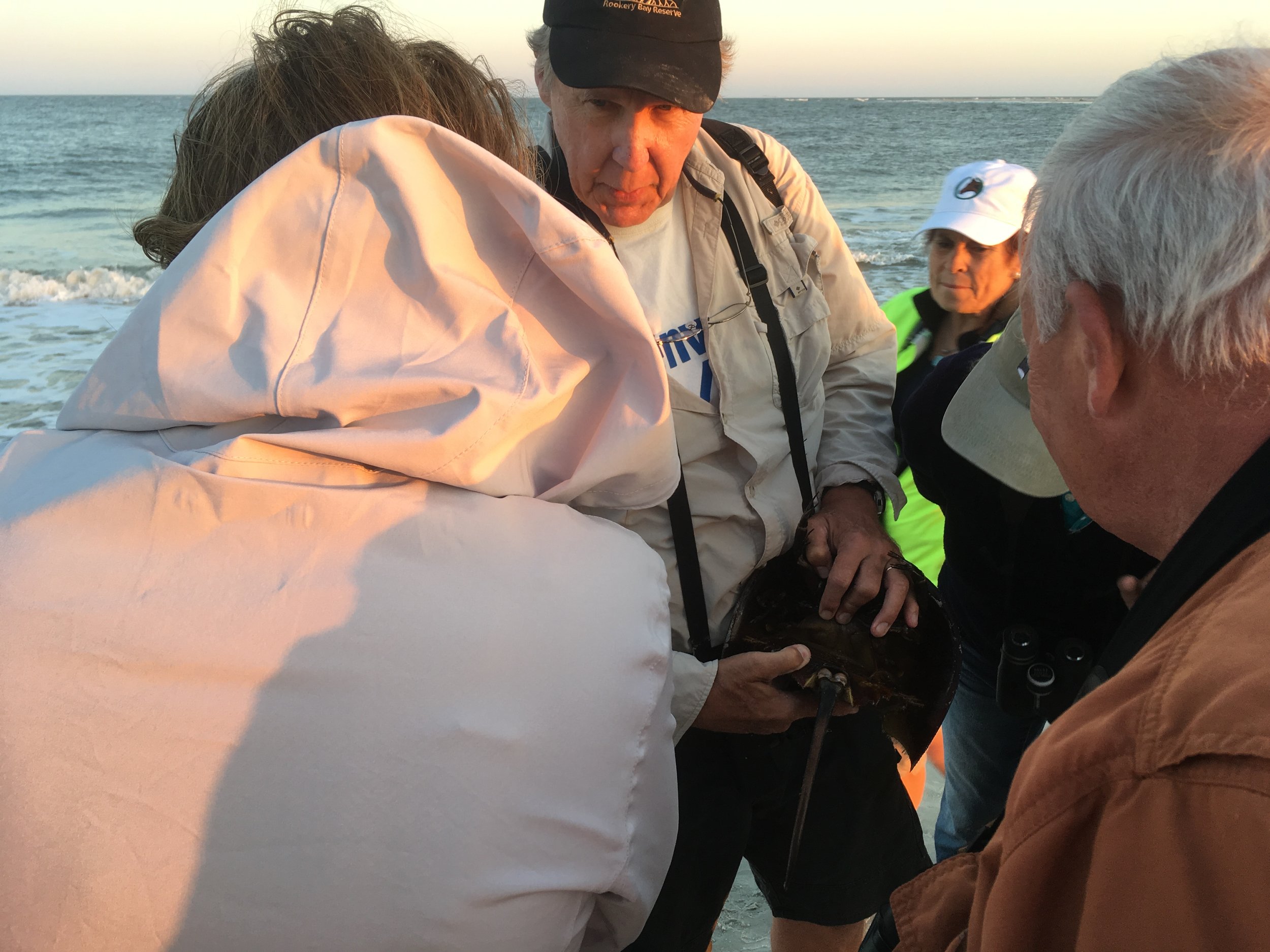
SCWF had a wonderful event at Harbor Island on April 29 & 30, 2018 to observe and learn about Horseshoe Crabs & their spawning cycles, and the shorebirds that depend on the Horseshoe Crabs! HUGE THANK YOU to Dr. Al Segars (retired veterinarian & wildlife biologist with South Carolina Department of Natural Resources) and Nick Wallover (veteran shorebird biologist with SCDNR) for sharing their expertise with our group!

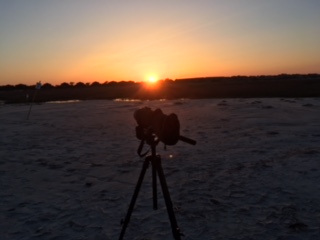
A note from Ben Gregg about the Sunday evening portion of the class: “We had a four-ring circus about 7:45. Sun setting in the West, moon rising in the east, hundreds of red knots grouped on a sand bar for the night and Al Segars tagging and measuring horseshoe crabs with assistance from his followers!”

Here’s a slow-motion video of the Red Knots flying over our group Monday morning…video taken by Dennis Sellers.

Now is the time to support Wildlife in South Carolina!

Our Spring Membership Drive is in full swing. With the end of April approaching, we are turning it up a notch and writing to ask you to re-up for 2018 now if you have not already.

You may have already begun to receive a flood of emails from different groups as the May 1 Giving Day approaches. This is a worthwhile effort by a number of worthy causes, but we are not participating this year. We prefer to communicate directly with our supporters, and we are proud that every dime you give goes straight to the Federation.

We are also sending out by U.S. Mail the following letter as we work to make involvement in the outdoors the highest ever in 2018:

Action Alert: Plastics are harmful to wildlife

Photo by Laurie Walden

Dr. Al Segars just retired from SC Department of Natural Resources.  He has seen up close the tremendous toll plastics have taken on marine mammals, sea turtles and fisheries.  On behalf of SCWF he wrote this letter to legislators last week as they consider tying the hands of local governments and prohibiting them from placing restrictions on plastic debris.  It is an extremely serious problem and gets worse by the day since plastics do not biodegrade.

Please contact your state senator and ask that he or she vote against the legislation that would tie the hands of cities, town and counties from doing what is best for their local citizens.

Thanks.

Ben Gregg

SCWF’S ‘ALL IN’ MEMBERSHIP DRIVE BEGINS NOW!

A Message From Executive Director, Ben Gregg: 

Though the official first day of spring isn’t until March 20, the first of March symbolically marks the start of spring for many South Carolinians who are biting at the bit for warmer weather, a more active wildlife scene, and a flurry of outdoor adventures throughout the state.

Since the 1930s, S.C. Wildlife Federation has been protecting and enhancing the outdoor experiences of every South Carolinian. The state is truly blessed with its natural landscapes, fertile soils, pure waters, and flourishing wildlife. For 87 years, we have been at the forefront of making sure this heritage continues for the next generation.

Photo by Zach Steinhouser

I estimate we have represented 8 or 9 generations of South Carolina since our inception. As always, success depends on members and donors from every part of the state and all 46 counties. So, as the natural world comes alive over the next few weeks, we hope that you will be a vital part of sustaining our successes in conservation advocacy, native habitat recovery, and outdoor education for all ages. It has never been more important than right now. 

In the advocacy realm, our lobbyist Trip King is leading the charge at the State House with renewing the Conservation Bank. Over the past 15 years, 228,000 acres of prime wildlife habitat and recreational treasures have been protected at a bargain price of 19 cents on the dollar. Large tracts of land are essential for maintaining sustainable wildlife populations, and the Conservation Bank is the ONLY funding source available. If you have a few moments, please respond to our periodic action alerts to legislators. A few minutes of your time can go a long way towards a vital difference.

Photo by Bill Varney

Laura Blake-Orr is traveling statewide, meeting with landowners who are dedicated to enhancing wildlife populations on their property. With the tremendous loss of pollinators, butterflies, and other building blocks in both aquatic and land ecosystems, SCWF realizes more and more people need to “step up to the plate” and be a vital part of keeping our wildlife heritage intact. If you want to join the emerging army, give Laura a call. Meanwhile, as the weather warms, Sara Green is in the midst of organizing an array of outdoor education experiences for both young people and adults. You can visit the event page on this website for a calendar and sign-up information, or call Sara directly. Our membership coordinator Kristin Weaver has been with us less than a year, but she is already transforming our outreach to younger and more diverse audiences as we build a top-flight grassroots organization for the future of conservation. She is looking to expand our ranks and would welcome your reaching out to her with ideas and questions.

On a personal note, I want to express my sincere appreciation to Senior Biologist Steve Gilbert for keeping decision makers “honest” by insisting that the future of the state’s air, water, land, and wildlife be determined through best science and not through political trash-talk. One additional key component of our science advocacy and outreach is provided by Jenna Stephens who coordinates and manages our campaign to Keep Public Lands in Public Hands.

Photo by Joan Eckhardt

These dedicated and savvy folks could not do it without your backing. We need you “All In” as winter turns to spring. Thanks very much for your consideration and for your needed financial support. Hope to see you out and about this spring.

To donate, click the button below or the “JOIN” button in the top right corner of our home page

Conservation Bank Renewal Passes Overwhelmingly

Dear Outdoor Enthusiasts:

Passage of the original Conservation Bank legislation in 2002 was made possible when businesses and citizens combined forces and convinced a bipartisan majority of legislators to support protecting special places around the state. It is heartening to see history begin to repeat itself in 2018. With the passage of a Conservation Bank re-authorization bill in the SC House of Representatives, we are a big step closer to extending the life of this state agency that has been the single most important factor in the preservation and conservation of some of our most precious natural resources. We are grateful for the overwhelming vote in the House today and especially for the leadership of Rep. Brian White and others who championed the Conservation Bank.

Thanks to all of you who made this critical step happen. And thanks to our lobbyist Trip King who has dedicated so many hours to passage.

Ben Gregg
Executive Director

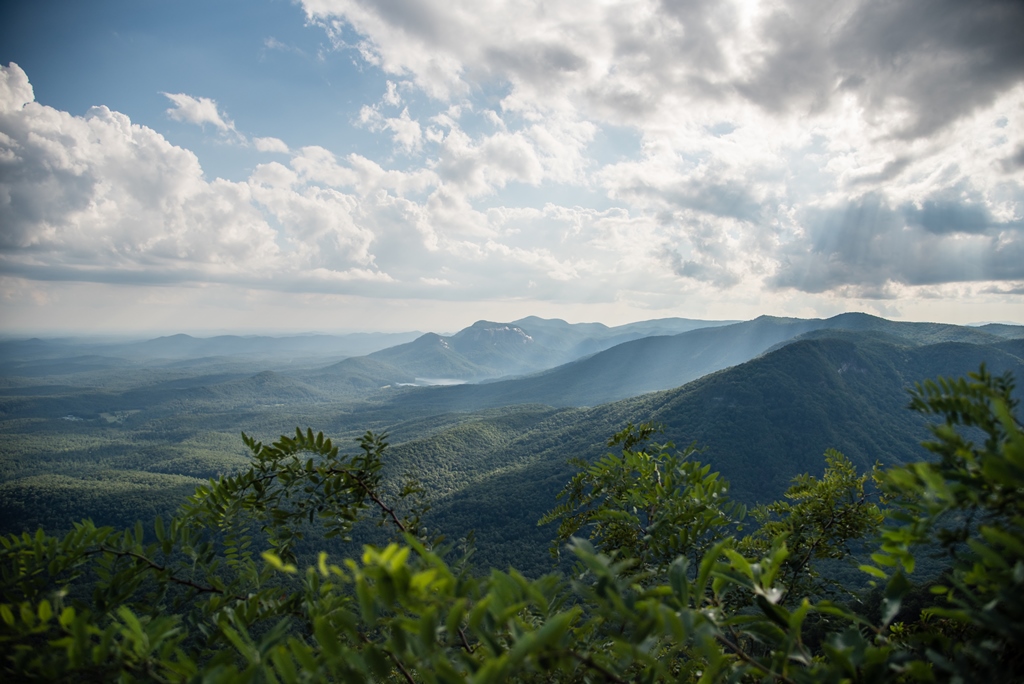
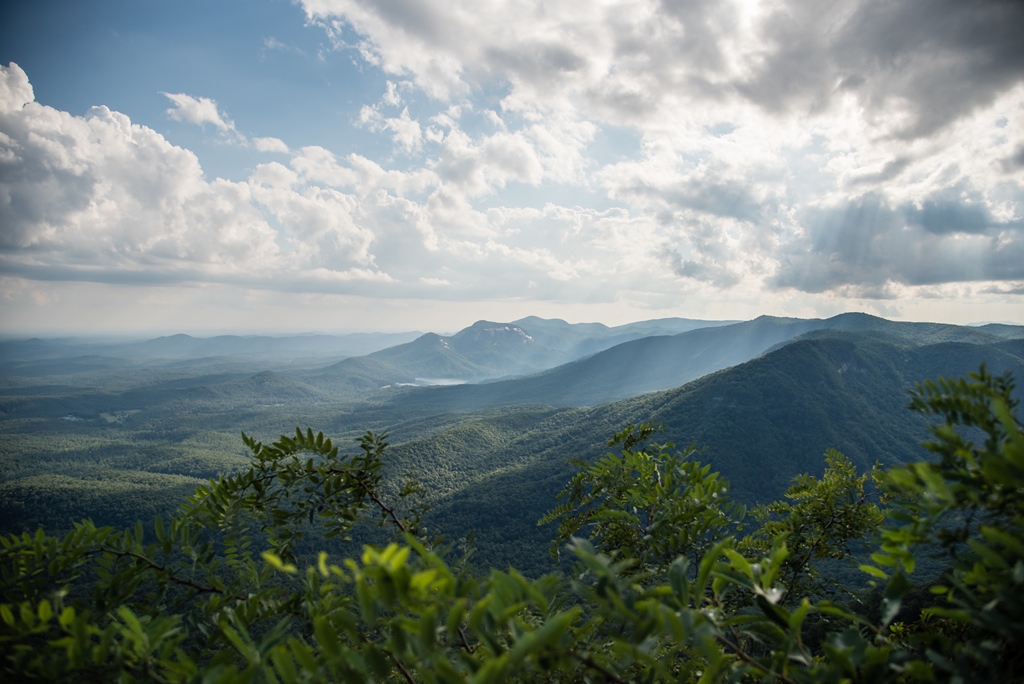
Cloudy Day Views by Amanda Johnson

Great Backyard Bird Count

The Great Backyard Bird Count is this weekend, and YOU can participate in collecting data on current bird populations right from your own backyard! For at least 15 minutes on one or more days of the count, February 16-19, 2018, simply tally the numbers and kinds of birds you see. You can count from any location, anywhere in the world, for as long as you wish!

Click this link to learn more about the program, submit your observations, and see what birds have been reported around you, and all around the world!

Click here to learn more about birds you might see in your backyard in the winter in South Carolina!

From GBBC website:

Why count birds?

Scientists and bird enthusiasts can learn a lot by knowing where the birds are. Bird populations are dynamic; they are constantly in flux. No single scientist or team of scientists could hope to document and understand the complex distribution and movements of so many species in such a short time.

Scientists use information from the Great Backyard Bird Count, along with observations from other citizen-science projects, such as the Christmas Bird Count, Project FeederWatch, and eBird, to get the “big picture” about what is happening to bird populations. The longer these data are collected, the more meaningful they become in helping scientists investigate far-reaching questions, like these:

• How will the weather and climate change influence bird populations?

• Some birds, such as winter finches, appear in large numbers during some years but not others. Where are these species from year to year, and what can we learn from these patterns?

• How will the timing of birds’ migrations compare with past years?

• How are bird diseases, such as West Nile virus, affecting birds in different regions?

• What kinds of differences in bird diversity are apparent in cities versus suburban, rural, and natural areas?

The Great Backyard Bird Count is led by the Cornell Lab of Ornithology and National Audubon Society, with Bird Studies Canada and many international partners. The Great Backyard Bird Count is powered by eBird. The count is made possible in part by founding sponsor Wild Birds Unlimited.

SCWF seeks a Development and Events Intern

Are you a college student studying public relations, communication, journalism, or something similar? Do you have a strong interest in conserving and helping the environment? Do you enjoy event planning and bringing the community together?

SCWF is looking for an intern to assist in the planning of our annual Wild Summer’s Night Auction and Wild Game Feast. The ideal candidate will have strong writing skills, interest in environmental conservation, and the ability to take direction and work with a team.

See more info about the position by clicking below. Send résumé and cover letter to kristin@scwf.org

Offshore Drilling Rally

Join hundreds of South Carolinians as we put a big exclamation point on saying no to offshore oil and gas!!! Mark your calendar for a rally and public hearing in Columbia on February 13 about offshore drilling in South Carolina.

Photo by Laurie Walden

The Bureau of Ocean Energy Management (BOEM) is holding South Carolina’s only public hearing on offshore drilling on February 13 at the Hilton Doubletree from 3pm to 7pm. The South Carolina Wildlife Federation and other state conservation groups have partnered to organize a rally at the statehouse beginning at 11am before the hearing. You don’t have to speak. Your presence is all we need.

Under a new Trump Administration plan, bidding for offshore oil and gas leases could begin as early as 2019 in almost all federal waters—opening up vast new areas of the Atlantic, Arctic and Pacific Oceans, and the Gulf of Mexico to drilling.

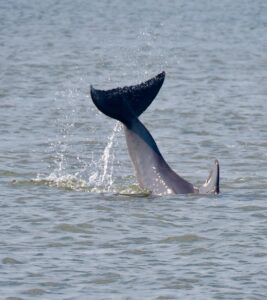
Oil and gas drilling is an inherently dirty and dangerous business. There is simply no safe way to drill. By allowing offshore drilling in more of our coastal waters, the Trump Administration increases the chances of a dangerous oil spill. Opening these areas to drilling endangers sea life, including whales, dolphins, and sea turtles, as well as the life and livelihoods of many South Carolinians. Every coastal community in SC has said no to these plans.

Public opposition to the proposed plan can make a big difference, as it did two years ago, when the Obama administration took all South Atlantic states off the chopping block. Your standing up now can make a difference in 2018. Anyone who cares about clean and healthy oceans should make his or her voice heard by commenting against this proposal. We will fight for our coasts by fighting this plan.

Click here to RSVP for the rally, and you can also sign up to ride a bus to the rally if desired.

Finally, you can also voice your opposition to offshore drilling by submitting comments to BOEM before March 9. You can submit comments regardless of whether you attend the rally on February 13.