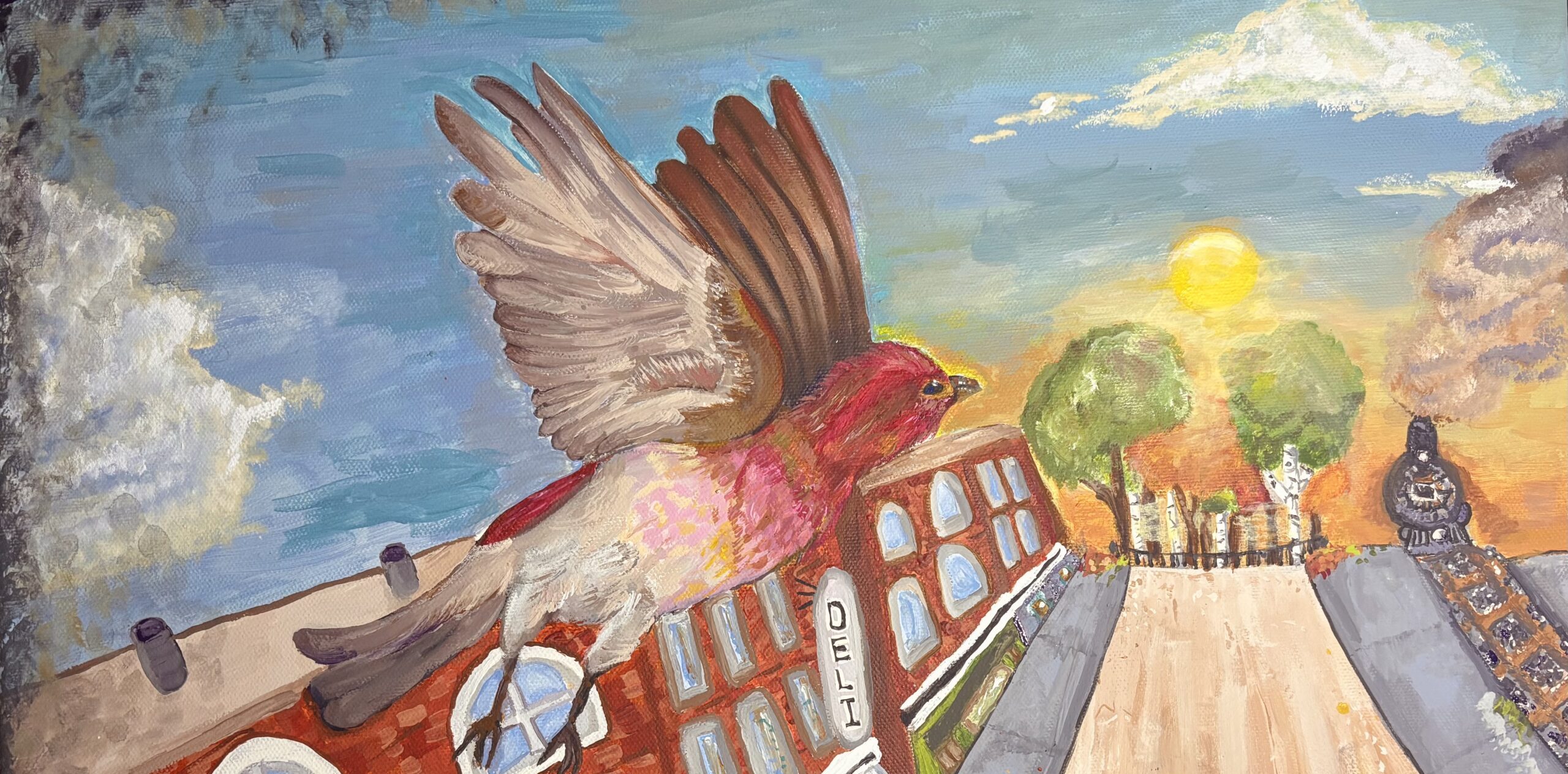
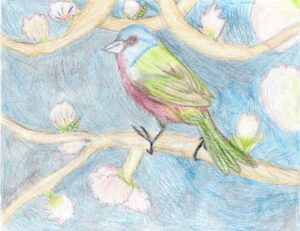
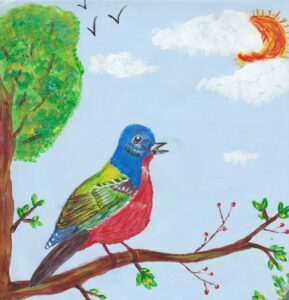
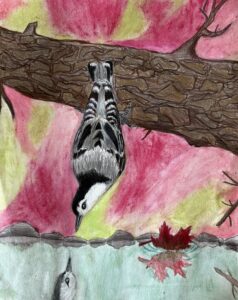
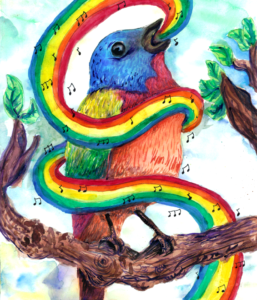
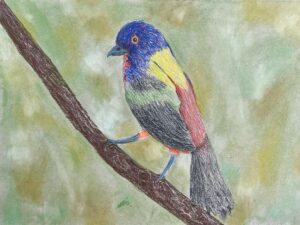
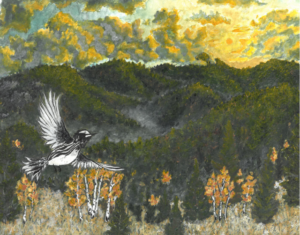
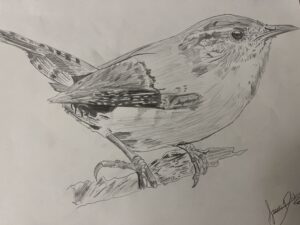
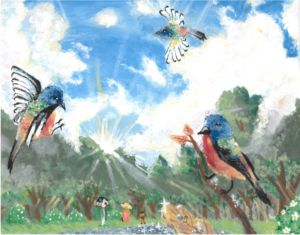
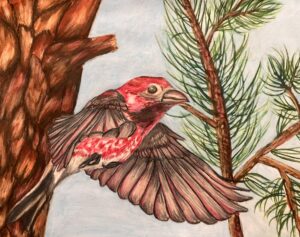
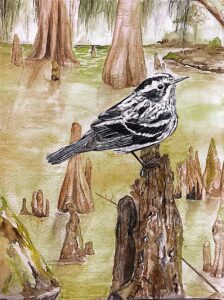
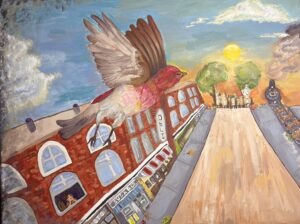
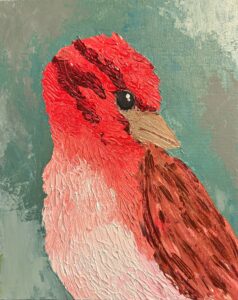
We are delighted to celebrate the talented students who participated in the 2025 South Carolina Songbird Art Contest, presented in partnership with Wildlife Forever. Congratulations to this year’s winners, and thank you to everyone who participated! This statewide contest invited K–12 students to explore South Carolina’s native songbirds through art, encouraging creativity while deepening students’ understanding of local wildlife and the habitats on which the birds depend.
By blending art with environmental education, the Songbird Art Contest helps students learn about bird identification, migration, and habitat conservation while fostering a sense of stewardship for South Carolina’s natural resources. These early connections to nature play a crucial role in building the next generation of conservationists and informed environmental leaders.
With 163 incredible submissions, selecting the winners was no easy task. Each piece reflected a unique perspective and a shared appreciation for South Carolina’s songbirds. We are grateful to every student, teacher, and family member who helped make this contest possible and joined us in advancing our mission to conserve and restore South Carolina’s wildlife and their habitats through education and advocacy.
Selected artwork will be featured throughout the year on our website and social media channels. Be sure to follow us on Facebookand Instagram@SCWildlifeFederation to see these incredible works and help us celebrate the next generation of conservation-minded artists.
Grade Winners: Kindergarten – Third
First place: Case Dorrell, grade 3.
Second place: Elana Cook, grade 1.
Third place: Mehar Tulsi, grade 3.
Grade Winners: Fourth – Sixth
First place: Amelie Rothrock, grade 6.
Second place: Caydence Vaughn, grade 6.
Third place: Adalyn Odom, grade 5.
Grade Winners: Seventh – Ninth
First place: Tori Shellenberger, grade 7.
Second place: Aarush Dubey, grade 9.
Third place: Tobias Shellenberger, grade 8.
Grade Winners: Tenth – Twelfth
First place (tie): Katherine Crowell, grade 11.
First place (tie): Sara Brunson, grade 11.
Second place: Michelle Kleich, grade 11.
Third place: Grayson Powell, grade 10.
We would also like to extend our sincere thanks to Dominion Energy for their generous support of the 2025 South Carolina Songbird Art Contest. Their commitment to education and environmental stewardship made this program possible, and helped connect students across South Carolina with wildlife conservation in a meaningful and creative way.
COPYRIGHT NOTICE: The photographs contained on this, and any other site under the scwf.org domain, are the property of SCWF and are protected by United States and International copyright laws. All copyright, trademark, and other intellectual property rights in this site, are the property of the South Carolina Wildlife Federation.
All Photographs on scwf.org are copyrighted. No permission, either express or implied, is granted for the electronic transmission, storage, retrieval, or printing of the photographs contained on scwf.org, other than that which is related to the normal “caching” practices of web browsers and activities such as downloading solely for your personal enjoyment. No parties/individuals visiting or viewing images from scwf.org, may otherwise copy, modify, publish, transmit, or distribute the contents of the photographs found herein. Express written permission must be granted in order to use these photographs for any purpose that is not outlined above.
Your use of scwf.org or viewing of this statement indicates your acceptance of these conditions.
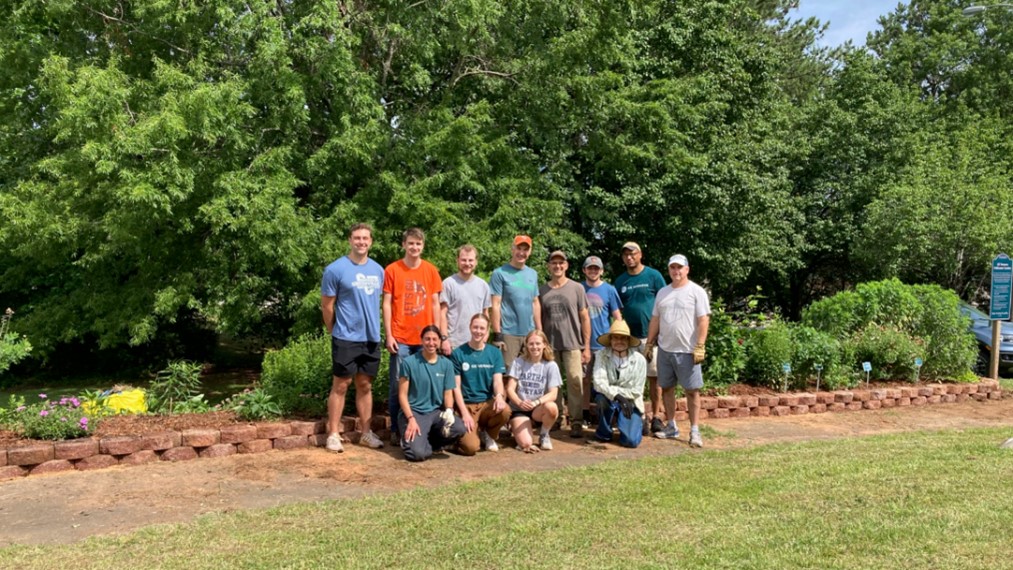
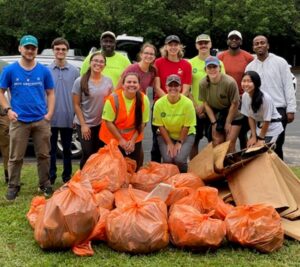
GE Vernova in Greenville, SC, is one of our newest Wildlife And Industry Together or WAIT partners, and they have gone above and beyond to support wildlife on their campus, educate their employees about wildlife and wildlife conservation, as well as connect with their community through quarterly litter sweeps with Adopt-A-Highway.
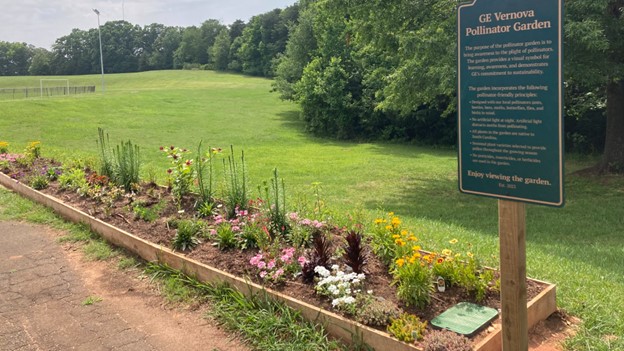
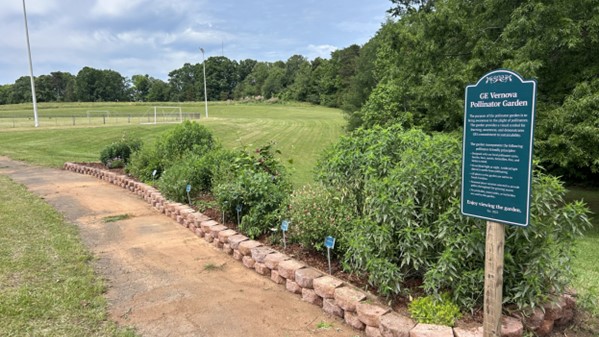
Habitat creation began during Earth Week in 2023 when they installed a pollinator garden with native plants – increasing the insect biodiversity on the property. In addition to the garden, they have installed 105 native trees like; sourwood, persimmons, oak, tupelo, maples, and several other native trees and shrubs. These plants will have a dramatic effect on increasing the biodiversity of insects, birds, and some reptiles like the anole.
GE Vernova’s native plant pollinator garden in 2023.
The same pollinator garden continues to thrive in 2025.
They have also installed bird boxes for multiple cavity nesting species, and have allowed unused outdoor areas to grow wild, which again, increases the diversity of both the flora and fauna on site.
GE Vernova has also done a great job opening up employees eyes to the amazing world around us. They host a quarterly lunch and learns with respected naturalists and organizations around the state. Topics have ranged from birds of prey and invasive species, to conservation through native plant habitat creation. They also take employees on quarterly nature hikes, which included walks at yellow branch falls in Sumter National Forest and Paris Mountain State Park in 2025. A fun addition to educating their staff is the Earth Week Photo contest where they encourage employees to take pictures of things that represent their sustainability impact, community connection, and creativity.
SCWF applauds the efforts at GE Vernova for taking steps to increase biodiversity on campus, educating its employees, and making their community a cleaner place to live for both people and wildlife!
Why WAIT?
SCWF partners with conservation-minded businesses throughout the state who want to help wildlife thrive by enhancing their properties and providing educational opportunities for their employees and communities. Read more about the WAIT Program and how to join here.
SCWF lost a dear friend over the weekend – Dan Turpin was the founder of the Women’s Outdoor Recreation Retreats (now known as Palmetto Outdoor Women’s Retreats/POWR) and was our fearless Retreat leader for decades.
Dan was passionate about the program because he knew many women didn’t otherwise have the opportunity to learn outdoor skills. The program had such demand that we’d fill 200 spots in a matter of hours and have a long waiting list. With his meticulous caring effort over the years, thousands of women were introduced to outdoor recreation and gained valuable skills, in a fun and inclusive setting.
For all his work on the Women’s Outdoor Recreation Retreats, SCWF presented him with the 2006 Outdoor Ethics Conservation Award.
He will be greatly missed by all who had the pleasure to know him, and by all who have benefitted from his many many hours of work for this program.
His service will be held Friday, January 9th at Caughman-Harman Funeral Home in Lexington, SC. Visitation will be at 10am, with the service at 11am.
In lieu of flowers, our family asks that you consider donating to two causes close to his heart:
The Michael J. Fox Foundation for Parkinson’s Research www.michaeljfox.org
and
the South Carolina Wildlife Federation www.scwf.org
I recently opened the door to my garden shed and encountered a squirrel, busily chewing away on a support beam. We were both quite surprised to see each other, and she panicked and started zigzagging all over the shed, knocking things over everywhere she went. I opened the door wider for an escape route, but she eventually escaped through the hole that she had made that morning to gain entry. As I was picking up all of the tools now strewn about, I thought about her trying to find a warm safe shelter and how all wildlife are constantly dealing with new threats while just trying to survive.
Clear-cutting with noisy machinery causes wildlife to have to venture away from their normal range, crossing dangerous roadways, with no guarantee they will find another suitable habitat. Waterways carry runoff chemicals, sediments and litter across our state. Wetlands are being filled in and built upon, and many amphibians and reptiles aren’t able to move to another area as easily as birds and mammals. Meanwhile, regulations meant to protect habitat are being dismantled.
It all seems overwhelming, but we constantly meet people who are very passionate about making a positive impact for wildlife. People like you who join with us to continue working hard to increase our impact. It might be planting native plants in your backyard, picking up litter, participating in citizen science activities, calling your representatives at the state or national level, drinking shade-grown bird-friendly coffee, using reusable grocery bags and water bottles, or other small actions which are amplified when we all work together. Of course, donating to SCWF helps us continue upholding protective regulations and working to conserve lands and waterways for wildlife habitat.
Please consider a donation now to help us continue our mission to conserve and restore South Carolina’s wildlife and their habitat through education and advocacy.
All donations stay in South Carolina, are tax-deductible and fully support our mission.
For 94 years, SCWF has offered many ways for you to connect with nature, learn new skills, and take action in your community. We hope you will join us in the coming year to increase our impact for wildlife together.
Sara Green Executive Director
Our Impact
5,000 packets of free native milkweed seeds distributed to SC households for monarch butterfly habitat conservation!
3,040+ learners reached through educational classes and trainings.
100,000+ people reached when we presented our conservation message at large-scale events such as the Palmetto Sportsmen’s Classic and other outreach events.
500 newly certified habitats in our state, which enhance wildlife habitat and increase connectivity, making our state #2 in the nation per capita.
142 volunteers showed up and helped with hands-on conservation projects, planting native plants, and litter sweeps.
100 high school students reached at Camp Wildwood, a summer camp that inspires the next generation of environmental stewards with its steadfast legacy in conservation and jobs in the field.
94 women acquired outdoor skills through our Palmetto Outdoors Women Retreat (POWR) series.
48 scholarship applications were received in 2025. With the help of generous donors, four were awarded to very deserving students.
49,000+ followers reached through our eNewsletter, communications, and social media posts.
6 demonstration pollinator gardens installed this year through grant funding.
Conservation
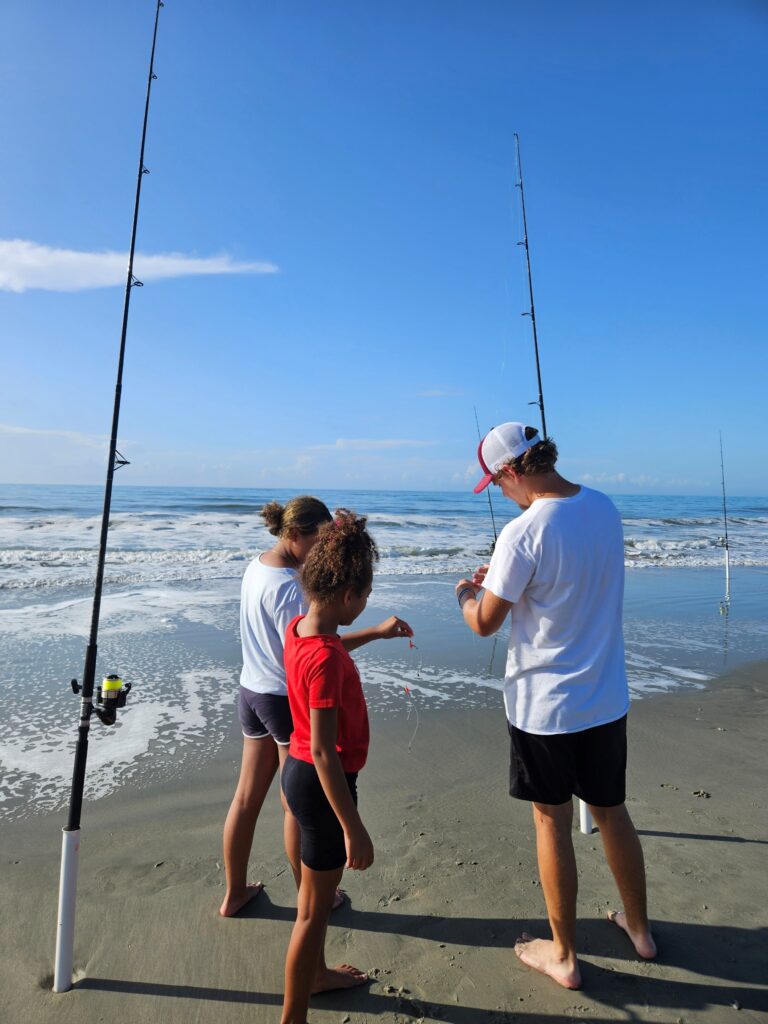
To ensure that future generations can enjoy our state’s wildlife and their habitat, every program, event, and class is imbued with our conservation message. We completed the fourth year of our Plishing Challenge, our conservation initiative designed to encourage anglers to help keep our waterways clean and use best fishing practices. This year’s challenge featured several in-person surf fishing events and litter sweeps that helped amplify our conservation message. Thanks to this increased participation, we achieved our highest fish total yet: 1,525 fish were caught (with most released for bonus points!). Participants also removed 307 bags of litter from local waterways, creating a cleaner, healthier environment for both fish and people.
2025 Plishing Challenge.
Advocacy
SCWF works with state legislators to conserve, restore, and protect land, water, and wildlife habitat from the mountains to the sea. With our support, bills were passed this year that will safeguard shorebird habitat, protect birds migrating through urban areas, and greatly increase the use of native plants for landscaping. With partner organizations, we’ve challenged developers wanting to fill in wetlands, and also challenged policy-makers to use scientific data to update regulations. We also partner with the National Wildlife Federation on issues of national significance, and are currently working together to defend the Endangered Species Act from significant changes which would strip away critical habitat protections.
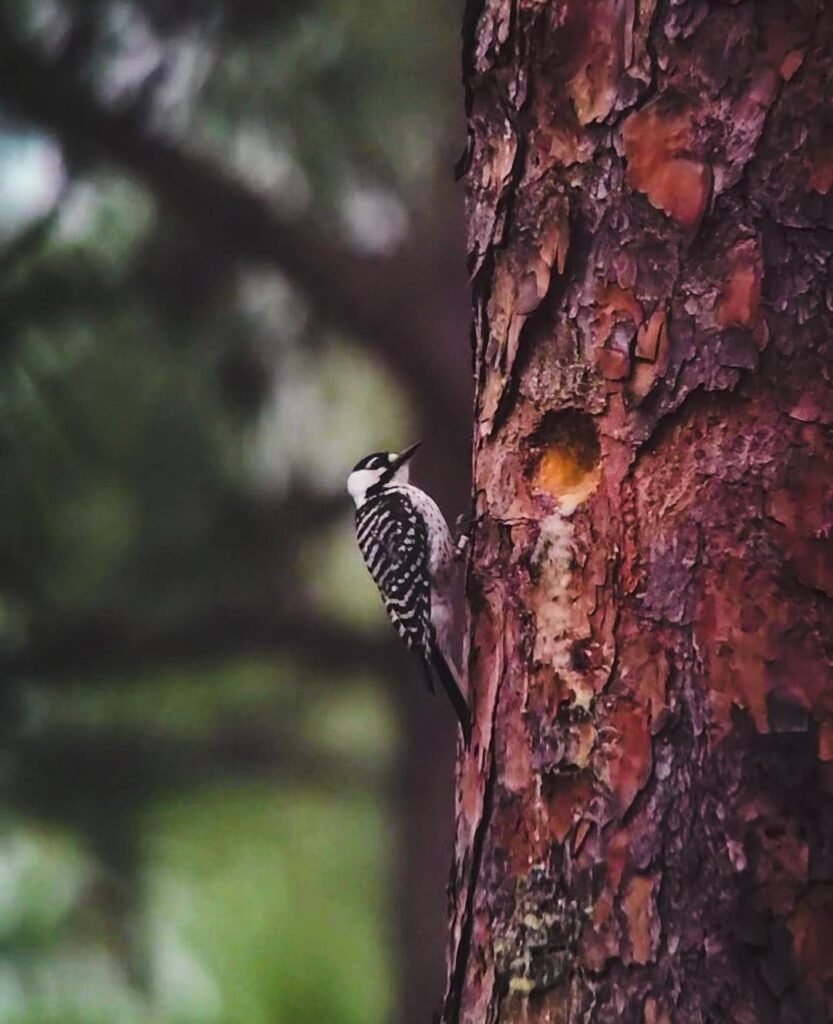
Red-cockaded woodpecker by Savannah Jordan.
Restoration
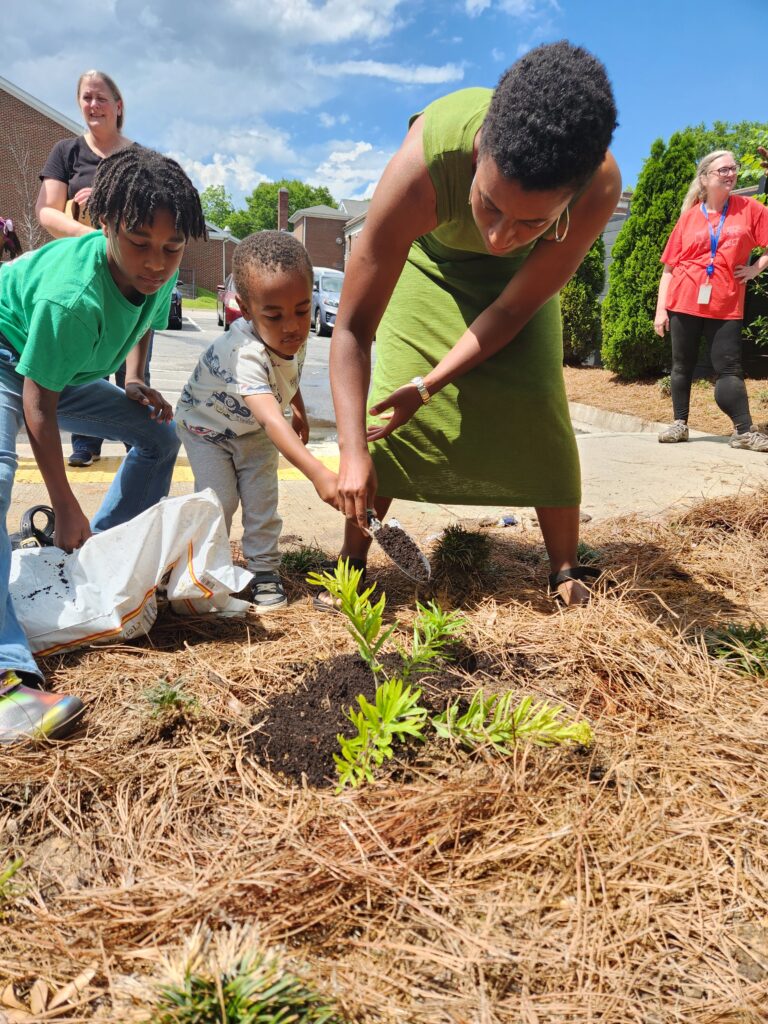
SCWF helps to enhance wildlife habitat and connectivity through our habitat restoration programs, which are increasingly vital as human development expands. We support those needs through our Certified Wildlife Habitat® programs, where individuals, schools, businesses, and communities enhance their properties by planting native plants, installing nesting boxes, and making other habitat improvements to help wildlife thrive. South Carolina has 15 certified communities, 12,479 certified backyard habitats, and 27 industry habitats. Please consider creating your own to increase habitat for wildlife!
A demonstration pollinator garden was installed at the Lancaster County Library this year!
Education
To encourage outdoor recreation and a deeper appreciation of South Carolina’s incredible natural resources, SCWF proudly offers a wide range of educational programs across the state. This year, we added new statewide habitat workshops to our impressive array of naturalist courses, Palmetto Pro Birder classes, and hands-on youth education experiences. Our first Families Exploring Nature Day introduced fishing basics, birding, and nature walks to those who may be newer to outdoor experiences. This spring, we hosted our popular Palmetto Outdoors Women’s Retreat (POWR) near Clemson and continued to offer POWR+ classes statewide to build on acquired skills.
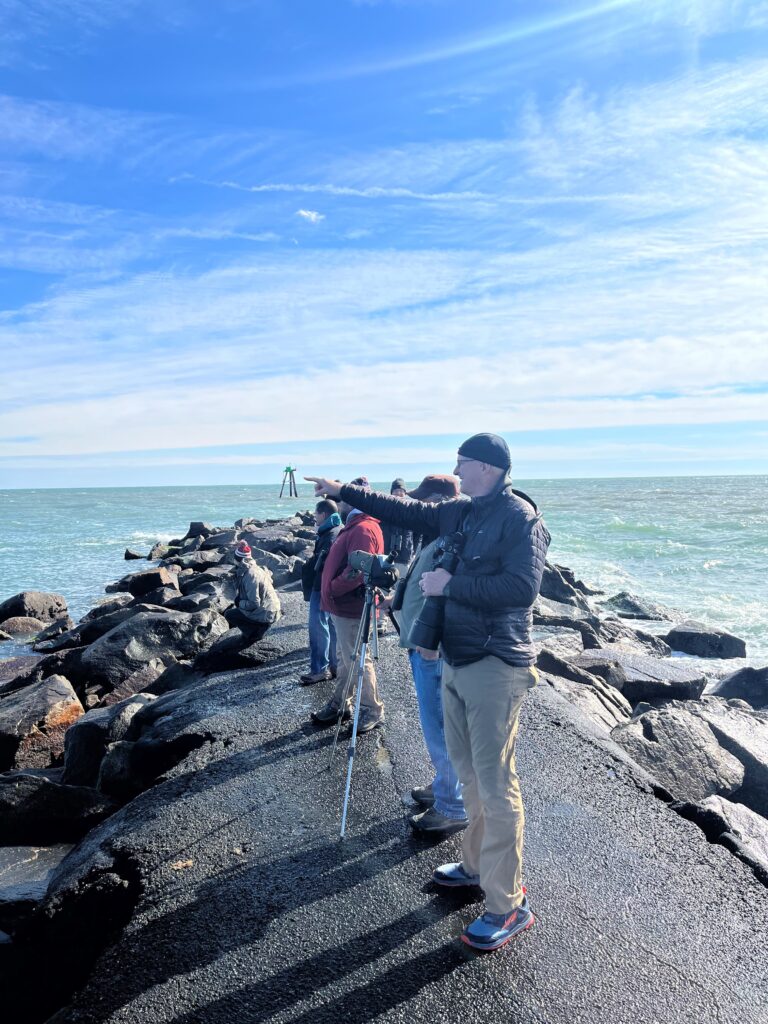
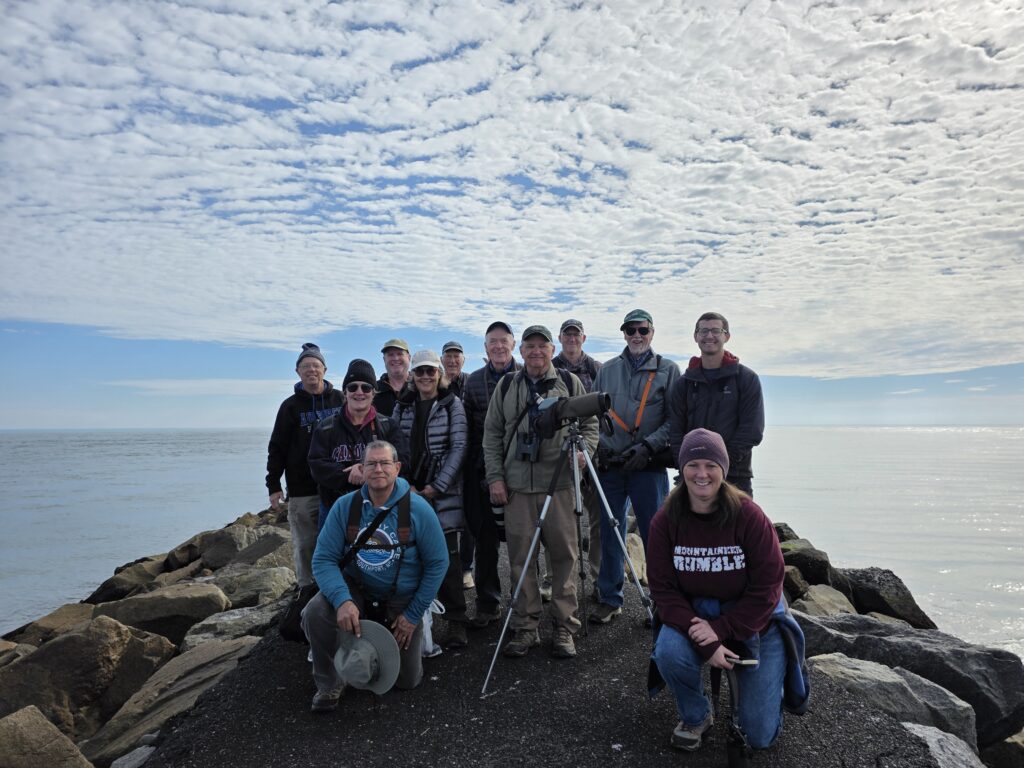
Palmetto Pro Birders at Huntington Beach State Park.
Blog post by Allison Bugarin, SCWF Education and Outreach Manager.
We had an incredible day exploring Huntington Beach State Park together! Winter birding along South Carolina’s coast never disappoints, but this trip delivered something truly special.
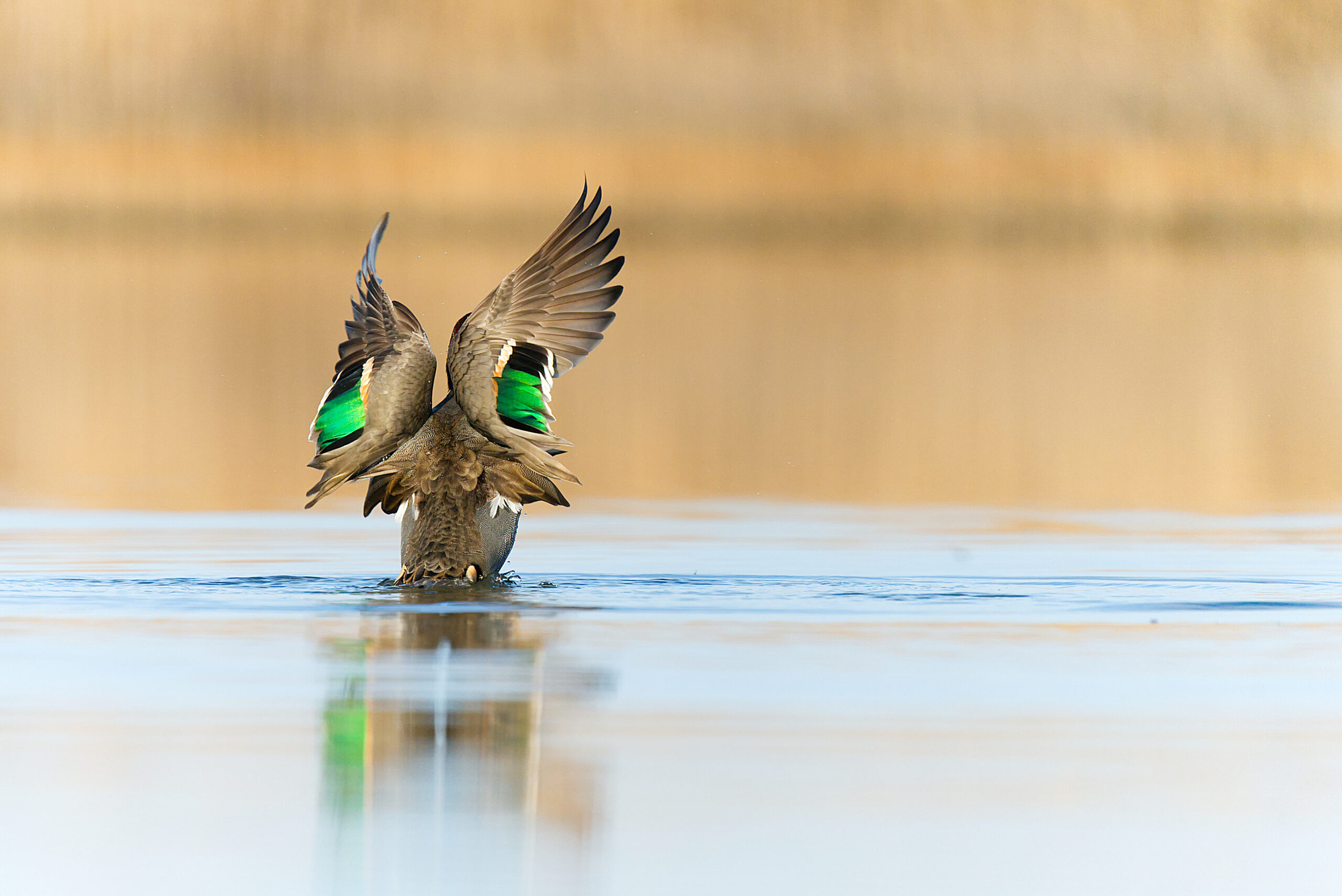
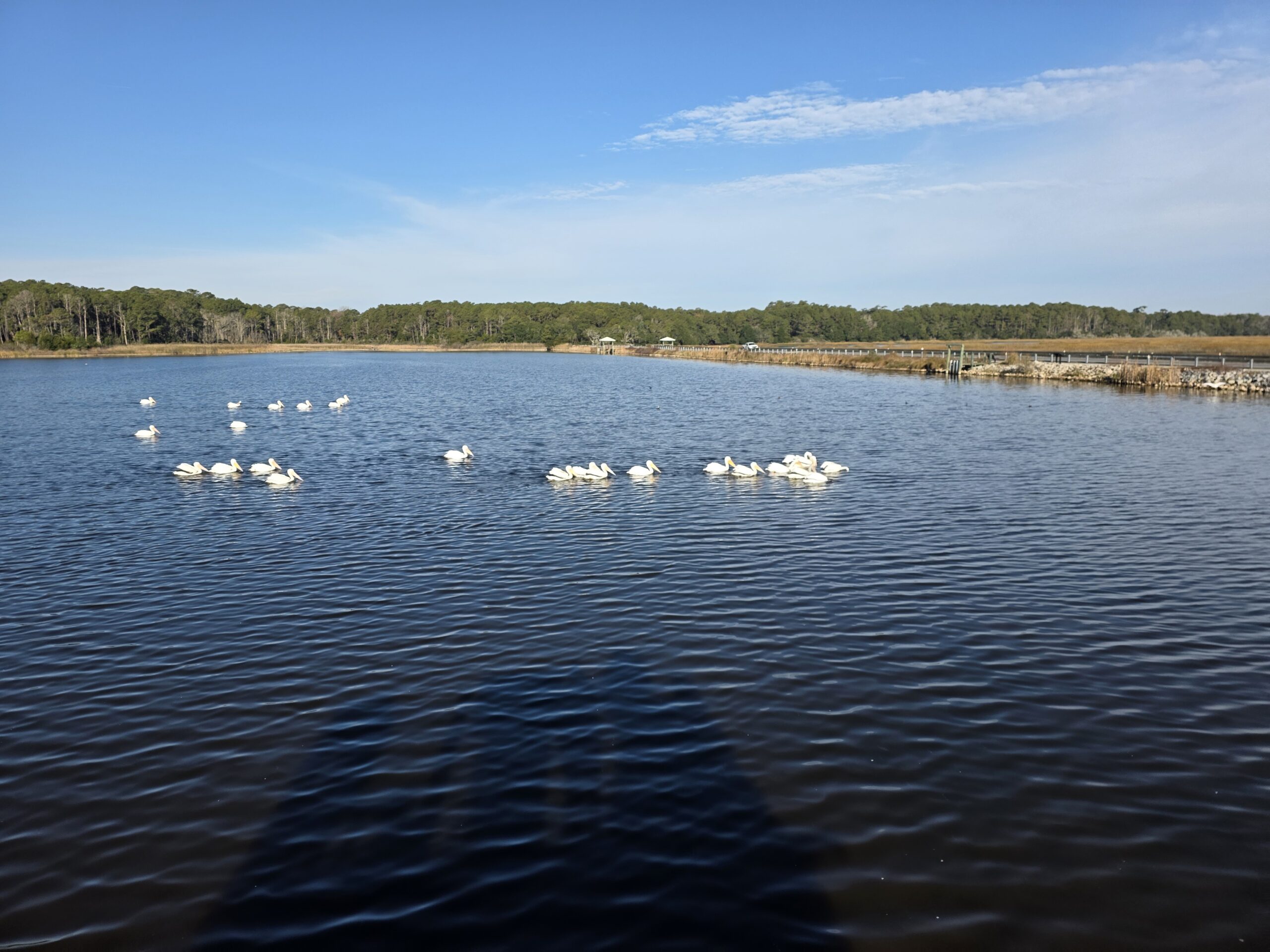
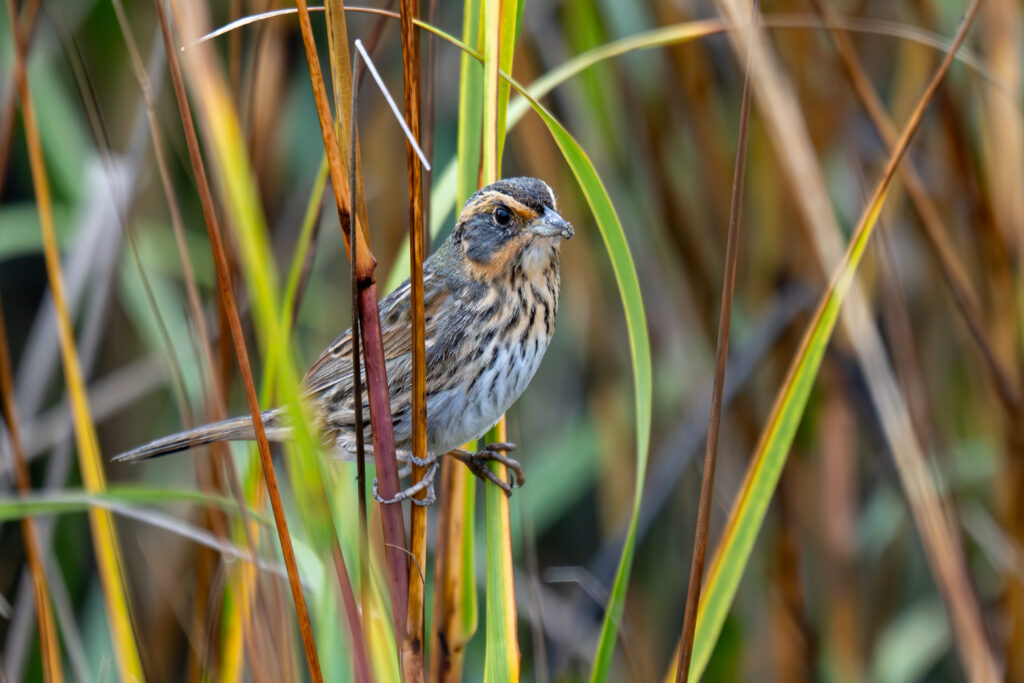
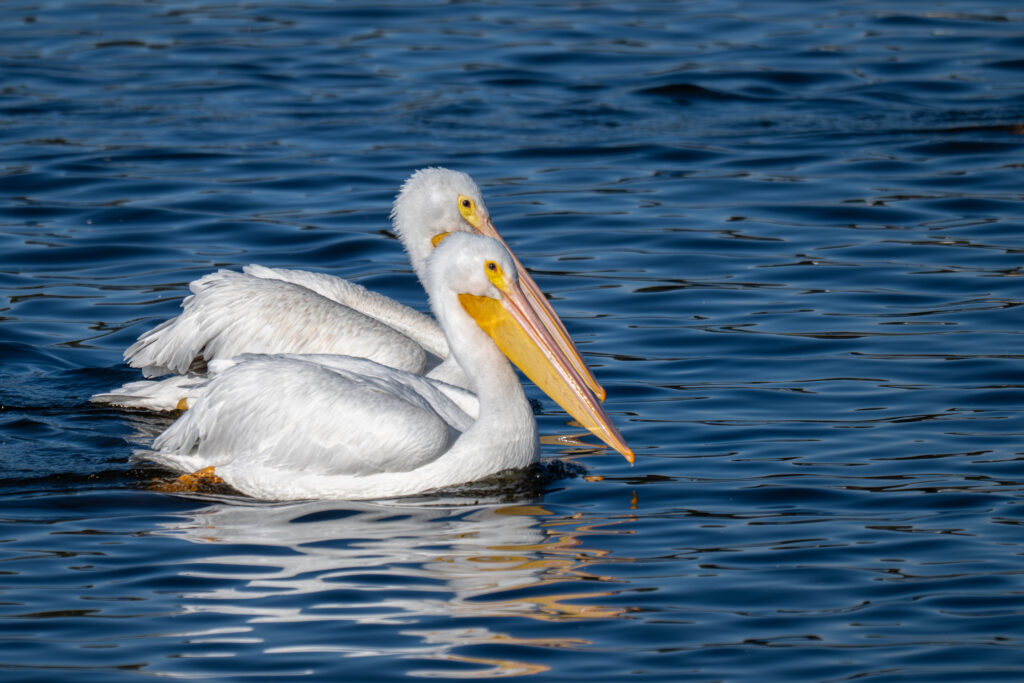
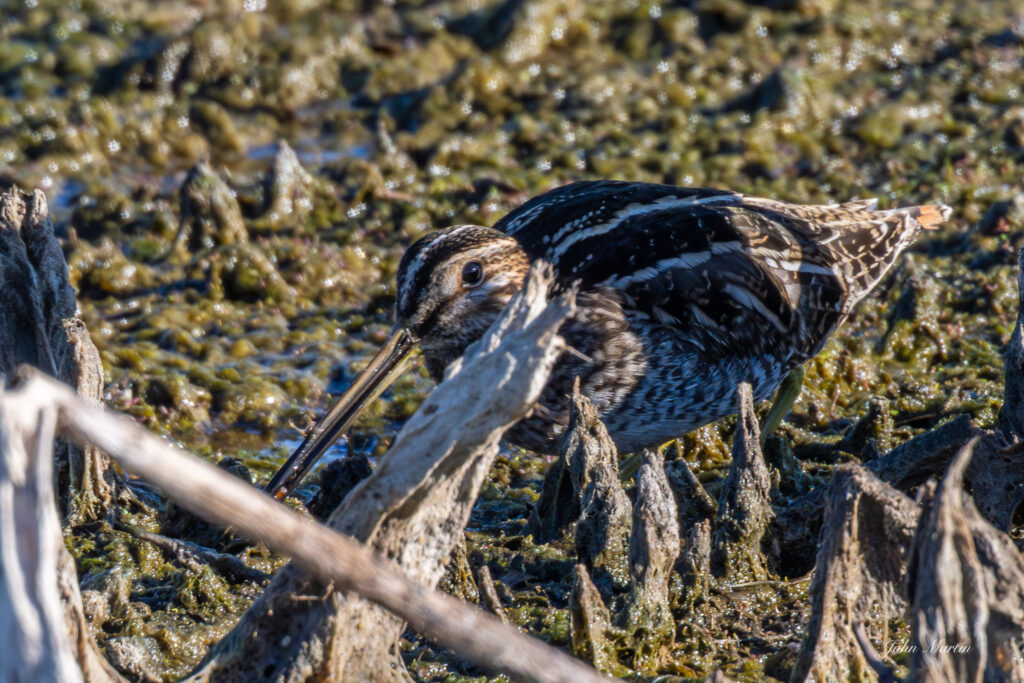
From the moment we stepped onto the woods to the last views leaving the park, we were surrounded by nonstop wildlife activity and unforgettable moments. Birds may have been our focus, but the park treated us to an outstanding mix of species—both feathered and not. We enjoyed amazing looks at saltmarsh sparrows! Some other species that we got great looks at were common loons, American white pelicans, green-winged teal, and a beautifully camouflaged Wilson’s snipe.
Image caption: Saltmarsh sparrow taken by a class participant.
Image caption: American white pelican taken by a class participant.
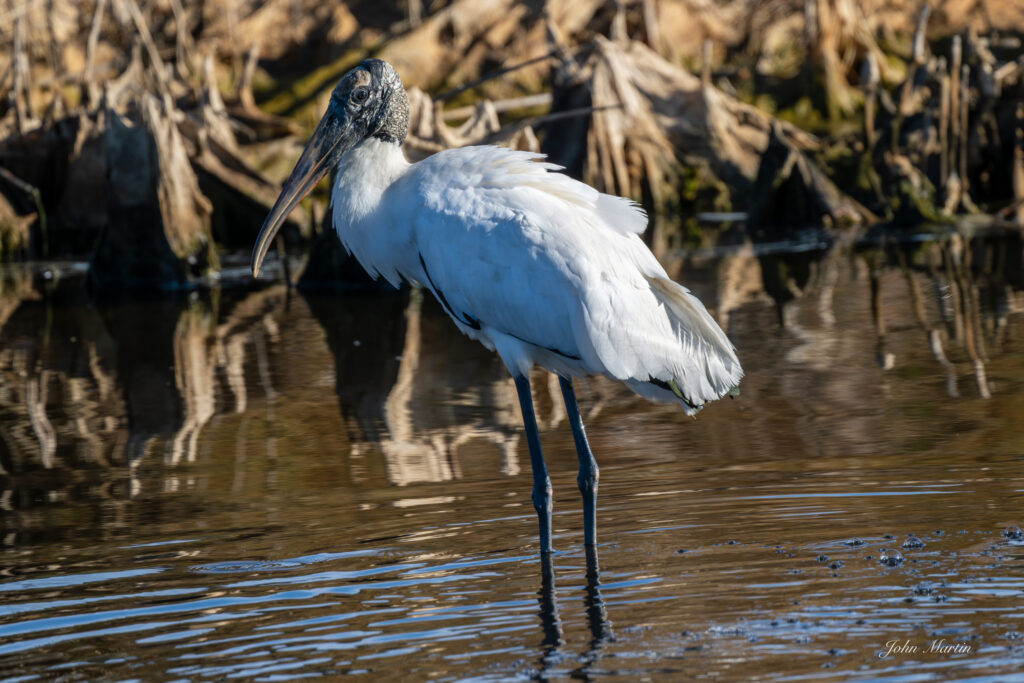
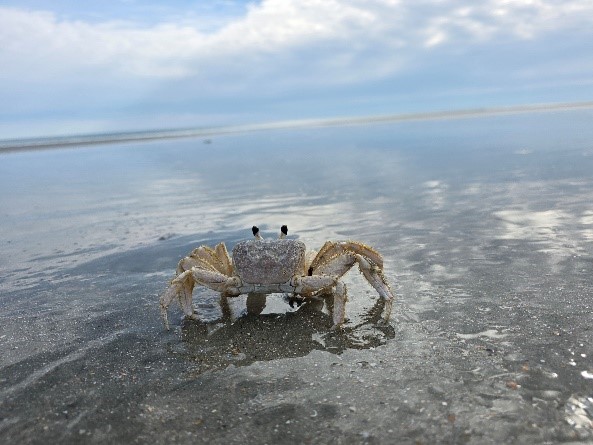
Beyond the birds, we were also lucky to encounter several fantastic non-bird species. A green sea turtle surfaced near the jetty, offering an unforgettable moment for everyone watching. A couple of minks darted in and out of the rocks along the jetty, and one of the largest Atlantic ghost crabs I’ve seen made an appearance on the beach on our walk back from the jetty.
Image Caption: Wood stork by John Martin.
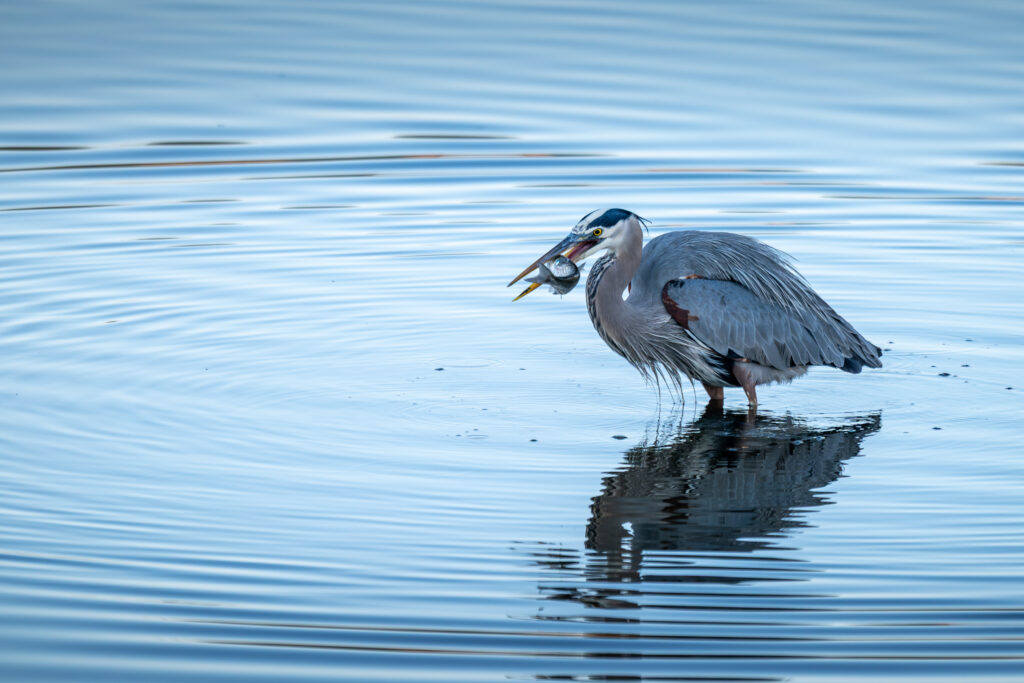
Image caption: Great blue heron photo taken by a class participant.
As if the day needed anything more, a few participants even caught a glimpse of a roosting Eastern Screech-Owl on their way out of the park! This was a perfect ending to an already magical outing.
Thanks to everyone’s sharp eyes and enthusiasm, we wrapped up the day with 79 species for the day. From waterfowl to songbirds, the diversity of habitats at Huntington Beach State Park gave us an incredible variety to enjoy.
Image caption: Wilson’s snipe by John Martin.
SCWF would like to say special thank you to Irvin Pitts for sharing his expertise and guidance throughout the trip. Birding alongside him was a rare treat, and we were incredibly fortunate to have his knowledge and sharp eyes with us for the day. Thank you to everyone who joined this trip. Your energy, curiosity, and camaraderie made the day truly memorable. I hope you enjoyed the experience as much as I did, and I can’t wait to see you again on our next adventure!
Image Credit: Atlantic ghost crab by Allison Bugarin.
This trip is part of our Palmetto ProBirder Program, which is at the heart of what we do at the South Carolina Wildlife Federation. By combining outdoor adventure, connection with others, and hands-on learning, we hope to inspire more people to become advocates for healthy wildlife habitats. Each time someone logs a bird sighting, plants a native plant, or supports conservation through a Duck Stamp or donation, it adds up to real and lasting change for the landscapes and species we love.
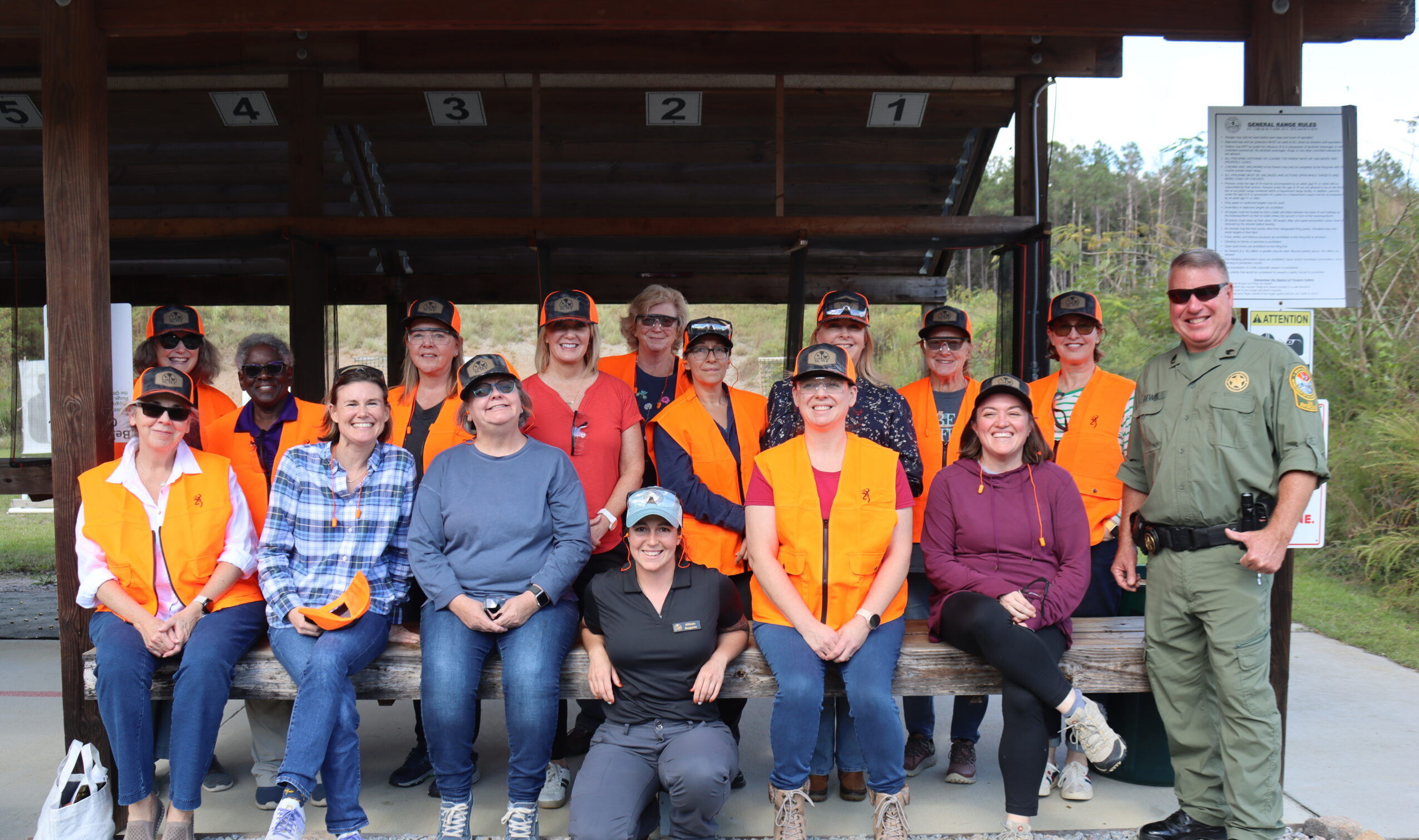
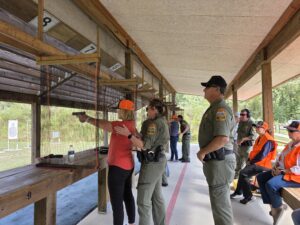
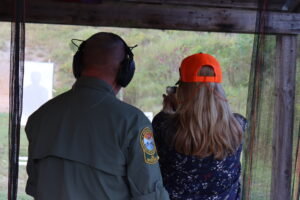
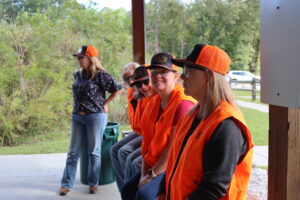
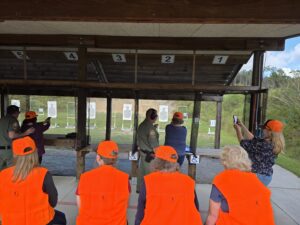
On Monday, October 13, fifteen women gathered at the Wateree Range for the POWR+ Handgun Orientation, a full day of learning and hands-on experience. This one-day workshop is part of the expanded Palmetto Outdoors Women’s Retreat (POWR) program, whose mission is to offer programs that provide women of all ages with the skills needed to participate in outdoor recreation. This class fits right into that mission to help women feel confident, capable, and connected to the outdoors. Whether learning to handle a firearm, identify native wildlife, or explore new outdoor skills, every POWR+ class builds community and self-assurance.
Designed for women with little to no handgun experience, the class provided a supportive, low-stress environment to learn safe firearm handling, basic techniques, and responsible range practices.
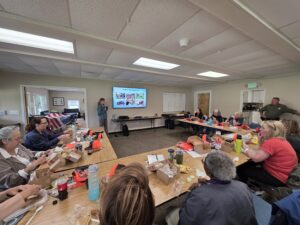
SSgt Ray Lewis and his fellow SCDNR Conservation Officers offered classroom instruction first. SSgt Lewis’ expertise and enthusiasm helped participants feel comfortable and confident.
After learning the fundamentals, participants had the opportunity to practice on the range, exploring different handguns and putting their new skills into action.
During lunch, SCWF’s Habitat Education Manager, Savannah Jordan, shared an engaging presentation on the native wildlife and plants found around the Wateree Range. Her talk highlighted the unique connection between conservation and recreation. This reminds everyone that being outdoors safely also means being aware of and appreciating the natural world around us.
A big thank-you also goes to the SCDNR Conservation Officers whose professionalism and encouragement made this class such an unforgettable experience.
The POWR+ Handgun Orientation was more than just a pre-CWP class. It was an empowering, hands-on introduction to firearm safety, confidence, and community. Events like this capture the heart of the POWR initiative: helping women build skills, confidence, and a lifelong connection to the outdoors.
Thank you to the National Shooting Sports Foundation for sponsoring this event! All participants received a safety vest, ear and eye protection, a stylish orange/camo Richardson hat, and lunch.
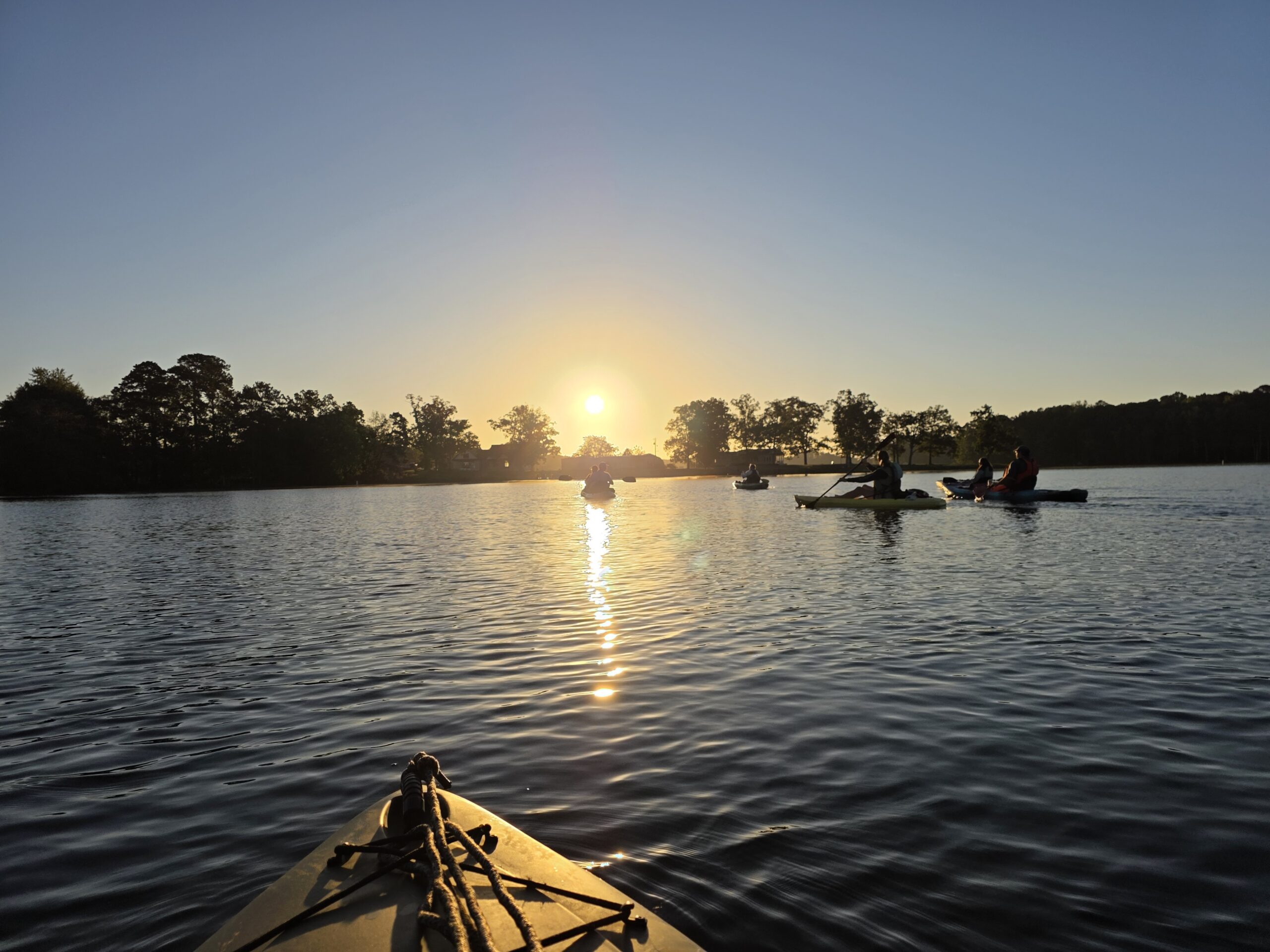
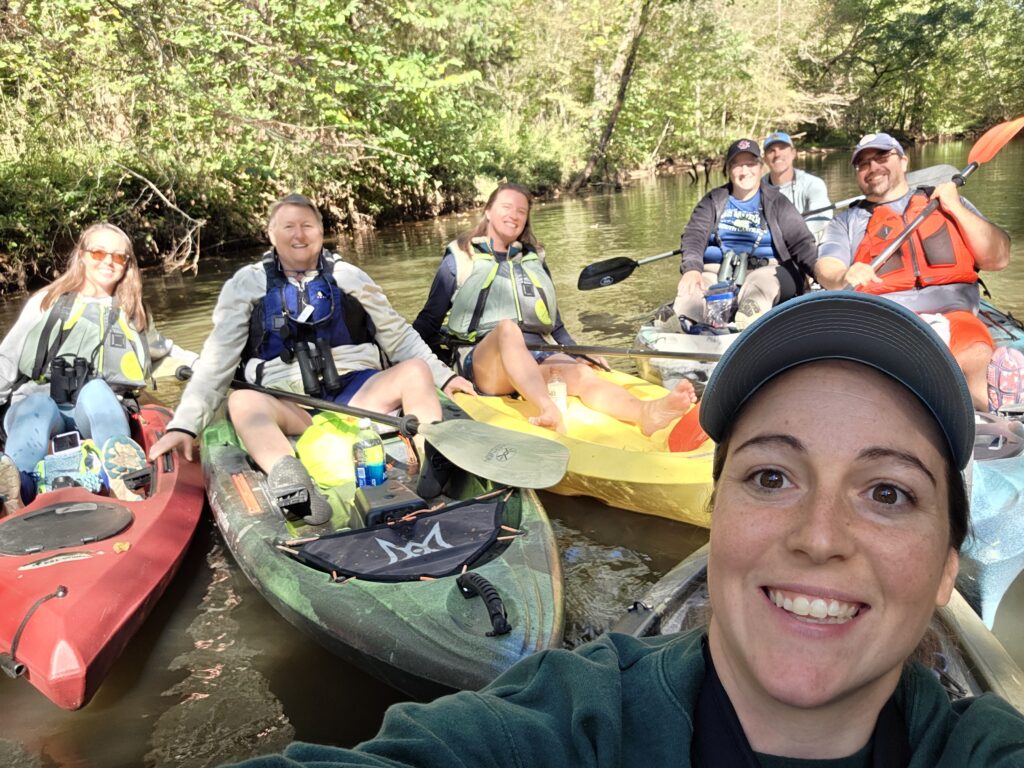
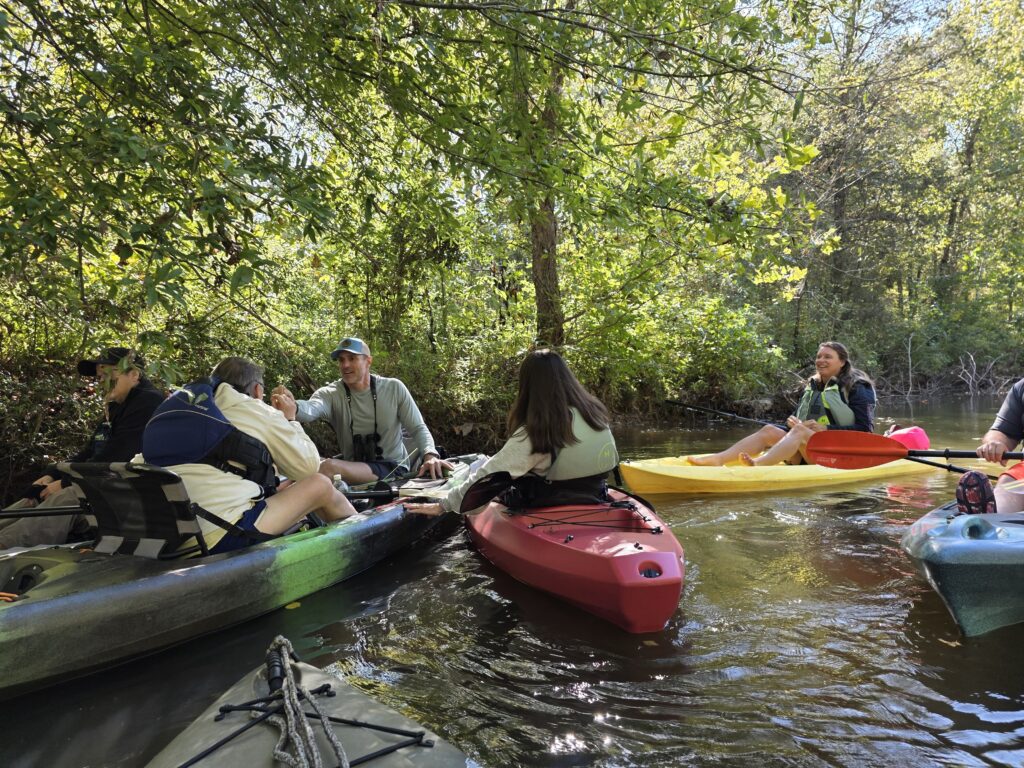
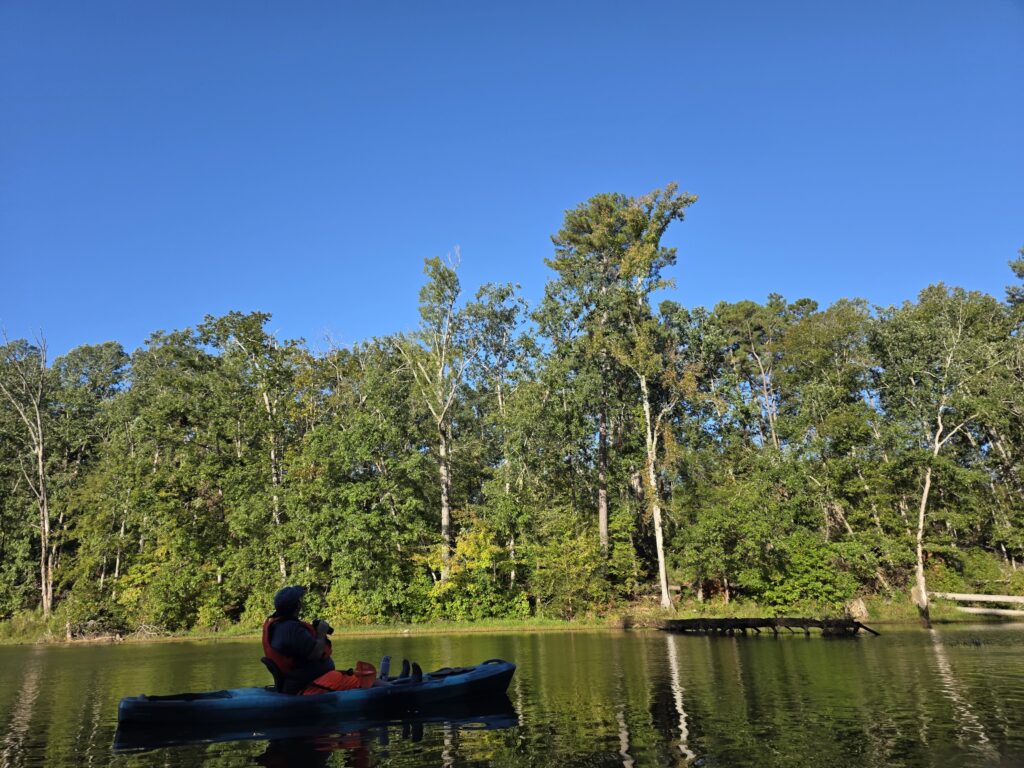
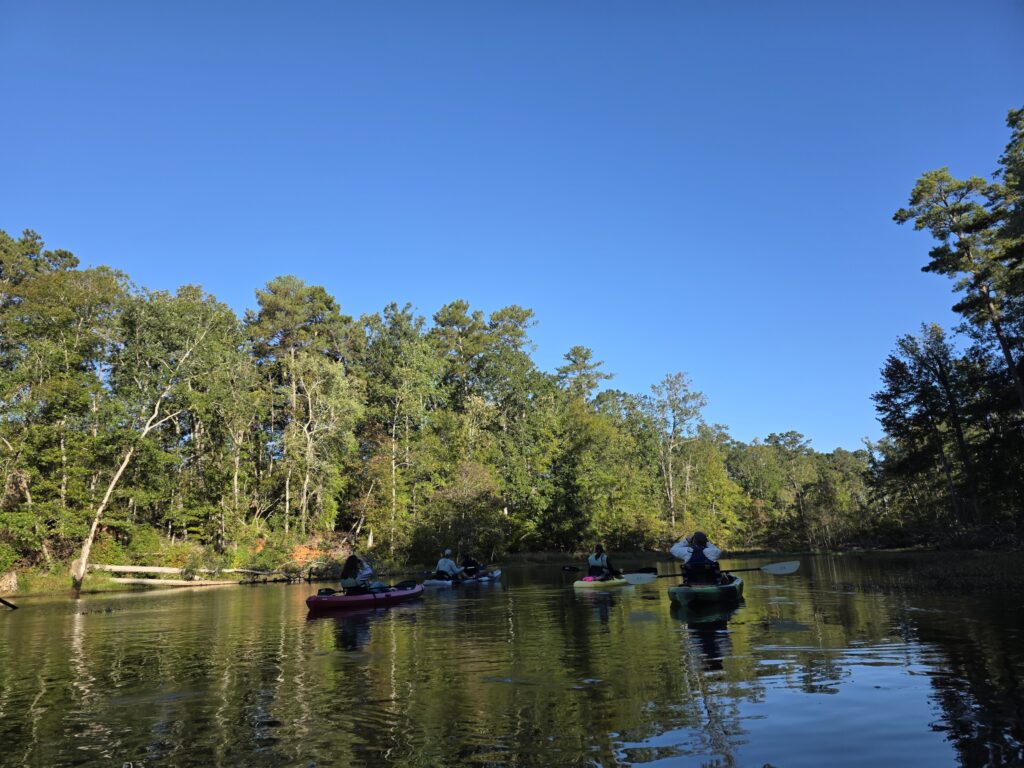
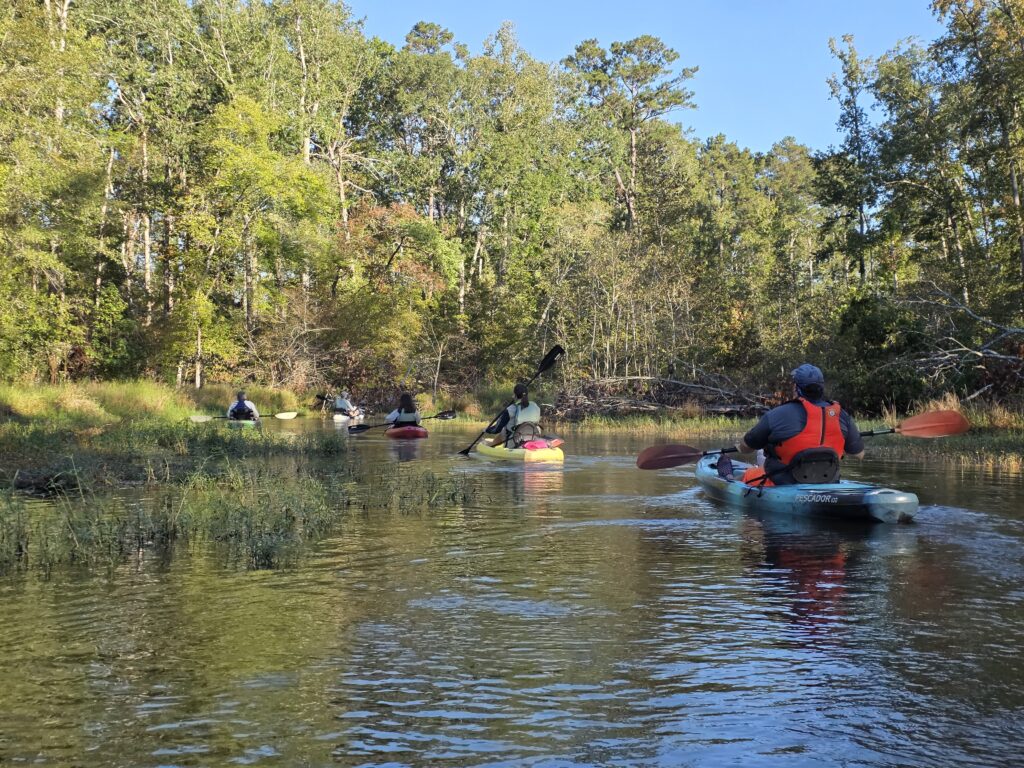
Thursday, October 2 was an incredible day on the water for our Palmetto Pro Birder Paddle, led by our Industry Habitat Manager and resident bird guru, Jay Keck. From the first push off the bank to the final call through the trees, the day was a reminder of how good it feels to slow down and enjoy nature with others.
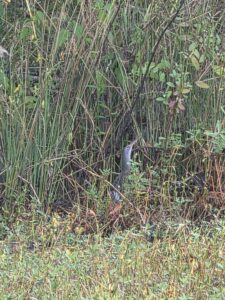
We tallied 37 bird species, including favorites like the wood duck, red-headed woodpecker, black-throated green warbler, and a clapper rail.
An elusive clapper rail.
We also heard a few species that stayed hidden in the trees, such as pileated woodpeckers and downy woodpeckers. Thank you to everyone who joined us for this fun and rewarding day in the field.
This paddle is part of our Palmetto ProBirder Program, which is at the heart of what we do at the South Carolina Wildlife Federation. By combining outdoor adventure, connection with others, and hands-on learning, we hope to inspire more people to become advocates for healthy wildlife habitats. Each time someone logs a bird sighting, plants a native plant, or supports conservation through a Duck Stamp or donation, it adds up to real and lasting change for the landscapes and species we love. We hope to see you on the next one! Until then, happy birding!
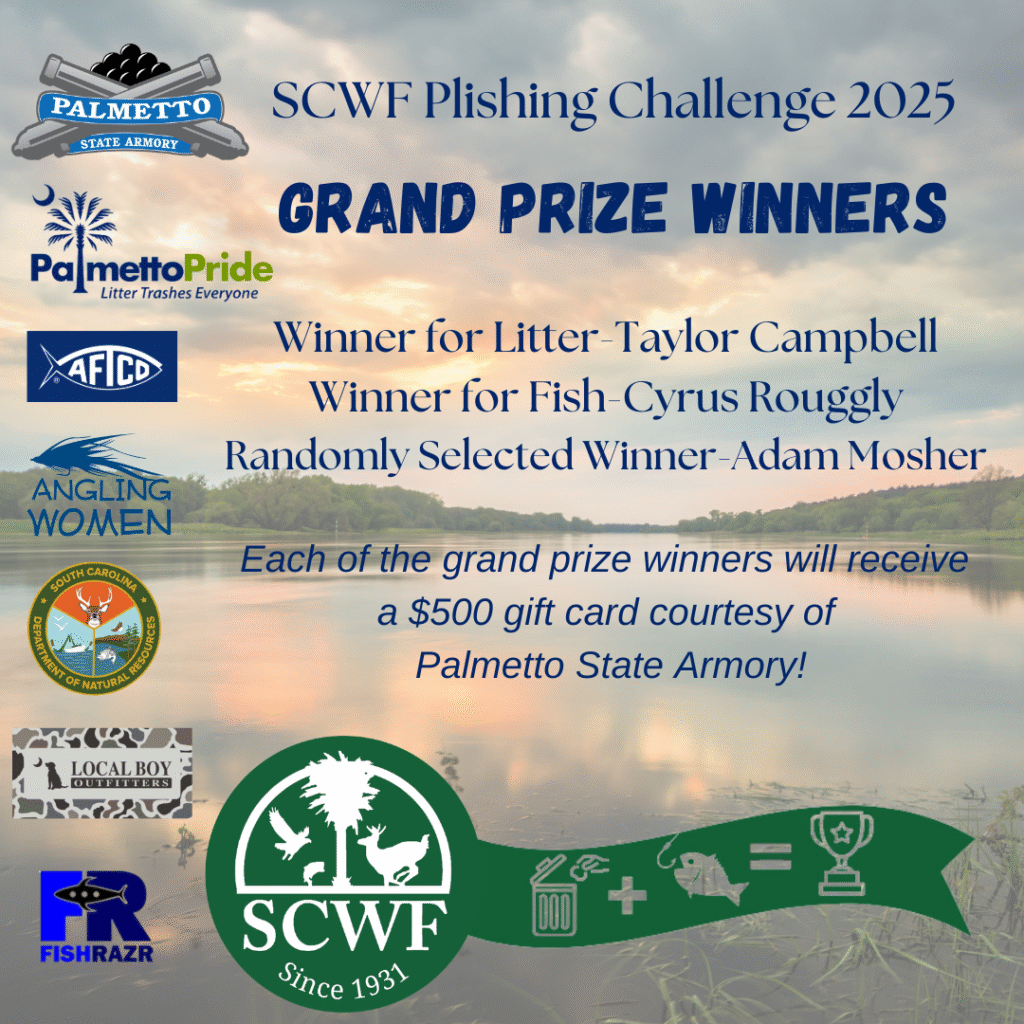
We are very excited to announce the winners of the 2025 Plishing Challenge! For the second year in a row, Cyrus Rouggly was the winner for the overall number of fish caught. Taylor Campbell came on strong to win the litter portion of the challenge. Adam Mosher was this year’s random winner. Each of these grand prize winners will receive a $500 gift card to Palmetto State Armory!
We are truly grateful to everyone who participated in this year’s challenge. A combined total of 1,525 fish were caught (and most were released for extra points!), and 307 bags of litter were removed from waterways, creating a cleaner habitat for fish – and us humans! All those who logged fish or litter in the 2025 challenge will receive a small token of appreciation in the mail from SCWF.
We are very grateful to all of our sponsors for supporting our conservation initiative for the fourth year in a row! Thank you to Palmetto State Armory, Palmetto Pride, Angling Women, Local Boy Outfitters, FishRazr, AFTCO, and the South Carolina Department of Natural Resources. Your commitment to conservation allows SCWF to offer this wonderful event to promote clean waterways, conservation of our natural resources, and fishing fun.
Finding motivated employees to enhance wildlife habitat, and connect with coworkers and the community, is critical for the success of the Wildlife And Industry Together or WAIT program. Luckily, such people stepped up to lead the program at our most recent WAIT partner, Shakespeare Columbia, located in Richland County.
After recently teaching a lunch and learn about wildlife and conservation to over twenty employees, I learned about their plans to hold additional nature-related lunch and learns each year, as well as plans to have an iNaturalist ID competition, photo contest, and a Merlin Bird ID contest. In addition to educating employees, a small team will spend an afternoon each year discussing environmental career paths with students at Title 1 schools in the local community.
Image Credit: Andy Sagcal.
Image Credit: Andy Sagcal.
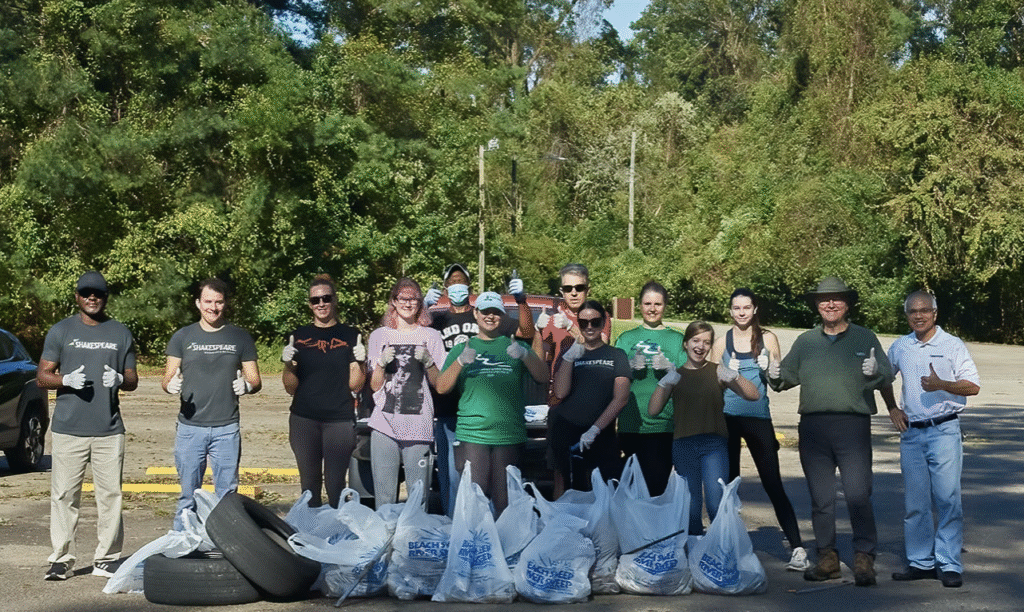
To further connect with the community, employees will also participate in litter sweeps in the area, the most recent being a successful river sweep in Cayce, SC. You can see the impact from that sweep in the picture below!
We are also proud of these employees for enhancing gardens with pollinator plants, installing Bluebird boxes, as well as developing plans to create a Carolina Fence Garden, which will continue to inspire employees to take a closer look at the natural world around them, and connect them to the planet’s smaller wonders, our pollinators!
Welcome aboard, Shakespeare Columbia, and thank you for doing such a great job connecting employees and the community to wildlife!
Why WAIT?
SCWF partners with conservation-minded businesses throughout the state who want to help wildlife thrive by enhancing their properties and providing educational opportunities for their employees and communities. Read more about the WAIT Program and how to join here.
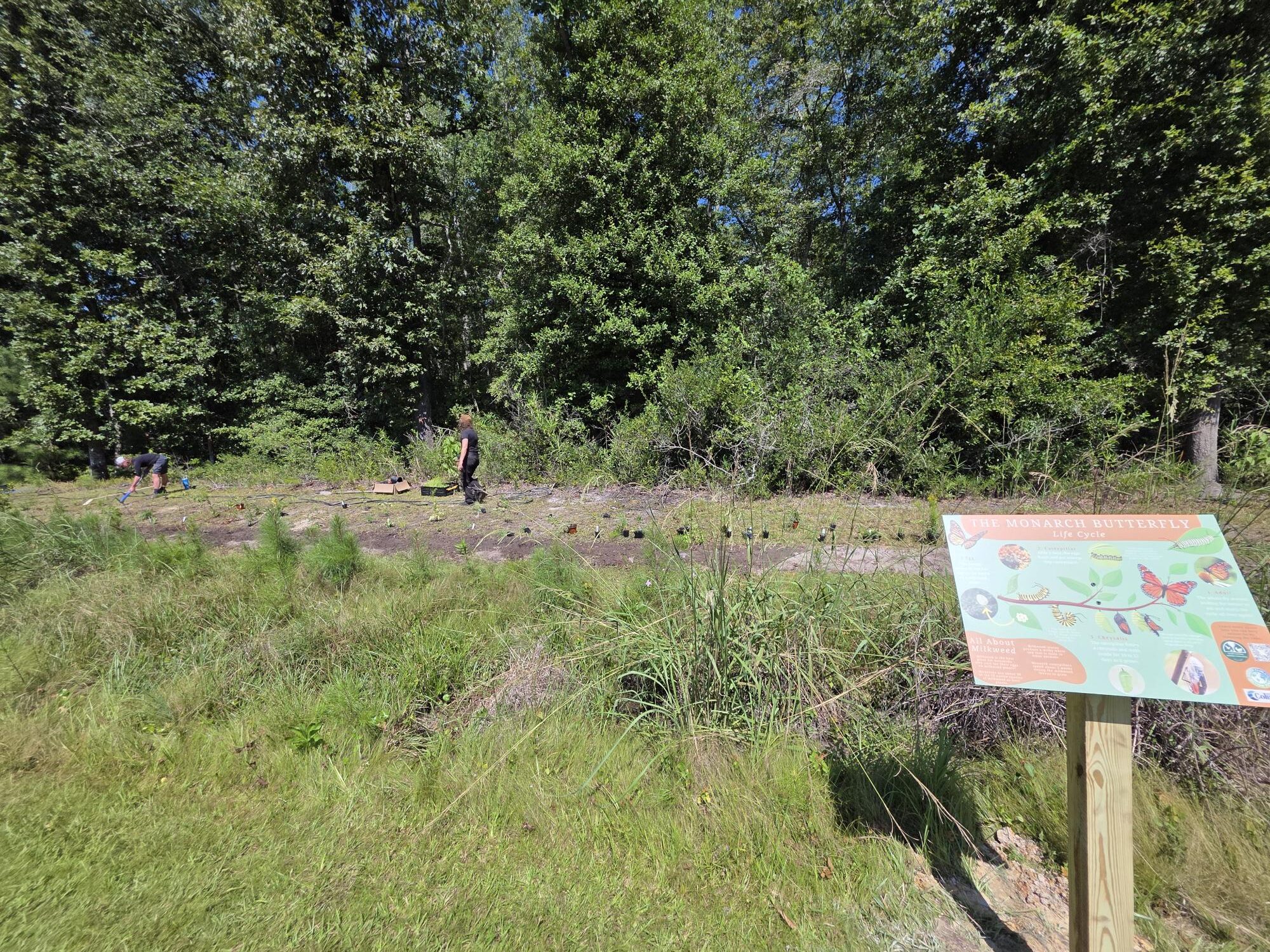
SCWF held an EcoLeaders event at Sesquicentennial State Park in Columbia on Monday, July 21st, where youth planted 750 native plants for wildlife habitat, installed a nesting box for Eastern bluebirds, and installed four interpretive signs. From start to finish, this was a youth-led event.
SCWF’s Education Assistant, Mason Eslinger, planned and executed this ambitious project. At age 20, Mason is already making an impact for conservation, and we know that his passion will also inspire other young people to get involved in the stewardship and protection of our natural resources.
“It is truly a privilege to find myself in a position that can make such profound impacts on not only the environment, but also on communities. This event in particular carried a different gravity to it, having just become an uncle. Being able to hold the “future generations” that I work so hard for allowed me to utilize my renewed sense of purpose on this project. Thank you to all that made something of this magnitude possible and I look forward to watching that little piece of me prosper at Sesqui!” – Mason Eslinger
The native plant garden covers approximately 300 linear feet and will be certified as a wildlife habitat by the National Wildlife Federation. In addition to helping wildlife, these plants will also serve as carbon storage. Carbon dioxide in our atmosphere is a leading cause of climate change and plants are great at taking CO2 out of our atmosphere and storing it in the ground. Click on the “Learn More” button below to see a list of the plants that were planted and how these plants benefit wildlife. The plants for this project were sourced from Charleston Aquatic and Environmental, Creekside Native Grass & Design, and Primitive by Design.
Thank you to Mason for leading this effort! We would also like to thank staff from Sesquicentennial State Park, the Palmetto Trail, and the South Carolina Department of Natural Resources for assisting with this project.
Thank you to the Bloomberg Philanthropies & the City of Columbia for sponsoring this project!

 SCWF lost a dear friend over the weekend – Dan Turpin was the founder of the Women’s Outdoor Recreation Retreats (now known as Palmetto Outdoor Women’s Retreats/POWR) and was our fearless Retreat leader for decades.