|
Category: Education

Spiders of September
Some call them “creepy” and some call them “cool.” Either way, spiders are definitely interesting, and this workshop is designed to help you discover some the amazing attributes that make them so. We’ll have opportunities to distinguish the sexes of spiders, surely a skill you’ve long desired to acquire. Through our discussion and discovery you’ll gain a better understanding of the different types of webs spiders spin, including how and why they are spun. Their silk is symbolic of the many connections they make in nature, and we’ll have conversations about that too.
We’ll talk about identification of the most common species found around the home. Of course our time together will include a walk in the woods to search for and identify woodland species. Because many spiders tend to reach maturity in the fall, they make themselves a bit more available for study this time of year. Since we’ll be at Goodale State Park, we’ll reserve the right to get a bit distracted if we see something other than a spider that warrants discussion. However, we’ll try to keep it focused and certainly fun.
At the end of the day, you’ll be able to:
1. Identify several species of spiders common in residential and woodland settings
2. Describe basic aspects of spider natural history
3. Appreciate the relationships between spiders and their environment
4. Feel confident and equipped in moving forward into your own study of spiders
Where: This training will take place at Goodale State Park, in the midlands and Sandhills Region of South Carolina. Meet at Picnic Shelter #1, more detailed directions will be sent in advance of the class. The website, which includes general directions, can be found by clicking here.
When: September 10, 2026. We’ll meet at 9:00 AM, and conclude at 2:00 PM.
Who: This training is open to the public. No prior knowledge is required. Minimum age is 16. For SC Master Naturalists who have not taken a spider course, this event can count as Advanced Training and towards your statewide certification if you need a Sandhills component. Lunch will last thirty minutes, so depending on when we finish, this will count for approximately four and a half hours of training. If you are not a Master Naturalist, just come have fun with us.
This class will be taught by Austin Jenkins, who teaches and facilitates the popular Midlands Master Naturalist class for the South Carolina Wildlife Federation. Jenkins teaches Natural History of South Carolina at USC Sumter.
IMPORTANT: Participants should be in good physical shape. We will be outdoors during the whole class, and it may be HOT. In addition, we will be on our feet most of the day.
Cost: The cost is $75.00 per person.
To ensure a quality experience for all, space is strictly limited to 20 participants. Classes fill quickly, register today! After registration, you will receive an email with lodging recommendations, directions, and any other details pertinent to the class.
Other Important Notes:
-
Restrooms are available at the park.
-
Participants should bring a bag lunch and water and be prepared for a day in the field.
There is no rain date for this event. We will make every effort to hold it, even in a few rain showers. If we can’t make it happen due to weather or some other situation, we will refund your money. -
After registering you will receive important correspondence via email – if you change your email between now and then, make sure to notify us.
SCWF reserves the right to cancel any event, due to unforeseen circumstances, extreme weather, low registration, or guidance from local/state officials. Any cancellation by SCWF will result in a full refund for all registrants.
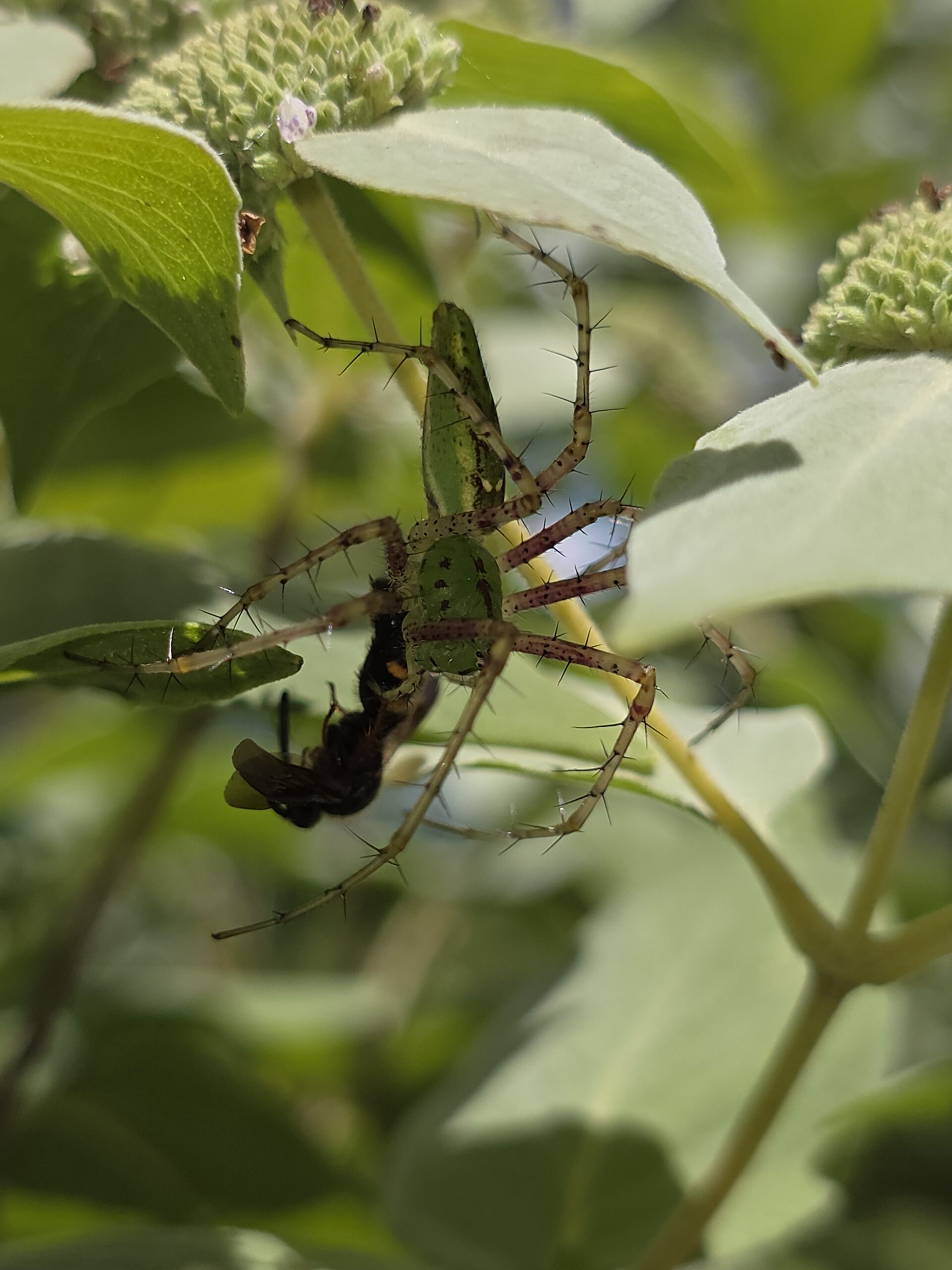
Featured Image Credit: Green lynx spider by Allison Bugarin.
Banner Image Credit: Black Widow by Allison Bugarin.
Plishing Challenge 2026
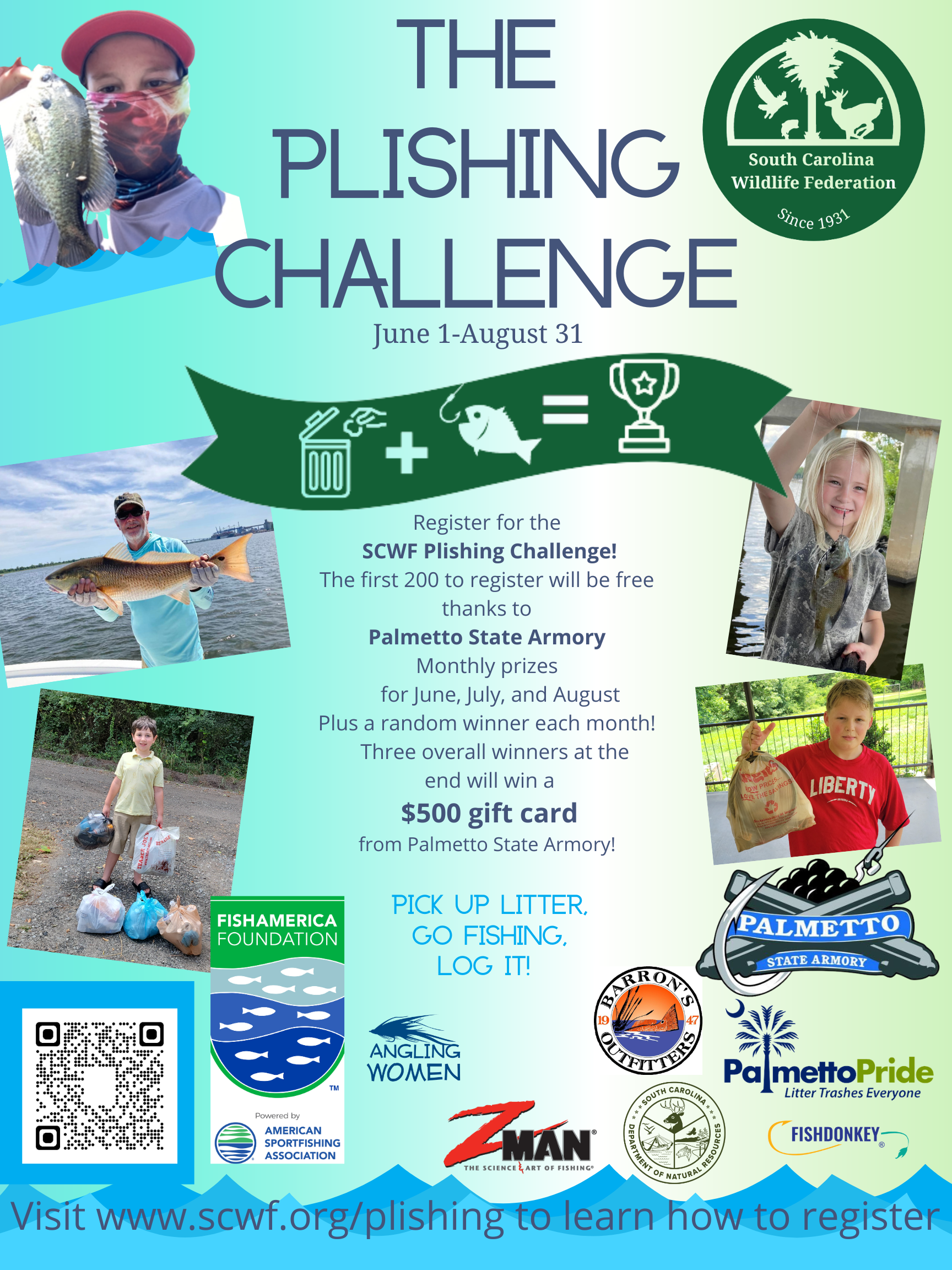
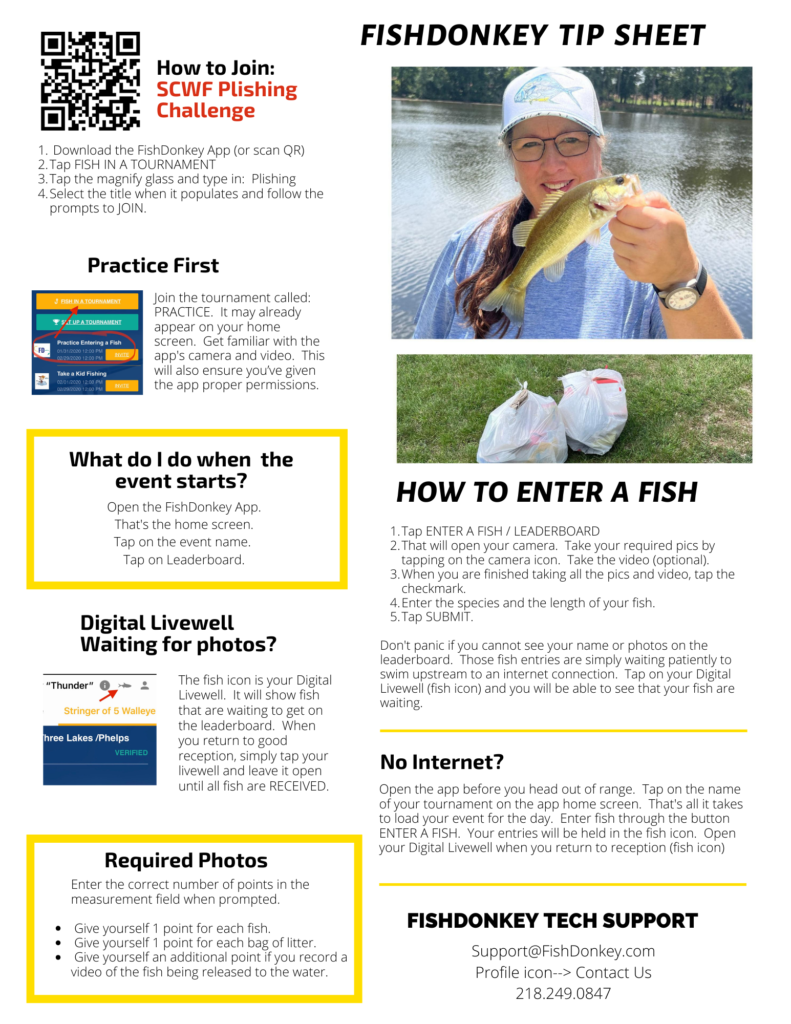
Have you recently learned to fish? Are you a lifelong angler? Either way, you are in the right spot! PLISHING is a combination of the Swedish phrase “plocka upp”, meaning (litter) pick up, and fishing! Join our challenge and, as you set out on your fishing adventures, you can log your fish as well as litter you pick up and dispose of properly. Each fish caught, fish released, and bag of litter collected can earn you prizes (in addition to enjoying the outdoors and practicing conservation!) Click here to get started!
Palmetto Outdoors Women’s Retreat 2026
REGISTRATION IS FULL
To join the wait list, please click on the button below.
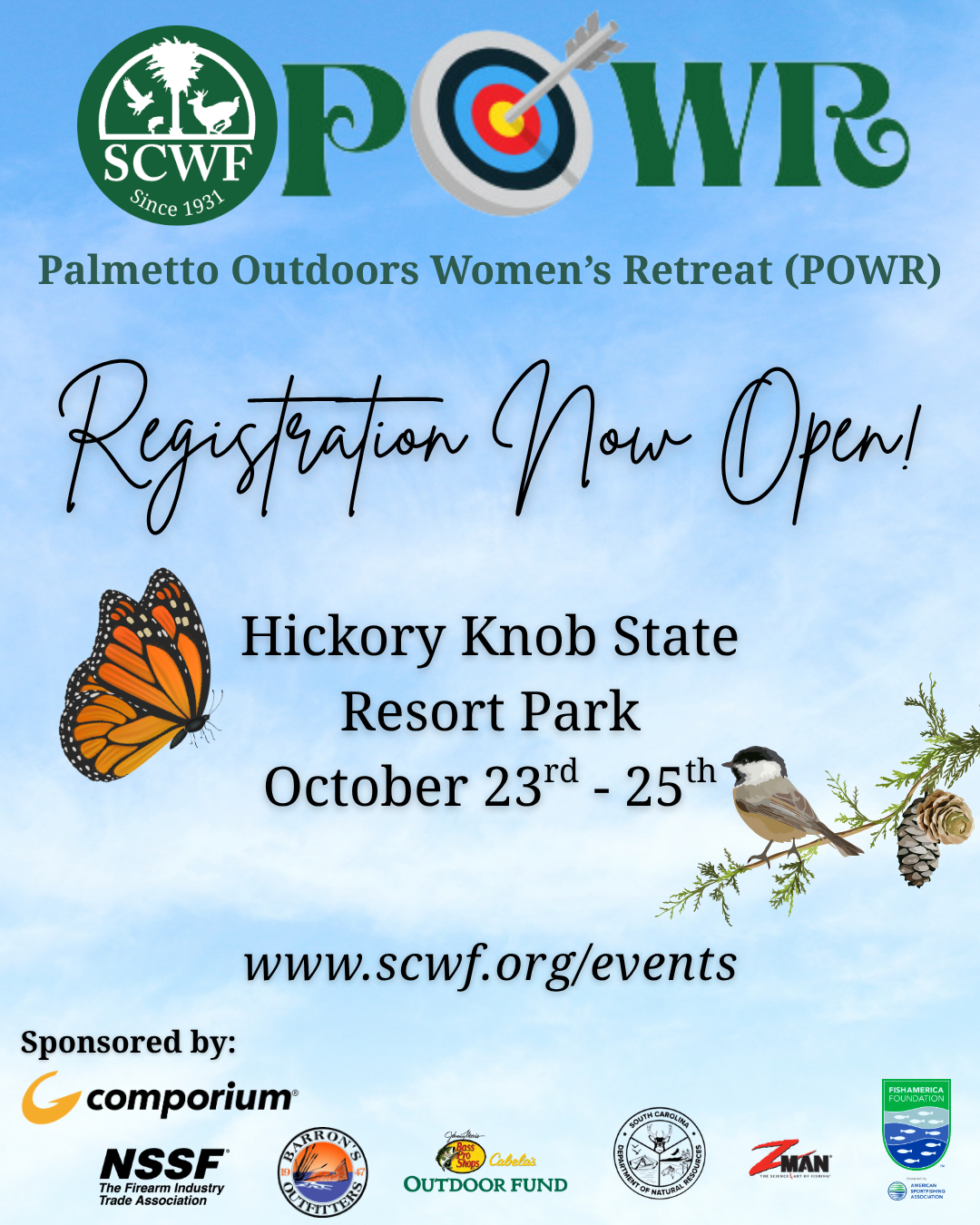
We are thrilled to offer this year’s POWR (Palmetto Outdoors Women’s Retreat) at Hickory Knob State Park this year! This event is designed for women to experience nature and outdoor recreation with like-minded ladies in a non-competitive environment.
Archery, nature hikes, kayaking, and fishing are just a few of the 20 classes to choose from. Participants will have the opportunity to select up to 8 classes and be introduced to many outdoor activities.


LOCATION: POWR will be held at Hickory Knob State Park and resort. (1591 Resort Drive, McCormick, SC 29835)
AGE GUIDELINES: Open to females age 16 and older (no maximum age). Girls ages 16-18 must be accompanied by responsible adult – no supervision will be provided.
Cost: $175, which includes the retreat classes and a t-shirt. *Optional meal plan: $115. Lodging arrangements must be made separately.
*Meal plan includes pre-payment for Friday dinner, Saturday breakfast, lunch and dinner, and Sunday breakfast. If you don’t choose the meal plan, you may eat at the restaurant for whichever meals you choose, and will need to pay the cashier after each meal.
DATES/TIMES: October 23rd-25th, 2026. POWR will open for check-in at 11:00 am on Friday. The first class begins at 1:30 pm on Friday, and the last class concludes Sunday at noon.
TENTATIVE CLASS LIST:
Archery
Backyard Wildlife Habitat
Birding
Boating And Trailering
Eco-Hiking
Fish Cleaning & Cooking
Freshwater Fishing
Intro To Deer Hunting
Kayaking Intro
Lake Thurmond Paddle
Low Ropes
Map & Compass Reading
Nature Crafts
Nature Spa
Pine Needle Basketry
Self Defense
Skeet Shooting
Yoga
REGISTRATION PROCESS: Registration button is below, and is opening on June 24th at 12pm! Each participant must register separately. After registration, participants will receive a unique code to reserve their room at Hickory Knob State Park and Resort. Campsites are also available. A separate class selection email will be sent out at a later date to all registered participants.
EVENT REGISTRATION REFUNDS: 90% of registration, t-shirt & meal plan fees will be refunded when requested in writing or by email on or before October 11th. 50% of registration fees will be refunded if requested after that date.
Thank you to our partners and sponsors!
The Retreat is presented by the South Carolina Wildlife Federation. We are especially grateful to our sponsors, Comporium, SC Department of Natural Resources, Fish America Foundation, Zman, Barron’s Outfitters, National Shooting Sports Foundation, and the BassPro/Cabela’s Outdoor Fund. These partnerships enable us to provide a wide variety of activities conducted by a diverse group of expert instructors. A special thank you is due to the numerous individual volunteers who so willingly donate their time to share their knowledge and expertise.




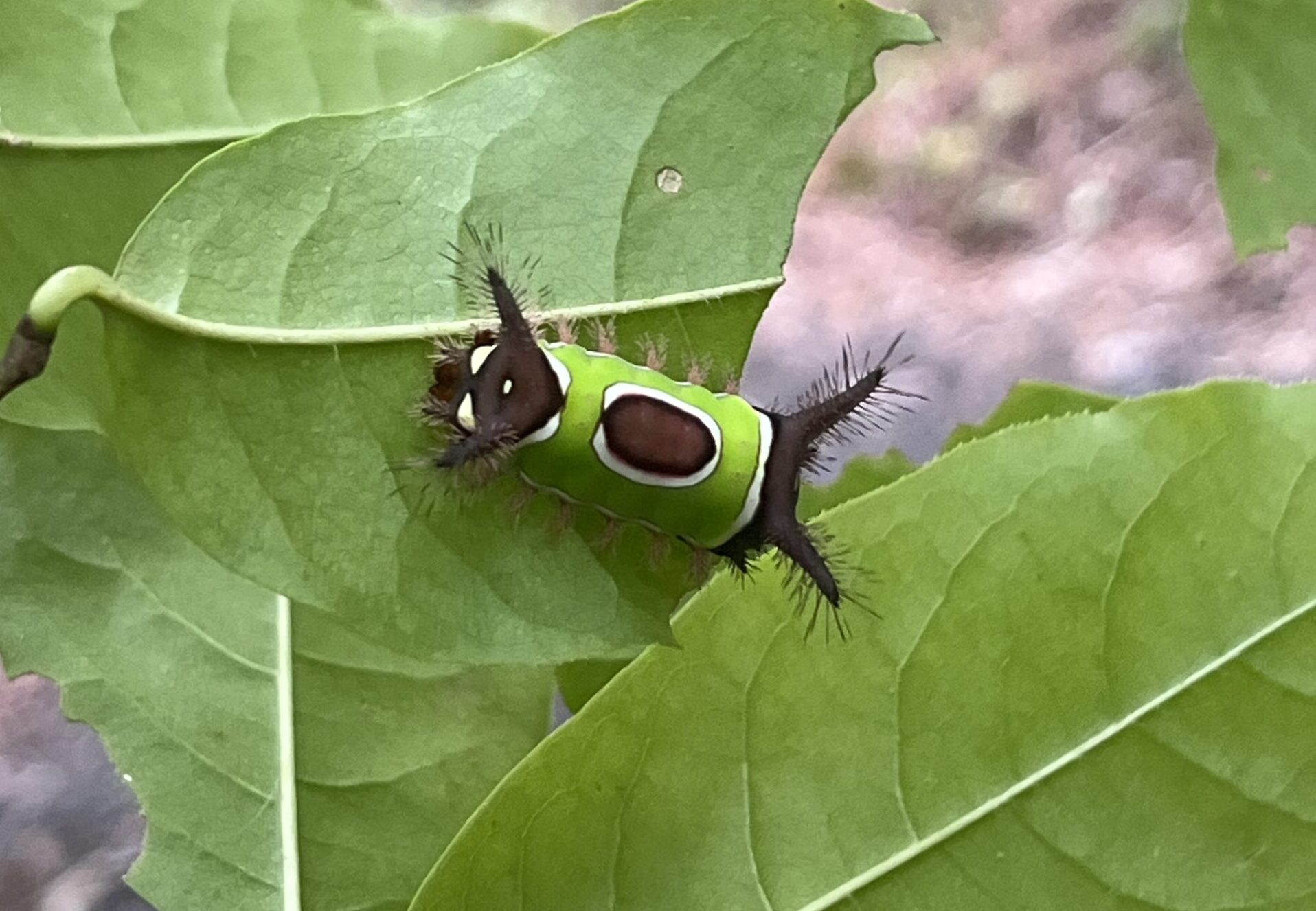
Introduction to Caterpillars
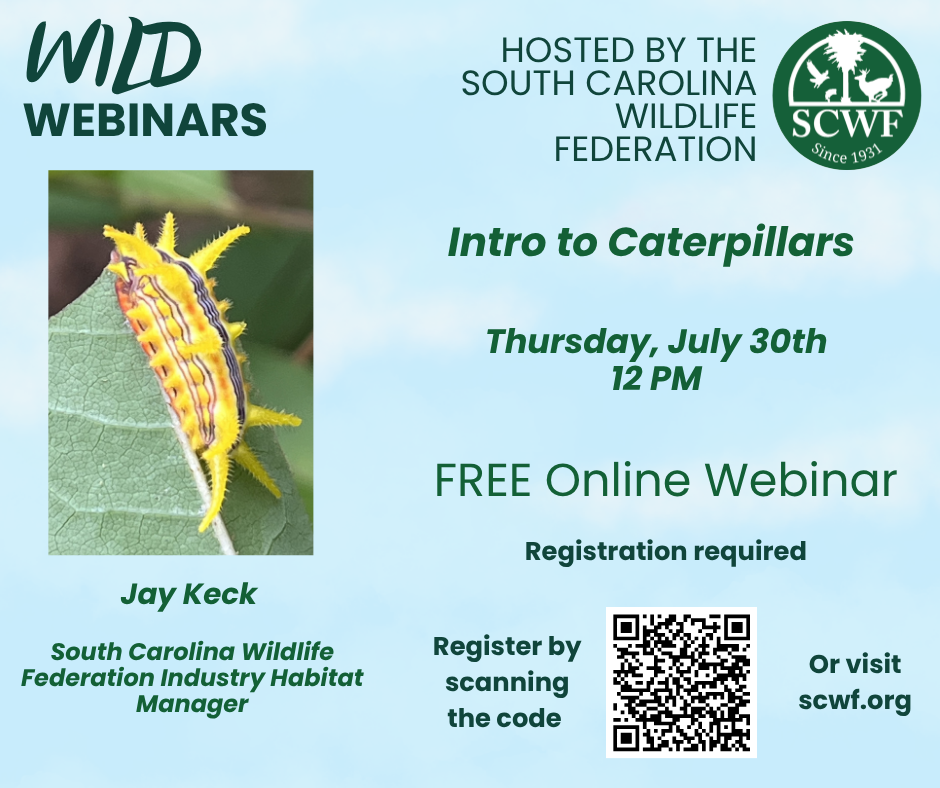
Join Jay Keck, SCWF’s Industry Habitat Manager, for an introduction to the fascinating world of caterpillars and their essential role in South Carolina’s ecosystems.
Caterpillars are much more than just the larval stage of butterflies and moths. They are a critical link in the food web and serve as an important indicator of habitat health. During this webinar, participants will learn how to identify common caterpillars found throughout South Carolina, where and when to search for them, and the host plants that support their development.
Jay will share practical tips for finding caterpillars in gardens, parks, and natural areas, while exploring the incredible diversity of species that call South Carolina home. Participants will also discover how caterpillars contribute to healthy ecosystems by supporting birds, reptiles, amphibians, and other wildlife, and why native plants are key to their survival.
Whether you’re a gardener, birder, naturalist, educator, or simply curious about the natural world, this webinar will provide the knowledge and tools to begin observing and appreciating these often-overlooked creatures.

Jay has been a passionate nature and bird lover since his early teens. He lives in Chapin, SC with his wife and two boys, and has identified 95 bird species in his yard in three years, as well as 160 species in Lexington county since moving back in September of 2013. He has viewed birds in Spain, Chile, Honduras, and Costa Rica, as well as many areas in SC from the mountains to the coast. Being inspired by SCWF’s mission, he earned his Palmetto Pro Birder certification, and has led bird walks for SCWF as well as Saluda Shoals park, Columbia Audubon, and private organizations. Even when he is golfing, hunting, or fishing, he is secretly birding. At SCWF, Jay coordinates the Wildlife And Industry Together (WAIT) program as well as leading birding classes for the Palmetto Pro Birder & Midlands Master Naturalist programs.
Headlamp Spider Class
This class is full! You can add yourself to the waiting list here.
Please join us on Friday, July 17th for an arachnid-filled adventure at Dreher Island State Park with Dr. Robert Wolff.
This unique walk will begin at 7:30 pm and will focus on finding spiders by looking for their eyeshine as we explore the park with headlamps at night. The class will conclude at approximately 10:00 pm. Dr. Wolff has spent most of his life studying spiders, and will identify and discuss the different spider species we’ll find in the park. The shores of Lake Murray are known for their abundance of spiders, so it should be an action-packed night!
Class Date: July 17. Rain date July 25
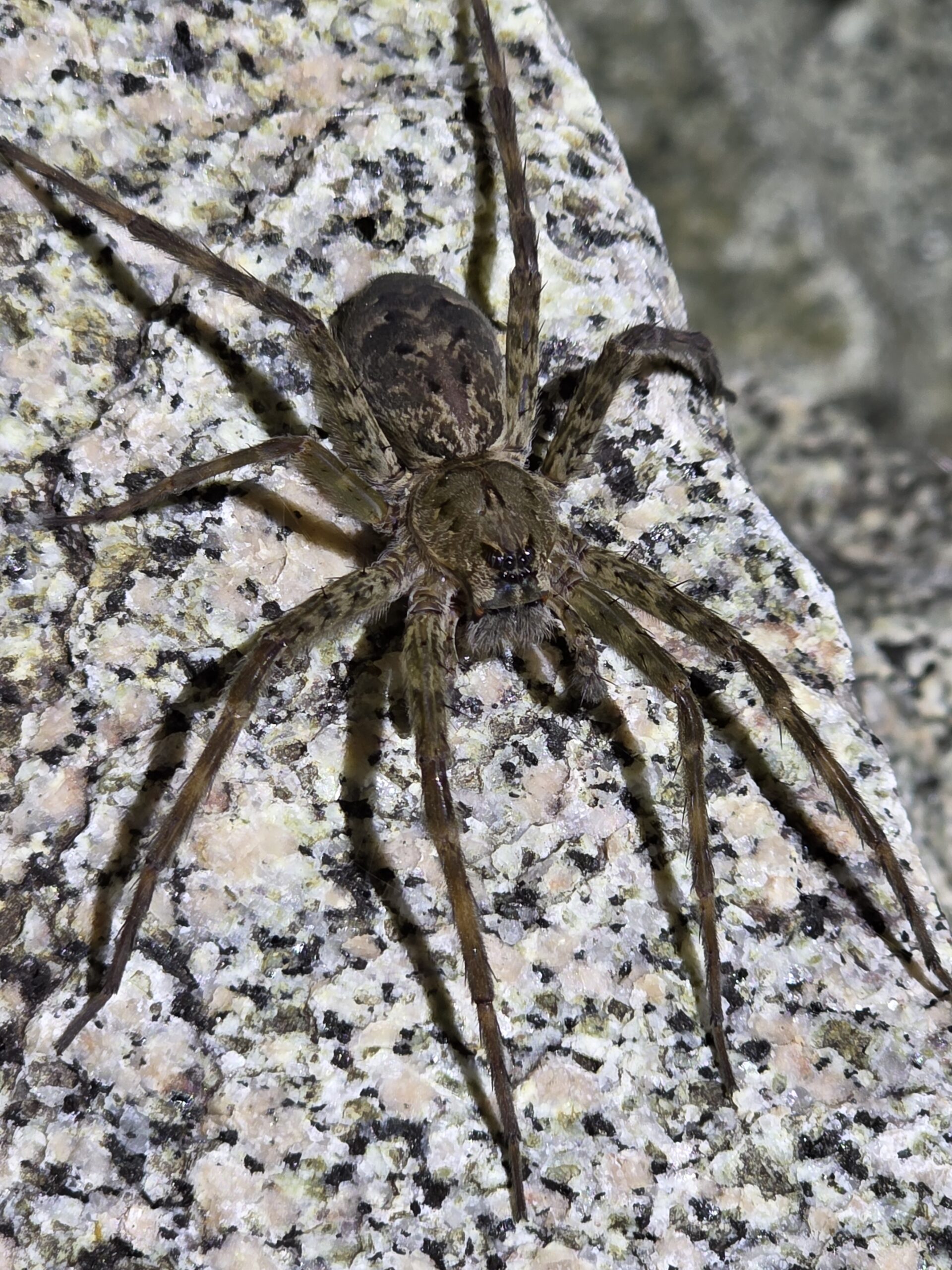
Image Credit: Dark Fishing Spider by Allison Bugarin.
Banner Image Credit: Wolf Spider Species by Allison Bugarin
Invasive Species in South Carolina: What Are You and Why Are You Here?
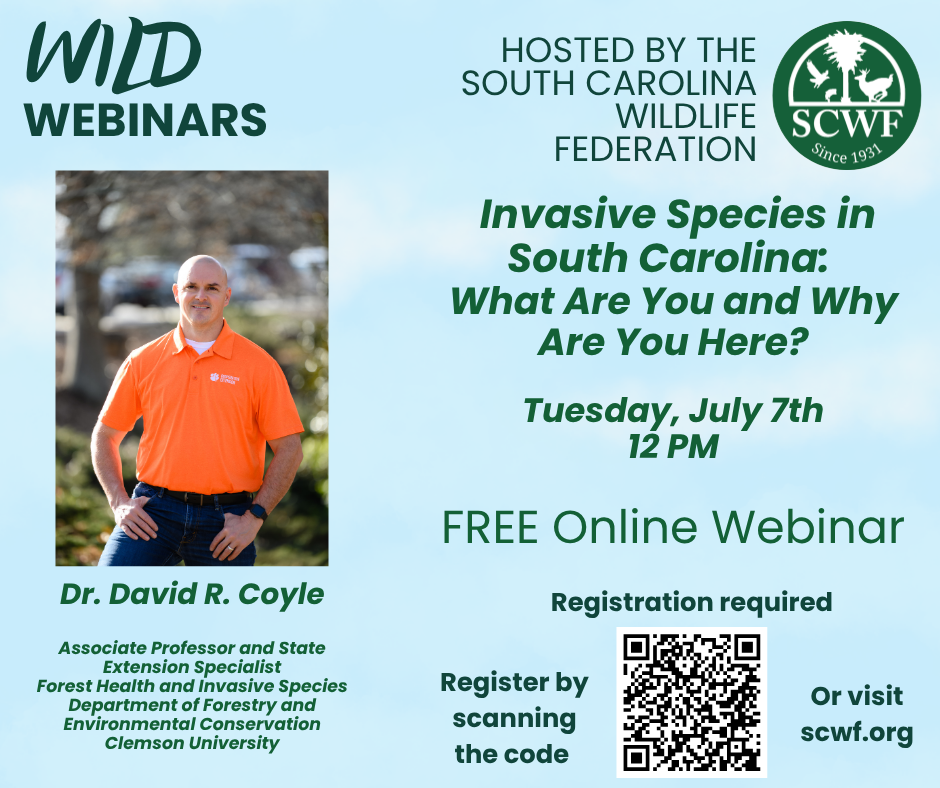
Many invasive species impact South Carolina’s natural and managed landscapes. This webinar will discuss how and why we have an invasive species problem, and participants will learn to identify common invasive animal species (vertebrates and invertebrates) found in the Southeast. We will discuss the impacts of these species, and also if there is anything we can do to help manage this problem.
Families Exploring Nature Day
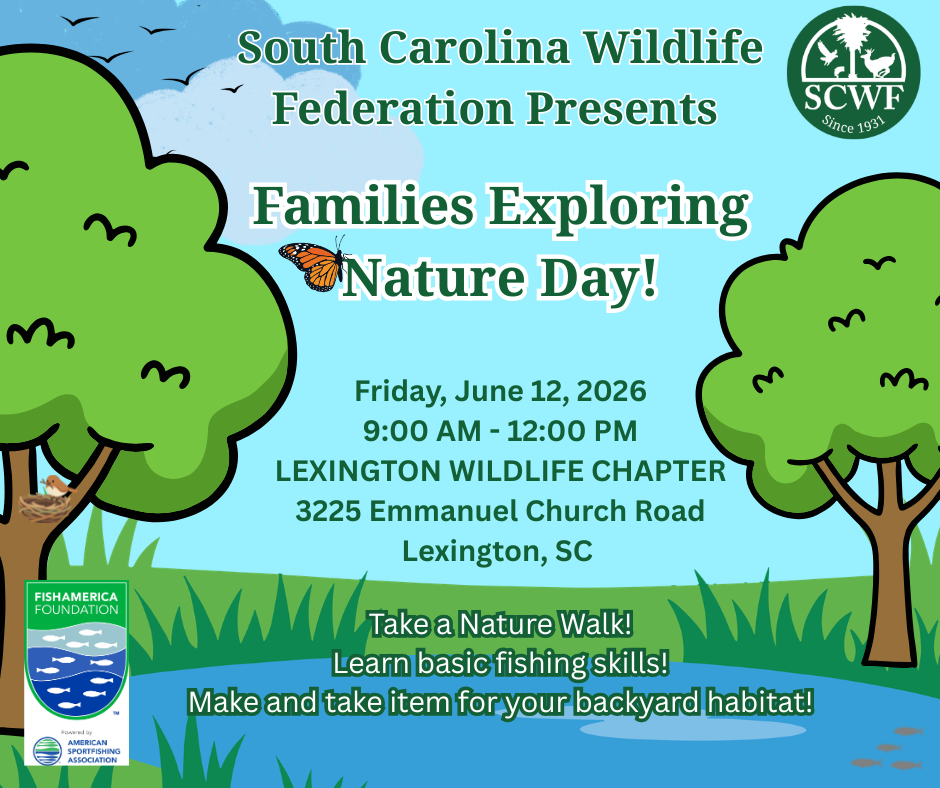
What is that bird? What kind of tree is this? Can we go fishing? Parents, do you get these questions all summer once school is out? We’ve got you covered! Register today for the South Carolina Wildlife Federation’s second annual Families Exploring Nature Day in Lexington, South Carolina!
Join our staff on a leisurely nature walk, learn the basics of fishing and try your luck in the pond, and make a take home item for your backyard habitat. This event will run from 9:00 AM-12:00 PM and registration is only $10 per person! Come explore with us!
Banner Image Credit: Little Birder by Amanda Johnson
Palmetto Pro Birders: Lake Murray Paddle
This class is full! Please add yourself to the waiting list here.
Join Jay Keck, SCWF’s Industry Habitat Manager, for a Pro Birder paddle at a beautiful, secluded cove on the northwest side of Lake Murray. We will kayak under a bridge that is home to hundreds of breeding cliff swallows and will get a great look at their clay nests built directly onto the bridge. It’s one of Jay’s favorite things to see on any of our trips!
On this trip, Jay will focus his efforts on a section of the creek that is below a canopy of river birch, tulip poplars, and Carolina willows. The shade will help us stay comfortable, and being among the trees will place us directly in the breeding habitat of some of the neotropical migrants that call South Carolina home during the summer months.
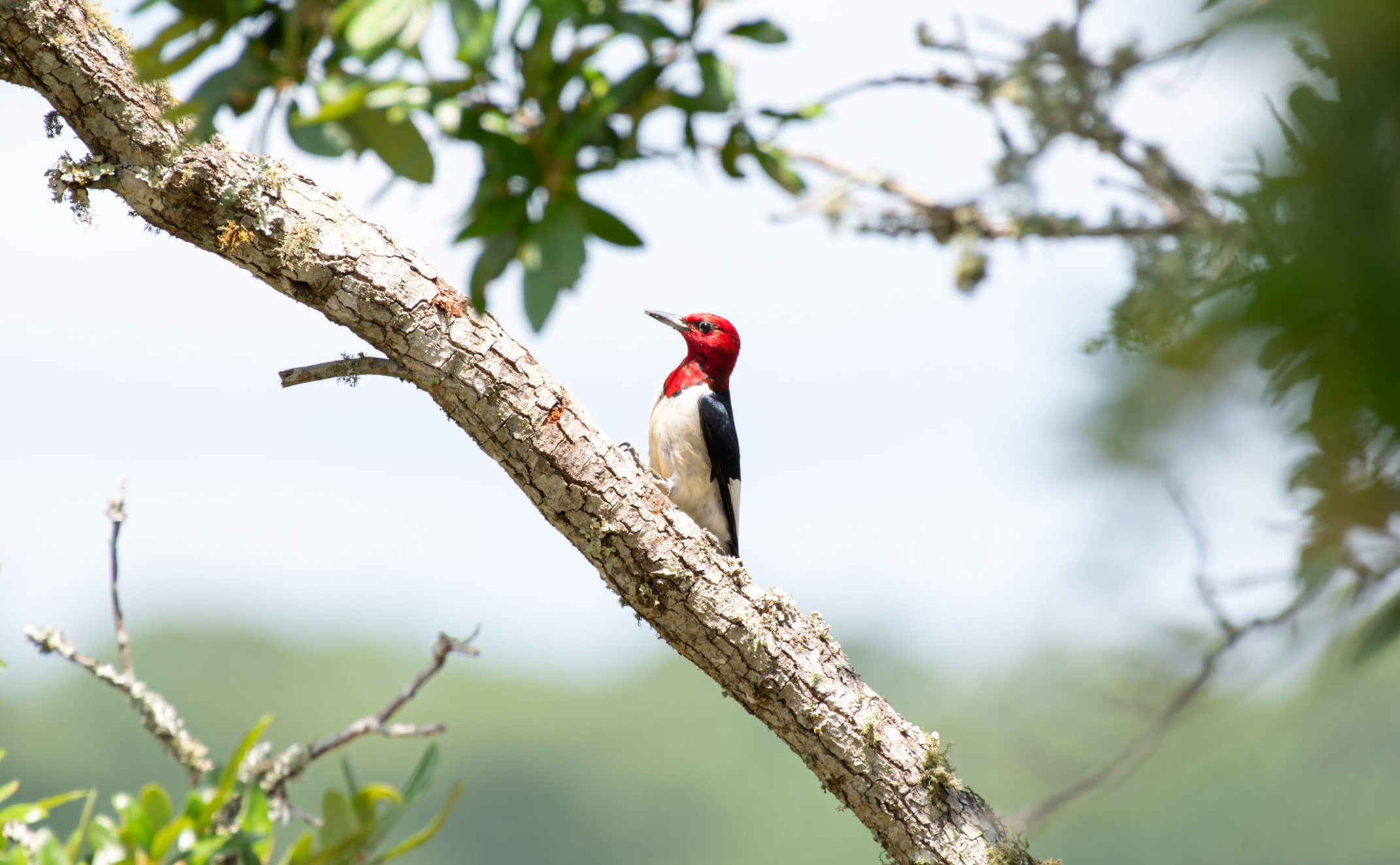
We will be on the lookout for species such as the belted kingfisher, red-headed woodpecker, yellow-billed cuckoo, and Kentucky warbler. On the fall paddle, we even saw a clapper rail at this location!
This paddle is limited to six guests, so register early to secure your spot.
Where: Prosperity (Crayne’s Landing)
When: Monday, June 11th at 7 am (Rain Date – June 12th.)
Who: This training is open to the public. No prior knowledge is required. Minimum age is 16. This training will count for one day toward Palmetto Pro Birder certification (8 days needed total).
Jay has been a passionate nature and bird lover since his early teens. He lives in Chapin, SC with his wife and two boys, and has identified 95 bird species in his yard in three years, as well as 160 species in Lexington county since moving back in September of 2013. He has viewed birds in Spain, Chile, Honduras, and Costa Rica, as well as many areas in SC from the mountains to the coast. Being inspired by SCWF’s mission, he earned his Palmetto Pro Birder certification, and has led bird walks for SCWF as well as Saluda Shoals park, Columbia Audubon, and private organizations. Even when he is golfing, hunting, or fishing, he is secretly birding. At SCWF, Jay coordinates the Wildlife And Industry Together (WAIT) program as well as leading birding classes for the Palmetto Pro Birder & Midlands Master Naturalist programs.
Other Important Notes:

• If available, please bring binoculars & your favorite field guide to Eastern birds.
• After registering, you will receive important correspondence via email. If you change your email between now and then, make sure to notify us.
Cost: The cost is $100.00 per person and limited to the first 6 people that register.
IMPORTANT: Participants should be in good physical shape for this paddle.
A
Featured Image Credit: Red-headed woodpecker by Amanda Johnson.
Banner Image Credit: Sad Shad by Brian Fox.
Palmetto Pro Birders: Birds of the Blackwater
This class is full! Please add yourself to the waiting list here.
Come be the FIRST to explore SCWF’s beautiful property in Sumter, SC, to look for colorful migratory birds like, scarlet tanagers, American redstarts, yellow-throated vireos, and maybe a Baltimore oriole or two. Jay Keck will be leading this bird-focused tour, but Allison Bugarin, SCWF’s Education and Outreach Manager, will be pointing out any of the amphibians and reptiles at this location, which is rich in biodiversity. The property is bordered by a wetland called Green Swamp, a black water stream and floodplain that has the potential to support prothonotary warblers, various owl species, and many other birds. As always, Jay and Allison will be pointing out the various native plants and any of the critters that may be feasting on, or hiding within them. Please join us on this first-ever class at our very own property! We look forward to seeing you there!
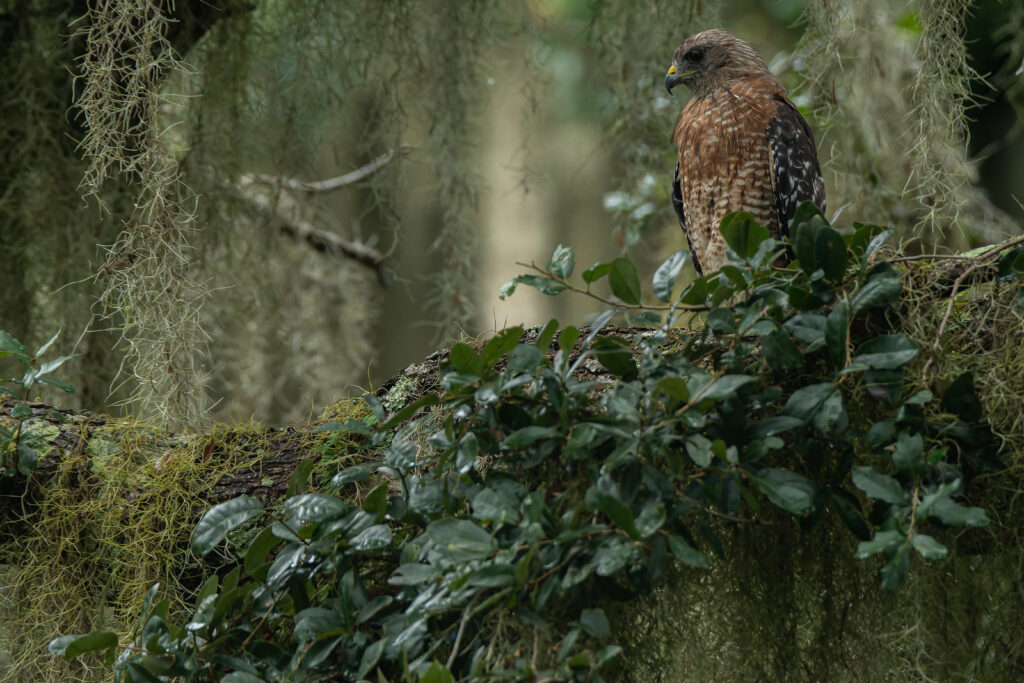
Image Credit: Searching for Dinner by James Davis featuring a Red-shouldered Hawk.
Image Credit: Atlantic Coast Slimy Salamander by Allison Bugarin
Where: Sumter, SC (SCWF Property)
When: Monday, May 4th from 7 am -11 am. (Rain Date – May 5th.)
Who: This training is open to the public. No prior knowledge is required. Minimum age is 16. This training will count for one day toward Palmetto Pro Birder certification (8 days needed total).
Jay has been a passionate nature and bird lover since his early teens. He lives in Chapin, SC with his wife and two boys, and has identified 95 bird species in his yard in three years, as well as 160 species in Lexington county since moving back in September of 2013. He has viewed birds in Spain, Chile, Honduras, and Costa Rica, as well as many areas in SC from the mountains to the coast. Being inspired by SCWF’s mission, he earned his Palmetto Pro Birder certification, and has led bird walks for SCWF as well as Saluda Shoals park, Columbia Audubon, and private organizations. Even when he is golfing, hunting, or fishing, he is secretly birding. At SCWF, Jay coordinates the Wildlife And Industry Together (WAIT) program as well as leading birding classes for the Palmetto Pro Birder & Midlands Master Naturalist programs.
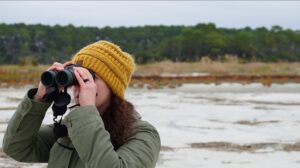
Allison Bugarin, SCWF’s Education & Outreach Manager. In this role, she manages education and outreach programs, including Palmetto Outdoor Women’s Retreat and the Midlands Master Naturalist program. Allison has been a passionate nature lover since her childhood. She fell in love with birds when she got the chance to monitor red-cockaded woodpeckers on a military base. She earned her Bachelors in Fisheries, Wildlife, and Conservation Sciences through Oregon State University. She lives in Eastover, SC, and has enjoyed observing birds throughout South Carolina. Allison has participated in bird monitoring, citizen science projects, and conservation work, and has viewed birds in multiple U.S. states and abroad. Even when she’s hiking, gardening, or exploring, she’s always watching and listening for birds.
Other Important Notes:
• If available, please bring binoculars & your favorite field guide to Eastern birds.
• After registering, you will receive important correspondence via email. If you change your email between now and then, make sure to notify us.
Cost: The cost is $75.00 per person and limited to the first 10 people that register.
IMPORTANT: Participants should be in good physical shape for this walk.
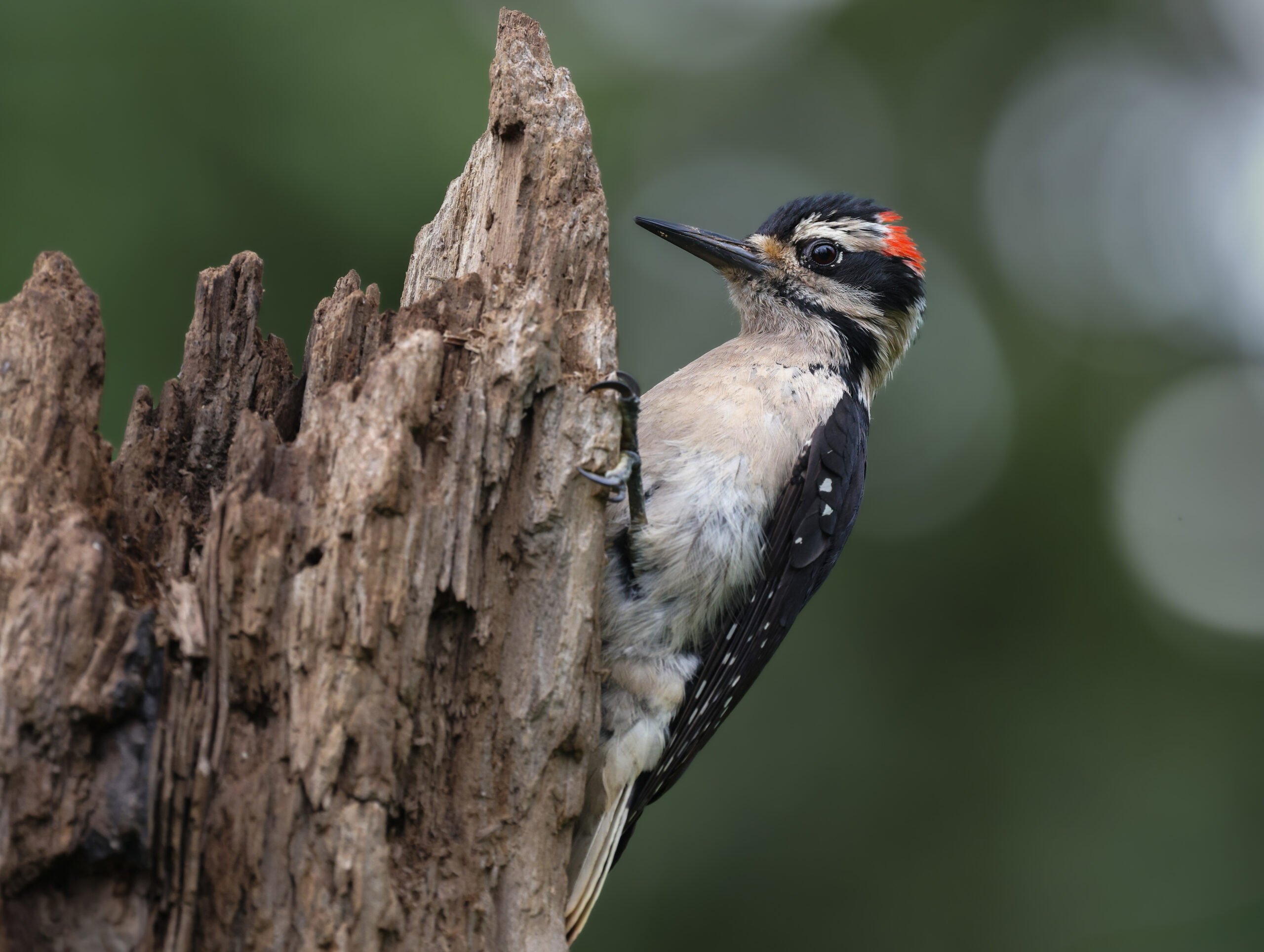
Featured Image Credit: Downy Woodpecker perched by Cassandra Elkins