Keep South Carolina Wild

WAIT Partner Update: Oshkosh Defense

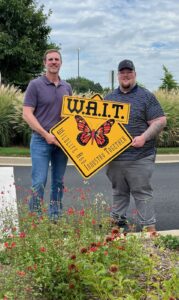
One of the greatest things we can see on a Wildlife And Industry Together or WAIT partner’s property are signs that wildlife has a place to feed and reproduce in a safe environment. Oshkosh Defense LLC in Spartanburg, SC, has developed such an area on part of its property for birds like red-winged blackbirds, Eastern bluebirds, and even the steeply declining loggerhead shrike, which has been seen in and around the parking lot feeding on the insects or other prey near the native plants that were installed to attract wildlife.

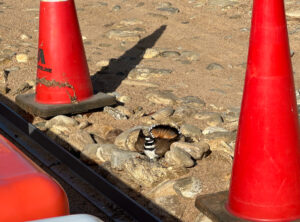
Image Caption: Killdeer on nest at Oshkosh Defense.

In a press release, Trent McJunkin, facilities and maintenance manager said: “Our intent is to turn our greenspace at the facility into a thriving habitat for native wildlife, supporting biodiversity, and a healthy ecosystem. Trent added that: “This effort not only helps wildlife flourish, but also increases efficiencies in groundskeeping, demonstrating that sustainability and operational effectiveness can go hand in hand.”


Why WAIT?

SCWF partners with conservation-minded businesses throughout the state who want to help wildlife thrive by enhancing their properties and providing educational opportunities for their employees and communities. Read more about the WAIT Program and how to join here.

Project Prothonotary Workshop

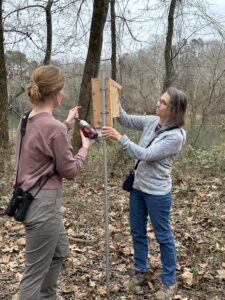
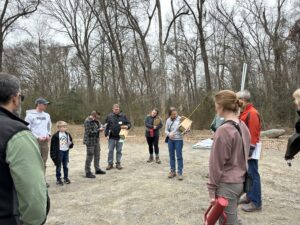
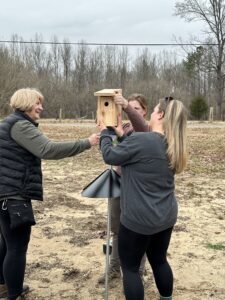
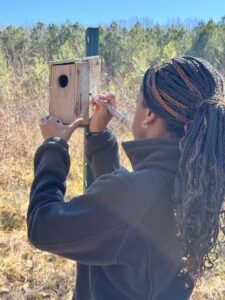
SCWF recently held a workshop for Project Prothonotary, an ongoing conservation effort to enhance habitat for a declining bird species known as the prothonotary warbler. This project focuses specifically on installing nesting boxes for prothonotary warblers in the Catawba-Wateree watershed of South Carolina. Hosted at the Catawba Nation, workshop participants learned about how to identify nests of certain species, bird breeding biology, and best practices for monitoring bird nests.

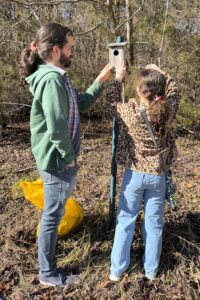
Volunteers were trained in nest box monitoring for prothonotary warblers and data collection using NestWatch. Starting in the spring, volunteers will begin checking nest boxes each week for signs of nesting activity! To learn more about Project Prothonotary, visit https://www.scwf.org/projectprothonotary/


Thank you to Duke Energy for sponsoring this workshop and for making this project possible!

Volunteer Day at Camp Discovery

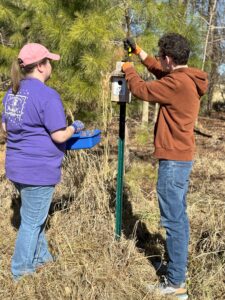
Thank you to the 25 volunteers who showed up on Saturday, February 1st, to help Eastern bluebirds at Camp Discovery in Blythewood, SC! Camp Discovery’s mission is to engage and inspire through discovery in science and nature. On their 116-acre property, Camp Discovery has about 30 nesting boxes for bluebirds.

SCWF staff and volunteers go out each year to clean these boxes, reduce vegetation, and record the data. This is important to do because Eastern bluebirds will not nest in boxes if they contain old nests or debris.

Thank you to the Columbia Star for your article about this volunteer day!

Project Prothonotary: Restoring Bird Nesting Habitat in the Catawba-Wateree Watershed

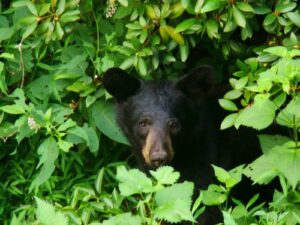
Black bear by Ann Timberlake.

FOR IMMEDIATE RELEASE: The U.S. House of Representatives has voted to pass the Recovering America’s Wildlife Act, a bill to prevent wildlife extinctions by funding locally-led conservation efforts. If it becomes law, South Carolina will receive $14 million each year to help hundreds of species in need, including bobwhite quail, gopher tortoises, black rails and loggerhead sea turtles.

“This is the most important piece of wildlife legislation in the past fifty years,” said Sara Green, executive director of the South Carolina Wildlife Federation. “Wildlife in South Carolina and across the country are in crisis and this bold, bipartisan bill will tackle the problem at scale without new taxes or regulations.”

Funding from the Recovering America’s Wildlife Act will be used to implement the Congressionally-mandated state wildlife action plans, which identify more than 12,000 wildlife and plants that need conservation assistance nationwide.

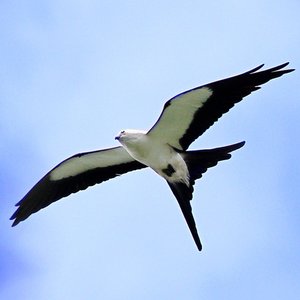
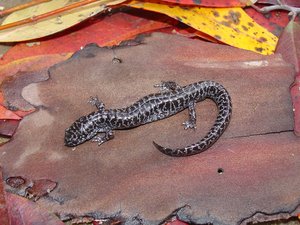
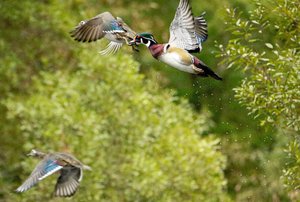
Image Credits L to R: Swallowtail Kite by Ross Appel; Flatwoods Salamander by Dike Stevenson; Swallowtail Kite by David Dial; Wood Duck by Joseph Dress.

“The bipartisan passage of the Recovering America’s Wildlife Act affirms that there is consensus across the political spectrum that we can, and we must, prevent extinctions from our backyards to the backcountry,” said Collin O’Mara, president and CEO of the National Wildlife Federation. “Inaction is the ally of extinction, and the time to act is now.”

The bill will also dedicate $97.5 million annually to fund proactive wildlife conservation efforts led by Native American Tribes. The nation’s 574 federally recognized Tribes manage tens of millions of acres of land nationwide with limited federal funding for conservation efforts.

“Tribes have thousands of years of traditional knowledge and a vested interest in solving the biggest challenges facing our fish and wildlife. The missing piece of the puzzle is adequate, sustained resources to build tribal capacity and support their conservation efforts,” explains Gloria Tom, Director of the Navajo Nation’s Fish and Wildlife Department. “The Recovering America’s Wildlife Act would be an unprecedented step in providing those resources and rectifying historic funding inequity and injustice.”

The bill has strong bipartisan support in the Senate, with 35 cosponsors including Senator Lindsey Graham. The Senate bill would be paid for out of federal environmental penalties.

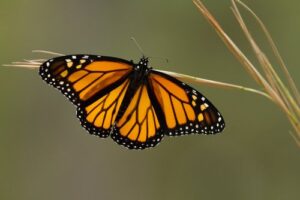
Monarch by Teri Carter.

“I want my children and grandchildren to be able to hear the song of the meadowlark and to see monarchs in their backyard, the way I did growing up. Senator Graham and Senator Scott should do everything they can to champion this historic legislation and get it over the finish line this summer,” said Green.

Bull Point Celebrates Certification as a Community Wildlife Habitat

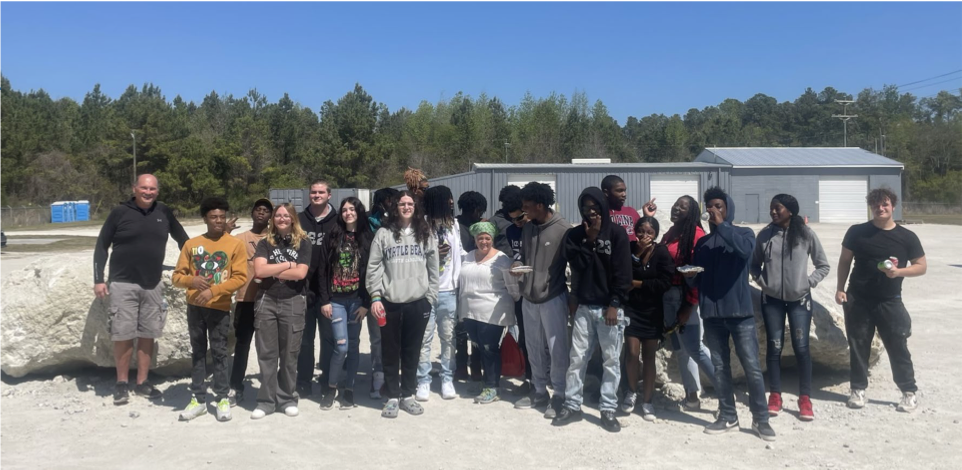
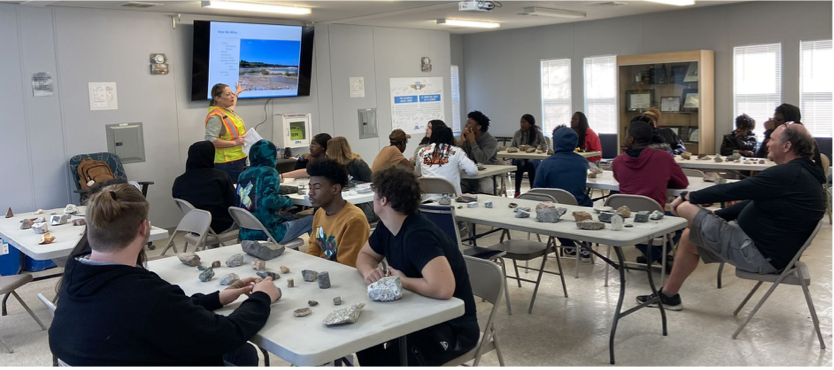
The team at Martin Marietta’s Berkeley Quarry goes above and beyond to educate local students and the community about the natural history of the Cross, South Carolina area, and how the quarry functions while respecting our natural resources.

Combined with numerous field trips, which include visits with local schools, gem and mineral clubs and community organizations, Berkeley Quarry’s crew educates close to 1,000 people annually, sharing information about a little known underground world that is normally hidden from view. Fossil collecting, geode breaking stations, a child mining area, quarry tours and geology lessons are among the activities that visitors enjoy while learning from the site’s knowledgeable and talented team members.

In addition to the geological interests of the area, habitat creation and preservation is important to Martin Marietta as well. Working with the South Carolina Department of Natural Resources and American Forest Management, the Berkeley Quarry team has set aside several hundred acres of forested land that is intended to preserve habitat for both birds and animals. Wood duck boxes have also been installed on the grounds, and the area is regularly patrolled by a bald eagle that glides through the skies in search of prey.

Through community education, wildlife habitat creation and sustainable practices, Martin Marietta exemplifies how a large corporation should operate in an ecologically responsible way.

We hope this approach continues for years to come!

Why WAIT?

SCWF partners with conservation-minded businesses throughout the state who want to help wildlife thrive by enhancing their properties and providing educational opportunities for their employees and communities. Read more about the WAIT Program, and how to join here.