Keep South Carolina Wild

Carolina Bay Workshop

This one-day class will focus on Carolina Bays, unique anomalies present in the Sandhills and Coastal Plain. These odd depressions in the landscape have puzzled naturalists for many decades. They host an important and unique ecology because of their hydrology. While isolated from any tributaries, bays often hold water in winter and spring, then drying by mid-summer. Many plants and animals have come to specialize in these conditions. Savage Bay presents a unique opportunity for observation because of its accessibility and the beautiful pond cypress savanna within.

The trail to the bay will take us through a Sandhills scrub oak forest. We’ll explore Sandhills plants including the four scrub oaks. TLC had a song about scrubs, you know. They didn’t “want no scrub,” but I love scrubs, so we’re going to talk about them. Other common plants are poison oak, persimmon, and sandhills hawthorn. With any luck, a few fall wildflowers will still be blooming.

Before entering the bay, we’ll discuss various hypotheses for the formation of these features before narrowing down the explanations to the one currently most supported by scientific evidence. I’ll hold you in suspense until then. I will also explain the ecological importance of Carolina bays, with examples from the scientific literature and a discussion of their current level of protection.

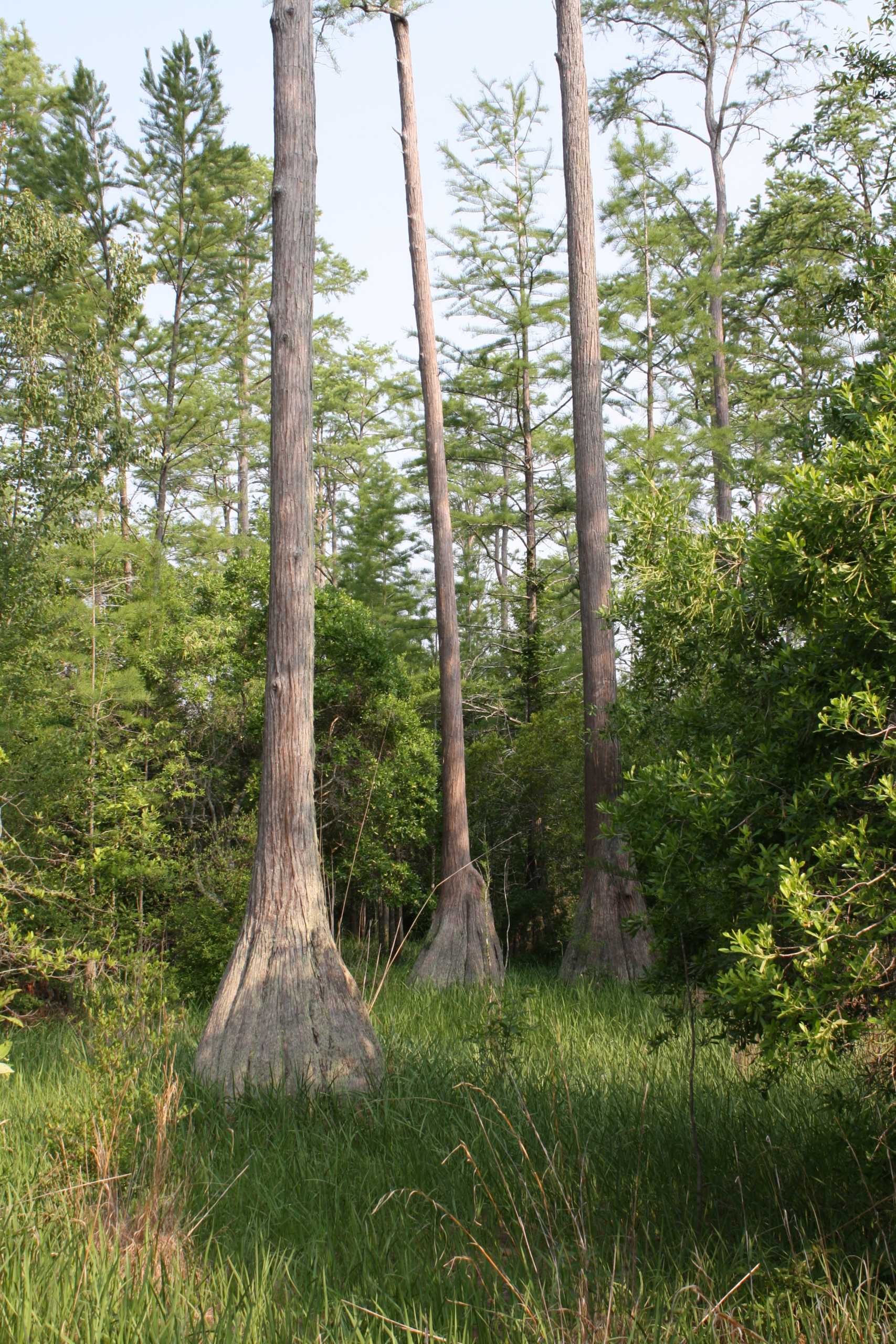
Along the bay border, we will explore a pocosin plant community, host to species such as redbay, sweetbay, fetterbush, titi, and gallberry. The middle of the bay opens up into a picturesque plant community known as the pond cypress savanna. In addition to the pond cypress and water tupelo, we’ll see honeycup (Zenobia) and pondspice (Litsea), a rare shrub in South Carolina.

While the Sandhills grow more silent in the fall, animals will also be addressed, especially those unique to this ecoregion. Bird species associated with these Sandhills include brown-headed nuthatches, chipping sparrows, and pine warblers.

We’ll travel around the block to Goodale State Park for a late lunch, some prize giveaways, and a walk by the water before our day concludes.

This training will begin at Savage Bay Heritage Preserve. We will email more specific directions before the trip. In the meantime, more information about the site can be found here: Savage Bay Heritage Preserve.

When: Tentative date is Wednesday, June 17, 2026; We will start at 9 AM. The day will conclude between 2 and 3 PM.

Who: This training is open to the public. No prior knowledge is required. Minimum age is 16. Participants will receive city info of other participants to encourage carpooling.

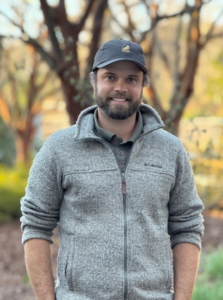
This class will be taught by Austin Jenkins, who teaches and facilitates the popular Midlands Master Naturalist class for the South Carolina Wildlife Federation. Jenkins teaches Natural History of South Carolina at USC Sumter.

IMPORTANT: Participants should be in good physical shape. Savage Bay has relatively flat terrain, but we may cover some distance. Savage Bay does not have trails, so we will be walking through vegetation and on uneven ground. You should be prepared to possibly encounter briars, mosquitoes, chiggers, and ticks. Poison ivy is present in the bay.

Cost: The cost is $75.00 per person.

To ensure a quality experience for all, space is strictly limited to 15 participants. Classes fill quickly, register today! After registration, you will receive an email with lodging recommendations, directions, and any other details pertinent to the class.


Other Important Notes:

• If available, bring binoculars.
• Restrooms are not available at Savage Bay Heritage Preserve. It is best to leave early enough to stop at a restroom before 9 AM. Otherwise, the woods are available. There are restrooms at Goodale State Park.

• Participants should bring a bag lunch and water and be prepared for a day in the field.

• There is no rain date for this event. I will make every effort to hold it, even in a few rain showers. If the weather or conditions necessitate cancellation, I will notify you and refund your money.

• After registering, you will receive important correspondence via email. If you change your email between now and then, make sure to notify me.

• The bay is typically dry this time of year, but the soil could be mucky in some parts of it.


Day of the Dragon

Join us for an investigation into the exciting natural history of dragonflies and damselflies! These majestic creatures grace our waters on the wing throughout the summer in South Carolina, where we boast over a hundred species that come in all shapes, sizes, and incredible colors.

Goodale State Park, in the heart of the South Carolina Sandhills, is bursting with a bountiful regiment of these regal creatures. During our day, we’ll analyze each part of the dragonfly, from the eyes to legs to the wings to the tail, investigating the related biology of each aspect. We’ll mosey down to the aquatic habitats the dragons call home. This includes a large millpond that hosts a large number of skimmers, pennants, and pond damsels. We’ll also investigate the backwoods, where the running water gives rise to a completely different assemblage of dragons and damsels, to include jewelwings, rubyspots, and several dancer species.


In addition to surveying the sky, we’ll use the dip nets to capture larval dragonflies and damselflies, examining their differences and underwater lifestyles along with the associated biota with which they coexist. Dragonfly life also demands diverse aquatic vegetation, and we’ll discuss several of these plant species and the important strata they form upon the water.

By the end of the day, you’ll be able to:
1. Discuss the connections between form and function of dragonfly anatomy
2. Successfully identify several species of dragonflies and damselflies
3. Understand the variety of ecological requirements needed to support dragonfly life
4. Predict species assemblages associated with particular aquatic habitats

Where: This training will take place at Goodale State Park just outside of Camden, South Carolina. Meet at Picnic Shelter 1. Enter the park and just keep driving. Go past the community building, past the ranger station, and around the bend where dragonflies dwell. The website, which includes directions, can be found by clicking here.

When: Wednesday, June 10. We will meet at 9:00 AM. The day will conclude sometime around 2:00 PM.

Who: This training is open to the public. No prior knowledge is required. Minimum age is 16. For SC Master Naturalists who have not taken a dragonfly course, this event can count as Advanced Training (4.5 training hours) and towards your statewide certification if you need a Sandhills component. If you are not a Master Naturalist, just come have fun with us. Participants will also receive contact info of other participants to allow for carpooling to the park.


This class will be taught by Austin Jenkins, who teaches and facilitates the popular Midlands Master Naturalist class for the South Carolina Wildlife Federation. Jenkins teaches Natural History of South Carolina at USC Sumter.

IMPORTANT: Participants should be in good physical shape. We will be outdoors during the whole class, and it may be HOT. In addition, we will be on our feet most of the day.

Cost: The cost is $75.00 per person.

To ensure a quality experience for all, space is strictly limited to 20 participants. Classes fill quickly, register today! After registration, you will receive an email with lodging recommendations, directions, and any other details pertinent to the class.

Other Important Notes:

Restrooms are available at the park.

Participants should bring a bag lunch and water and be prepared for a day in the field.
There is no rain date for this event. We will make every effort to hold it, even in a few rain showers. If we can’t make it happen due to weather or some other situation, we will refund your money.

After registering you will receive important correspondence via email – if you change your email between now and then, make sure to notify us.


If available, please bring binoculars and a hand lens. If you have a dragonfly book, bring it, but this is not required or necessary. Otherwise, we will have several copies of field guides so that you can choose one for future studies. Feel free to bring an insect net if you have one. Otherwise, we will have some available.

SCWF reserves the right to cancel any event, due to unforeseen circumstances, extreme weather, low registration, or guidance from local/state officials. Any cancellation by SCWF will result in a full refund for all registrants.

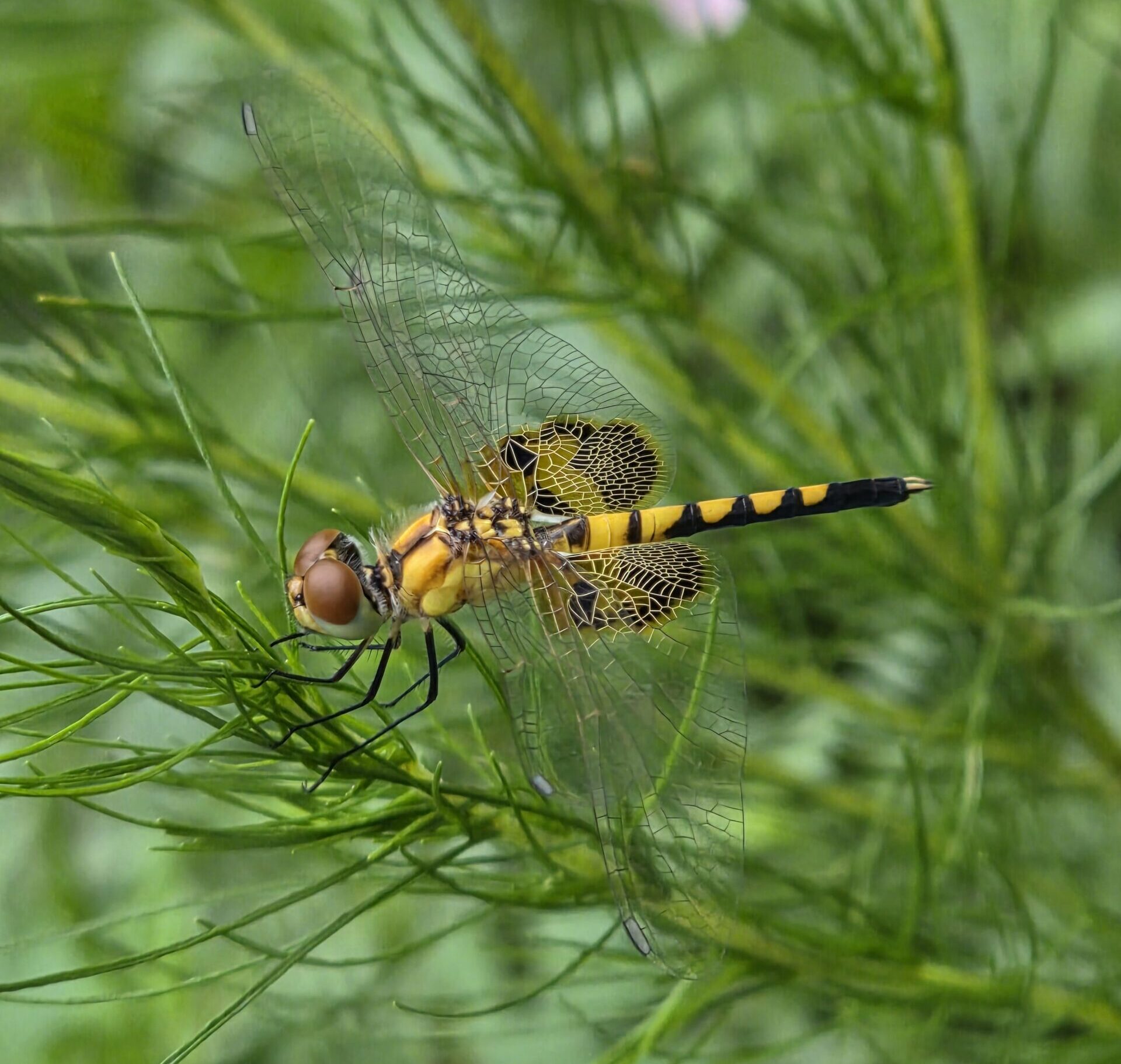
Featured Image Credit: Amanda’s Pennant by Allison Bugarin.

Banner Image: Eastern Pond Hawk by Allison Bugarin.

Field Herpetology

Spend a day in the field discovering what it means to be a herpetologist! This hands-on program focuses on reptiles and amphibians—some of the most fascinating and elusive species in our region. Both groups play key roles in ecosystem health and serve as excellent environmental indicators. During the day, you’ll learn about field methods researchers use to monitor these species and gain experience applying techniques such as aquatic trapping and coverboard surveys. Along the way, we’ll encounter the incredible diversity that defines our local herpetofauna.

The workshop takes place at Salleyland, a private property owned by the Gibbons Family. The site features a rich mix of habitats, from flowing blackwater creeks to managed upland pine forests. The Gibbons Family generously opens the property to environmental groups and educational programs as part of an ongoing effort to document the species found there. All species observations from this course will contribute to that inventory.

Be prepared for a true field experience—expect hot, muddy conditions and several hours of walking (approximately 2+ miles) through varied terrain. Long pants and knee-high boots or shoes that can get muddy are required. Bring plenty of water and snacks, and consider packing a change of clothes. We’ll wrap up the morning with a group lunch and discussion of our findings. Please pack your own lunch if you plan to join for this portion of the day.

Instructor: This class will be led by Jake Zadik, a naturalist and biologist based in the South Carolina Lowcountry with a lifelong passion for herpetology. Jake collaborates with local communities to provide natural history programs, conduct field research, and offer guidance on land and habitat management. Throughout his career, he has worked closely with the region’s diverse reptile and amphibian species—as well as many other taxa—with current projects focusing on Copperheads and Diamondback Terrapins.

Jake is an active instructor with the Charleston Master Naturalist Program, where he leads the herpetology portion of the course. In 2018, he co-founded the South Carolina Herpetological Society—an effort that has since grown into South Carolina Partners in Amphibian and Reptile Conservation (SCPARC), where he continues to serve as co-chair.


IMPORTANT: Participants should be in good physical shape. We will be outdoors during the whole class, and it may be hot. In addition, we will be on our feet most of the day.

Cost: The cost is $75.00 per person.

To ensure a quality experience for all, space is strictly limited to 12 participants. Classes fill quickly, register today! After registration, you will receive an email with lodging recommendations, directions, and any other details pertinent to the class.
Other Important Notes:

  • Participants should bring a bag lunch and water and be prepared for a day in the field.
    There is no rain date for this event. We will make every effort to hold it, even in a few rain showers. If we can’t make it happen due to weather or some other situation, we will refund your money.

  • After registering you will receive important correspondence via email – if you change your email between now and then, make sure to notify us.

SCWF reserves the right to cancel any event, due to unforeseen circumstances, extreme weather, low registration, or guidance from local/state officials. Any cancellation by SCWF will result in a full refund for all registrants.

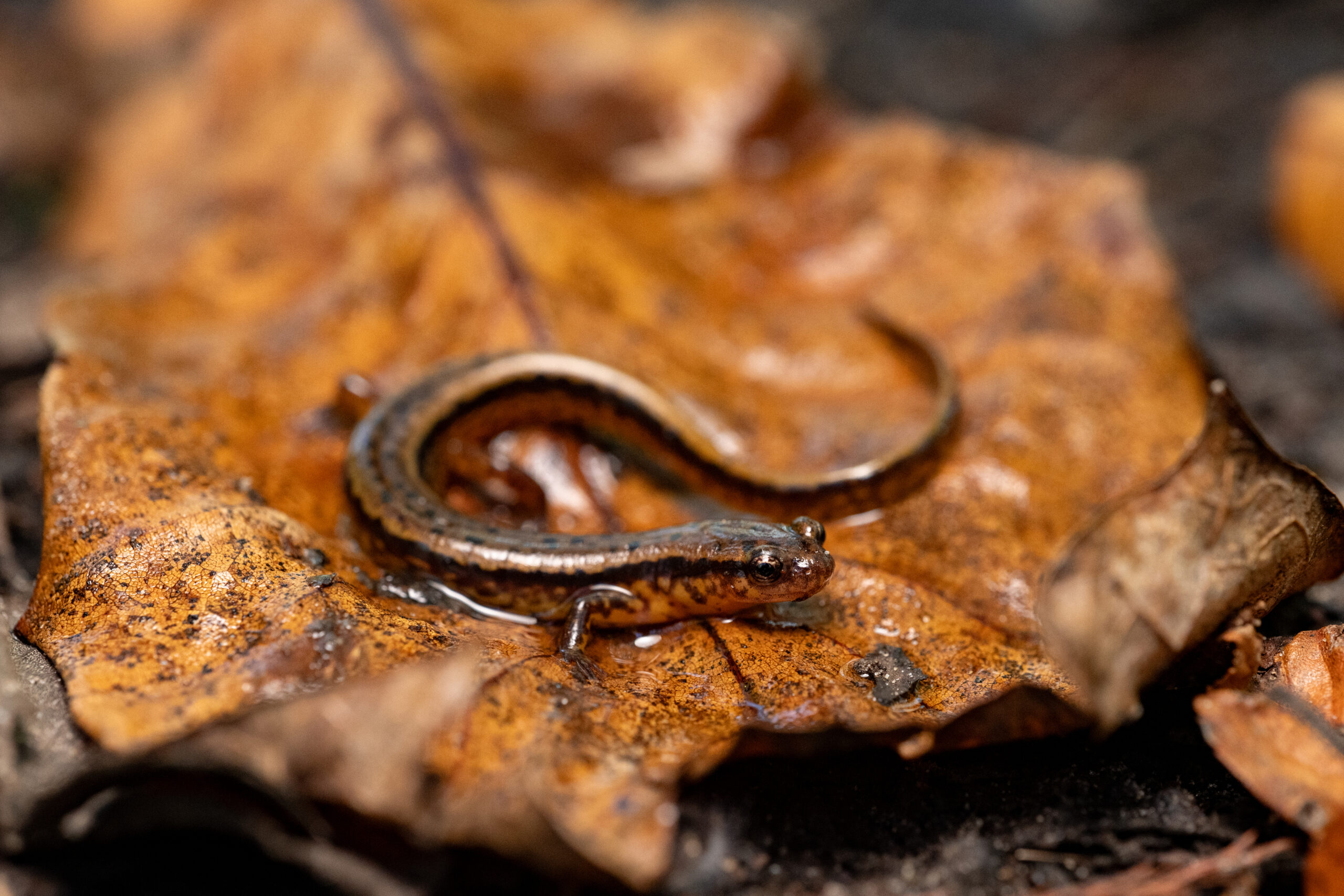
Featured Image Credit: Southern two-lined salamander by Jake Zadik.

Banner Image Credit: Timber rattlesnake by Jake Zadik.

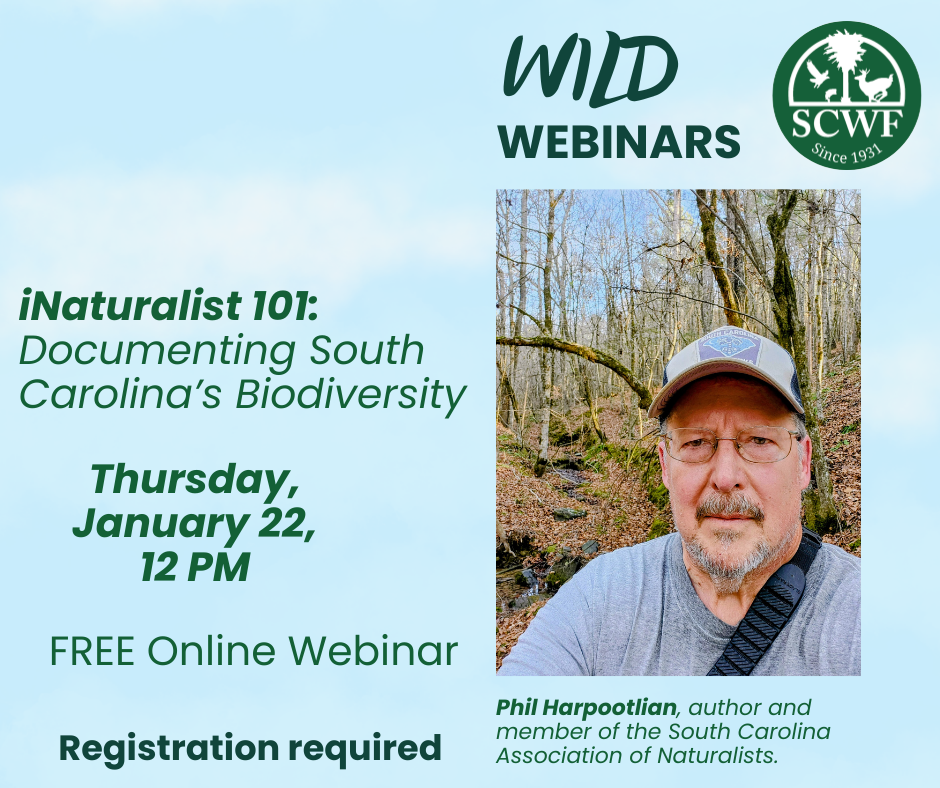
iNaturalist 101: Documenting South Carolina’s Biodiversity

Would you like to learn more about iNaturalist? If so, join us on Thursday, January 22 at noon for a webinar with Phil Harpootlian, who is a retired electrical engineer and lifelong naturalist with a deep focus on South Carolina’s biodiversity. He is the author of two Clemson University publications on South Carolina scarab and jewel beetles, as well as several peer-reviewed journal articles. A longtime member of the South Carolina Association of Naturalists, Phil currently concentrates on documenting species across the state through iNaturalist. He has created over 100 iNaturalist projects covering South Carolina’s state parks, heritage preserves, state and national forests, and local parks, helping make biodiversity data more accessible to researchers and the public.