Calling all local artists! The South Carolina Wildlife Federation is launching our fifth statewide art contest to design the menu art for our 2025 Forks, Knives, & Spoonbills conservation dinner series. For these events, SCWF partners with local chefs throughout the state to create culinary dining experiences themed around imperiled wildlife species.
The winner of the art contest will have their art featured on each menu of the dinner series. The first dinner is scheduled for March.
Local artists are encouraged to submit an image file of their design that includes all six of the wildlife species that will be featured in the 2025 dinner series (see below).
Please see below for this year’s featured species.
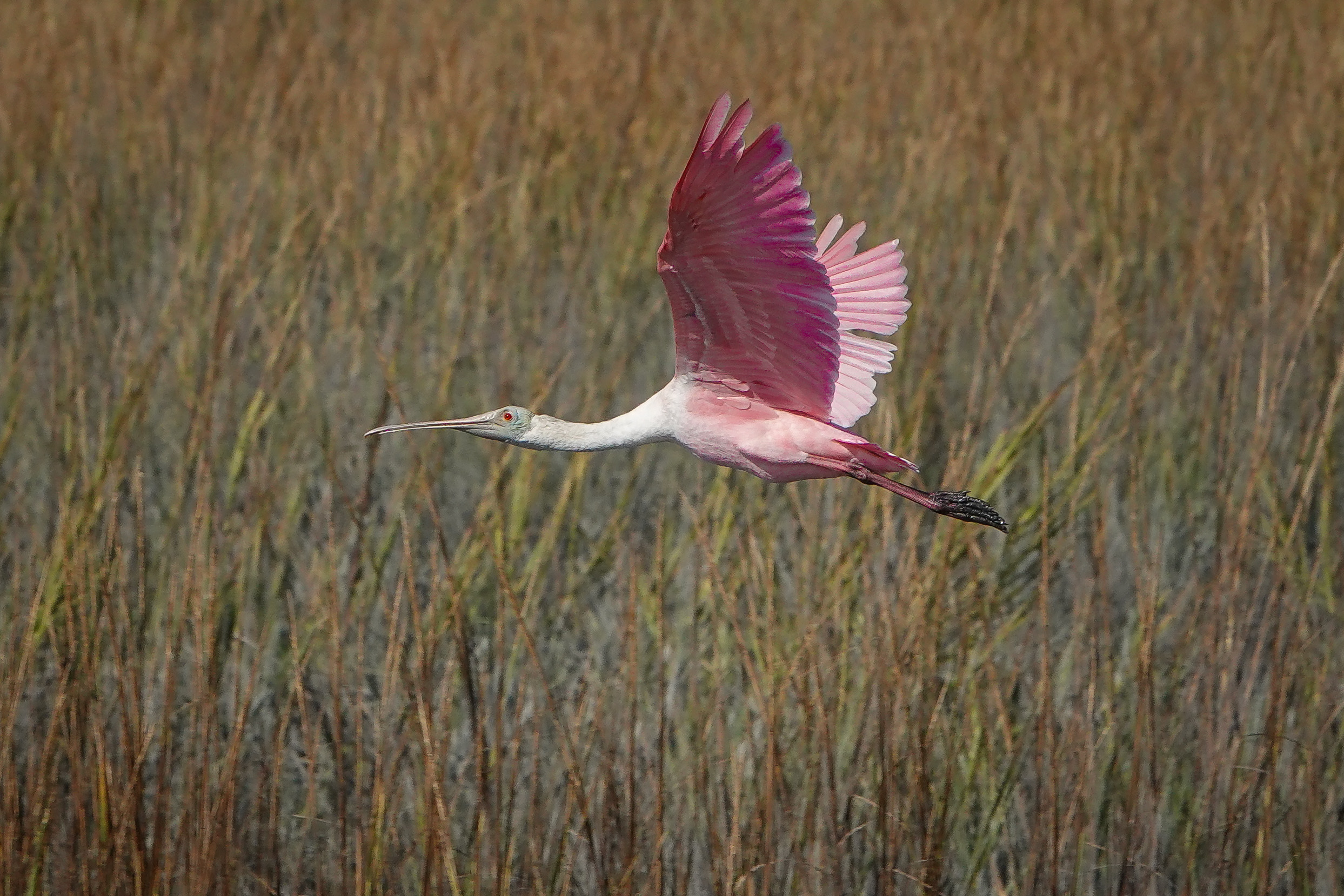
1. Roseate Spoonbill: Increasing after almost disappearing from the US in the early 1900’s.
South Carolina’s only pink bird, some people confuse it with a Flamingo at first sight. The color comes from the foods they eat, which include crustaceans, and other aquatic invertebrates, though they’ll also eat fish. The bill is long and flat and wide at the end, similar to a wooden spoon one would use in the kitchen while cooking. It’s a coastal bird that has increased its population in SC after almost being hunted to extinction in the late 1800’s and early 1900’s.

2. Cerulean Warbler: 50-year decline of 63%
This species can be found in the Appalachian mountains in large tracts of forests with tall trees. Unfortunately habit like this in the US has declined, but wintering habitat has also declined, contributing to its significant reduction in population. One of the mnemonics for this bird is “burr, burr, burr, I’m gonna freeze!”, which helps one find the bird while traveling along the Blue-Ridge Parkway during early summer. The male has a bright blue back with a blue neck band and black streaking on its sides.

3. American Redstart: Population is declining in the US but increasing in Canada.
This bright orange, black, and white bird can take people by surprise when it’s first seen. Often called the “Halloween bird” because of its coloration, it is rarely seen on October 31st, as most have flown back to their wintering grounds in Mexico, Central and South America. Though they feed on insects during the breeding season, they include fruits and berries in their diet during late summer.

4. Golden-crowned Kinglet: 50-year decline of 32%
This energetic and beautiful bird visits SC in the winter time when many of the other colorful songbirds have left for the tropics. The two black lines on the top of its head border a lemon-yellow crest that it can raise and drop depending on its mood. Though small, these birds are tough, and have been seen wintering in areas where nighttime temperatures can reach -40 degrees Fahrenheit.

5. Belted Kingfisher: 50-year decline of 38%
These widespread stocky birds have a shaggy blue crest on their large heads. The male and female both have a blue breast band, but only the females have the rusty band on their belly. It can be found throughout the state in lakes, marshes, swamps, ponds, and many other wet areas that have an abundance of aquatic food. Fish, crayfish, and other aquatic animals are usually on its menu. These long-distanced wanderers have even been seen in Iceland, the Azores, Greenland, the Netherlands, and even Hawaii.

Image credit: Belted Kingfisher by Kailey Bugarin.
6. Canada Warbler: 50-year decline of 62%
Canada Warbler males are steely grey on the back and bright yellow below, with a dark black “necklace”. They travel 3,000 miles to the US and Canada from their wintering grounds in Colombia, Venezuela, Bolivia, and Peru. You can find them breeding in shrubs, ferns, or rhododendrons, below the forest canopy in the Appalachian mountains of the Southeast.

Eligibility
Artists must be residents of South Carolina; there is no age restriction or registration fee. Artwork must contain all of the species represented in the 2025 dinner series. SCWF employees or board members or their immediate family members are not eligible.
Sizing: Artwork submitted can be vertically or horizontally oriented. The design will be printed on a card that is 5.5” wide x 8.5” long.
Judging
The judges are made up of the SCWF staff. Decisions of the judges are final. Notification will be sent by e-mail after judging is complete.
Prizes
The winner’s art will be featured on the menus of the 2025 Spoonbills dinner events. They will also have a choice of accepting a $100 cash prize or two tickets to one of the dinner events ($300 value).
Note regarding event tickets: There is a vegan option available at each event. Alcohol is included with the meal, so all attendees must be at least 21 years of age.
Dates
Entries must be postmarked or emailed no later than 11:59 pm on February 19th. Winners will be notified by March 3rd. All art submitted will be posted online.
Where to Send Entries:
Send via email to: mail@scwf.org. Questions? Contact SCWF at (803) 256-0670.


 Cost: The cost is $100.00 per person and limited to the first 15 people that register.