SCWF lost a dear friend over the weekend – Dan Turpin was the founder of the Women’s Outdoor Recreation Retreats (now known as Palmetto Outdoor Women’s Retreats/POWR) and was our fearless Retreat leader for decades.
Dan was passionate about the program because he knew many women didn’t otherwise have the opportunity to learn outdoor skills. The program had such demand that we’d fill 200 spots in a matter of hours and have a long waiting list. With his meticulous caring effort over the years, thousands of women were introduced to outdoor recreation and gained valuable skills, in a fun and inclusive setting.
For all his work on the Women’s Outdoor Recreation Retreats, SCWF presented him with the 2006 Outdoor Ethics Conservation Award.
He will be greatly missed by all who had the pleasure to know him, and by all who have benefitted from his many many hours of work for this program.
His service will be held Friday, January 9th at Caughman-Harman Funeral Home in Lexington, SC. Visitation will be at 10am, with the service at 11am.
In lieu of flowers, our family asks that you consider donating to two causes close to his heart:
The Michael J. Fox Foundation for Parkinson’s Research www.michaeljfox.org
and
the South Carolina Wildlife Federation www.scwf.org
I recently opened the door to my garden shed and encountered a squirrel, busily chewing away on a support beam. We were both quite surprised to see each other, and she panicked and started zigzagging all over the shed, knocking things over everywhere she went. I opened the door wider for an escape route, but she eventually escaped through the hole that she had made that morning to gain entry. As I was picking up all of the tools now strewn about, I thought about her trying to find a warm safe shelter and how all wildlife are constantly dealing with new threats while just trying to survive.
Clear-cutting with noisy machinery causes wildlife to have to venture away from their normal range, crossing dangerous roadways, with no guarantee they will find another suitable habitat. Waterways carry runoff chemicals, sediments and litter across our state. Wetlands are being filled in and built upon, and many amphibians and reptiles aren’t able to move to another area as easily as birds and mammals. Meanwhile, regulations meant to protect habitat are being dismantled.
It all seems overwhelming, but we constantly meet people who are very passionate about making a positive impact for wildlife. People like you who join with us to continue working hard to increase our impact. It might be planting native plants in your backyard, picking up litter, participating in citizen science activities, calling your representatives at the state or national level, drinking shade-grown bird-friendly coffee, using reusable grocery bags and water bottles, or other small actions which are amplified when we all work together. Of course, donating to SCWF helps us continue upholding protective regulations and working to conserve lands and waterways for wildlife habitat.
Please consider a donation now to help us continue our mission to conserve and restore South Carolina’s wildlife and their habitat through education and advocacy.
All donations stay in South Carolina, are tax-deductible and fully support our mission.
For 94 years, SCWF has offered many ways for you to connect with nature, learn new skills, and take action in your community. We hope you will join us in the coming year to increase our impact for wildlife together.
Sara Green Executive Director
Our Impact
5,000 packets of free native milkweed seeds distributed to SC households for monarch butterfly habitat conservation!
3,040+ learners reached through educational classes and trainings.
100,000+ people reached when we presented our conservation message at large-scale events such as the Palmetto Sportsmen’s Classic and other outreach events.
500 newly certified habitats in our state, which enhance wildlife habitat and increase connectivity, making our state #2 in the nation per capita.
142 volunteers showed up and helped with hands-on conservation projects, planting native plants, and litter sweeps.
100 high school students reached at Camp Wildwood, a summer camp that inspires the next generation of environmental stewards with its steadfast legacy in conservation and jobs in the field.
94 women acquired outdoor skills through our Palmetto Outdoors Women Retreat (POWR) series.
48 scholarship applications were received in 2025. With the help of generous donors, four were awarded to very deserving students.
49,000+ followers reached through our eNewsletter, communications, and social media posts.
6 demonstration pollinator gardens installed this year through grant funding.
Conservation
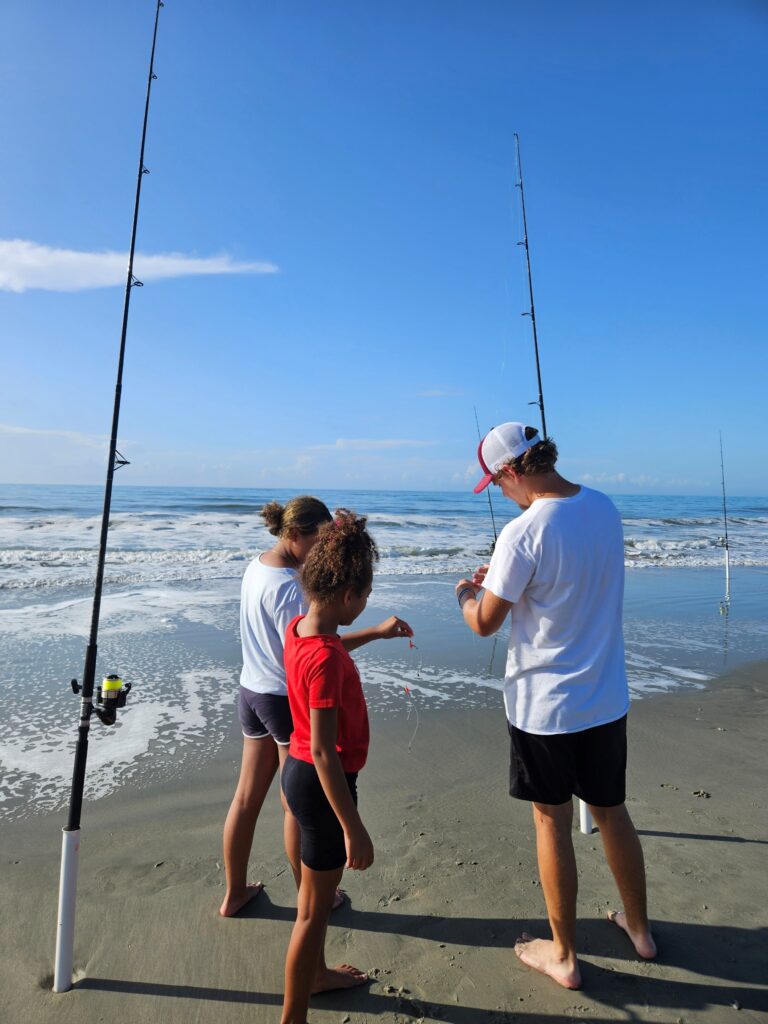
To ensure that future generations can enjoy our state’s wildlife and their habitat, every program, event, and class is imbued with our conservation message. We completed the fourth year of our Plishing Challenge, our conservation initiative designed to encourage anglers to help keep our waterways clean and use best fishing practices. This year’s challenge featured several in-person surf fishing events and litter sweeps that helped amplify our conservation message. Thanks to this increased participation, we achieved our highest fish total yet: 1,525 fish were caught (with most released for bonus points!). Participants also removed 307 bags of litter from local waterways, creating a cleaner, healthier environment for both fish and people.
2025 Plishing Challenge.
Advocacy
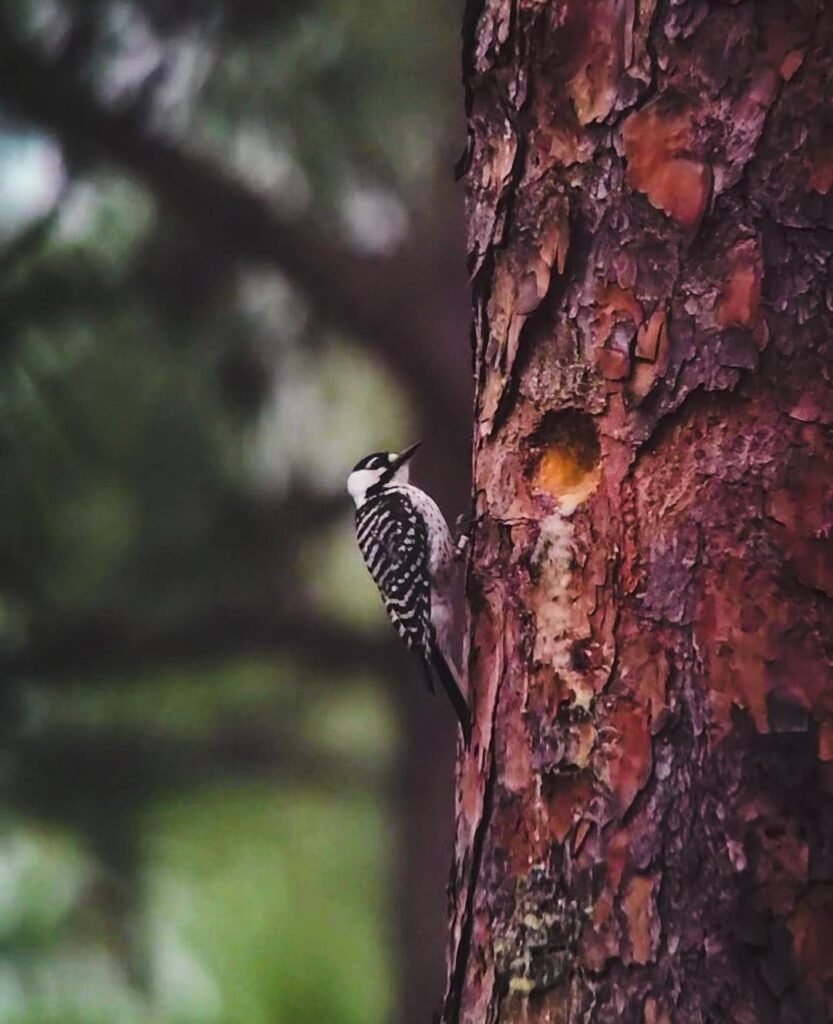
SCWF works with state legislators to conserve, restore, and protect land, water, and wildlife habitat from the mountains to the sea. With our support, bills were passed this year that will safeguard shorebird habitat, protect birds migrating through urban areas, and greatly increase the use of native plants for landscaping. With partner organizations, we’ve challenged developers wanting to fill in wetlands, and also challenged policy-makers to use scientific data to update regulations. We also partner with the National Wildlife Federation on issues of national significance, and are currently working together to defend the Endangered Species Act from significant changes which would strip away critical habitat protections.
Red-cockaded woodpecker by Savannah Jordan.
Restoration
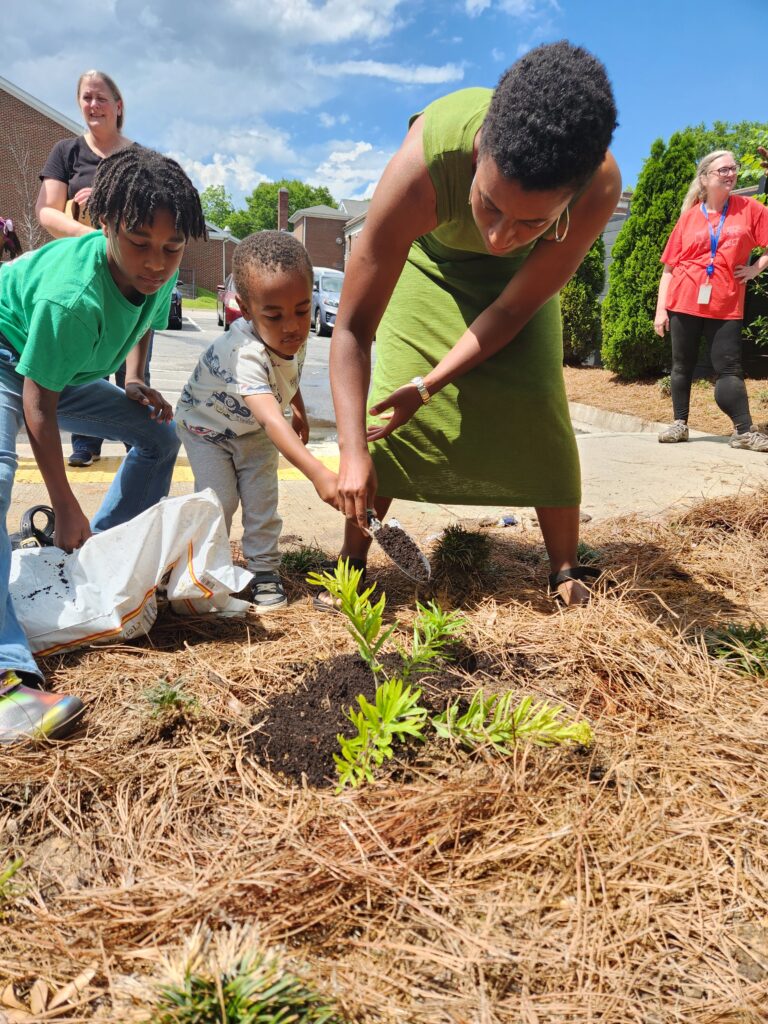
SCWF helps to enhance wildlife habitat and connectivity through our habitat restoration programs, which are increasingly vital as human development expands. We support those needs through our Certified Wildlife Habitat® programs, where individuals, schools, businesses, and communities enhance their properties by planting native plants, installing nesting boxes, and making other habitat improvements to help wildlife thrive. South Carolina has 15 certified communities, 12,479 certified backyard habitats, and 27 industry habitats. Please consider creating your own to increase habitat for wildlife!
A demonstration pollinator garden was installed at the Lancaster County Library this year!
Education
To encourage outdoor recreation and a deeper appreciation of South Carolina’s incredible natural resources, SCWF proudly offers a wide range of educational programs across the state. This year, we added new statewide habitat workshops to our impressive array of naturalist courses, Palmetto Pro Birder classes, and hands-on youth education experiences. Our first Families Exploring Nature Day introduced fishing basics, birding, and nature walks to those who may be newer to outdoor experiences. This spring, we hosted our popular Palmetto Outdoors Women’s Retreat (POWR) near Clemson and continued to offer POWR+ classes statewide to build on acquired skills.
Palmetto Pro Birders at Huntington Beach State Park.
The Colleton County Zoning Board of Appeals will be considering a request this Thursday to allow a new data center on an 850+ acre property south of Walterboro off of Green Pond Highway in the ACE Basin Project Area.
SCWF, along with our partners at the Southern Environmental Law Center (SELC) and other conservation organizations, are opposed to this request due to the impact it will have on sensitive wildlife habitat on the site as well as in the surrounding waterways.
The ACE Basin is one of the East Coast’s largest undeveloped wetland estuaries and it serves as vital habitat for migratory birds, sea turtles, and other wildlife, and offers opportunities for birding, hunting, fishing, and exploring unique natural beauty. This proposed data center, and other similar projects which may be proposed in the future, would drastically change the landscape and available habitat in the ACE Basin due to its potential water and electricity usage.
SCWF and our conservation partners are encouraging Walterboro area residents to attend the public meeting on Thursday, December 18th at 5:30 PM at the Colleton County Civic Center. The Civic Center is located at 494 Hampton Street in Walterboro.
The Zoning Board of Appeals needs to see the large number of residents who are paying attention to these decisions, and hear comments about how this project would impact your community. Please feel free to share these materials with your neighbors and encourage them to attend as well!
It will take all of us working together to protect habitat for wildlife as they face more and more threats every day across our beautiful state. Thank you for considering how you can protect wildlife and their habitat in your own community!
Blog post by Allison Bugarin, SCWF Education and Outreach Manager.
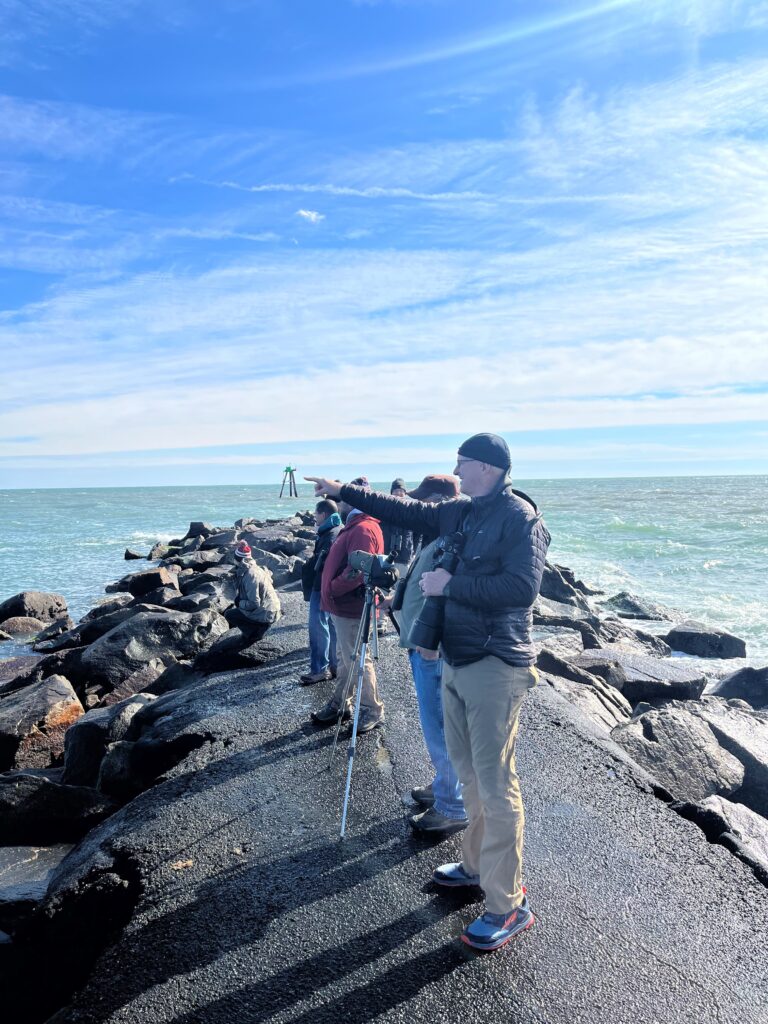
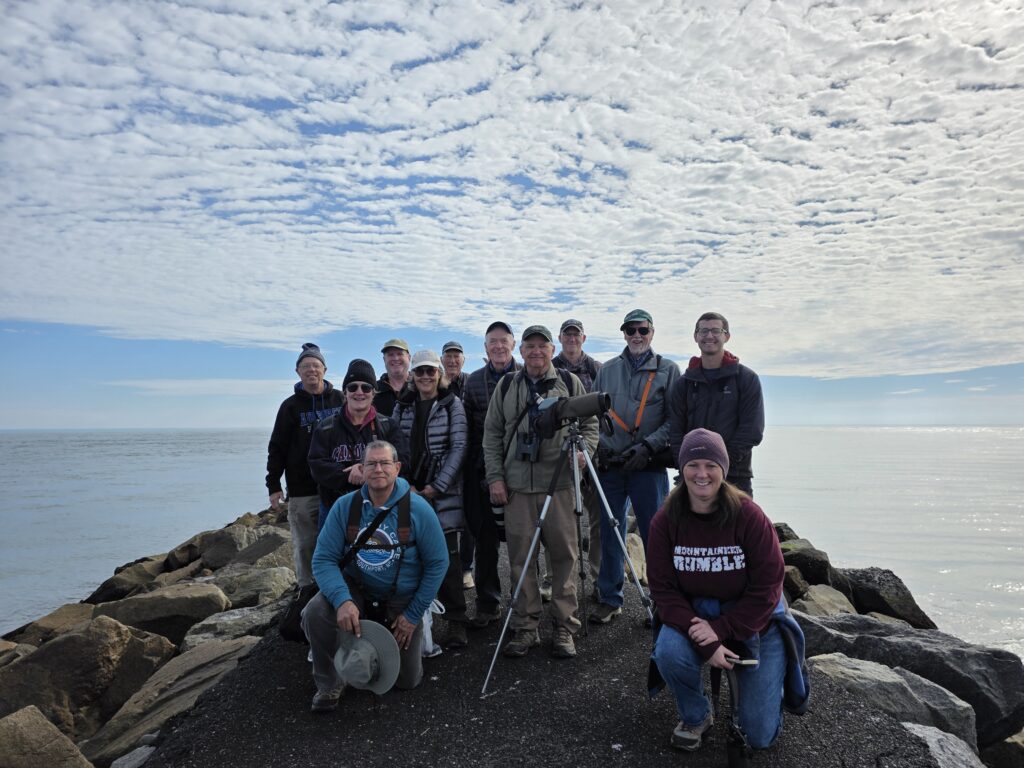
We had an incredible day exploring Huntington Beach State Park together! Winter birding along South Carolina’s coast never disappoints, but this trip delivered something truly special.
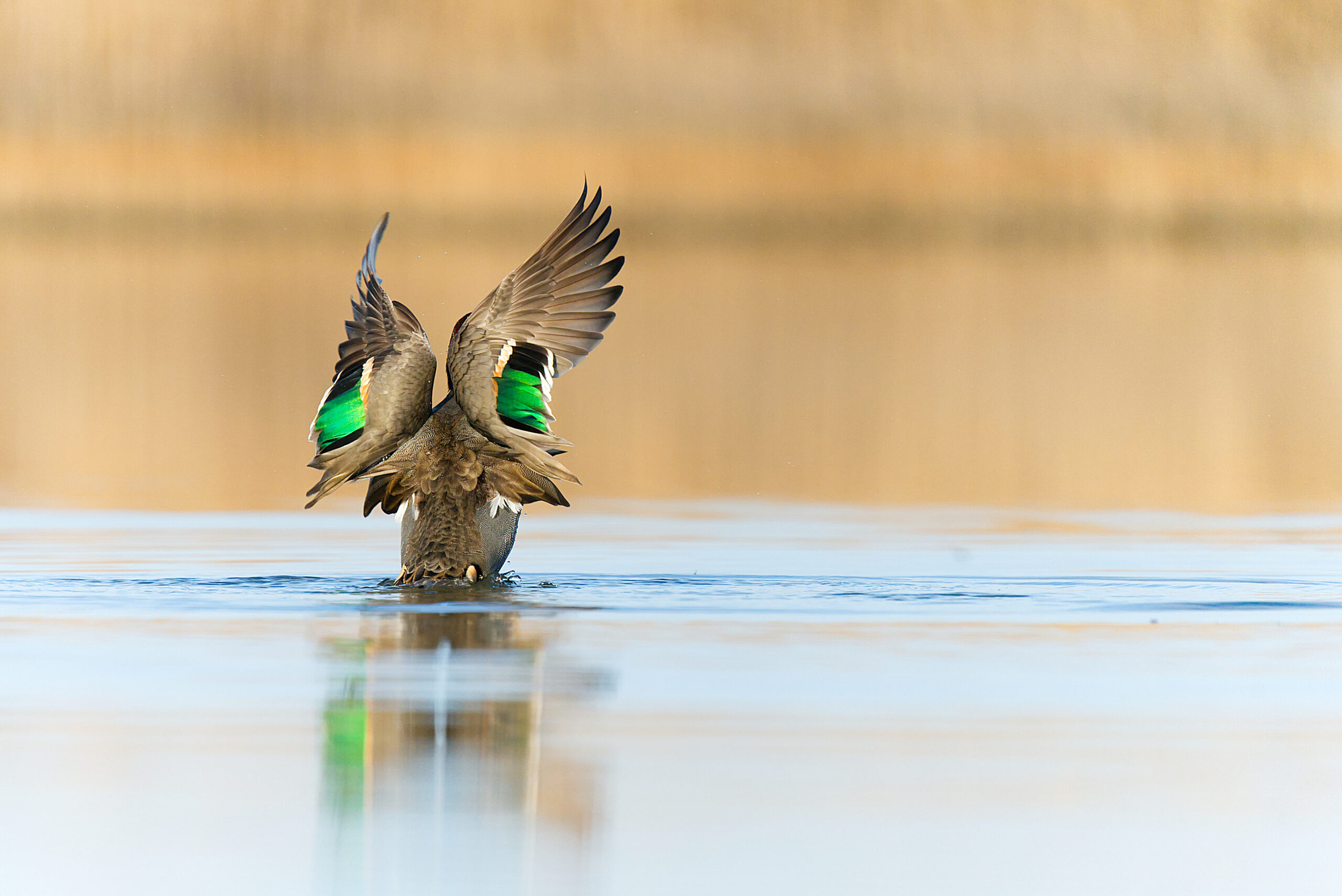
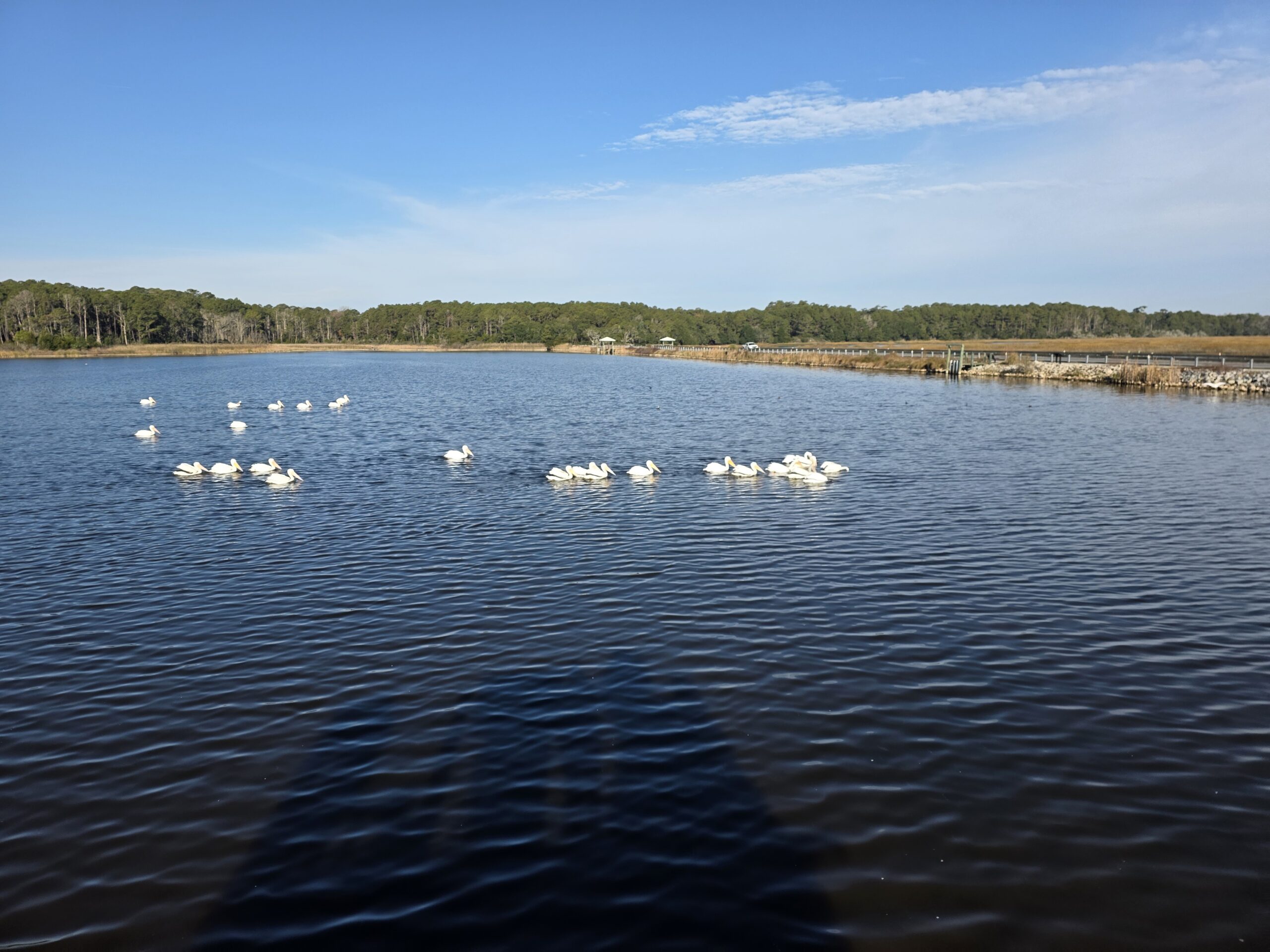
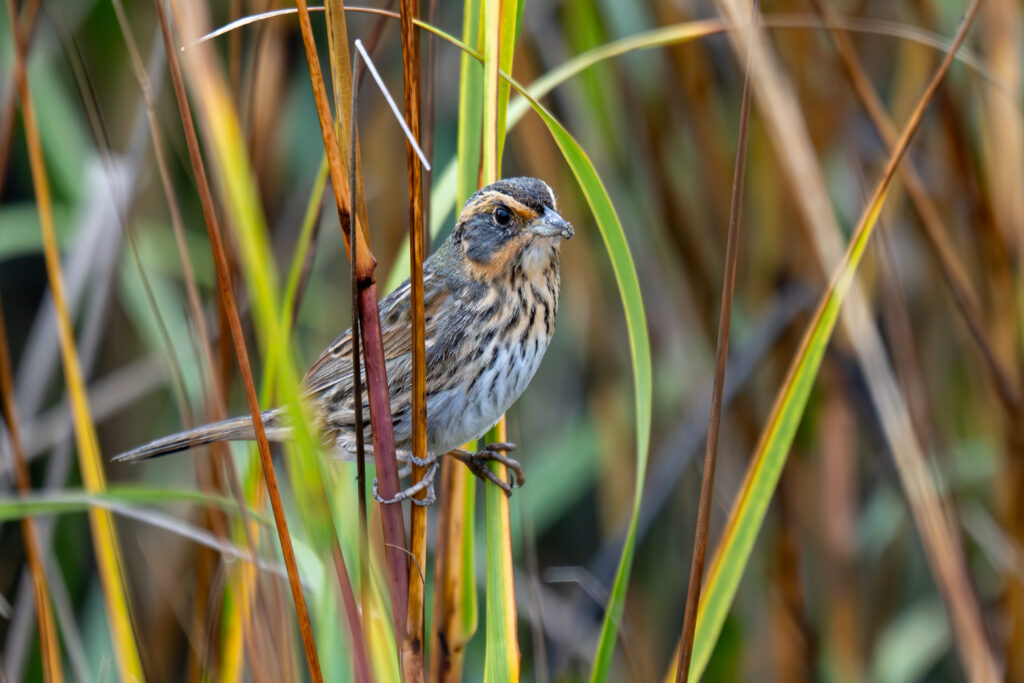
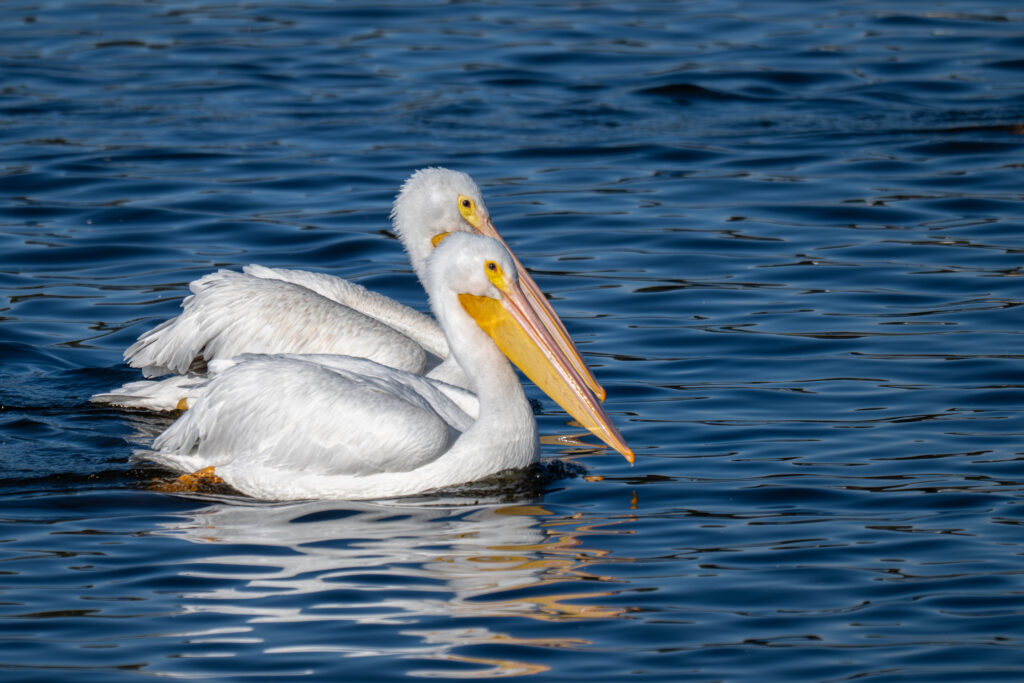
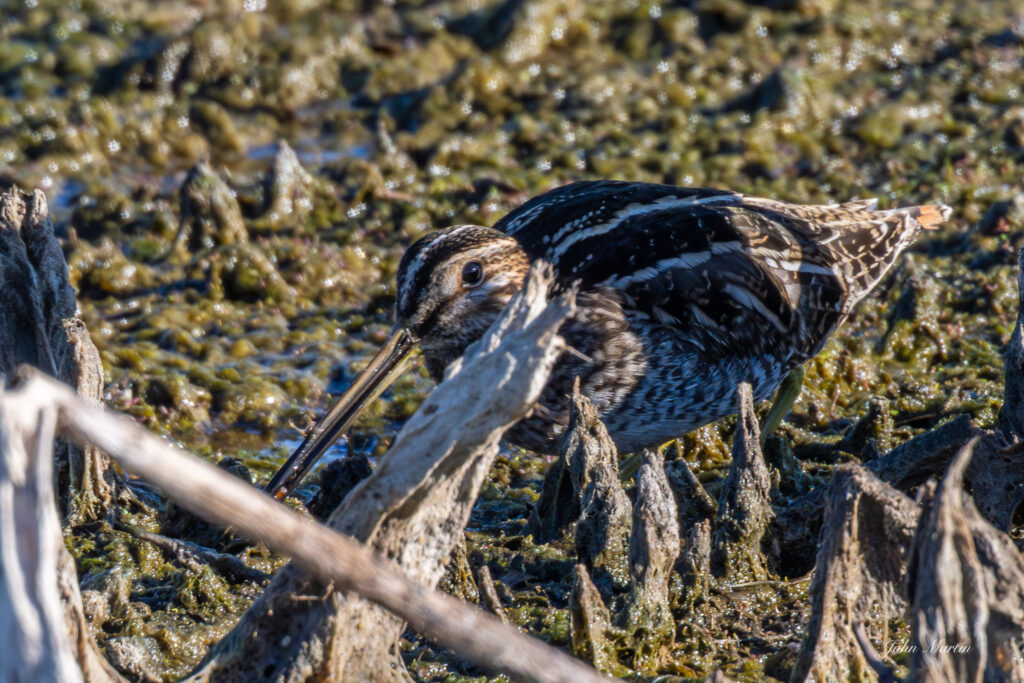
From the moment we stepped onto the woods to the last views leaving the park, we were surrounded by nonstop wildlife activity and unforgettable moments. Birds may have been our focus, but the park treated us to an outstanding mix of species—both feathered and not. We enjoyed amazing looks at saltmarsh sparrows! Some other species that we got great looks at were common loons, American white pelicans, green-winged teal, and a beautifully camouflaged Wilson’s snipe.
Image caption: Saltmarsh sparrow taken by a class participant.
Image caption: American white pelican taken by a class participant.
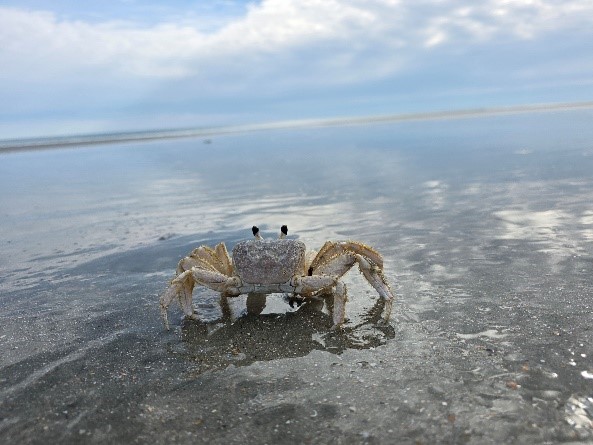
Beyond the birds, we were also lucky to encounter several fantastic non-bird species. A green sea turtle surfaced near the jetty, offering an unforgettable moment for everyone watching. A couple of minks darted in and out of the rocks along the jetty, and one of the largest Atlantic ghost crabs I’ve seen made an appearance on the beach on our walk back from the jetty.
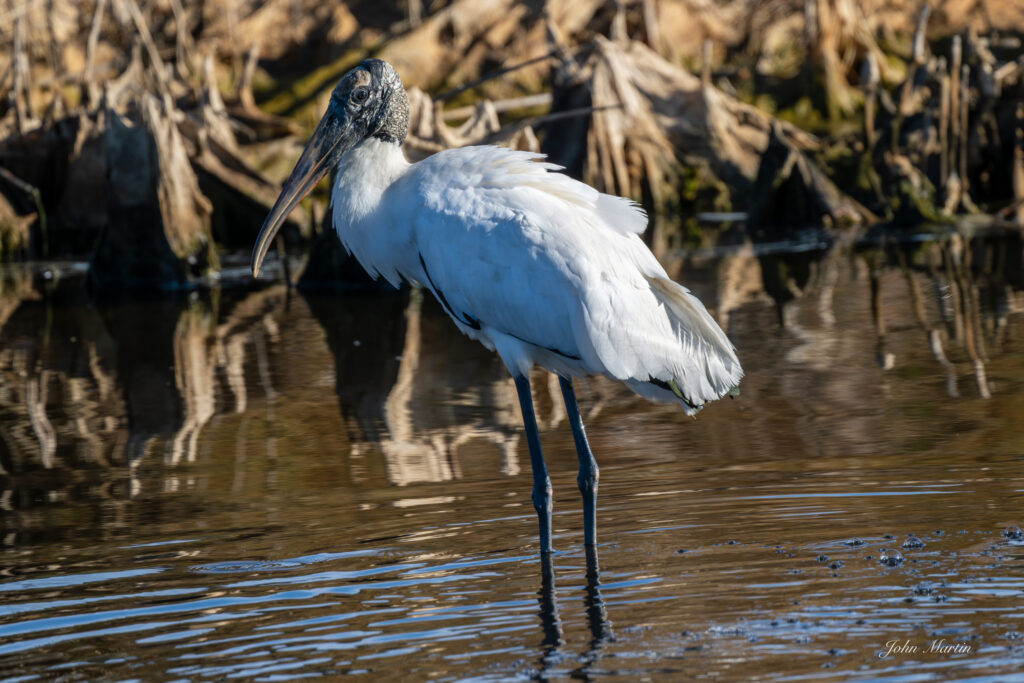
Image Caption: Wood stork by John Martin.
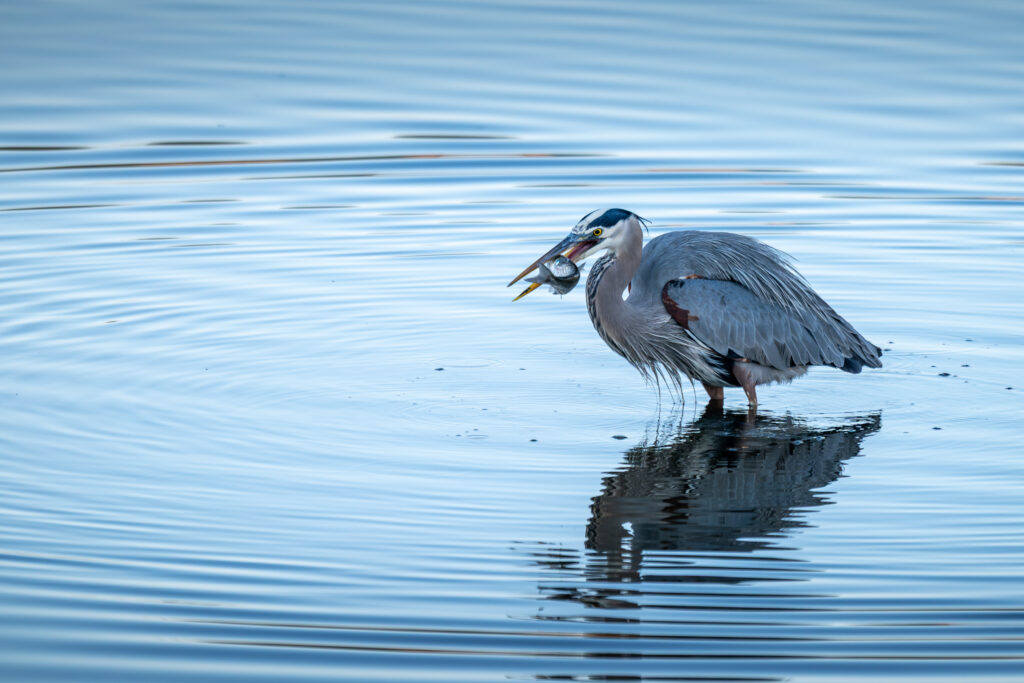
Image caption: Great blue heron photo taken by a class participant.
As if the day needed anything more, a few participants even caught a glimpse of a roosting Eastern Screech-Owl on their way out of the park! This was a perfect ending to an already magical outing.
Thanks to everyone’s sharp eyes and enthusiasm, we wrapped up the day with 79 species for the day. From waterfowl to songbirds, the diversity of habitats at Huntington Beach State Park gave us an incredible variety to enjoy.
Image caption: Wilson’s snipe by John Martin.
SCWF would like to say special thank you to Irvin Pitts for sharing his expertise and guidance throughout the trip. Birding alongside him was a rare treat, and we were incredibly fortunate to have his knowledge and sharp eyes with us for the day. Thank you to everyone who joined this trip. Your energy, curiosity, and camaraderie made the day truly memorable. I hope you enjoyed the experience as much as I did, and I can’t wait to see you again on our next adventure!
Image Credit: Atlantic ghost crab by Allison Bugarin.
This trip is part of our Palmetto ProBirder Program, which is at the heart of what we do at the South Carolina Wildlife Federation. By combining outdoor adventure, connection with others, and hands-on learning, we hope to inspire more people to become advocates for healthy wildlife habitats. Each time someone logs a bird sighting, plants a native plant, or supports conservation through a Duck Stamp or donation, it adds up to real and lasting change for the landscapes and species we love.
SCWF and other conservation groups are working to ensure that new housing developments conserve critical wildlife habitat and protect residents from increased flooding. The commentary below by Coastal Conservation League founder, Dana Beach, describes the almost 10,000-acre proposed Cainhoy development in Charleston, near the Francis Marion National Forest. Not only will it significantly increase traffic headaches, it will destroy nearly 200 acres of wetlands which offer critical habitat as well as protection from flooding.
One of my first experiences visiting the Cainhoy community was in the mid-1980s when I drove out to eat supper at a Cajun restaurant called La Tasha’s. The trip took more than an hour from downtown Charleston — across the old Cooper River Bridge, through Mount Pleasant, up Highway 41, across the Wando River, and then down Cainhoy Road to a modest white building beside a peaceful road in the forest.
At the time, I could not have imagined that within a few decades the Cainhoy peninsula would be practically destroyed — paved over by sprawling development enabled by the city of Charleston.
Thirty-five years ago, this peninsula, just to the northeast of historic Charleston, was a remote, authentic and beautiful place: Its people and culture were carefully documented by Charleston journalist and author Herb Frazier in “Behind God’s Back,” a collection of historical notes and personal interviews. Picture majestic live oaks and longleaf pine forests, farm fields, marshes and creeks, interspersed with historic Gullah communities such as Yellow House, St. Thomas and Jack Primus.
For more than a century, Cainhoy residents had made their living mostly from the land and water, farming and raising livestock, or fishing and oystering in the creeks and marshes of the Cooper and Wando rivers. Despite the challenges of life in those days, Cainhoy residents built strong families and resilient communities that have contributed to the Charleston area in countless ways.
Sadly, Charleston has not repaid the favor. Today’s Cainhoy peninsula would be unrecognizable to anyone whose last visit was in 1990. The historic Clements Ferry Road is now a five-lane highway lined with strip malls, gas stations and subdivisions.
Instead of navigating rivers, creeks and familiar roads, residents wade through immobilizing traffic congestion every weekday morning and afternoon.
If today’s traffic problems on the Cainhoy peninsula seem almost intolerable, they don’t begin to approximate the disruption that will plague the area in the coming years. As development progresses on Cainhoy Plantation — now called Point Hope — it will add 9,000 more houses to the peninsula. Clements Ferry Road and Highway 41 will be further burdened by 45,000 to 60,000 additional vehicle trips daily, tripling the number of cars on these roads now.
The Berkeley-Charleston-Dorchester Council of Governments transportation model of the road system is bleak and unequivocal: When Point Hope is built out, these roads will operate at what transportation planners call “Level of Service F.” In lay terms, this means gridlock.
It didn’t have to turn out this way.
In 1991, Charleston Mayor Joe Riley moved to annex Daniel Island into the city. Five years later, the owners agreed to let the city annex the considerably larger Cainhoy Plantation, extending to the border of the Francis Marion National Forest.
The owners were enticed with lavish public subsidies. According to a spokesperson from Daniel Island, “In excess of $250 million has been committed (in the area) by city, county and the state in terms of schools here, the roads, the bridges, water and sewer, public safety and all of those things.”
Perhaps most importantly, Charleston signed a contract with the Guggenheims that restricted the city from substantially modifying the Cainhoy Plantation plan for 50 years. The agreement included the right to build 18,000 houses and condominiums on the property. Thus, the stage was set for the wholesale transformation of one of the most beautiful and historic places in the Southeast.
While the future of Daniel Island was the subject of years of public hearings and benefited from the expertise of some of the nation’s most talented land planners, Cainhoy was afforded no such careful attention. Unlike Daniel Island, the Cainhoy owners began dismembering the property, selling it piecemeal to national tract homebuilders such as Pulte Homes.
For more than two decades conservation groups, along with courageous residents of the Cainhoy community, have advocated for improvements to the development plan that would reduce the crush of traffic and lessen some of the environmental and cultural damage.
The recent protection of Blessing plantation, just up the river, provides an inspirational example of land owners working collaboratively with the community, local government and environmental groups to secure a beautiful destination for centuries to come. In contrast, the Guggenheim family and their development company have consistently rejected virtually every conservation proposal.
It is critical that citizens understand that the unfolding Cainhoy catastrophe was not inevitable nor is it irreversible. There is still time for City Council to make substantial changes to the Cainhoy-Point Hope project — changes that are justified by the threat the development poses to public health, safety and welfare.
But time is of the essence. The fate of the Cainhoy peninsula hangs in the balance.
Dana Beach is a longtime conservation leader who lives in Charleston.
 SCWF lost a dear friend over the weekend – Dan Turpin was the founder of the Women’s Outdoor Recreation Retreats (now known as Palmetto Outdoor Women’s Retreats/POWR) and was our fearless Retreat leader for decades.