
Keep South Carolina Wild
August 04, 2021
By Jay Keck, Habitat Education Manager for Chapin Magazine
“Wanna go see the Martins?” That’s a question I loved to hear my dad ask during the summer while growing up on the south side of Lake Murray. It reminds me of all the small things you don’t know are special when you’re young, like taking the folding chairs out to the boat (the only permanent chair on our pontoon boat, which we named “Tin Can,” was my father’s “Captain’s” chair.) It reminds me of mom’s snack mix loaded with nuts and those slightly burnt bits of rice Chex that were lucky enough to soak up some of the butter in which they were cooked. It reminds me of boat-created summer breezes, orange Chek soda, and those unforgettable and unbeatable Lake Murray Sunsets (which are indeed, fyi, totally worthy of capital letters.) And then, of course, I’m reminded of the frenetic bird tornado the Purple Martins create when they congregate each evening at Bomb Island. What a sight! Isn’t it amazing that all those memories were created because of a bird? That is just one example of the power of nature, and our much-needed connection to it.
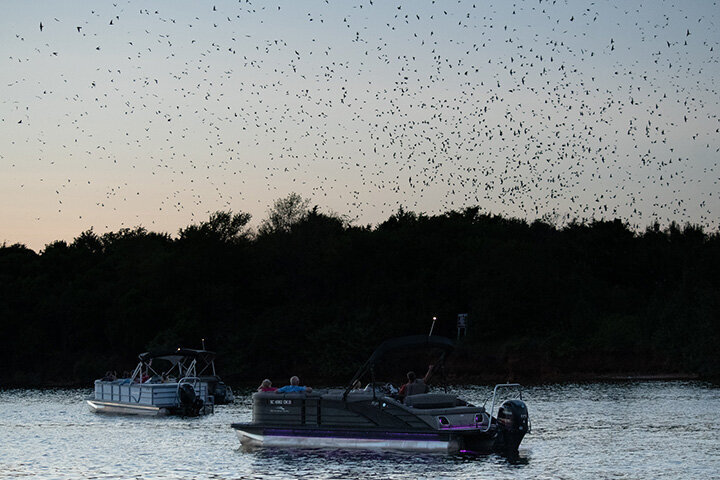
Photo of Purple Martins at Bomb Island, by Zach Steinhauser
But the Purple Martin isn’t just any bird. It’s a fast flying, insect eating, cavity nesting, transcontinental migrating, purple-fighter-jet of a bird. Visually, the male Purple Martin is a stunning bluish-purple, but you’ll need a good pair of binoculars to pull out the vibrant colors of the bird, which are at their brightest when reflecting the sun’s light. The female and young males are brown, though young males can have purple feathers on their chest and belly. Purple Martins are the largest member of the swallow family here in North America, and measure about 7.5 inches in length, have a 15–16-inch wingspan, and an average weight of 1.97 ounces.
Read more here: https://www.chapinmagazine.com/home/2021/8/3/7d6nxf00r37hr7ak3n4lx2p0v7ifs3
Banner image by Vance Solseth

Tags: Chapin Magazine, Birding, Chapin, Jay Keck, Birds

SCWF was honored to be featured in the SC Sea Grant Consortium’s Coastal Heritage Magazine in their Spring 2023 issue. Check out the full article by Erica Hussey on their...
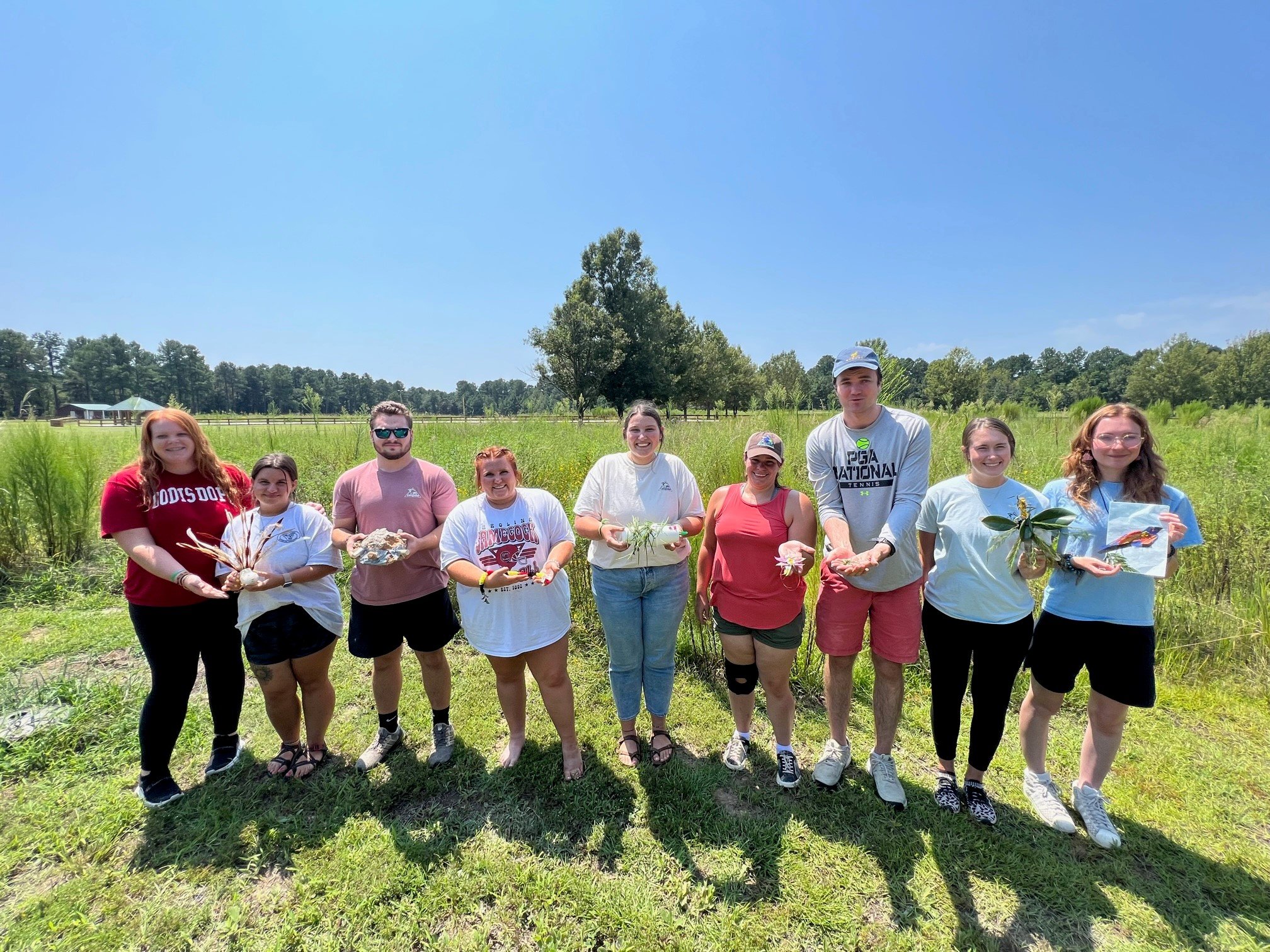
“Oh Deer!”, shouted the instructor as several educators ran across a field recently to find what they needed to survive as a white-tailed deer. This classic activity from Project WILD...
We are thrilled to announce the addition of two new instructors to the program! Tim Lee has studied and taught as a naturalist and biologist throughout the southeast for more...