Keep South Carolina Wild
December 22, 2017
BY STEVE GILBERT
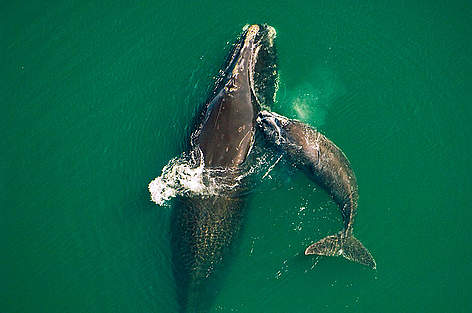
In a recent Post and Courier article, the National Oceanic and Atmospheric Administration expressed great concern about the recovery of the endangered right whale. There are only about 450 left and 17 of them have died so far in 2017. There are only 100 breeding females. The Northeast regional administrator for NOAA Fisheries stated: “You have to use the extinction word, because that’s where the trend lines say they are.”
Ironically, this concern for the survival of the species temporally coincides with an ongoing NOAA Protected Species Division process for issuing Incidental Harassment Authorizations (IHA) in association with seismic testing for oil and gas exploration in the mid-and south Atlantic for the “take” (harm) of right whales and other protected species under the Marine Mammal Protection Act and the Endangered Species Act. Seismic permits require such an action before the Federal Bureau of Ocean Energy Management can issue them.
Seismic testing uses powerful underwater air-gun blasts, the equivalent to igniting a stick of dynamite every 10-12 seconds. These sounds extend underwater for hundreds and even thousands of miles from the blast. Permit applications indicate that multiple companies would be conducting such surveys off our coast continuously for periods of up to a year covering over approximately 9,000 linear miles of ocean.
According to published studies, many marine organisms are highly dependent on sound for feeding, navigation, communication and reproduction. Research has shown that fish, invertebrates (like clams, scallops and shrimp) and marine mammals show both physical harm and behavioral-pattern alteration from seismic blasts. Recent research also shows seismic blasts have devastating effects on zooplankton, a critical link in the marine food web and the primary food for juvenile fish, like snapper and grouper, as well as for the North Atlantic right whale. The warmer Atlantic waters serve as breeding habitat for this species.
A great concern is that in their IHA analysis, NOAA routinely “buys down” impacts to marine mammals through mitigating actions like posting observers to spot whales and shut down seismic blasting while in their vicinity. These are not particularly effective safeguards as the operations also occur at night, in fog and/or rain when visibility is low, and the level of sound that may affect behavior or loss of communication (particularly relevant during spawning activities) occurs far beyond effective visual distances.
Additional concern for marine mammals, especially the endangered right whales along our coast has also been raised by a recent study on bowhead whales (a close relative of our right whales) which start behavioral responses at the 100dB noise level or 1 million times less than the threshold NOAA Fisheries is using in its IHA analysis. If thresholds were updated in their analysis, the areas of impact would show substantially larger numbers of whales impacted and non-negligible impacts. This would also have implications for the effectiveness of mitigation measures, as behavioral response levels would occur at greater distances from the source with significantly less chance of marine mammal visual observation.
It is also critical that NOAA Fisheries include a cumulative impact analysis in the IHA and not just review each company’s IHA request in isolation. In total, surveys would result in 906 days of round-the-clock seismic activity within a one-year period over the same geographic area.
Inevitably marine mammals in the proposed survey area will at times be exposed to multiple air-gun activities at once and will probably experience some air-gun activity most days of the year. These multiple activities will expose marine mammals to chronic noise that will cause cumulative impacts on individuals and stocks in the area.
How can an agency charged with the protection of our marine resources and recovery of endangered sea turtles and whales issue take permits for imperiled species when they recognize they are close to extinction?
We can only hope they do the right thing for the species. Unfortunately, it is unlikely they will do the right thing in an administration under the thumb of the oil and gas industry. It is the people of South Carolina, along with our neighbors to the north and south, who are now responsible for saving this majestic creature by speaking out against oil and gas exploration by seismic blasting.
Steve Gilbert, a fish and wildlife biologist, is special projects manager for the South Carolina Wildlife Federation.
Tags: Steve Gilbert, Offshore Drilling, Whales, Oceans

Palmetto Pro Birders had a fantastic class last weekend with Instructor Tim Lee! They hiked along the Foothills Trail and to the top of Sassafras Mountain, and learned to identify...
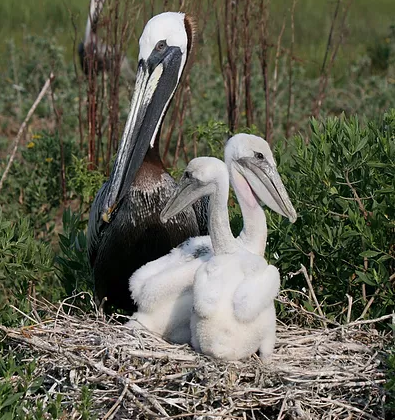
SCWF is one of many organizations supporting a new SCDNR S.C. Coastal Bird Conservation Program to protect and restore rapidly disappearing coastal bird habitat. The pilot project is to raise...
Alex Killman is a guest writer for SCWF sharing his experiences of connecting with nature, enjoying the outdoors, and advocating for conservation – all through hunting. Busy. That’s the word...