Keep South Carolina Wild
January 29, 2026
Thank you to Governor Henry McMaster for his dedication to preserving land in South Carolina!
Below is section of the transcript of his State of the State Address given January 28, 2026 which relates to land conservation. Read the full transcript here.
“South Carolina’s future prosperity requires us to enhance our efforts to respect and protect our land, our history, our culture and our natural environment. It is not a coincidence that previous years of economic growth have followed our efforts to conserve, preserve, and display our unique gifts of nature’s abundance.
These are not opposing objectives which must be balanced as in a competition, one against the other. Instead, they are complementary, intertwined, and inseparable, each dependent on the other. Each can be accomplished to the fullest if we plan now and be bold.
In recent years, we have provided funds, time, and attention for identifying significant properties for preservation and conservation and for flood mitigation.
We created the Floodwater Commission. Its purposes included measuring our strengths and weaknesses concerning flooding, erosion and the conditions of our rivers, coast and barrier islands; and to make recommendations for the State to act upon. From the commission’s recommendations came the creation of a new cabinet agency, the Office of Resilience, and a Chief Resilience Officer for the state.
Their mission: To develop plans and studies to identify and understand flooding issues, to deploy mitigation projects, to provide grants for flood reduction, to conduct the voluntary buyout of homes in flood-prone areas, to protect and preserve endangered lands and wetlands, and to take on special environmental protection projects, as was done with the remarkable cleanup of over a million and a half gallons of hazardous toxins, tainted ballast and old diesel fuel inside the USS Yorktown in Charleston Harbor.
After the state’s official Water Plan languished without update or consensus for over twenty years, we created the WaterSC working group, led by the new cabinet agency, the Department of Environmental Services. We tasked this cadre of stakeholders to quickly complete the plan and provide an inventory of how much surface and ground water we have, and how much we will need in the future. Like the old saying goes, “if you can’t measure it, you can’t manage it.” I am pleased to report that the new State Water Plan was completed and published just last month.
Today we have a veritable army of people, farmers, public and private organizations, as well as local governments, dedicated to these endeavors, including the Conservation Land Bank, the Department of Natural Resources, the Office of Resilience, the Forestry Commission, the Department of Parks, Recreation and Tourism, the Nature Conservancy, the Open Space Institute, the Darla Moore Foundation, the Audubon Society and Francis Marion University.
In less than 10 years, we have preserved almost 400,000 acres of historically or environmentally significant lands, including the State’s largest conservation easement in history, which last year permanently protected 62,000 acres in the Pee Dee.
We have protected our most important historic and cultural sites, including Snow’s Island, where General Francis Marion’s Revolutionary War camp is somewhere located, and the colonial era Blessing Plantation, on the Cooper River. These properties are protected and in the future will become publicly owned, welcoming visitors to enjoy and learn about key aspects of South Carolina’s landscape and history.
Also included in this newly conserved acreage are African American historic sites, working farms and forests, and new areas for outdoor recreation, from the mountains to the sea.
Over the decade we have created new state parks, such as Ramsey Grove on the Black River and expanded existing parks in the midlands and the upstate. Among these is the Glendale Nature Park, in Spartanburg, one of the largest urban parks in the Upstate.
A significant portion of this land was protected with funding from the South Carolina Conservation Land Bank – just over $250 million. The investment from the Bank has brought in other funding from federal, local and private sources, exhibiting an unprecedented level of efficiency and effectiveness that has been the hallmark of South Carolina land conservation for many years.
Importantly, local governments have stepped up on land conservation, collectively investing many millions of dollars to conserve land and create new parks. But, of the forty-six counties in the state, only a few have conservation funding programs. I urge all of our counties to join this effort.
Protecting our land is a gift for all our people. With insight and continued hard work, we can achieve the goal helping private and public property owners with preserving half their lands for future generations, and making our South Carolina recognizable as the closest thing we have to heaven on earth.“
Banner photo by Melanie Gallant.

COLUMBIA — Senator Lindsey Graham has signed onto a bipartisan wildlife conservation bill, the Recovering America’s Wildlife Act, that will dedicate $1.4 billion annually to locally-led efforts to help at-risk...
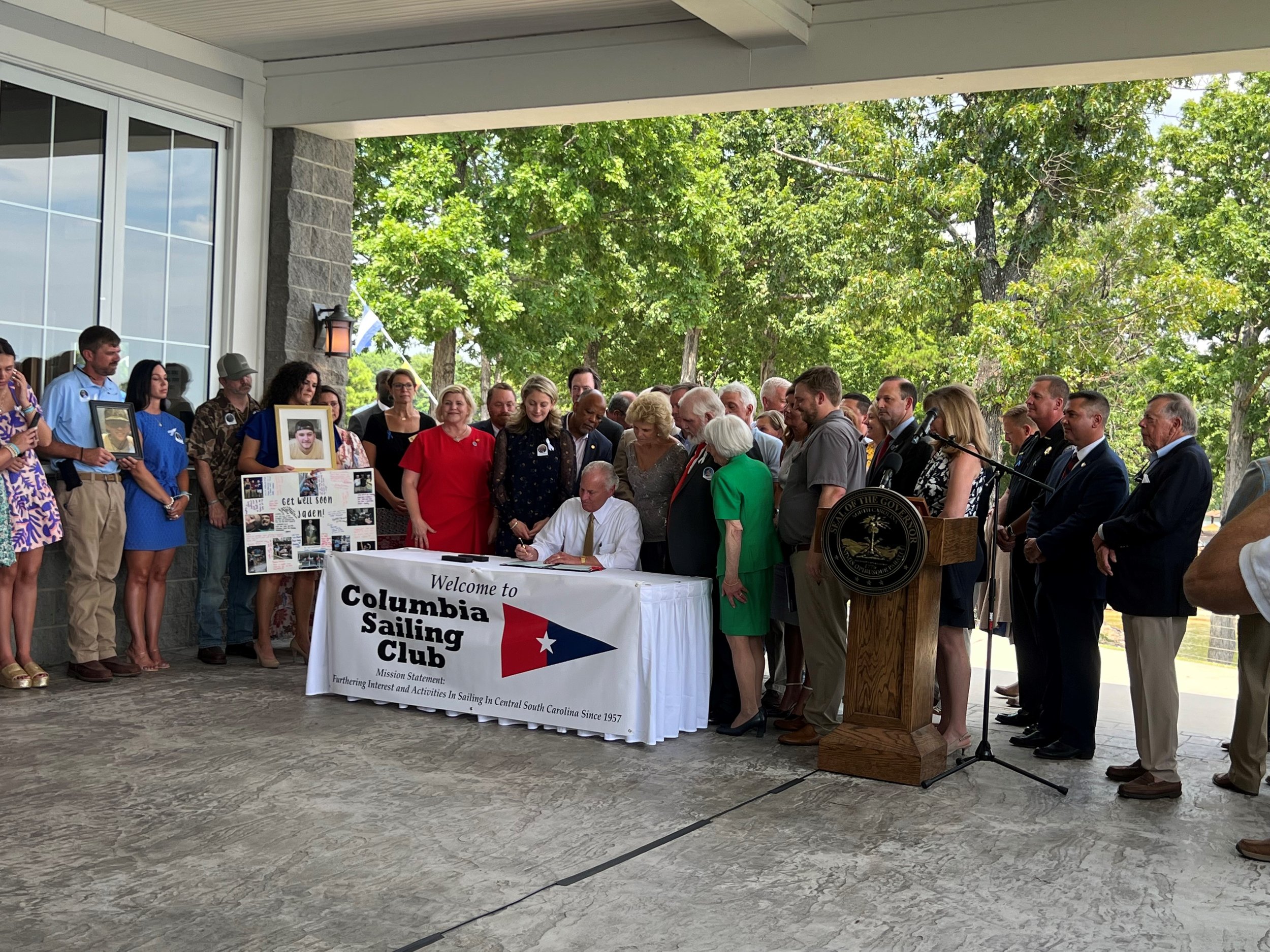
SCWF is proud to support S. 96, the South Carolina Boating Safety and Education bill which will make South Carolina’s waterways safer. This legislation will require boaters born on or...

We are thrilled to announce the mailing of native milkweed seeds to SC residents, thus completing the 2024 Milkweed for Monarchs Project! We are grateful to Comporium for sponsoring this...