Keep South Carolina Wild
Event Date: December 26, 2025 – February 18, 2026
Free
Location: Online
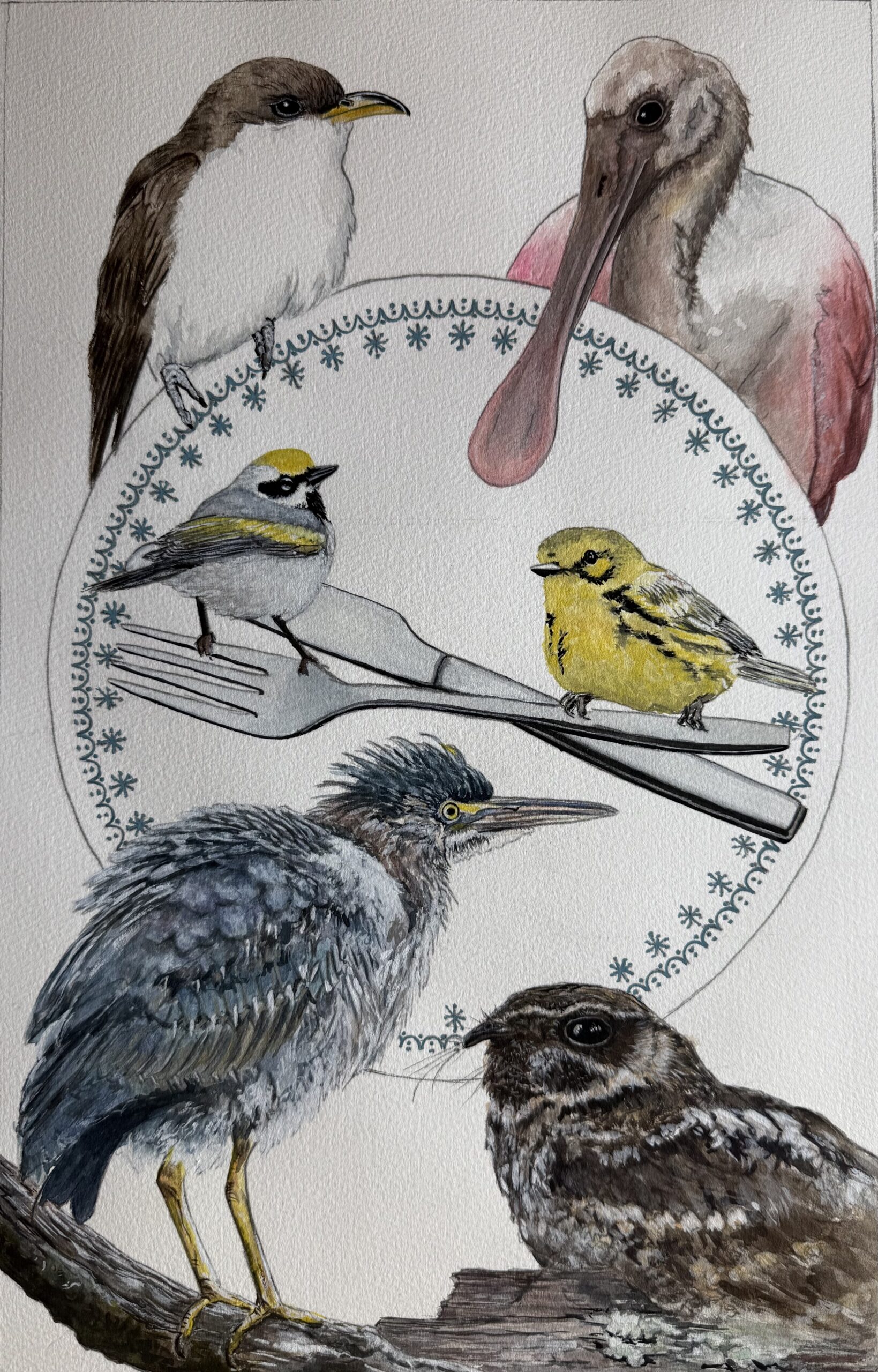
Calling all local artists! The South Carolina Wildlife Federation is launching our sixth statewide art contest to design the menu art for our 2026 Forks, Knives, & Spoonbills conservation dinner series. For these events, SCWF partners with local chefs throughout the state to create culinary dining experiences themed around imperiled wildlife species. The winner of the art contest will have their art featured on each menu of the dinner series. The first dinner is scheduled for March.
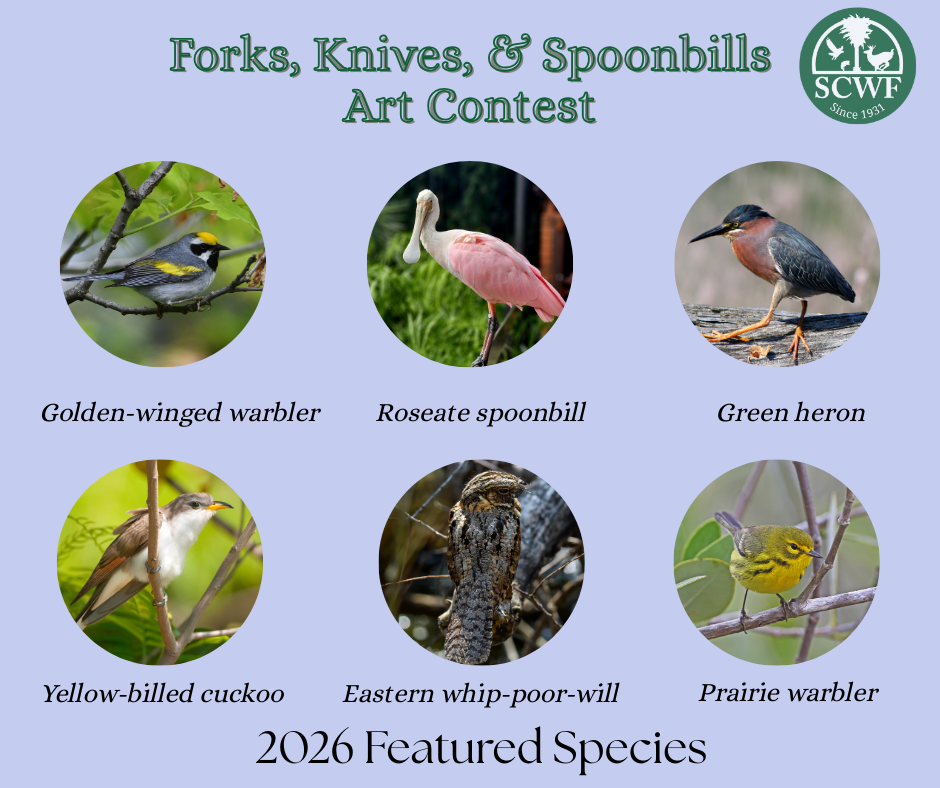
Local artists are encouraged to submit an image file of their design that includes all six of the wildlife species that will be featured in the 2026 dinner series (see below).
Please see below for this year’s featured species.
Please note that all of the species below, except for the roseate spoonbill, are listed in the SC Department of Natural Resources’ State Wildlife Action Plan (SWAP), which identifies species of concern for South Carolina.
1. Roseate spoonbill
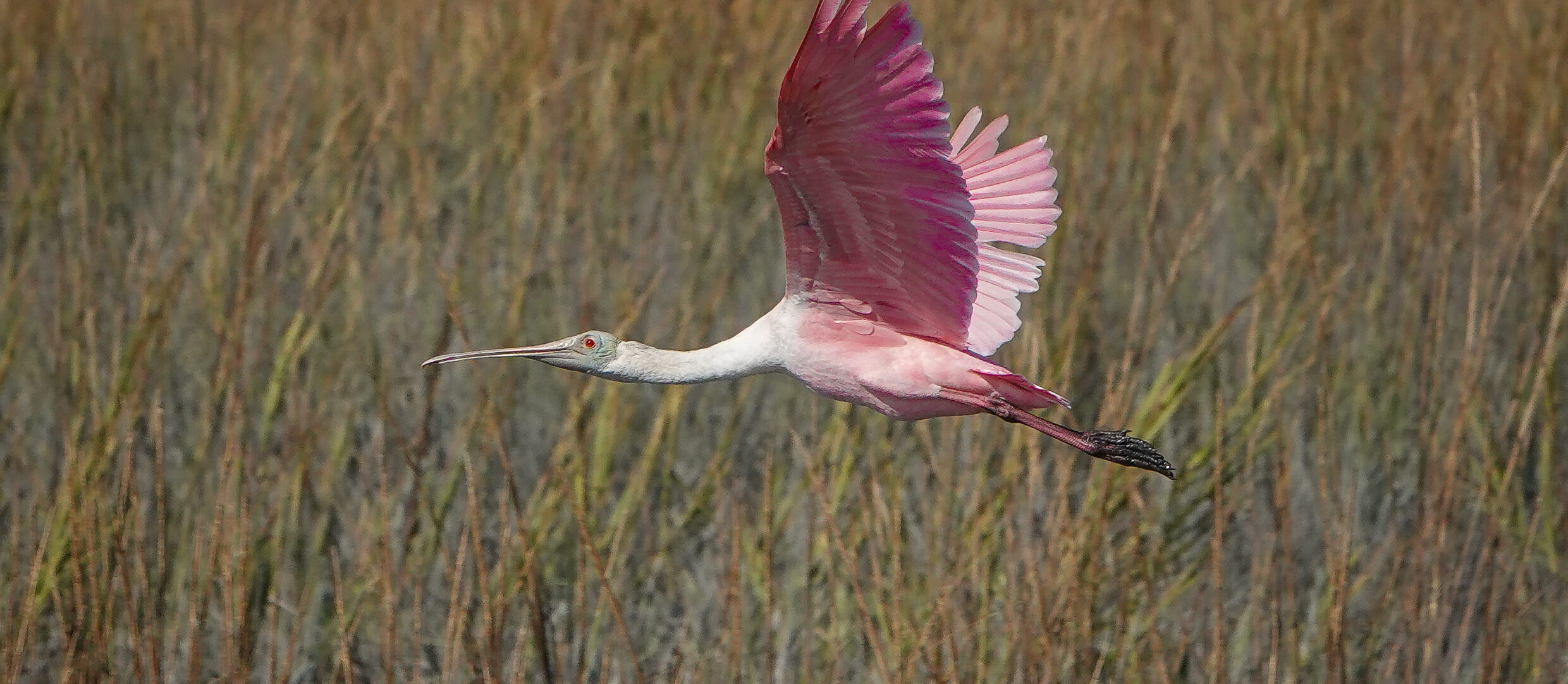
South Carolina’s only pink bird, some people confuse it with a flamingo at first sight. The color comes from the foods they eat, which include crustaceans, and other aquatic invertebrates, though they’ll also eat fish. The bill is long and flat and wide at the end, similar to a wooden spoon one would use in the kitchen while cooking. It’s a coastal bird that has increased its population in SC after almost being hunted to extinction in the late 1800’s and early 1900’s.
Conservation status: increasing after almost disappearing from the US in the early 1900’s.
2. Golden-winged warbler
This light gray warbler is about 5 inches tall and has a striking yellow head and a lovely yellow wing. Interestingly, the female builds a nest on the ground, sometimes in the base of a plant. Females will abandon a nest if they feel like it has been disturbed. Golden-winged warblers like shrubby areas but also rely on the protection of forests to avoid predators. These neo-tropical migrants can be seen in South Carolina during fall and spring migration.
Conservation status: this species has undergone a large decline in North America over the past 40 years, which has gotten even more dramatic in the past 15 years.
3. Green heron
These dark colored wading birds are year-round residents in South Carolina. They are about 16 to 22 inches high and can be found near lakes, ponds, and marshes, where they hunt for fish and other aquatic species with their dagger-like bill. These fairly solitary birds are considered ambush predators.
Conservation status: this species is in a mild decline, although they are still fairly common.
4. Yellow-billed cuckoo
This gorgeous bird has a slender body with a long tail that has spots underneath the tailfeathers. They winter in South America but come up to South Carolina in the spring. They live in deciduous woodlands and are able to stay very still so they can be hard to spot. They do have a distinctive call and are sometimes called “thunder crows” because they often call when there is thunderstorm. An interesting fact is that they have one of the shortest nesting cycles of any bird species, and it can be as short as 17 days.
Conservation status: this species is in decline. Studies suggest that the North American population has declined by 7% over the past 10 years.
5. Eastern whip-poor-will
More likely to be heard than seen, this member of the nightjar family is named for their recognizable “whip-poor-will” song. If you are in the forest at dusk or dawn, you’ve probably heard their song before. Eastern whip-poor-wills prefer forests that are open rather than dense, so you might find them in deciduous forests, mixed forests, or open pine forests. Their beautiful brindled feathers provide good camouflage and make them hard to spot. During the day, they will rest on the ground or a log, and actually also nest on the ground. Like other members of the nightjar family, they are insectivores, and feast on insects that they catch while flying with their mouths open.
Conservation status: this species is in decline but recent studies suggest that the populations are becoming more stable.
6. Prairie warbler
These small songbirds are about 5 inches tall, and you might think that these yellow and black warblers live on prairies. However, they actually live in regenerated forests that have been cleared at some stage and are growing back. Prairie warblers are often found at forest edges and in scrubby areas that provide cover.
Conservation status: this species is in significant decline. Short-term studies suggest the population has declined by 15% over the past decade.
Eligibility
Artists must be residents of South Carolina; there is no age restriction or registration fee. Artwork must contain all of the species represented in the 2026 dinner series. SCWF employees or board members or their immediate family members are not eligible.
Sizing: Artwork submitted can be vertically or horizontally oriented. The design will be printed on a card that is 5.5” wide x 8.5” long.
Judging
The judges are made up of the SCWF staff. Decisions of the judges are final. Notification will be sent by e-mail after judging is complete.
Prizes
The winner’s art will be featured on the menus of the 2026 Spoonbills dinner events. They will also have a choice of accepting a $100 cash prize or two tickets to one of the dinner events ($300 value).
Dates
Entries must be postmarked or emailed no later than 11:59 pm on February 18th. Winners will be notified by February 25th. All art submitted will be posted online.
Questions:
Send via email to: mail@scwf.org. Questions? Contact SCWF at (803) 256-0670.
Banner image credit: Roseate Spoonbill at HBSP by Gretchen Locy.